Job · Interior painting
Interior Repaint With Full Floor Protection
Published · Updated
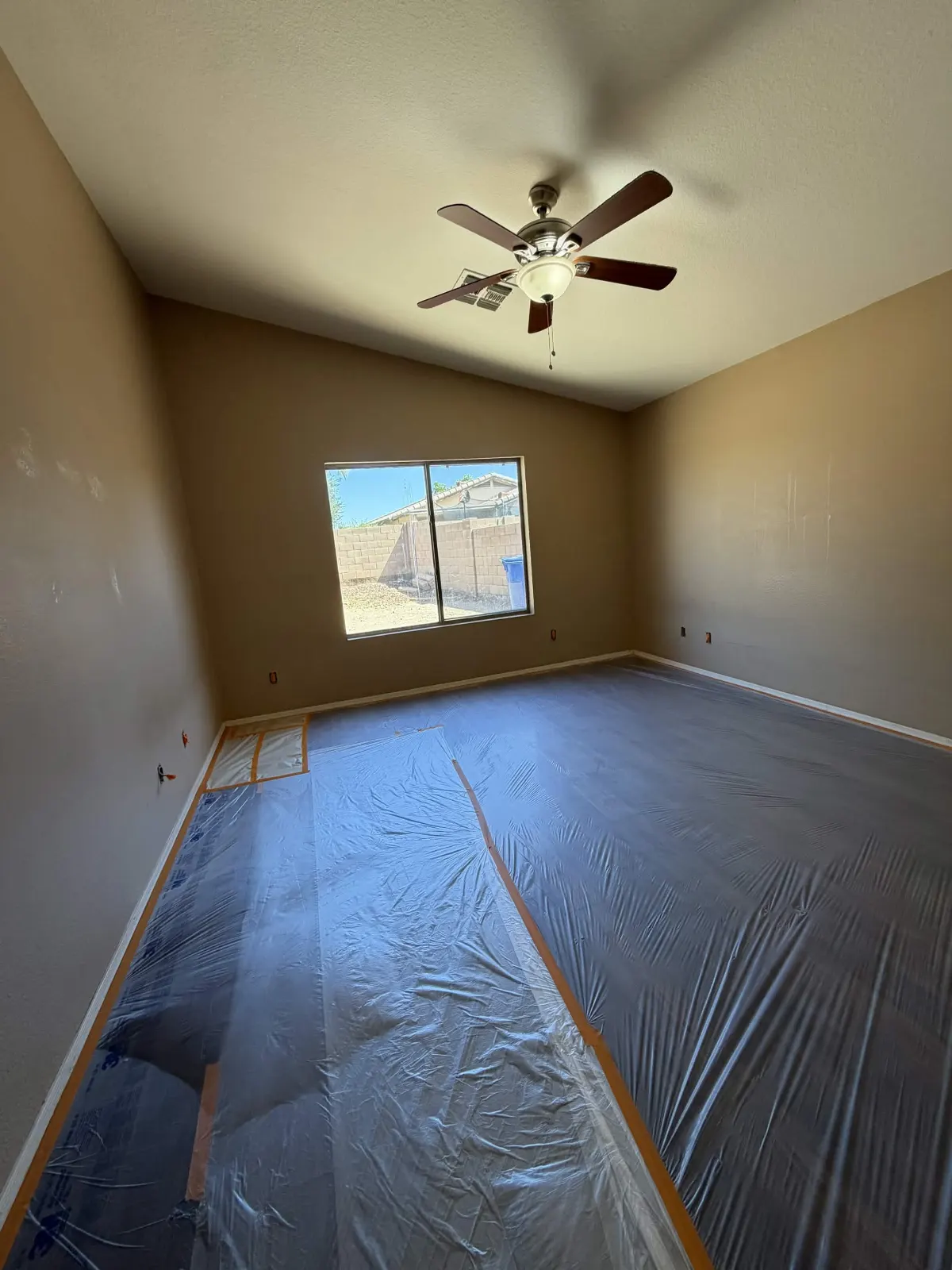
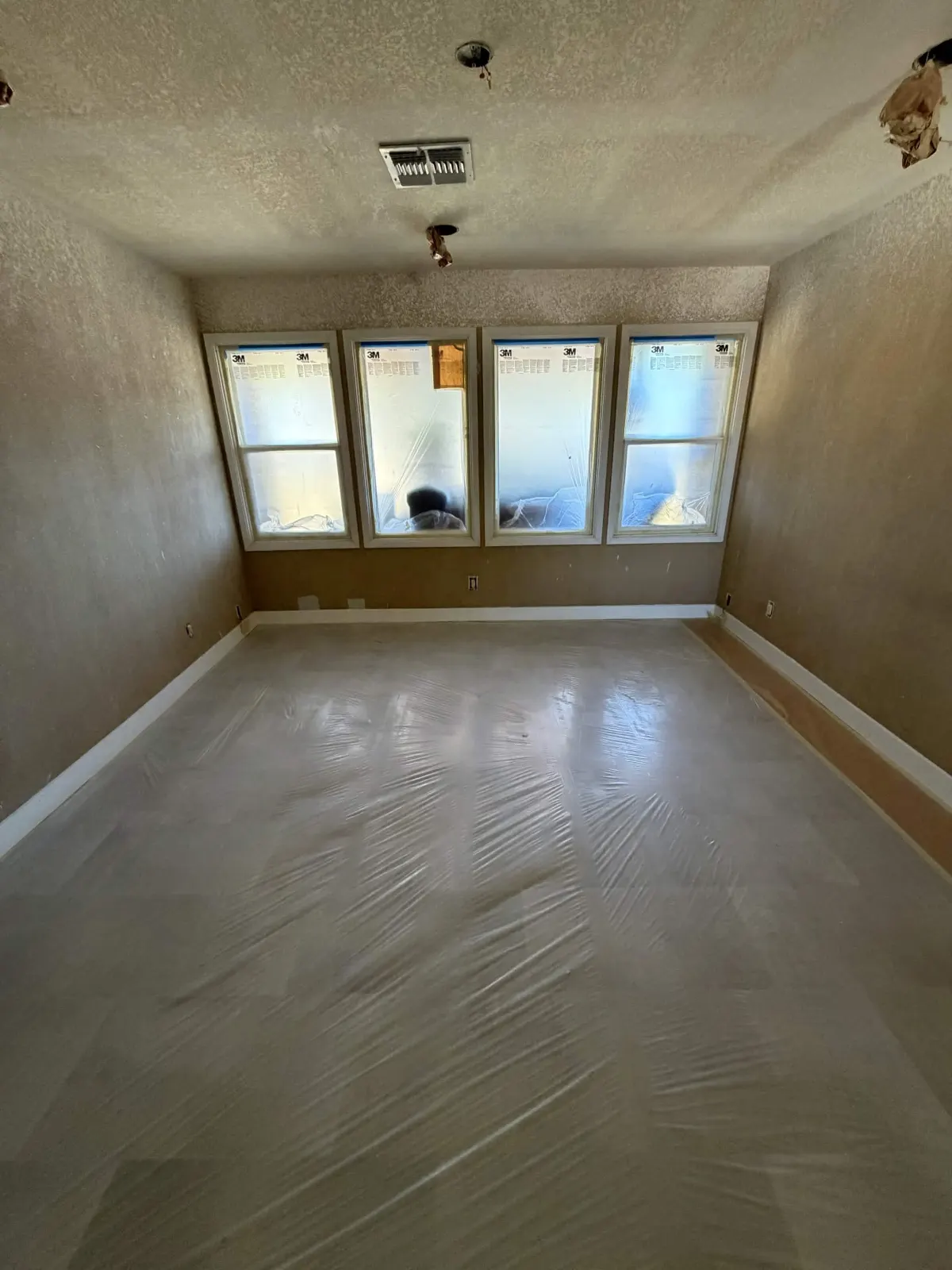
These photos come from Orange Coatings interior work where every room was prepped the same way before any paint was opened: floors covered wall to wall in plastic, furniture wrapped, and surfaces ready for paint.
They show the part of interior painting most people never see, and the part that decides how clean the finished job is.
| Service | Residential interior painting |
|---|---|
| Surfaces | Interior walls; Drywall patches |
| Rooms shown | Bedroom, a room with a deep red accent wall, a bathroom, a hallway |
| Prep | Floors covered in plastic, furniture and fixtures masked, drywall patches before paint |
What the photos show
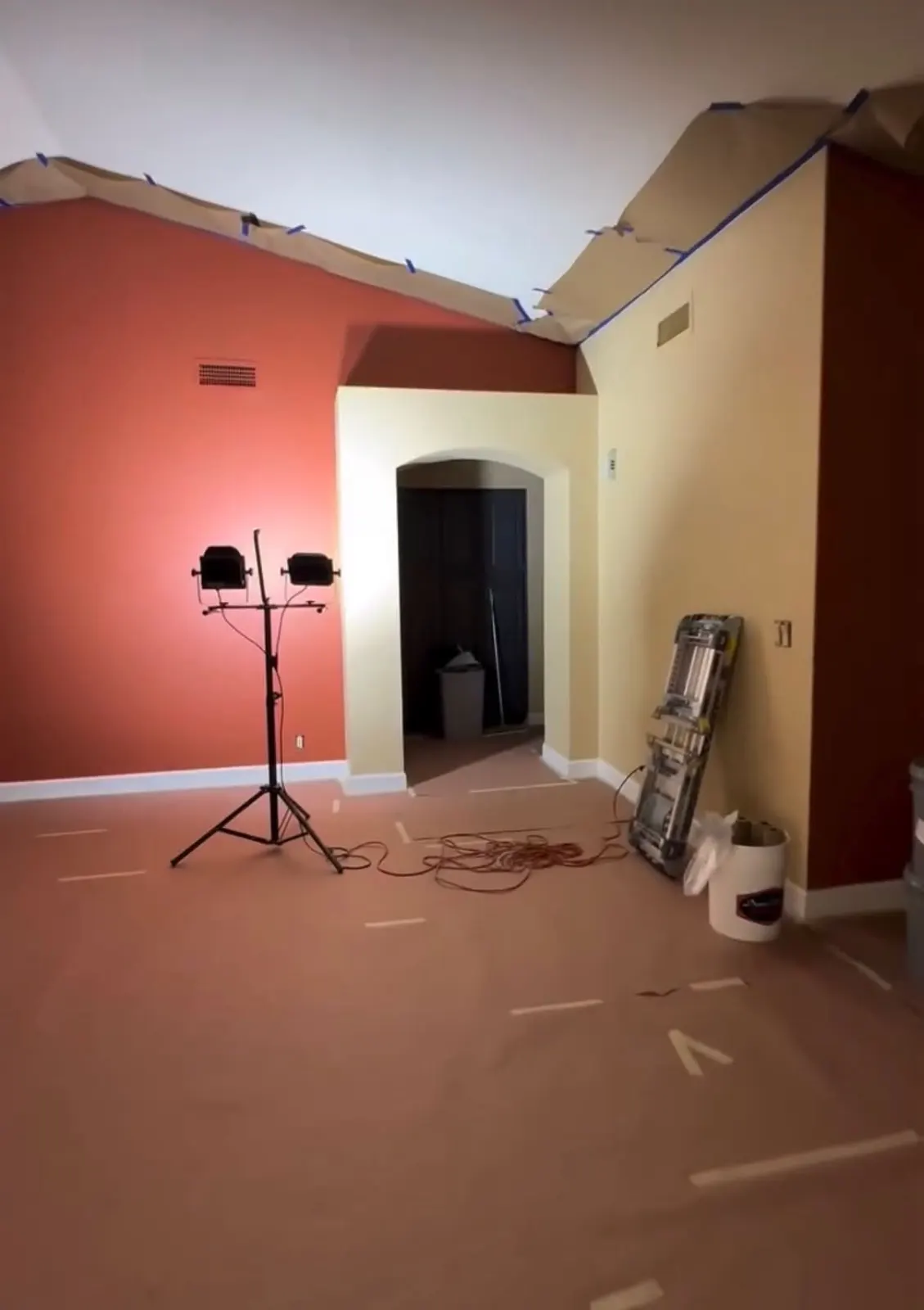
The bedroom shot shows the floor covered edge to edge in plastic with the ceiling fan left in place, so the room is protected without being emptied. Another room has a deep red accent wall with work lights set up, which shows how much light a painter needs to cut a sharp line where a strong color meets a lighter one.
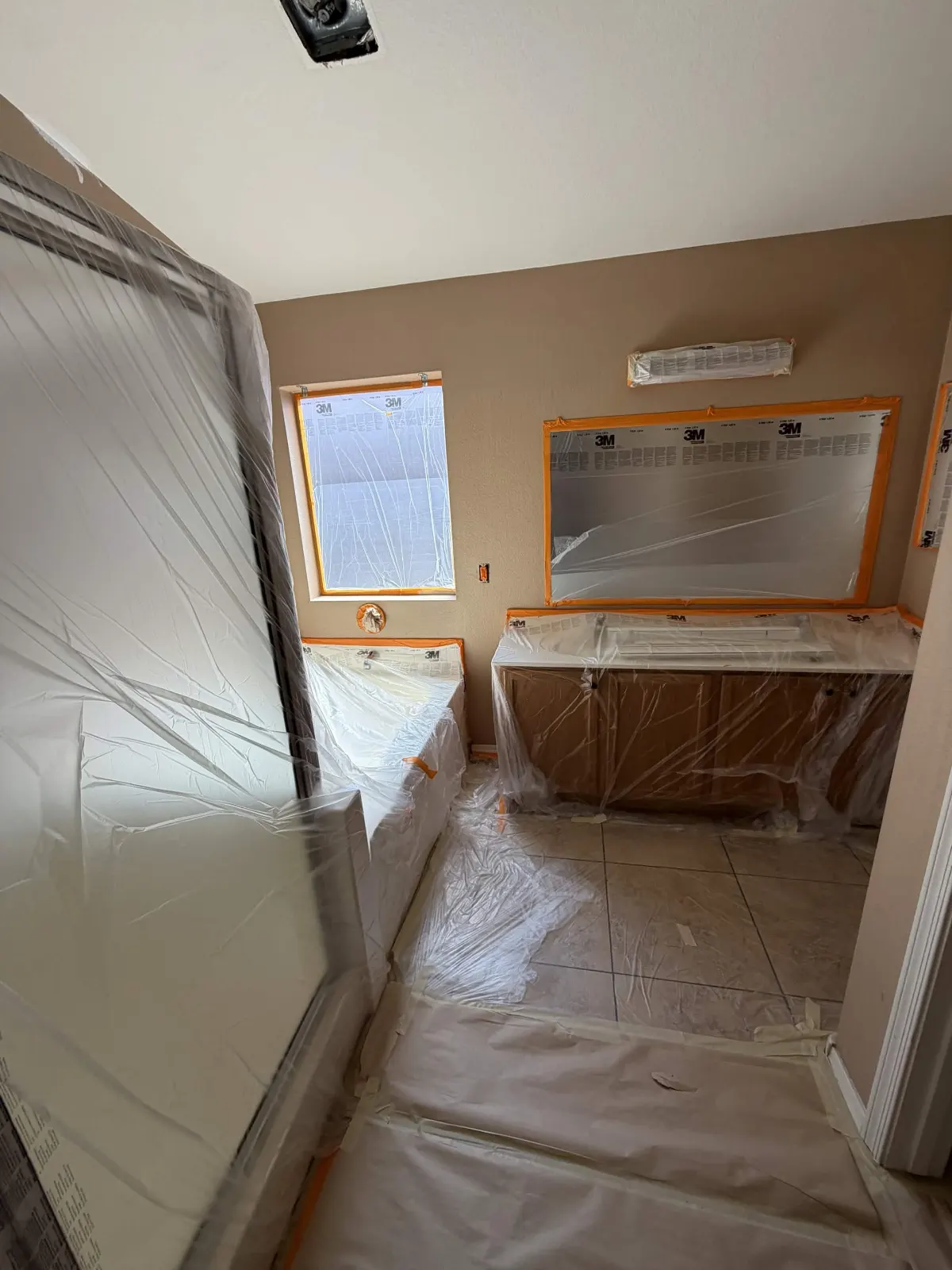
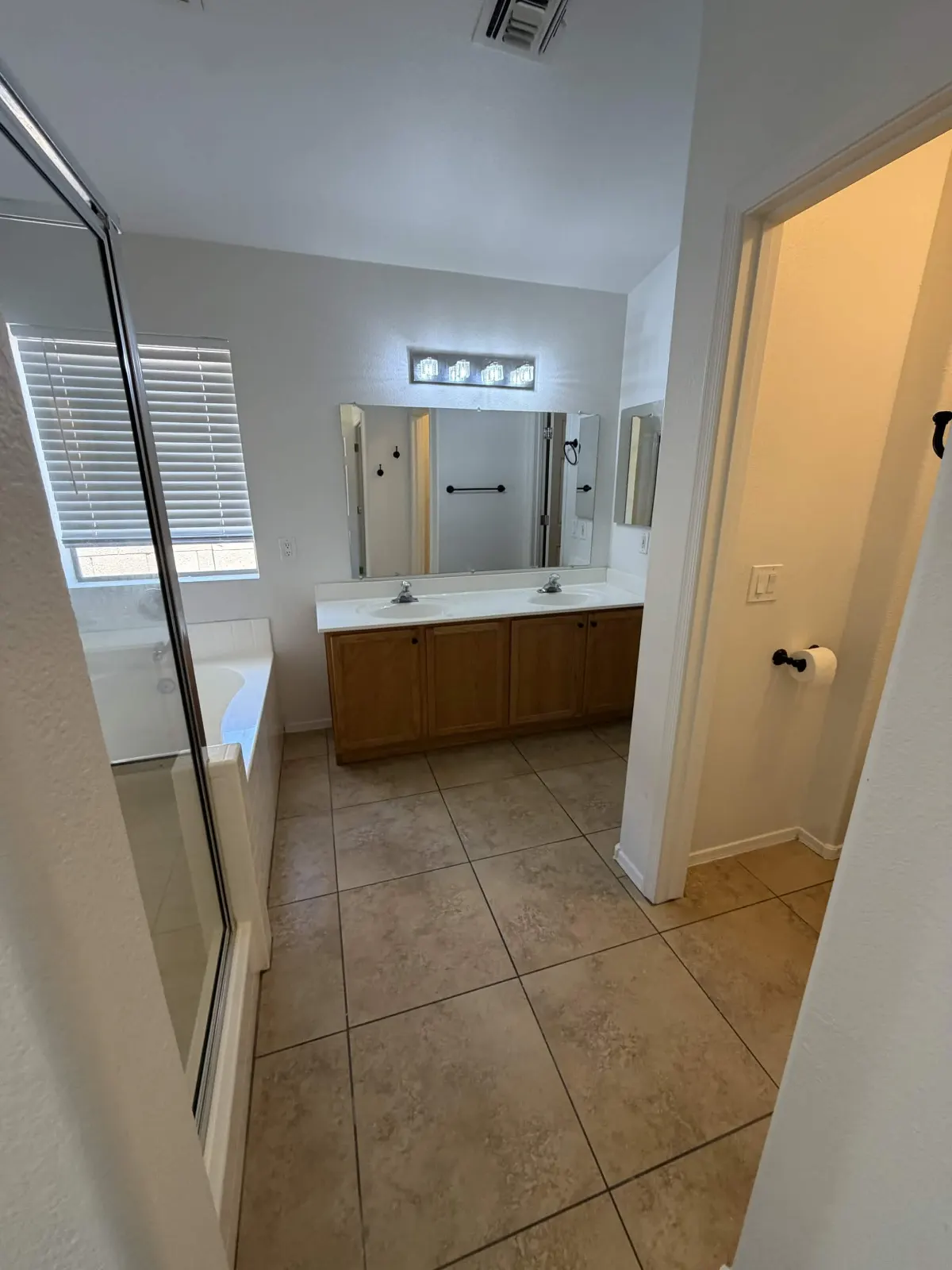
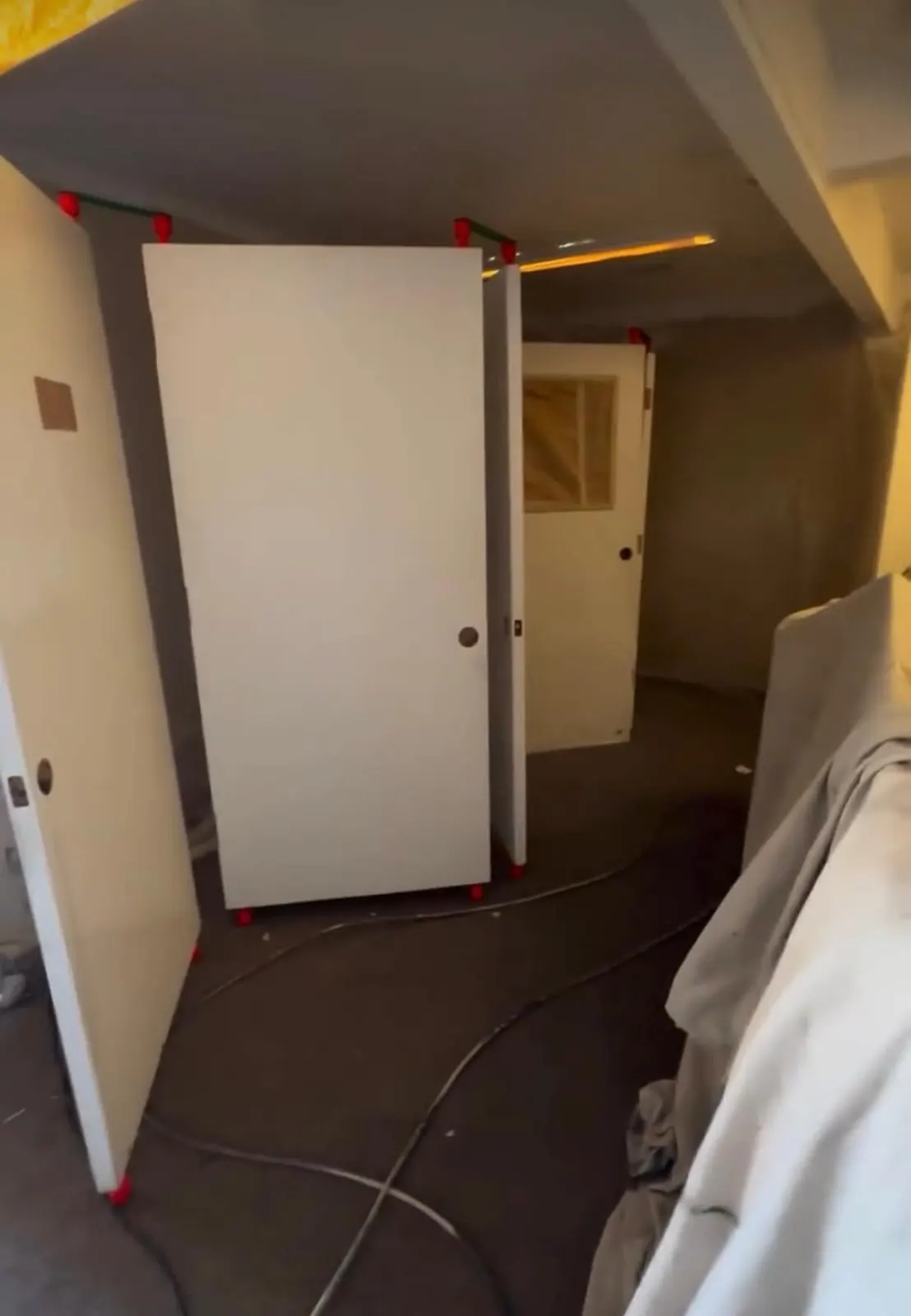
The bathroom and hallway photos show the same masking carried into tighter spaces, where vanities, mirrors and doors have to be protected rather than moved.
Why the prep matters inside a lived-in home
Most interior jobs happen while people are living in the house. Covering every floor and masking fixtures is what keeps paint off carpet, tile and cabinets, and it lets the room go back into use quickly once the walls are dry.
We use low-VOC interior coatings for occupied homes for the same reason: the house stays livable while the work goes on.
Repairs before paint
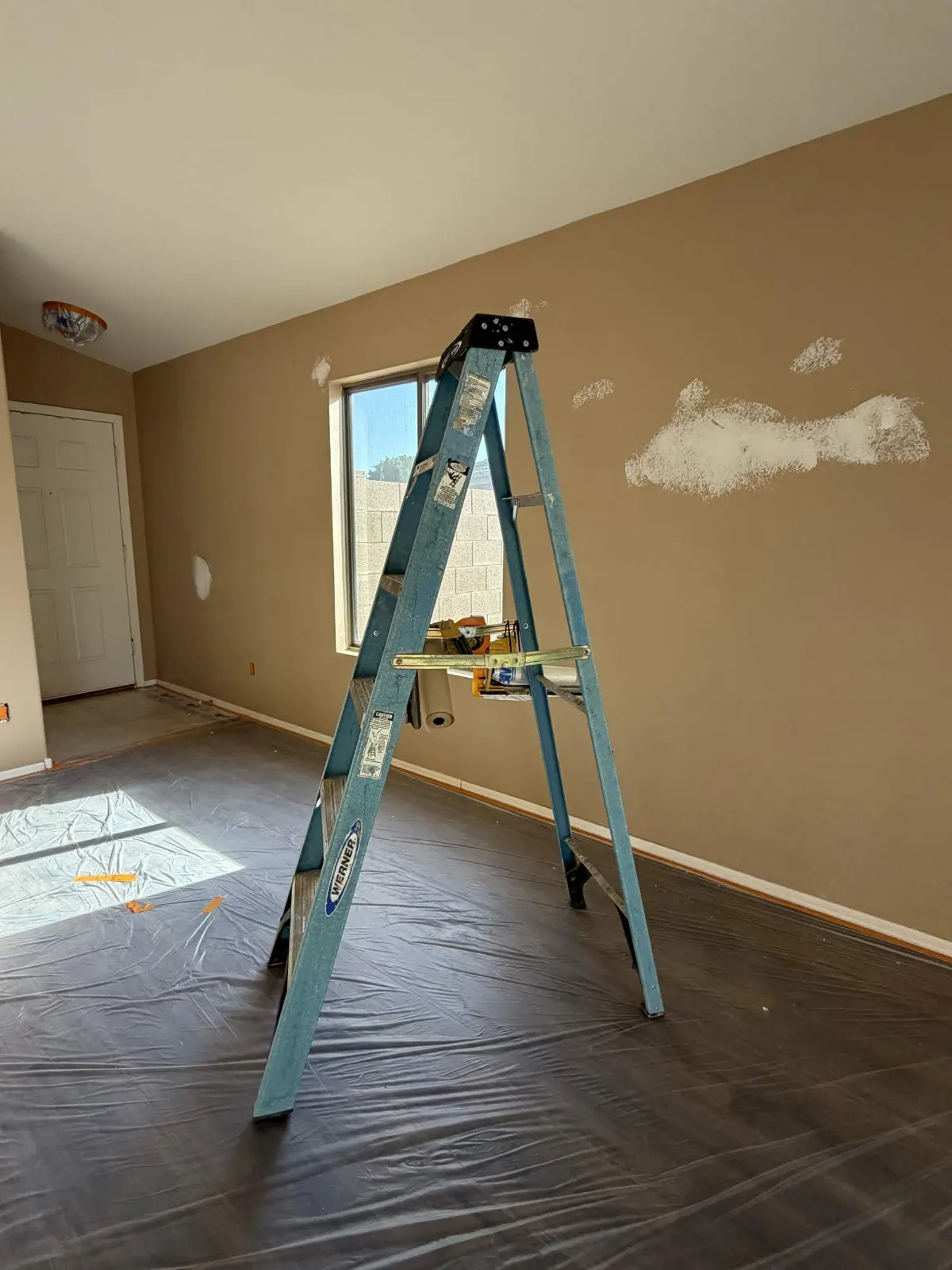
One photo shows fresh drywall patches with a ladder in place. Nail pops, dents and hairline cracks get filled and sanded before the first coat, because paint makes small flaws more visible, not less.
During the work
More about this service
Frequently asked questions
- Do I need to move my furniture before interior painting?
- Move small items, valuables and anything fragile. We cover floors and wrap or move larger furniture away from the walls as part of the prep.
- Can you paint a strong accent color next to a light wall?
- Yes. A deep color next to a light one needs good light and a careful cut line, and sometimes an extra coat for full coverage.
- Do you fix wall damage before painting?
- Yes. Dents, nail pops and small cracks are patched and sanded before the first coat.