New construction painting · Glendale
Commercial New Construction Painting in Glendale, AZ
Published
Orange Coatings paints new commercial buildings in Glendale for general contractors and developers: retail pads, restaurants, offices, medical suites and multi-unit buildings. We paint to the architect's finish schedule, work inside the GC's sequence, and close out punch lists before turnover.
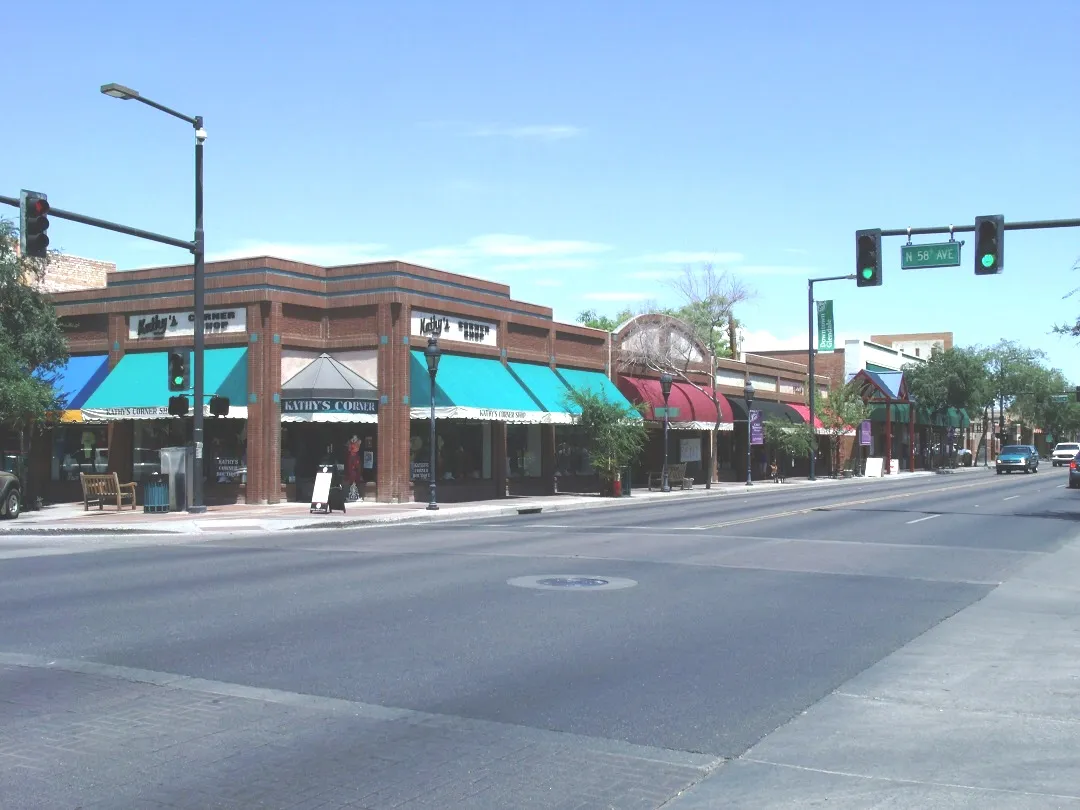
Glendale had 248,325 residents at the 2020 census and is home to State Farm Stadium and Arrowhead Towne Center, so commercial construction there ranges from small pad buildings to large multi-tenant projects.
| Population | 248,325 (2020 census) |
|---|---|
| ZIP codes | 85301-85312 and 85318 |
| Project types | Retail, restaurants, offices, medical suites, multi-unit buildings |
| Masonry primer | Sherwin-Williams Loxon on new CMU, concrete and stucco |
| Contractor license | AZ ROC 365464, licensed, bonded and insured |
Reading the finish schedule and submittals
Commercial drawings carry a finish schedule with codes such as P-1 and P-2 for each paint color and sheen, and a specification section that names products, coat counts and sometimes dry film thickness. We price from those documents, not from a walk-through guess. If the spec lists a product we do not normally use, we raise it during submittals so the architect can approve the product before any of it goes on a wall.
Our standard finish products are Sherwin-Williams Emerald Interior and Emerald Exterior, and we never substitute a lower line to win a bid.
CMU, tilt-up concrete and new stucco
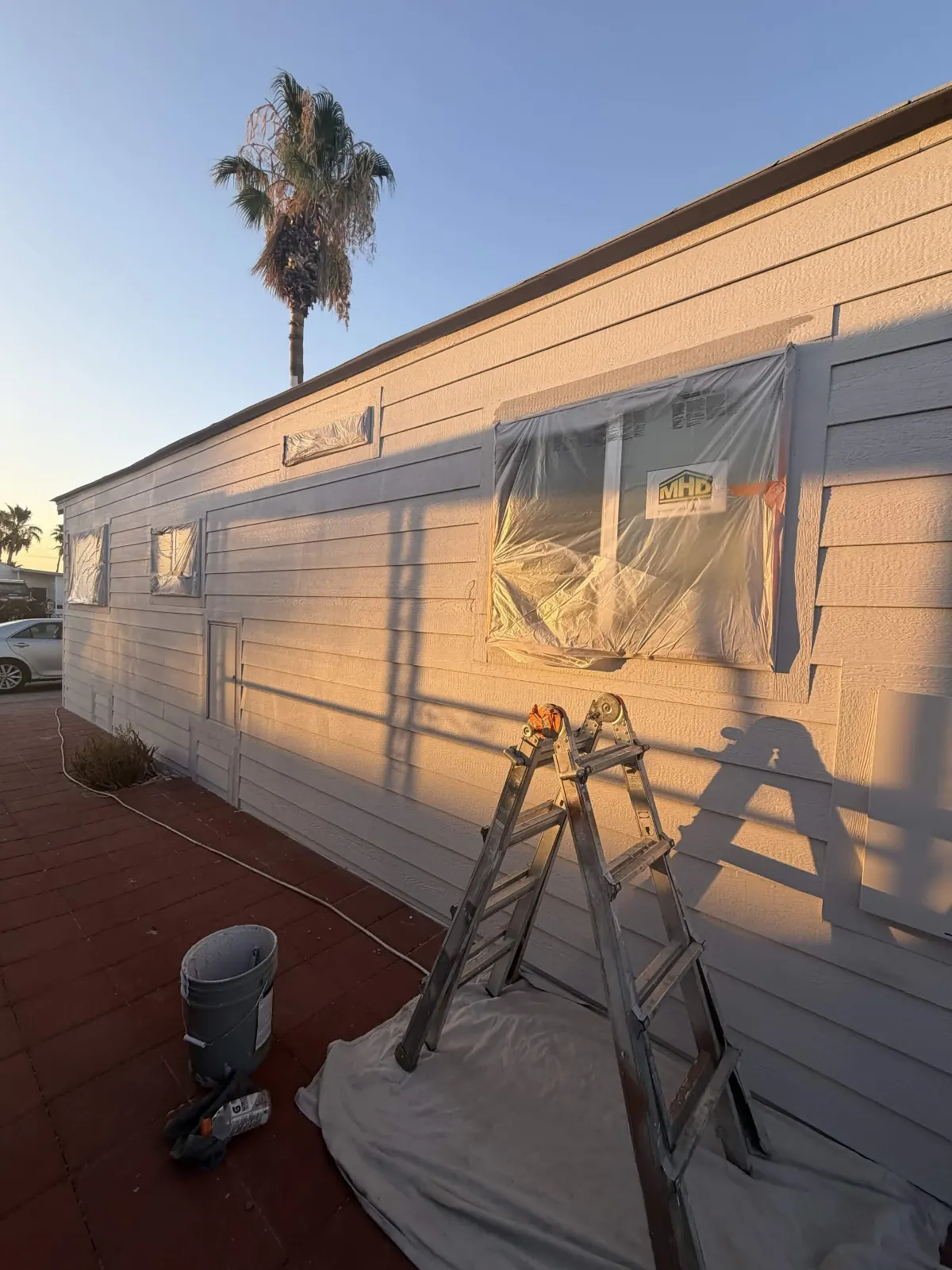
Many Glendale commercial shells are concrete masonry units or tilt-up concrete panels, often with a stucco or EIFS-style finish on the street faces. All of them are alkaline when new, and block can push salts to the surface as efflorescence. We clean the surface, remove any bloom, and prime bare masonry, concrete and stucco with Sherwin-Williams Loxon masonry primer, made for that alkalinity.
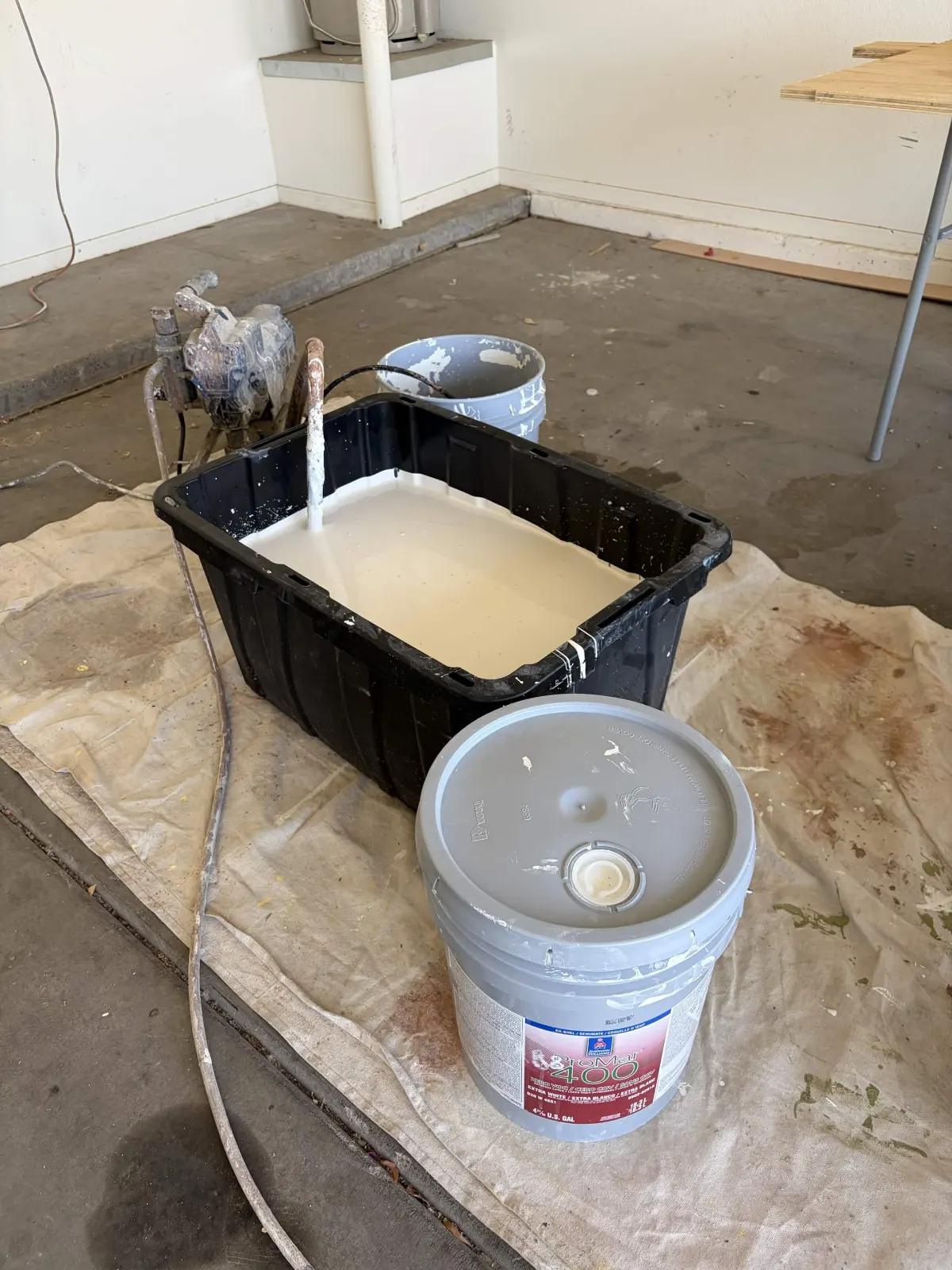
Block walls are porous, and the spec may call for a block filler to close the pores before finish coats. We follow the spec and the label. Finish coats on large walls are sprayed and back-rolled so the color reads evenly across a long elevation.
Hollow metal frames, doors and exposed steel
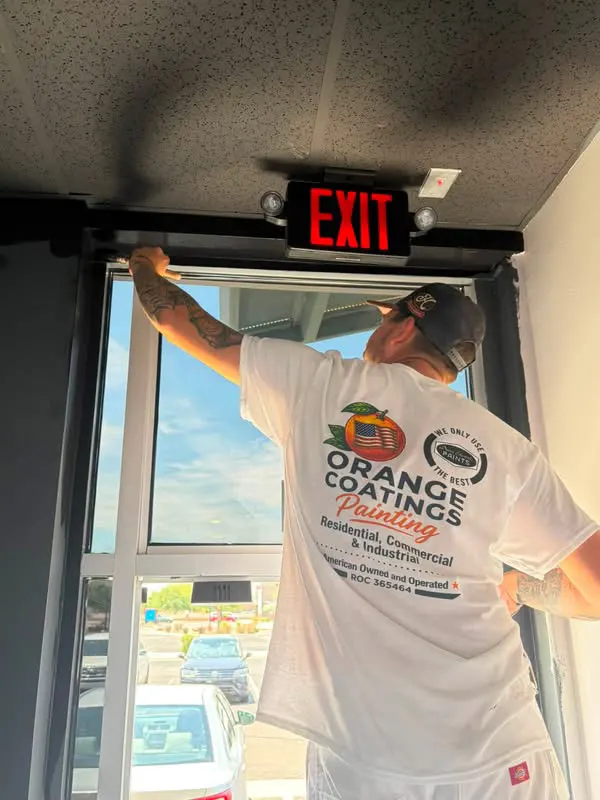
Commercial doors and frames usually arrive shop-primed. That primer is a temporary coat, so it is cleaned, scuffed where needed, touched up at scratches and finished with the specified enamel. Exposed steel such as bollards, stair rails, canopies and structural members gets cleaned and primed with a metal primer where it is bare. In buildings with open ceilings, the spec may call for a dry-fall coating sprayed on the deck and joists. We confirm the color and product before we schedule any lift.
Drywall finish levels in commercial space
Commercial specs usually set a drywall finish level by room. Lobbies, conference rooms and any wall with tall glass or wall-washer lighting may call for Level 5, because grazing light shows every joint. Typical offices and corridors are often Level 4. Areas above ceilings or in mechanical rooms may only need fire-taping. We read those levels off the spec and walk the work before primer, since paint cannot hide a finish level that was missed. Every new wall gets primer before the finish coats so the joints and paper take paint evenly.
Working inside the GC's schedule
- Review drawings, finish schedule and specifications, and submit products for approval.
- Walk the drywall with the superintendent after taping and flag finish-level problems.
- Prime and paint walls and ceilings in the sequence the GC sets, area by area.
- Finish doors, frames and metal after hardware prep, with hardware removed or masked.
- Paint exterior masonry and stucco once the cure time on the primer label has passed.
- Return after flooring, millwork and signage for touch-ups and the punch list.
Shell buildings and tenant improvements
A new retail or office building is often finished in two stages. The developer's GC builds and paints the shell and common areas. Each tenant's GC then builds out the suite with its own walls, colors and schedule. We work on both sides. For tenant improvements, we pay close attention to brand colors, since a national tenant usually specifies exact colors and sheens and expects them to match its other locations.
Corridors, restrooms and back-of-house
- Corridors and lobbies: a washable sheen that stands up to carts and luggage
- Restrooms: a sheen and product suited to humidity and frequent cleaning
- Back-of-house and storage: often primer plus one coat, per the spec
- Kitchens: coatings compatible with the cleaning the space will get
- Exit stair shafts: finished to the schedule, often lower sheen on walls and enamel on rails
Closeout and turnover
Before turnover, we walk each area with the superintendent or owner's representative and close out paint punch items. We leave attic stock if the spec calls for it, label it by finish code, and provide the color and product list for the closeout binder so maintenance staff can touch up the building years later.
Photos
Frequently asked questions
- Do you bid commercial new construction in Glendale from drawings?
- Yes. Send the drawings, finish schedule and spec section, and we will review them and visit the site. The estimate lists products, coat counts and areas so it can be compared line by line.
- What primer do you use on new CMU walls?
- Bare block, concrete and stucco get Sherwin-Williams Loxon masonry primer, designed for the high alkalinity of new masonry. If the spec calls for block filler first, we apply it as written.
- Can you paint tenant suites to a national brand's color standards?
- Yes. We paint to the tenant's specified colors and sheens and confirm them against the brand's documents before ordering.
- Do you handle punch lists and attic stock at closeout?
- Yes. We walk the building with the GC, close out paint items, and leave labeled attic stock and a product list when the contract requires it.
- Are you licensed for commercial work in Arizona?
- We hold Arizona ROC license 365464 and are licensed, bonded and insured. Proof of insurance is available for GC prequalification.
- Can your crews work in phases as areas are released?
- Yes. Crews scale to the project, and we paint areas as the GC releases them rather than waiting for the whole building.
- How do you paint a Glendale restaurant shell before the kitchen equipment arrives?
- We coordinate with the GC so walls and ceilings behind equipment lines are painted before the equipment is set. Touch-ups around hoods, counters and fixtures happen during the final punch pass.
Related
- New construction painting
- Painters in Glendale, AZ
- Commercial painting in Glendale
- Industrial painting in Glendale
- Commercial and multifamily painting in Peoria
- New construction painting in Avondale
- New construction painting in Scottsdale
- Office painting
- Commercial painting
- Painting services by city
- Photo credits