Guide · Driveway coatings
How to Prep an Oil-Stained Driveway Before It Gets Coated
By the Orange Coatings team · Published
To prep an oil-stained driveway for coating, stop the leak first, then lift the oil out of the concrete with a degreaser and scrubbing, use a poultice on stains that have soaked in, rinse, and test that water soaks in rather than beading. Only then is the slab ground or profiled, repaired and coated.
The goal is not a driveway that looks clean. It is concrete with no oil left at the surface for the coating to sit on, because a coating bonded to oil peels off in the exact shape of the old stain. Here is how each step works, and what a homeowner can do in the weeks before the crew arrives.
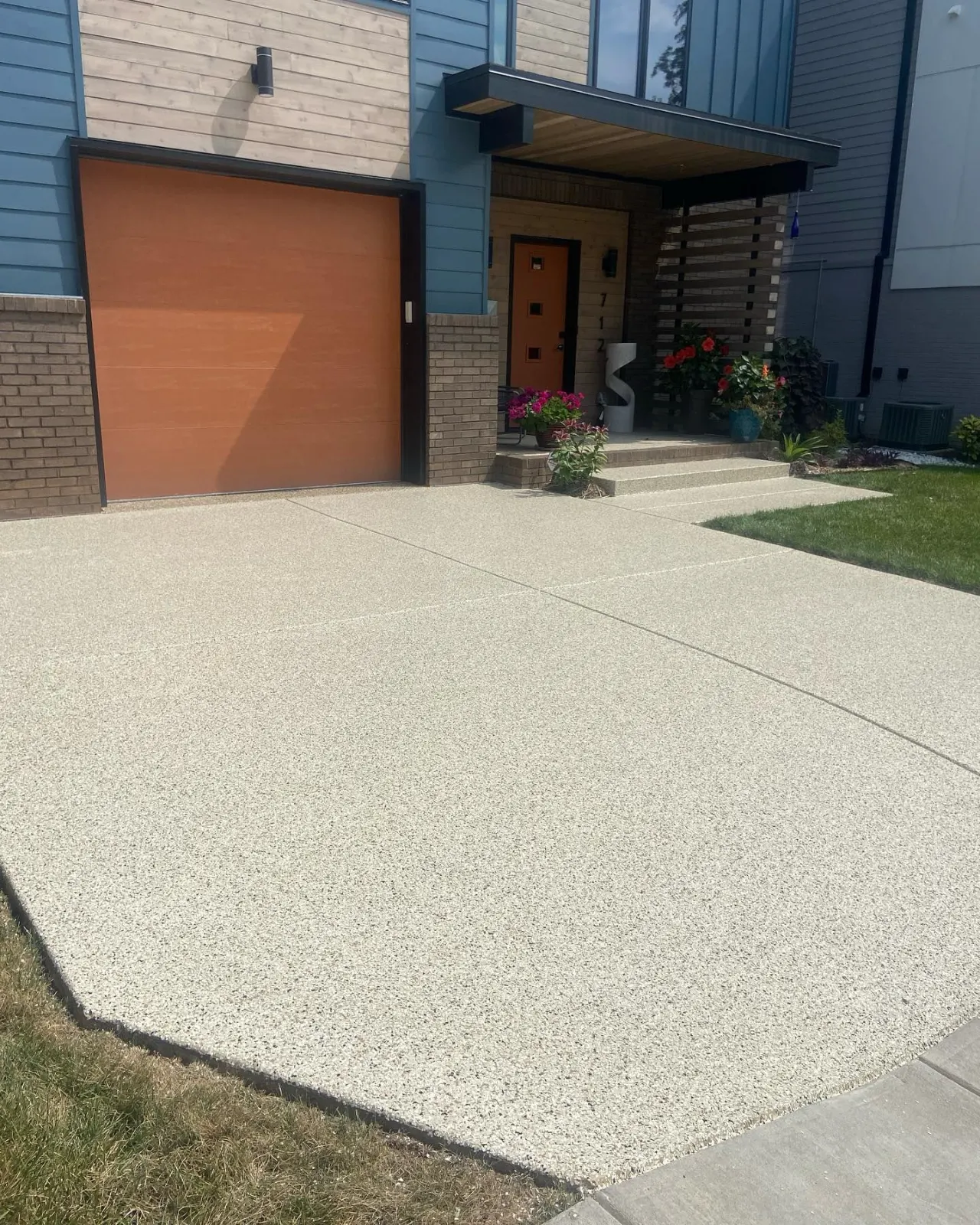
Why oil ruins a coating
Concrete is porous. Motor oil, transmission fluid and grease soak into it, and on a driveway that sits in full Arizona sun, the warm slab and thinner, warmer oil let a drip spread wider than it would on a cool floor. Any coating applied over that area is gripping a film of oil instead of concrete.
Sherwin-Williams puts the rule for coating concrete simply: the surface has to be clean, sound, dull and dry. It also notes that cold-water washing may not remove grease and oil, and that oily surfaces need a cleaner or degreaser along with the power washing.
Step one: stop new oil
There is no point cleaning a stain that gets a fresh drip every night. Have the leak fixed, or park the car on the street or over a drip pan until it is. Do this a few weeks before the coating date so the last cleaning is not undone. If a car will keep leaking after the job, plan where it parks so the new surface is not the drip tray.
Fresh spills versus old stains
- Fresh, wet oil: cover it right away with an absorbent such as clay cat litter, let it sit, then sweep it up before scrubbing
- Recent stains: a concrete degreaser and a stiff nylon brush usually lift most of it
- Old, dark stains that have soaked in: need a poultice that pulls oil up out of the pores
- Stains under an old sealer or coating: the coating has to come off first, or the degreaser cannot reach the oil
Degreasing and scrubbing
PROSOCO, a maker of masonry cleaners, describes the usual process for its cleaner-degreaser: dilute it to suit how heavy the stain is, apply it generously, let it dwell a few minutes, reapply and scrub hard, then rinse. Their guidance also stresses protecting people, cars and nearby surfaces from splash and drift.
Two practical additions for a driveway. Work on a cool slab, early in the day, so the cleaner does not dry on the surface before it works. And keep the rinse water out of the street gutter and storm drain: block it with an absorbent sock or towels, and collect what you can, because storm drains carry water untreated. Check your city's guidance on disposing of the absorbent and rinse water.
Poulticing stains that have soaked in
A poultice is a paste that sits on the stain, draws oil out of the concrete as it dries, and is then swept away. PROSOCO's poultice goes on a dry stain and is left to dry, typically five to eight hours, until a web of cracks shows across its surface. Severe stains may need a second or third application.
Expect old stains to fade rather than vanish. A faint shadow can remain even after the oil that matters has been pulled from the surface. That shadow is fine under a solid-color or flake coating, which is one reason those finishes suit oil-stained driveways better than a clear sealer.
How to tell the oil is really gone
- Let the driveway dry fully after the last rinse; a full sunny day is a good minimum.
- Sprinkle a few drops of water on the old stain and on clean concrete nearby.
- Watch them for a few seconds. On clean concrete the drops darken the surface and soak in.
- If drops bead up or sit on the stain, oil or an old sealer is still there, so clean again.
- Repeat on every stain, including small drips along the edges and at the street apron.
What happens after the oil is out
Cleaning gets the oil out. Preparing the surface is a separate step: the slab is pressure washed, control joints are cleaned out, cracks and chips are repaired, and the surface is prepared so the coating can grip, following the product's requirements. Sherwin-Williams notes that coating the same day as power washing is generally not a good idea, so the concrete gets time to dry before anything goes on.
Even after all that, a stain that was decades deep can occasionally bleed or weaken adhesion. Grinding the worst spots harder, or letting them dry and testing again, is cheaper than a coating that lifts in the parking spot.
What we do on an oil-stained driveway
Our driveway work starts with pressure washing and oil-stain treatment, then crack repair, control-joint cleanup and surface preparation for adhesion. The finish is a Sherwin-Williams concrete coating, stain or sealer chosen for the slab and matched to your home's exterior colors and HOA requirements. At the estimate we look at the stains with you and tell you which finish will hide what is left and which will not.
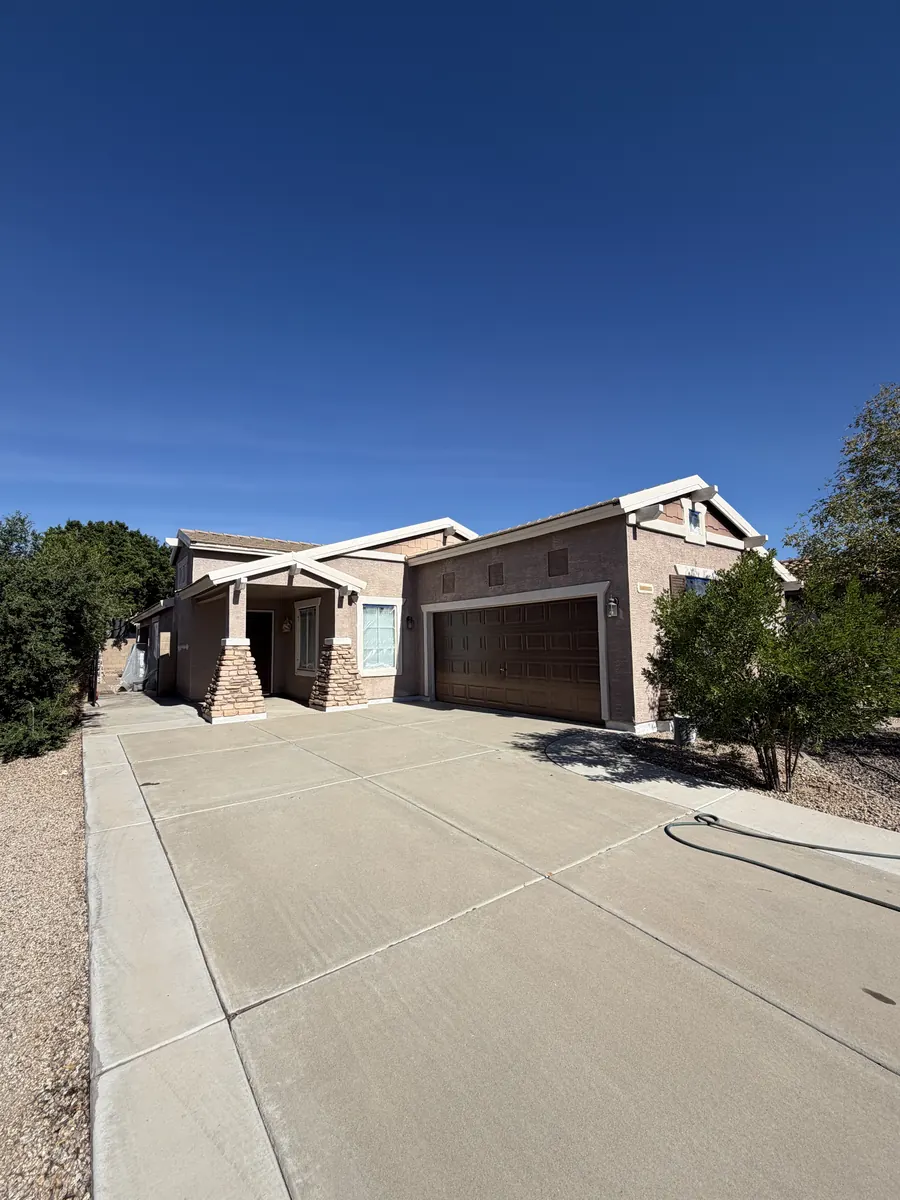
Frequently asked questions
- Will pressure washing remove oil from a driveway?
- It removes surface grime, but not oil that has soaked in. Sherwin-Williams notes that oily concrete needs a degreaser along with the washing, and deep stains need a poultice.
- Can a coating go over a faint oil shadow?
- Often, yes, once the oil itself has been pulled from the surface and the water test passes. A solid-color or flake finish hides the shadow; a clear sealer will not.
- Does cat litter work on driveway oil?
- Clay litter works well on fresh, wet spills because it soaks up oil before it sinks in. It does little for an old, dry stain, which needs a degreaser or poultice.
- How long should a driveway dry after degreasing?
- Give it at least a full dry day, longer after a monsoon storm or in cool weather. The coating's data sheet sets the moisture and temperature limits for application.
- Do I need to clean the stains before the estimate?
- No. It actually helps to see them as they are, so we can judge how deep they go. What helps most is fixing any leak and keeping the car off the stains.
- Is a clear sealer a good choice for an oily driveway?
- Not usually. A clear sealer protects the concrete you have, stains included, and can darken old marks. A coating or stain is the better choice when you want stains hidden.