Guide · Epoxy flooring
How to Clean and Care for an Epoxy Garage Floor
By the Orange Coatings team · Published
To clean an epoxy garage floor, sweep or dust-mop the grit off first, then mop with warm water and a small amount of mild cleaner, rinse, and let it dry. Avoid acidic cleaners like vinegar and citrus, concentrated ammonia, and abrasive pads, which dull or etch the finish over time.
That is most of it. The rest of this guide covers deep cleaning, spills, desert dust, hot tires and the first weeks after install, so the floor keeps its shine for years.
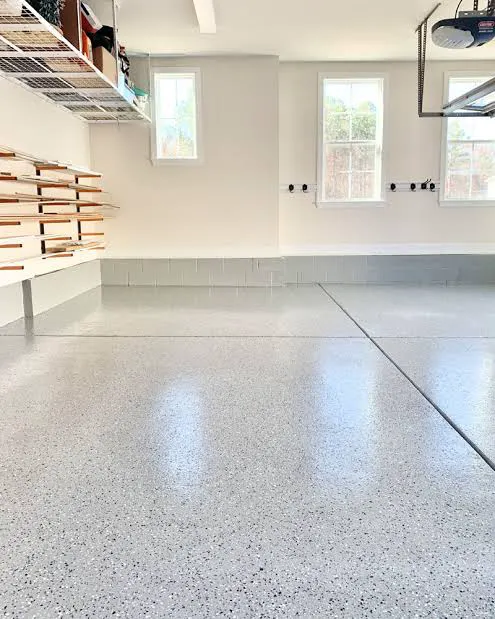
The weekly routine
Grit is the enemy of a coated floor. Fine sand ground under tires and shoes acts like sandpaper on the clear topcoat, and in the West Valley that dust blows in every time the garage door opens.
- Sweep with a soft push broom or run a dust mop over the whole floor. A leaf blower works well for a quick pass in a dusty garage.
- Pick up any small stones or metal bits from the tire tracks by hand.
- Spot-wipe drips with a damp microfiber cloth as you find them.
- Shake out or vacuum entry mats so they keep trapping dirt instead of releasing it.
Deep cleaning every month or two
Coated floors get slippery when wet, so keep people and pets off until it is dry. Flake floors and floors with an anti-slip additive in the topcoat have more grip, but treat any wet garage floor with care.
- Sweep or blow the floor clear first so you are not mopping mud around.
- If dirt has caked on, mist the floor with a hose or spray bottle and let it soften for a few minutes.
- Mop with warm water and a small amount of mild cleaner. Home improvement guidance commonly suggests either a little dish detergent or 1 to 2 ounces of household ammonia per gallon of hot water.
- Work stubborn spots with a soft or medium plastic-bristle brush. Use a plastic scraper, never a metal blade, on stuck-on deposits.
- Rinse with clean water so no cleaner film is left behind.
- Squeegee the water toward the door and let the floor dry completely before walking or parking on it.
What not to use on epoxy
When in doubt, check the cleaning guidance for the specific floor system. The topcoat is what you are cleaning, and the coating maker knows what it tolerates.
- Vinegar, lemon or other citrus cleaners: acids slowly etch and dull the topcoat
- Concentrated ammonia or strong degreasers used straight: dilute anything alkaline
- Soap-heavy cleaners used without a rinse: they leave a hazy film that also makes the floor slicker
- Steel wool, scouring pads and wire brushes: they scratch the clear coat
- Hot, close-up pressure washing: keep the tip well back if you use one at all
- Paint thinner or solvent wipes as everyday cleaners: save them for a specific stain, test first, and rinse
Handling spills and stains
Epoxy resists most garage fluids, but nothing should sit on it for days, especially in a hot Arizona garage where spills bake on.
- Motor oil and transmission fluid: blot, then clean with your mild solution
- Antifreeze: wipe it up right away; it is toxic to pets and slippery
- Brake fluid and gasoline: wipe quickly, ventilate, then mop the area
- Battery acid or pool chemicals: rinse with plenty of water immediately
- Large spills: cover with absorbent like cat litter, sweep it up, then mop
- Rust marks from tools or cans: lift early with a soft brush before they set
Hot tires, tire marks and summer heat
After a summer drive in the Valley, tires come home hot. On a properly prepared floor with a good system, that heat should not lift the coating, but tires can still leave dark marks where they park. Those usually come off with your normal cleaner and a soft brush if you get to them every week or two rather than letting them build up all season.
If you see the coating itself lifting in tire-shaped patches, that is a bond problem, not a cleaning problem. It points back to prep or a thin product and needs a repair, not a scrub.
Protecting the floor day to day
- Put a walk-off mat at the house door and the side door to catch sand from shoes
- Use plywood or rubber pads under jack stands, motorcycle kickstands and ladder feet
- Lift heavy tool chests and workbenches with casters instead of dragging them
- Lay a welding blanket or fire-resistant mat down before grinding or welding
- Keep the garage door closed during the hottest, sunniest part of the afternoon if light reaches the floor, since standard epoxy can yellow and lose gloss with long sun exposure
The first weeks after install
A new floor feels hard long before it is fully cured. Foot traffic usually comes after about a day and vehicles after about three, depending on the system and the temperature, and we give you the timeline for your floor. Hold off on wet mopping, chemical cleaners and heavy items until the full cure time on the product is up; until then just sweep.
Our epoxy installs use Sherwin-Williams epoxy floor systems over cleaned, degreased, repaired and profiled concrete, with optional decorative flakes, a clear topcoat and an anti-slip additive where you want extra grip.
When cleaning is not enough
After years of use, the busiest lanes can look dull or worn even when they are perfectly clean. If the coating is still bonded, a fresh clear topcoat can often bring the shine back. If you see peeling, bubbles or bare concrete, the damaged area needs proper prep and recoating. Ask for an assessment before choosing a fix, since the right answer depends on why the floor wore.
Frequently asked questions
- Can I use a microfiber mop on epoxy?
- Yes. A dry microfiber or dust mop is one of the best tools for weekly care because it picks up fine dust without scratching. Use a wet microfiber pad with a mild solution for light cleaning.
- Is a household degreaser safe on epoxy floors?
- Many degreasers are fine when diluted as the label directs and rinsed off afterward. Do not use them full strength as a daily cleaner, and test any new product on a corner first.
- Why does my epoxy floor look cloudy after mopping?
- A cloudy haze is usually cleaner residue left behind. Mop again with plain warm water and wring the mop well, and use less cleaner next time.
- How do I get tire marks off an epoxy garage floor?
- Use your mild cleaning solution and a soft or medium plastic brush, and clean the parking spots every week or two. Marks that are left for months are harder to remove.
- Can I pressure wash an epoxy garage floor?
- You can on a low setting with the tip held well back, but a mop and squeegee do the job with less risk. Never aim a narrow, high-pressure jet at an edge or a chip.
- How do I keep my epoxy floor from getting slippery?
- Keep it dry and free of cleaner film, and use mats at entries. If the floor is slick for your use, an anti-slip additive in a new topcoat adds grip.