Concrete coatings · Patios and walkways
Patio and Walkway Coatings in Surprise and the West Valley
Published
We coat patios, front walks, side paths and entry slabs with Sherwin-Williams concrete coatings, stains or sealers after pressure washing, stain treatment and crack repair. The result is concrete that looks finished, shrugs off dirt and spills, and can be given texture where people walk in wet shoes.
Back patios and walkways take the same sun as a driveway without the vehicle weight, so the goals are a bit different: color that holds up to UV, a surface that is comfortable and not slippery, and a finish that ties the concrete to the house, the pool deck or the driveway.
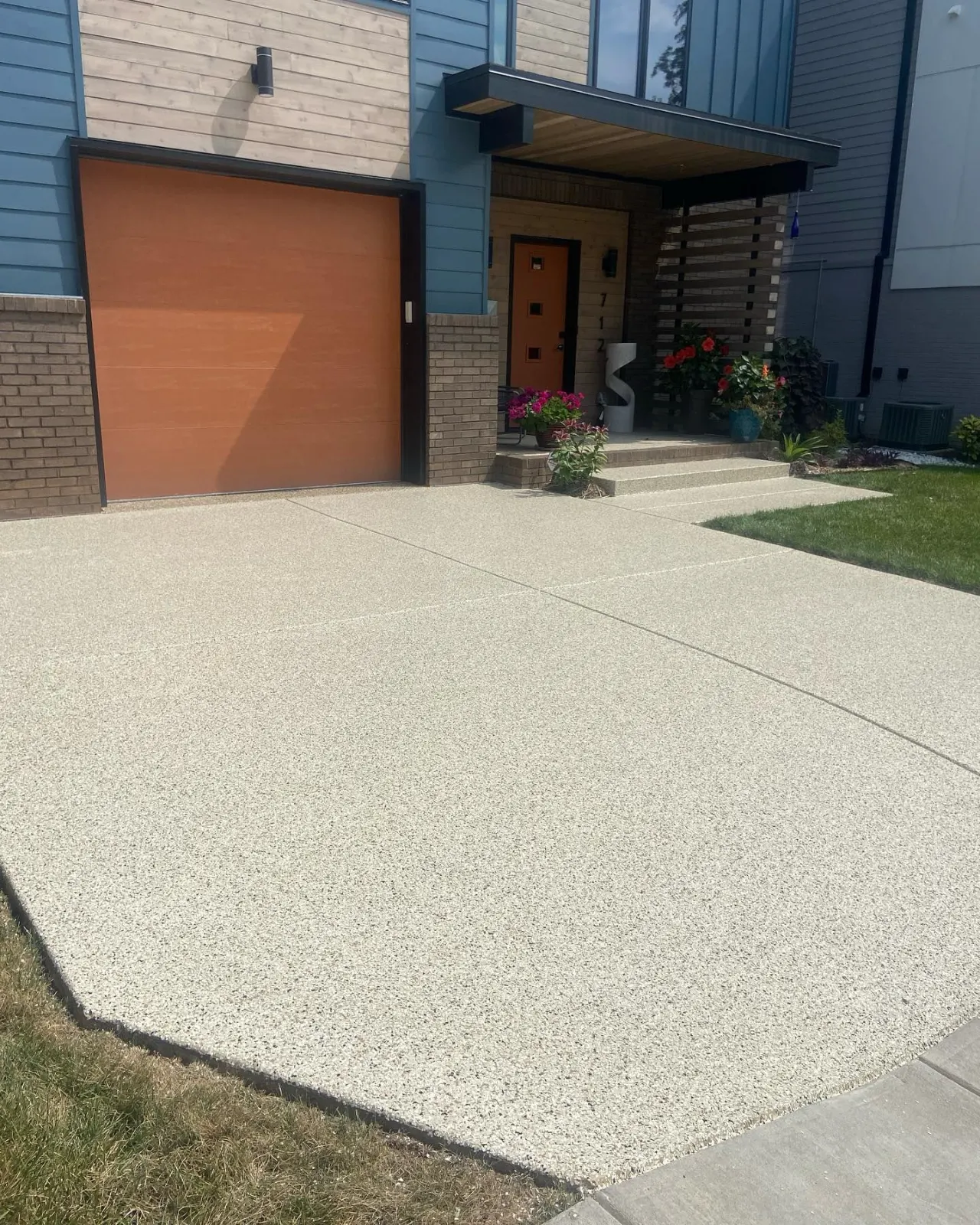
| Surfaces | Patios, front walks, side paths, entries, courtyards |
|---|---|
| Options | Solid-color coating, stain or clear sealer |
| Prep | Pressure wash, stain treatment, crack repair |
| Contact | (602) 932-3417, same-day in-person estimates |
What patio and walkway coating includes
- Pressure washing to strip dirt, mildew, rust drips and old chalky sealer
- Treatment of grill grease, oil, leaf tannin and fertilizer stains where possible
- Crack repair and cleanup of control joints
- Masking of house walls, door thresholds, pavers, turf edges and plant beds
- Sherwin-Williams coating, stain or sealer applied to the product spec
- Optional anti-slip texture on steps, entries and wet areas
- Final walkthrough and clear guidance on when furniture can go back
Coating, stain or sealer: which fits
A clear sealer keeps the concrete you have and deepens its color a little. It suits newer slabs that are clean and even in tone. A penetrating stain soaks in and tints the concrete while keeping its natural look, which works well when you want warmer color without a painted feel.
A solid-color coating covers old stains, patches and mismatched pours completely, and can be matched to your house trim or pool deck. It is the most dramatic change and the best choice for an older patio that has been patched over the years. We look at the slab with you and recommend one at the estimate.
Walkways that lead to the front door are a common place to combine finishes: a coating on the walk itself and a matching color on the entry slab, with anti-slip texture on any step. Side yards that only see trash cans and the occasional wheelbarrow are often fine with a sealer, which keeps the cost down where looks matter less.
Who we coat patios and walkways for
Homeowners redoing a backyard often want the patio to match a newly coated pool deck or driveway. Landlords use a coating to clean up a stained entry before a new tenant moves in. HOAs and property managers call us for shared walkways, courtyard slabs and pool-area paths, and small businesses want a front entry that looks cared for.
Signs your patio concrete is ready
- Gray, blotchy color where an old sealer has worn off
- Dark rings from planters, grill drips or furniture feet
- Green or black growth in shaded corners after monsoon rains
- Hairline cracks that collect dust and weeds
- A patio and a newer addition that never matched
- Old paint peeling off in the walking path
Our process for patios and walks
- Same-day estimate: we check the slab, talk through finish options and note any HOA approval you need.
- Move or ask you to move furniture, grills and planters.
- Pressure wash, treat stains and let the concrete dry fully.
- Fill cracks and clear debris from the control joints.
- Mask walls, thresholds, landscaping and anything that should not get coated.
- Apply the coating, stain or sealer in the cooler part of the day, adding texture where you asked for it.
- Pull masking, clean up and walk the finished surface with you.
Arizona sun, heat and monsoon runoff
Afternoon sun can push slab temperatures far above the air temperature. Coating a slab that hot makes products flash-dry before they bond, so in summer we start at first light and finish before the concrete heats up.
Light colors stay cooler under bare feet and hold their tone longer under UV. Monsoon storms between mid-June and the end of September bring runoff that pools at the low end of patios and stains walkways with mud, so we look at drainage at the estimate and avoid coating when a storm is likely before the product has set.
Timing and what drives the cost
A typical back patio or front walk takes one to three days including prep and dry time. Foot traffic is usually fine within a day, and furniture can return once the product's cure time allows. We give you the schedule up front.
- Square footage and the number of separate areas
- Steps, curbs, seat walls and edges that need hand work
- Depth of staining and amount of crack repair
- Removal of old paint or failing sealer
- Finish type: sealer, stain or solid coating
- Anti-slip texture and the number of colors
Cities we serve
We coat patios and walks for homes and properties around our Surprise shop, including:
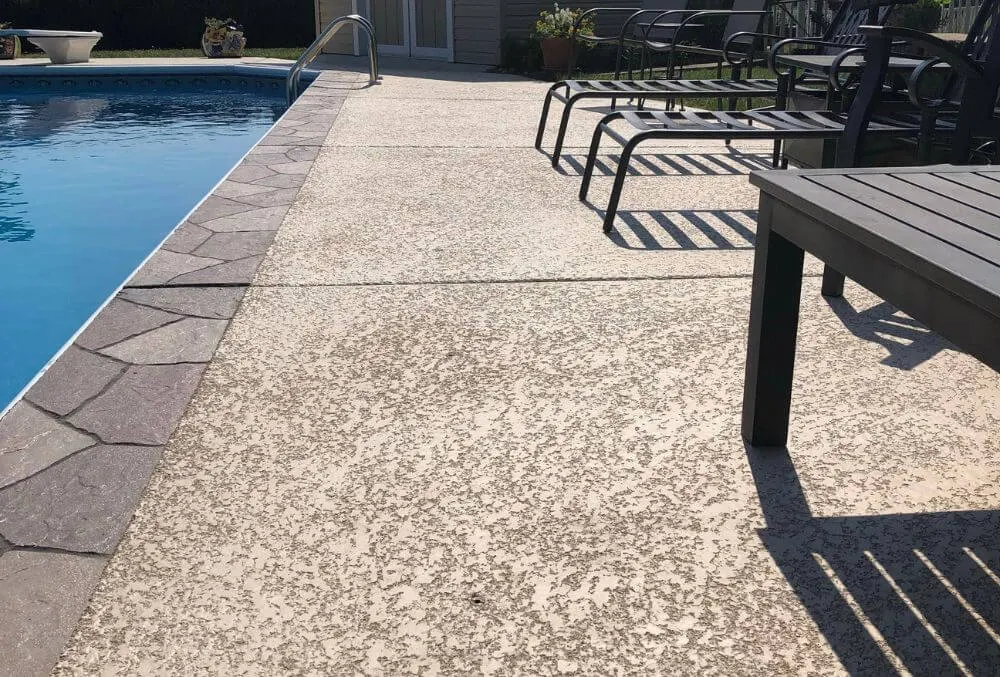
Photos
Frequently asked questions
- Can you match my patio to my coated driveway?
- Usually, yes. We use Sherwin-Williams concrete products and can match or coordinate the color with an existing coating. If the driveway is older and faded, we may suggest coating both so the colors line up.
- Will a coated walkway be slippery when it rains?
- A smooth coating can get slick when wet, especially on a slope or steps. We add anti-slip texture to entries, steps and paths that get wet so they keep their grip.
- Do I need HOA approval to coat a front walkway?
- Often, because a front walk is visible from the street. Rules vary by community, so check your HOA's guidelines. We can put the product name and color code in writing for the form your committee asks for.
- How long do I keep patio furniture off?
- Light foot traffic is usually fine within a day. Heavy furniture, planters and grills should wait until the product has cured to its label's recommendation, and we tell you the date before we leave.
- Is a sealer enough for an older patio?
- A clear sealer protects concrete but shows every stain and patch underneath. On an older patio with mismatched repairs, a stain or solid-color coating usually gives a much cleaner result.
- What happens to the control joints?
- We clean them out and leave them working, because they let the slab move without cracking randomly. Coating across them would just crack along the joint line.