Guide · Commercial painting
Painting Your Business Without Closing
By the Orange Coatings team · Published
You can repaint most offices, shops and restaurants without closing by splitting the space into zones and doing the messy, smelly work after hours, on weekends or before opening. Low-odor, low-VOC interior coatings and a clear daily plan cover the rest, so staff and customers barely notice.
The key is planning before the first drop cloth goes down. This guide walks through scheduling, phasing, air quality, safety and the questions to settle with your painter.
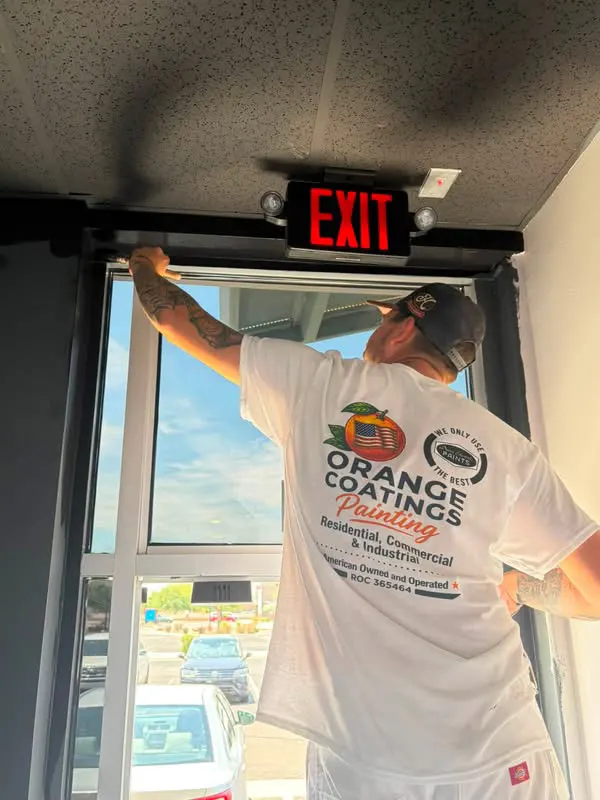
Pick the schedule around your busiest hours
Start by listing when the building is empty, when it is quiet, and when it is packed. The painting schedule fits into the first two. We regularly schedule commercial projects for evenings, weekends and early mornings, and we build that schedule with you at the walkthrough.
- Offices: evenings and weekends for open work areas, weekdays for storage rooms and unused suites
- Retail: after closing for the sales floor, early mornings for the stockroom and exterior
- Restaurants: closed days and the hours before prep starts, with the kitchen and dining room done separately
- Salons, clinics and studios: the day of the week you are closed, plus short evening shifts
- Warehouses and shops: weekends for the floor and offices, shift changes for anything near a loading dock
How a phased plan works
A phased plan paints one wing, floor or zone while the rest of the building keeps working. It trades a few extra mobilizations for zero lost business days.
- Walk the building and divide it into zones that can close one at a time, such as a conference room block, a sales floor section or a hallway run.
- Order the zones so the least disruptive ones go first and the crew learns the building's routine.
- Move or cover furniture, stock and equipment in the active zone only.
- Prep, prime and paint that zone, then let it dry before people move back in.
- Clean up, reset the zone and do a quick check with your contact before moving on.
- Finish with a full walkthrough once every zone is complete.
Odor, VOCs and fresh air
Paint smell is the most common complaint in an occupied building. The EPA notes that paints release volatile organic compounds (VOCs) while they are applied and that indoor levels can stay high for a while after the work is done, and it recommends increasing ventilation when using products that emit them.
We use low-VOC interior coatings, including Sherwin-Williams Emerald Interior, and plan the work so fresh paint has the night to dry. Keeping the HVAC running with good outside air, painting the most sensitive rooms last thing before a weekend, and opening doors to the outside where security allows all help the space smell like nothing by morning.
Keeping people safe while you stay open
- Exits, exit signs and fire extinguishers stay clear and visible at all times
- Wet-paint signs and cones mark any area that is drying when staff arrive
- Ladders and lifts are never left standing in a public path overnight
- Accessible routes stay open, or a marked detour is set up before work starts
- Drop cloths are taped down so they are not a trip hazard
- Paint and solvents are stored in a closed, labeled area, not in a hallway
Protecting stock, equipment and records
Overspray and sanding dust travel. In occupied buildings we mask carefully and wrap what cannot move: shelving, displays, computers, printers and point-of-sale stations. Brush and roller work is often a better fit than spraying in finished interiors, and the choice is made zone by zone.
Tell your painter about anything sensitive before the estimate: server closets, food storage, medical supplies, artwork or merchandise that cannot get dusty. It changes how a zone is prepped and how long it stays closed.
Exterior work while the doors are open
Outside, the challenge is entries and parking. Storefront doors and the main entry get painted in sections, with one door or one side always usable. Parking lot spaces near the work area can be coned off for a day at a time.
In Arizona we start exterior work early to avoid afternoon heat, which also keeps ladders and drop cloths out of the way before most customers show up. Monsoon storms can move a day, so plan the exterior with a little slack.
What to settle before work starts
Orange Coatings is licensed (ROC 365464), bonded and insured, and we can send certificates of insurance directly to property managers or building owners before we mobilize.
- A written scope and schedule that names each zone and the hours work will happen
- A certificate of insurance for your landlord, property manager or general contractor
- One contact on each side who can answer questions on the spot
- Keys, alarm codes and after-hours access rules
- A heads-up email to staff, and signage for customers if the entry is affected
- What happens if a zone has to reopen early for a delivery or an event
Frequently asked questions
- Will customers smell the paint the next morning?
- With low-VOC coatings, overnight dry time and good ventilation, most spaces have little to no odor by opening. Rooms painted on a Friday evening have the whole weekend to air out.
- Does painting after hours cost more?
- It can, depending on the schedule and the number of separate visits. A phased, after-hours plan is often still cheaper than closing, because you keep your revenue coming in during the work.
- Can you paint an office while people are working in it?
- We avoid painting in a room people are using. Instead we close one zone at a time and move staff to another area, or work in that zone outside office hours.
- How do restaurants handle repainting?
- Dining rooms are usually painted on closed days or overnight, and kitchens are scheduled separately because of food safety and equipment. Everything near food prep is covered or moved before work starts.
- Do I need to tell my landlord before painting my unit?
- Most commercial leases require approval for alterations, including paint colors. Check your lease and send the scope to the landlord or property manager before you book.
- How long will each zone be out of service?
- Many rooms can be prepped and painted overnight or over a weekend. Larger zones or rooms needing drywall repair take longer, and the schedule should say how long each zone is closed.