Guide · Commercial painting
Commercial Painting in Arizona Summer: Timing Tips
By the Orange Coatings team · Published
Commercial painting can keep going through an Arizona summer if exterior work happens from first light to late morning, shaded walls are painted before sunny ones, and interiors fill the afternoons. The two things to plan around are surface heat, which makes paint dry before it bonds, and monsoon storms from mid-June to the end of September.
Summer also has an upside for many businesses: interior work in air-conditioned space is easy to schedule, and some West Valley businesses are quieter once winter visitors head home.
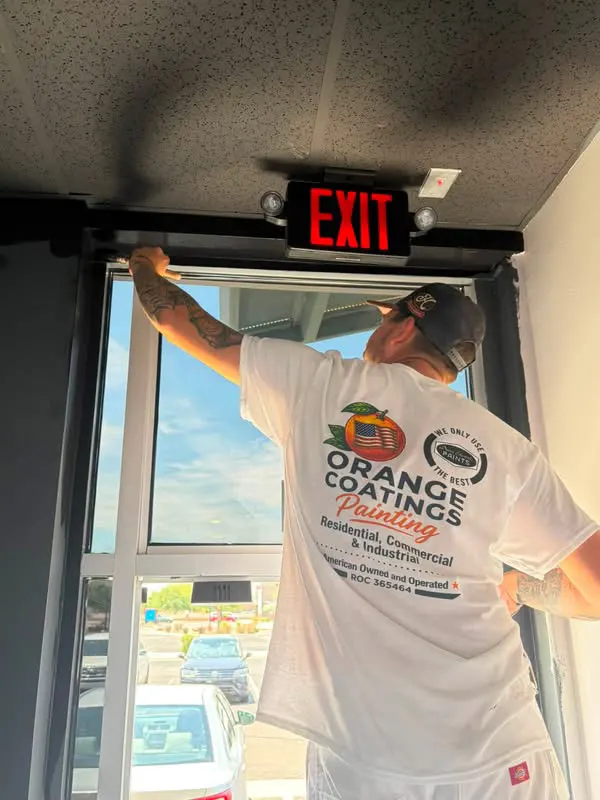
Where heat becomes a problem for paint
Paint needs a little time wet to flow, level and grip the surface. Sherwin-Williams warns that air temperatures over 100°F can make paint dry before it bonds, which can lead to peeling later, and it advises against painting in direct sun because fast drying leaves lap marks and weak adhesion. Dunn-Edwards, another major Southwest paint maker, puts its own caution at about 95°F and adds that a surface already heated by the sun is a risk on its own.
Surface temperature matters more than the forecast. A west-facing stucco wall at 3 p.m., a steel door or an aluminum storefront frame can be far hotter than the air. The product label lists the air and surface temperature range, and that range is the rule on site.
What a summer exterior day looks like
Heat affects people and equipment as well as paint. Crews need water, shade breaks and an earlier finish on the worst days, and sprayer hoses, rollers and buckets left in the sun make the paint thicken and skin over. A summer schedule that respects those limits is slower per hour but produces a finish that does not have to be redone in two years.
- Set up at first light, with washing and masking done the day before where possible.
- Paint the walls that are still in shade, which in the morning means the west and north elevations.
- Check surface temperature by hand and with a thermometer before moving to each new wall.
- Stop exterior application by late morning on sun-facing walls, before they heat up.
- Move the crew indoors, or to caulking and prep in shade, for the afternoon.
- Clean up and stage materials out of the sun so paint is not cooked in the can.
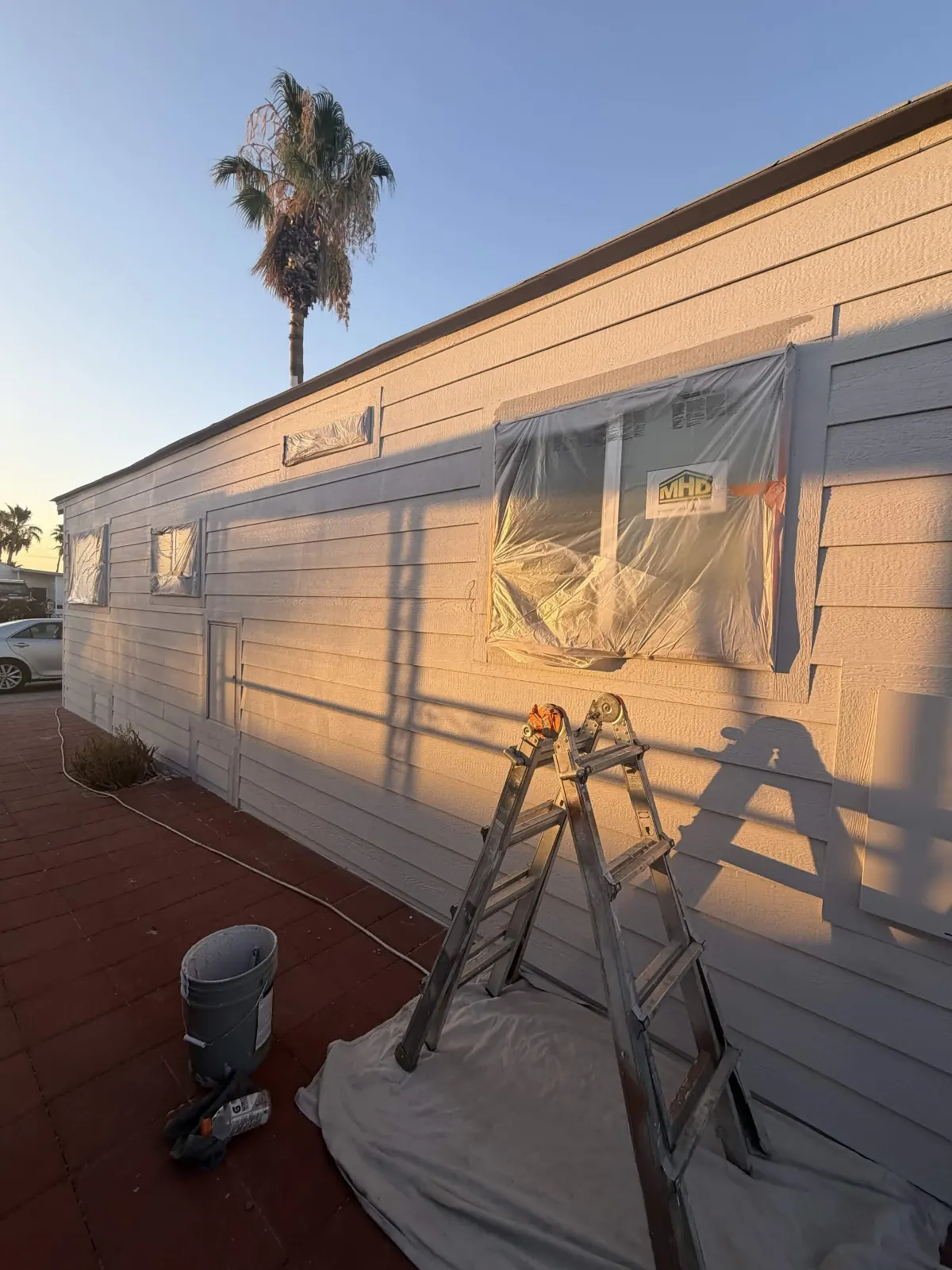
Chasing the shade around the building
Paint makers recommend following the shade as the sun moves. On a typical building that means west and north faces in the morning, and east faces only after they have been in shade long enough to cool. South walls get the most sun all day in summer and are best done at the very start of the morning.
Watch the items that heat fastest: dark metal doors, railings, rooftop equipment screens and storefront frames. These often get painted at dawn on their own schedule. Light-colored walls heat up less than dark ones, which is one reason most commercial palettes in the Valley stay light.
Planning around monsoon season
Monsoon season runs June 15 through September 30. Storms usually build in the afternoon, which lines up with the early-start schedule, but dust ahead of a storm can coat wet paint and wind can push rain under an overhang.
Sherwin-Williams says latex paint needs at least four hours of drying before moisture settles on it, and masonry should get at least a day to dry after heavy rain. Build weather days into the contract so a storm does not push the crew into painting a damp wall to hold the date.
- Check the radar before starting each exterior section
- Finish full walls or panels before breaking, so a storm does not leave a lap line
- Rewash any wall that collected dust or debris overnight
- Keep a list of interior tasks ready for storm days
Why summer is a good time for interiors
Inside an air-conditioned building, heat is not a factor, so summer is a strong season for interior repaints. In communities with many seasonal residents, such as Sun City, Sun City West and parts of Surprise, some restaurants, clinics and shops see fewer customers in the hottest months, which makes evening and weekend work easier to fit in. Schools, churches and offices with summer slowdowns can use the same window.
Combine the two: exteriors in the morning, interiors in the afternoon and evening. It keeps a project moving without asking a crew to paint walls that are too hot.
Keeping the business open during summer work
Early exterior starts have a side benefit: most of the ladder and drop-cloth work is done before customers arrive. We work around business hours and can schedule evenings, weekends and early mornings, with a phased plan for occupied buildings so one area is painted while the rest operates.
Booking calendar for a commercial repaint
Orange Coatings is licensed under ROC 365464, bonded and insured, and we schedule a commercial walkthrough when you call (602) 932-3417.
- Spring: walk the building, get written estimates and approvals for fall exteriors
- Summer: interiors, and exteriors with early starts and weather days in the plan
- Fall through early spring: the easiest window for full exterior repaints
- Any season: confirm the schedule, work hours and access in writing before mobilization
Frequently asked questions
- Is it too hot to paint a commercial building in July in Phoenix?
- Not if the work is timed right. Exterior coats go on early in the morning on walls in shade, and the afternoons are used for interiors or prep.
- What temperature is too hot for exterior paint?
- Check the label, which lists air and surface limits. As general guidance, Sherwin-Williams cautions that over 100°F paint can dry before it bonds, and a surface that is hot to the touch should wait.
- Does monsoon season stop exterior painting?
- It slows it. Mornings are often clear, but crews need to finish sections before afternoon storms and let masonry dry after heavy rain.
- Can a crew paint at night to avoid the heat?
- Interior work at night is common. Exterior night work is possible with lighting, but dew and visibility make early morning the more reliable choice.
- Should we paint the exterior in summer or wait for fall?
- If the building can wait, fall through spring gives the widest working window. If the work cannot wait, a summer schedule with early starts and weather days still produces a sound job.