Guide · Interior painting
Low-VOC Paint: When It Matters
By the Orange Coatings team · Published
Low-VOC paint matters most indoors, in rooms people will sleep or work in soon after painting, in homes with babies, older adults or anyone with asthma, and in houses kept closed up with the air conditioning running, which describes most Arizona homes from late spring to fall. Outdoors, or in an empty house you can air out for days, the VOC level of the paint matters much less to the people living there.
VOCs are only part of the story, though. How you ventilate, which primer the job needs and how long the paint takes to cure all change what you breathe. Here is what the labels mean and when it pays to care.
What VOCs are and why paint releases them
Volatile organic compounds are carbon-based chemicals that evaporate at room temperature. The US EPA lists paints, varnishes and paint strippers among the household products that release them, and notes that indoor levels of many VOCs run higher than outdoor levels, with its TEAM studies finding about a dozen common pollutants at two to five times outdoor levels inside homes.
The EPA also points out that levels can stay high after the activity that caused them is over. With paint, most of the release happens while it dries and in the first days after, then tapers off as the film cures. Reported short-term effects of high exposure include eye, nose and throat irritation, headaches and nausea.
Low-VOC, zero-VOC and low-emission are different claims
If indoor air is a priority for your household, look for a third-party emission certification in addition to a low-VOC label.
- Low-VOC describes what is in the can: the product is formulated with a reduced amount of volatile solvents.
- Zero-VOC means the content is below a very low threshold. It does not mean nothing at all is released while the paint dries.
- Low-emission certification measures what the dried paint actually gives off into room air. Programs named in US Department of Energy building guidance include GREENGUARD Gold, Green Seal GS-11 and products tested to the California CDPH standard method.
- Odor is not a reliable guide. Some compounds smell strongly at low levels, and some barely smell at all.
When low-VOC paint matters most
- Bedrooms and nurseries that will be slept in the same night or the next day
- Homes with someone who has asthma, allergies or chemical sensitivity
- Summer projects in Arizona, when windows stay shut and the same air recirculates through the AC
- Small rooms with little airflow: bathrooms, closets, laundry rooms and home offices
- Kitchen cabinets and built-ins, where a lot of coated surface sits in one room
- Occupied offices, clinics and stores that stay open while painting happens
When it matters less
Exterior paint releases its solvents outdoors, so the choice there is about durability and local rules rather than your indoor air. An empty house between owners or tenants can be aired out for several days before anyone moves in. And some problems call for a higher-VOC product no matter what: shellac and oil-based primers are still the most reliable way to lock in water stains, smoke damage or bleeding knots. In those cases the answer is to use them only where needed, ventilate hard, and put a low-VOC finish over them.
The Arizona problem: a closed-up house
From roughly May through September, most Valley homes run the AC around the clock with windows closed. That is efficient for cooling and poor for clearing paint fumes. A few habits help a lot during summer interior work.
- Run bathroom and kitchen exhaust fans while painting and for a day or two after.
- Set the HVAC fan to run continuously instead of only when cooling, and replace the filter after the job.
- Close off the painted room from bedrooms where possible and sleep elsewhere the first night if anyone is sensitive.
- Schedule bedrooms and nurseries for spring or fall, when windows can stay open for a few days.
Low-VOC paint still has to cure
A low-VOC label does not shorten curing. Sherwin-Williams lists latex and acrylic paint as dry to the touch in one to two hours but taking two to three weeks to cure fully. The smell fades long before that, yet the film is still hardening, so the same care applies: no scrubbing, no tape on the walls and no furniture pressed against fresh paint for the first weeks.
Cutting exposure beyond the label
The EPA's general advice for VOC-emitting products applies to paint too, and most of it costs nothing.
- Provide plenty of fresh air during and after painting, and follow the precautions printed on the can.
- Buy only what the job needs so fewer opened cans end up stored in the house.
- Do not keep opened paint, thinner or primer inside living spaces; a ventilated garage shelf is better.
- Take leftover solvent-based products to a household hazardous waste collection rather than the trash.
What we use indoors
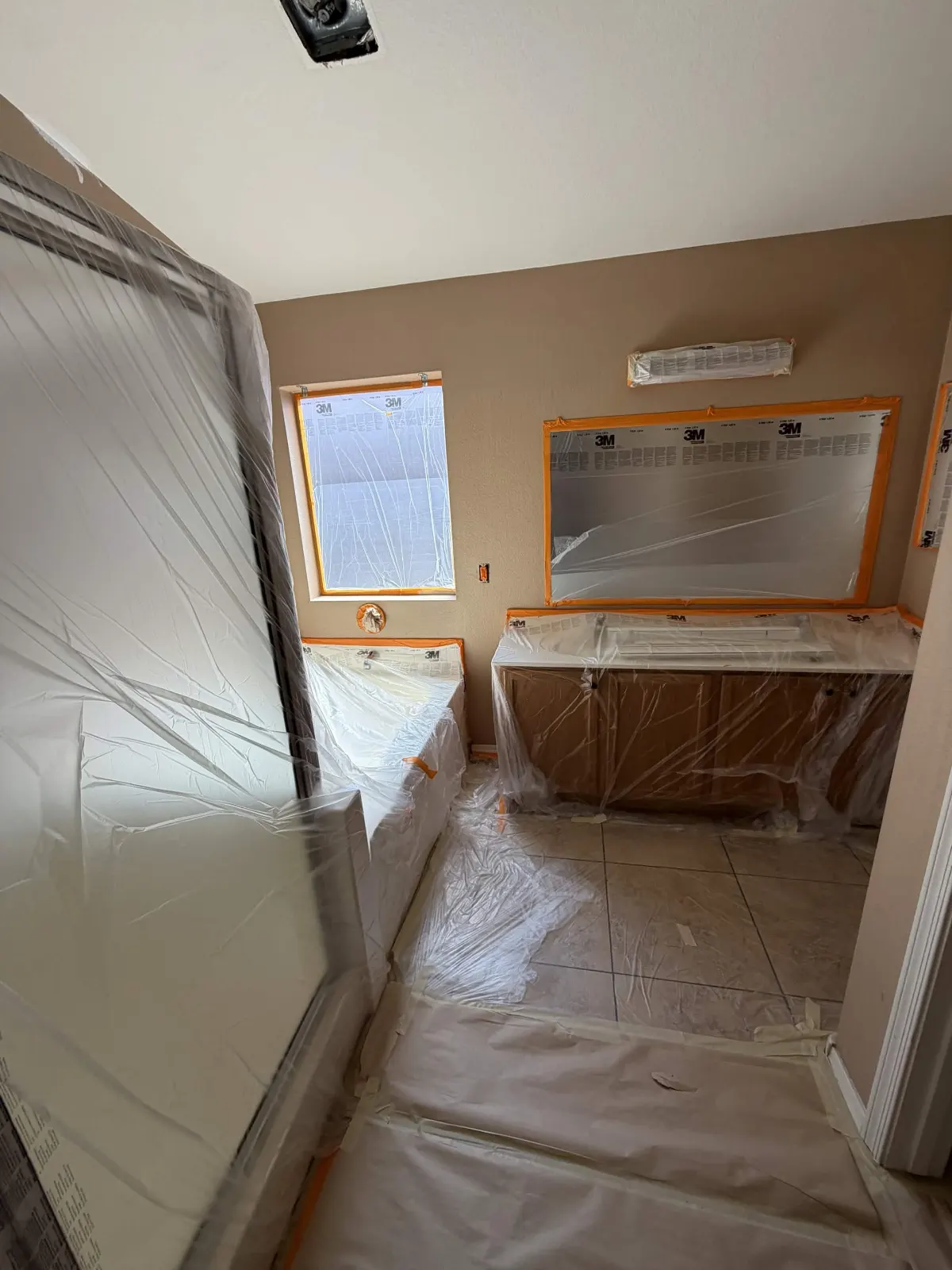
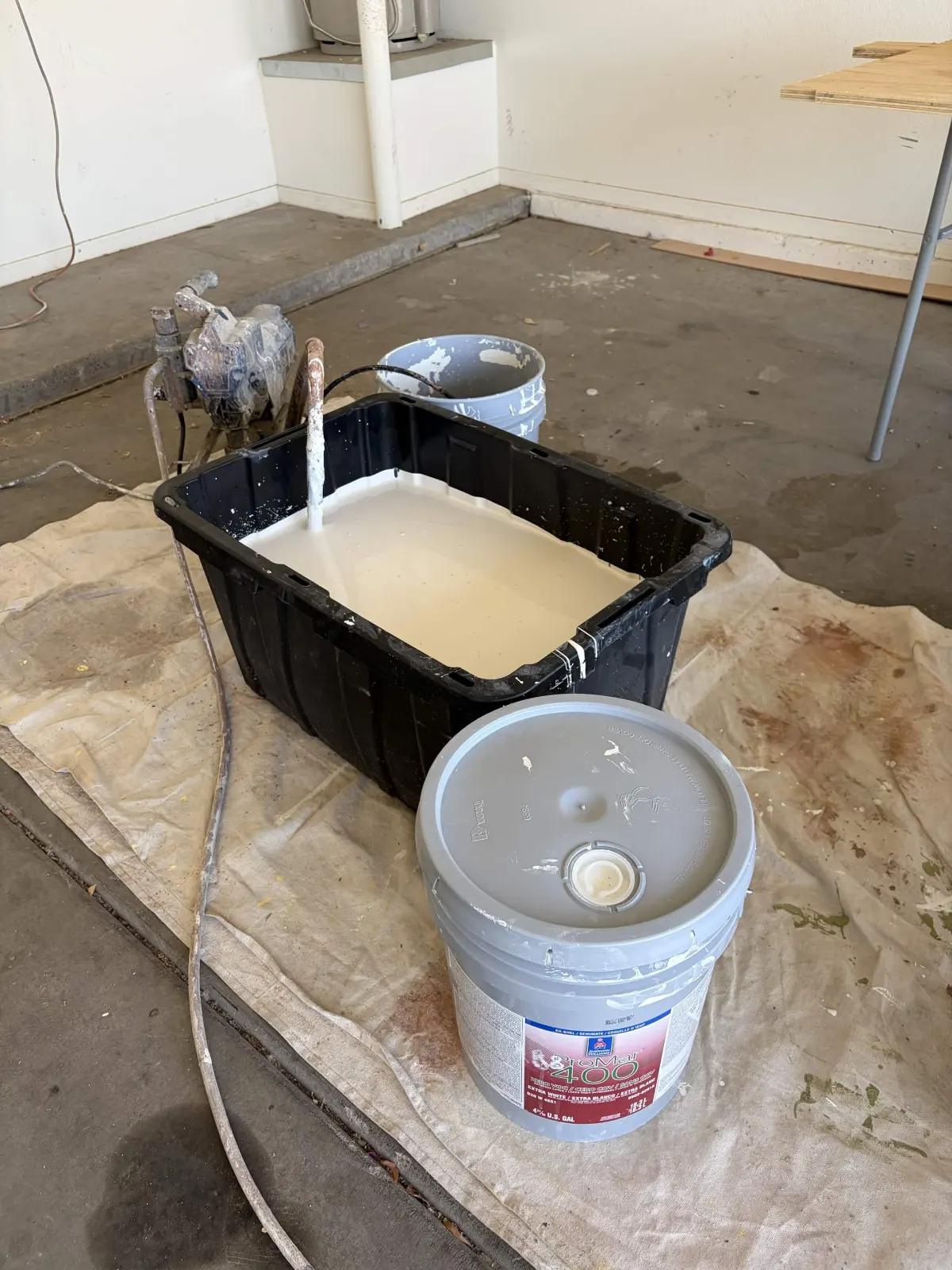
Our standard interior finish is Sherwin-Williams Emerald Interior, a low-VOC coating, and our crews mask and cover rooms carefully so dust and drips stay contained. When a stain or odor problem calls for a solvent primer, we tell you before we use it, keep it to the affected areas and ventilate. If someone in the house is sensitive, mention it at the same-day estimate so we can plan the order of rooms around it.
Frequently asked questions
- Is it safe to sleep in a room painted with low-VOC paint the same day?
- Many people do, but the safest habit is to wait at least a night if you can, especially for babies or anyone with asthma. Keep the room ventilated and the door open to fresh air while the paint dries.
- Does low-VOC paint perform worse than regular paint?
- Not at the premium level. Modern low-VOC acrylics cover and wash well; the bigger quality differences are between product tiers, not between low-VOC and conventional formulas.
- Are paint fumes harmful to pets?
- Birds in particular are very sensitive to airborne chemicals, and cats and dogs can be bothered by strong odors. Move pets, especially birds, away from the painted area until it is dry and aired out.
- Should I worry about VOCs from exterior paint?
- Less so for indoor air, since it cures outside. Keep windows near the work closed during spraying and open the house up once the exterior is dry.
- Can I paint while pregnant?
- Talk with your doctor about your situation. Many people choose to let someone else do the painting and stay out of freshly painted rooms until they have been aired out.
- How long do paint fumes last after interior painting?
- With low-VOC latex and good ventilation, the noticeable smell usually fades within a few days. Closed-up rooms, solvent primers and dark or high-gloss finishes can stretch that out.