Commercial painting · Goodyear
Commercial Painting in Goodyear, AZ
Published
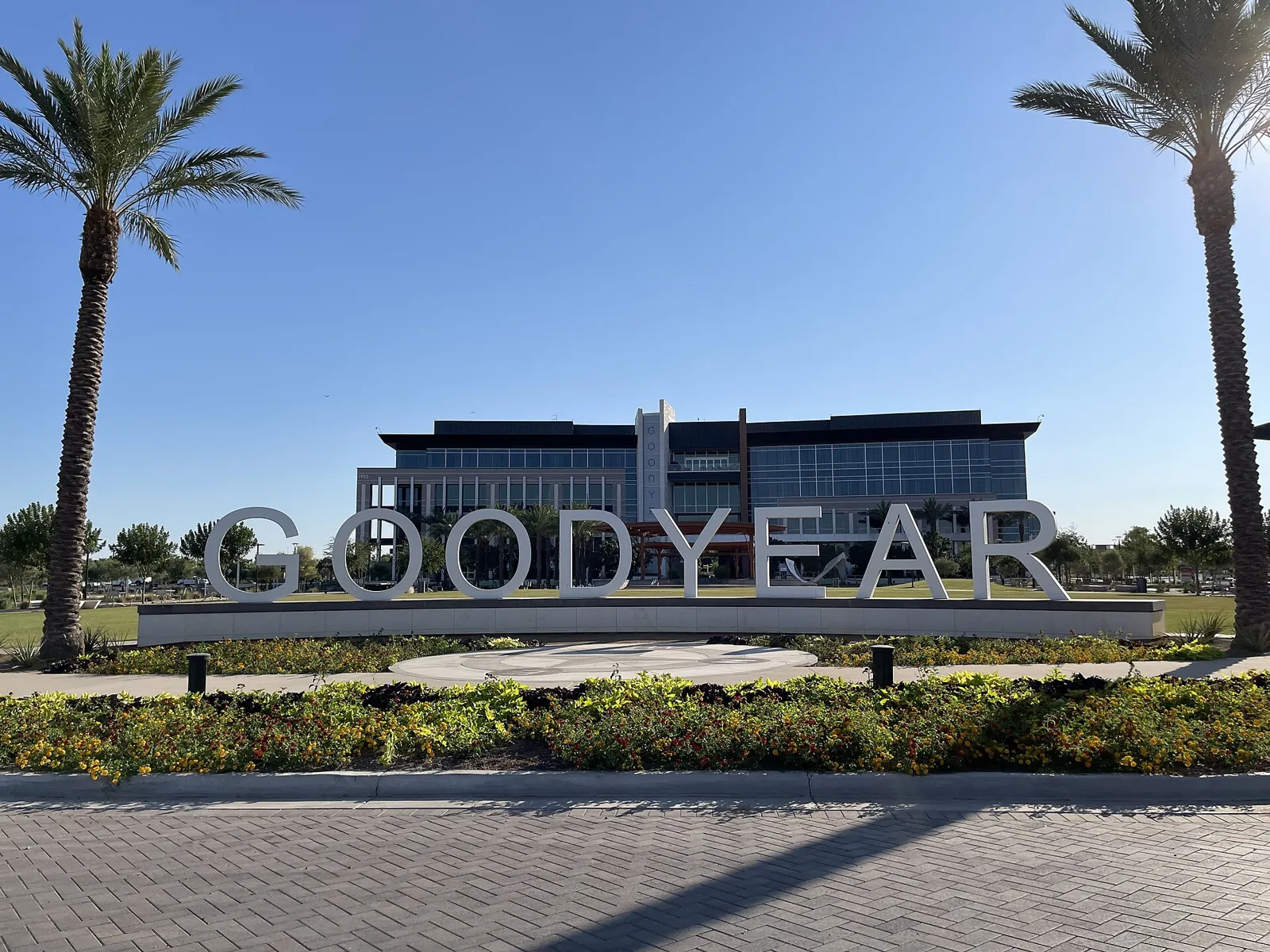
Orange Coatings paints the commercial buildings going up and aging in Goodyear: tilt-up distribution centers, the offices at the front of them, retail centers, medical offices and new pad buildings along I-10 and Loop 303. We work around shifts and store hours, starting with a same-day site visit and a written scope.
The city counted 95,294 residents at the 2020 census and an estimated 118,186 by 2024, and its commercial growth has kept pace along the freeways. Big panel warehouses, small flex suites and new retail each need different coatings and different safety planning.
| Population | 95,294 (2020 census); est. 118,186 (2024) |
|---|---|
| Area | About 191 square miles |
| Main corridors | I-10 and Loop 303 |
| ZIP codes | 85338, 85395 |
| Common surfaces | Tilt-up concrete, block, stucco, steel doors and frames |
| License | ROC 365464 with bonding and insurance |
What Goodyear's commercial buildings look like
Along I-10 and Loop 303, Goodyear has added large distribution and logistics buildings, most of them tilt-up concrete panels with an office section at one corner. The Phoenix Goodyear Airport area has hangars and industrial buildings of its own. Retail centers, restaurants and medical offices have followed new neighborhoods south of the freeway, and Goodyear Ballpark draws spring training crowds for the Cleveland Guardians and Cincinnati Reds.
So a commercial job here is as likely to be a tall panel wall facing a truck court as a dental office lobby, and the plan for each starts from very different questions.
Painting tilt-up concrete panels
Tilt-up panels are cast flat on site and lifted into place, and they have their own weak points. The joints between panels are filled with a flexible sealant that dries out and splits in the sun. Form-release residue and curing compounds on newer panels can keep paint from bonding. On older panels, chalky paint and hairline cracks are the usual problems.
- Wash the panels and check for chalk and leftover residue
- Cut out and replace failed joint sealant when it is part of the scope
- Patch spalls and bug holes, then prime bare concrete with Loxon
- Spray finish coats from a lift, back-rolling where the texture calls for it
- Brush and roll man doors, dock door frames and bollards
Working around docks, trucks and forklifts
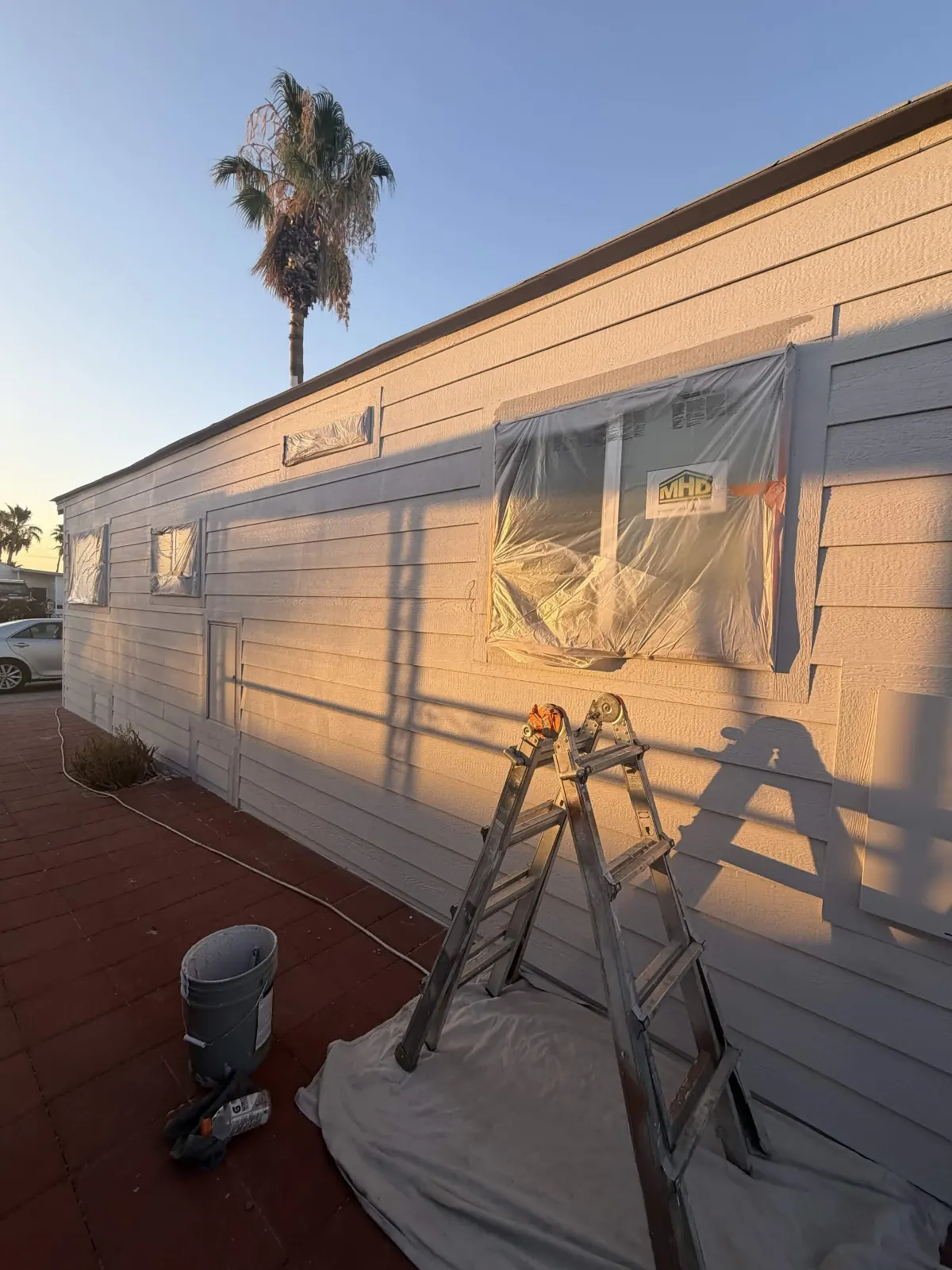
A working distribution center does not stop for painters. Lifts have to stay out of truck lanes, and dock doors cannot be blocked during loading hours. We walk the site with the facility manager, mark which areas we can use on which days, set cones and barricades around every lift and keep a spotter on the ground whenever equipment moves near traffic.
Overspray is controlled with masking and wind limits, because most warehouse walls face a parking lot full of employee cars. Any site rules the facility has, such as check-in, vests or restricted zones, go into the written scope so the crew follows them from day one.
The office end of a warehouse
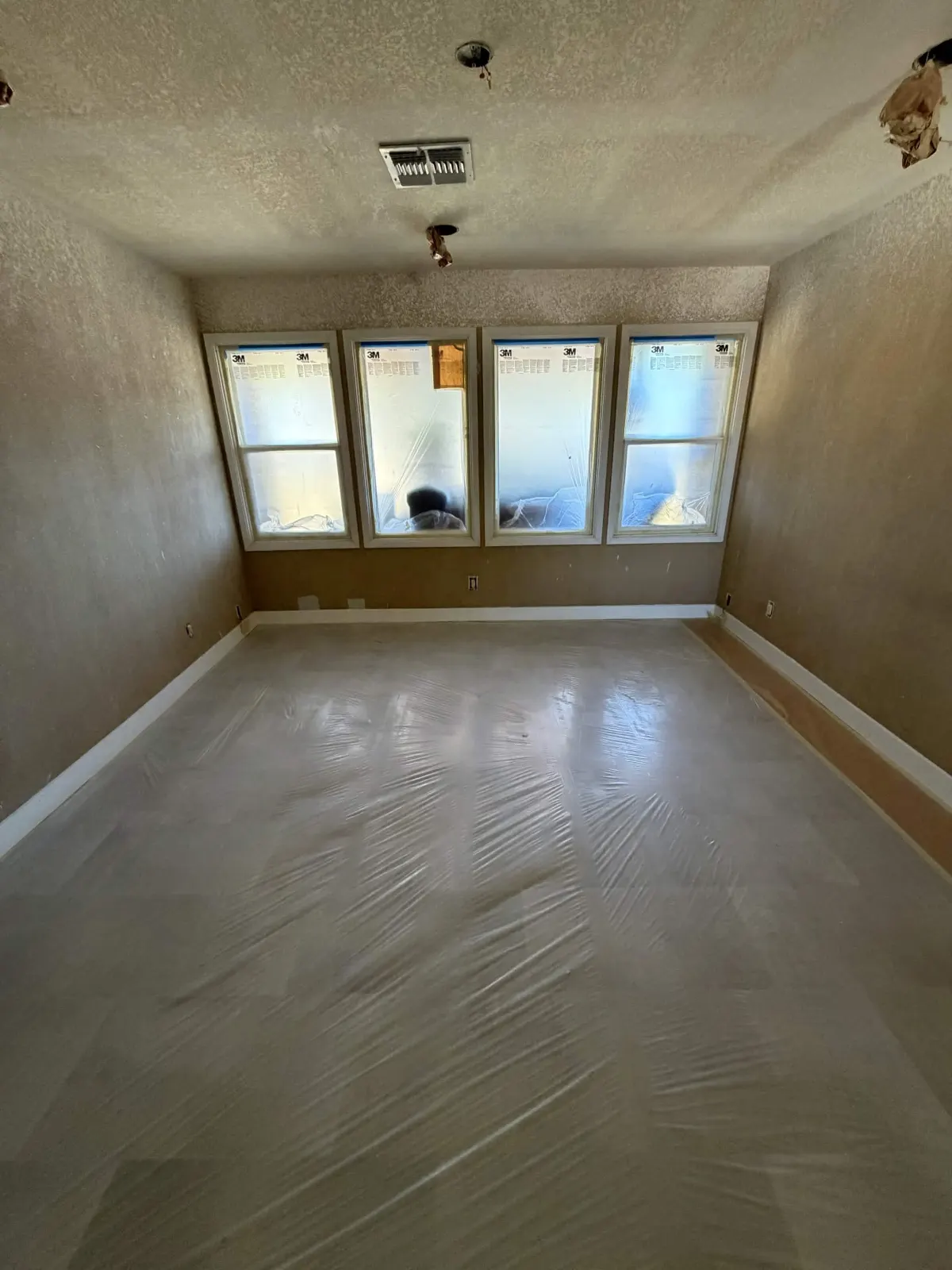
The office portion of a distribution building is ordinary commercial space: a lobby, private offices, restrooms and a break room. It usually gets painted after hours so staff are not working around wet walls. We use low-VOC Emerald Interior on walls and a harder-wearing sheen in corridors and break rooms, where carts and chairs scuff paint daily.
Retail, medical and restaurant buildings
Newer shopping centers in the city are mostly stucco and EIFS with metal canopies and accent bands, and many follow a center-wide color scheme. Medical and dental offices need the work done outside patient hours with as little odor as possible. Restaurants need dining rooms and patios painted on closed days or before opening. The prep is the same careful stucco work as anywhere else; the schedule is built around each business.
Businesses near the ballpark see heavier traffic in February and March. Exterior work on those buildings is easier to book in the fall, or after spring training wraps up and before summer heat sets in.
Where commercial painting ends and industrial begins
Some buildings need both. Office walls, storefronts and stucco are commercial painting. Structural steel, process areas and concrete warehouse floors fall under industrial coatings and floor systems, which have their own prep and products. We can quote both from one walkthrough, so a building owner deals with one contractor and one schedule.
Heat on big, flat walls
A tall west-facing panel wall in July gets far hotter than the 100°F-plus air, and paint applied to a surface that hot dries too fast to bond well. Goodyear sits at about 968 feet, among the lowest and hottest parts of our service area. Summer exterior work starts at first light and follows the shade, and the label's temperature range decides when spraying stops for the day. Monsoon dust storms can coat a fresh wall, so we watch the forecast closely from mid-June through September.
Photos
Frequently asked questions
- Can you paint a distribution center without shutting down the docks?
- Yes. We map out which areas are free on which days with your facility manager, keep lifts out of truck lanes, and paint dock walls during the hours they sit idle.
- Do new tilt-up buildings need anything special before painting?
- Often, yes. Form-release agents and curing compounds can keep paint from sticking, so we test and clean the panels and prime bare concrete with Loxon before finish coats.
- Will you replace the sealant between tilt-up panels?
- We can include failed joint caulking in the scope. Cracked or pulled-away sealant lets water behind the panels and breaks up the paint line, so it is worth fixing during a repaint.
- Can one contractor handle both the warehouse floor and the office painting?
- Yes. We do commercial painting, industrial painting and epoxy floor systems, so one walkthrough can cover the whole building.
- What do you need from a facility before work starts?
- A contact on site, any safety rules for the property, the hours that are off limits and the name of whoever should receive our certificate of insurance. All of it goes into the written scope.
- Do you paint at night?
- We schedule evenings, weekends and early mornings for commercial work. Exterior spraying in the dark depends on lighting and safety, so most outdoor work happens in the early morning instead.
- Do you paint bollards and dock door frames?
- Yes. Steel bollards and frames are scraped, wire-brushed and spot-primed where rusty, then finished in the color your facility uses for safety marking or trim. That work is usually brushed and rolled, not sprayed.