Exterior painting · Glendale
Exterior House Painting in Glendale, AZ
Published
Orange Coatings paints the outside of Glendale homes of every age, from early-1900s bungalows near the historic downtown to block ranch houses and 1990s stucco near Arrowhead. The prep changes with the house, but the finish does not: two coats of Sherwin-Williams Emerald Exterior over repaired, primed surfaces.
With 248,325 people (2020 census) in about 65 square miles, this is one of the West Valley's older and more built-out cities. Age matters on an exterior. Older homes come with many layers of paint, wood that has dried out, and sometimes lead paint under the newer coats.
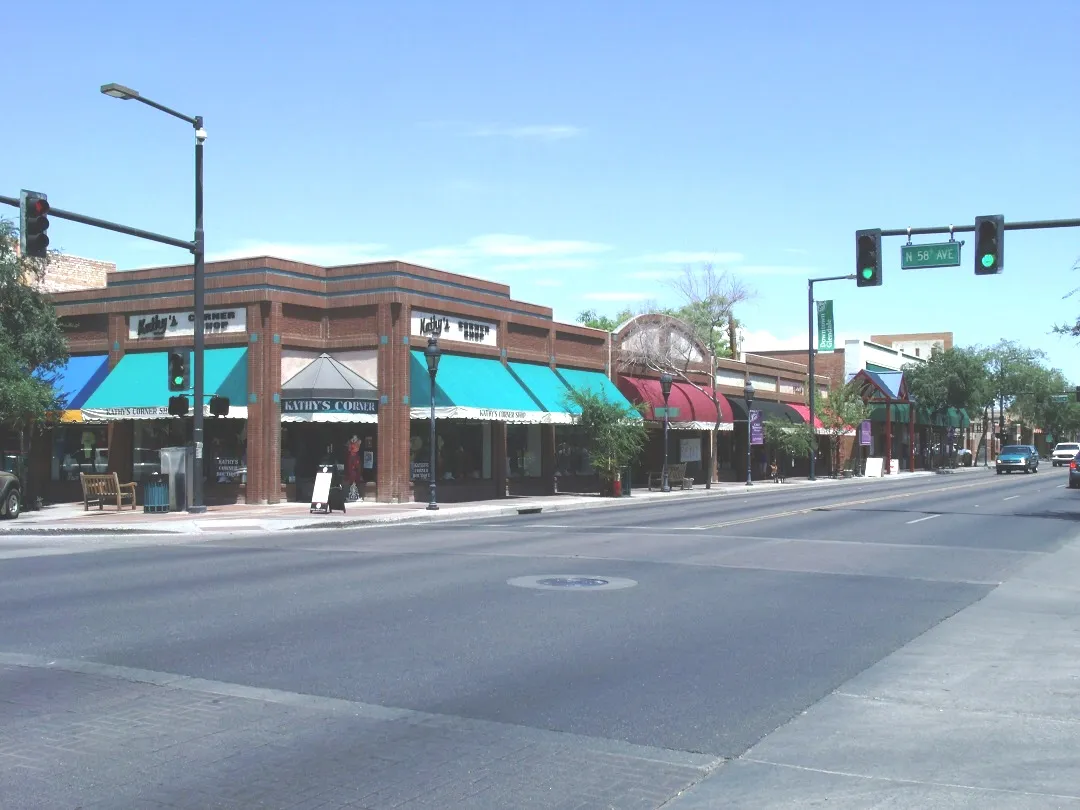
| Population | 248,325 (2020 census) |
|---|---|
| ZIP codes | 85301–85312 and 85318 |
| Land area | About 65 square miles |
| Known for | State Farm Stadium and Arrowhead Towne Center |
| Masonry primer | Loxon on bare stucco, block and brick |
| Contractor license | Arizona ROC 365464 |
A century of Glendale houses
Downtown and the Catlin Court historic district hold some of the oldest homes in the West Valley, including early 20th-century bungalows with wood siding, porches and brick. Spreading out from there are mid-century neighborhoods of single-story ranch homes, many built of painted concrete block or brick, with wood fascia and carports. The north side, around Arrowhead Towne Center, filled in later with stucco homes from the 1980s and 1990s.
Each era fails in its own way. Wood siding checks and peels, painted block grows efflorescence and loses adhesion, and the newer stucco chalks and cracks. The estimate begins by working out which of those you are dealing with.
Wood siding, porches and trim on older homes
Wood needs a different approach than stucco. Loose paint is scraped and sanded to a feathered edge, bare wood is spot-primed, and open joints are caulked so water and dust stay out. Porch ceilings, window sashes and decorative brackets are hand work, which goes slower than spraying a stucco wall.
Dry desert air pulls the moisture out of old boards, so siding that has gone years between paint jobs often shows cracks along the grain. We fill what can be filled and point out any boards a carpenter should replace before paint goes on.
Lead paint in homes built before 1978
Lead-based paint was banned for residential use in 1978, so a house built earlier may still have it under the newer layers. It is mainly a hazard when disturbed, and scraping and sanding disturb it. A lead test kit or a certified inspector can tell you what is on your walls.
The federal Renovation, Repair and Painting rule sets lead-safe work practices for this kind of prep on pre-1978 homes. If your house is that old, bring it up at the estimate and ask any contractor you talk to how they handle it.
Painted block and brick ranch homes
Mid-century ranch houses here often have exterior walls of concrete block, painted many times over. Block is porous and alkaline like stucco, and it can push salts to the surface as efflorescence, the white powder you see near the base of a wall. We brush that off, look for where the water is getting in, and prime bare or chalky block with Loxon before the finish coats.
Unpainted brick is a separate decision. Once brick is painted, it needs paint for good, so we talk that through before any primer goes on.
Many of these houses also have block perimeter walls that were painted along with the house decades ago. They get the same treatment, and painting them in the body or trim color at the same time keeps the yard and the house looking like they belong together.
Arrowhead-area stucco from the 1980s and 1990s
North-side homes are mostly frame-and-stucco, and by now many have been repainted once or twice. Typical problems are chalky walls, hairline cracks at window corners, and peeling where sprinklers have soaked the base for years. These houses get our standard system: wash, repair, Loxon on anything bare, then two sprayed and back-rolled coats of Emerald Exterior.
Some of these subdivisions have HOAs with color rules, while many older central neighborhoods have none. Check before you pick a color.
Choosing colors for an older home
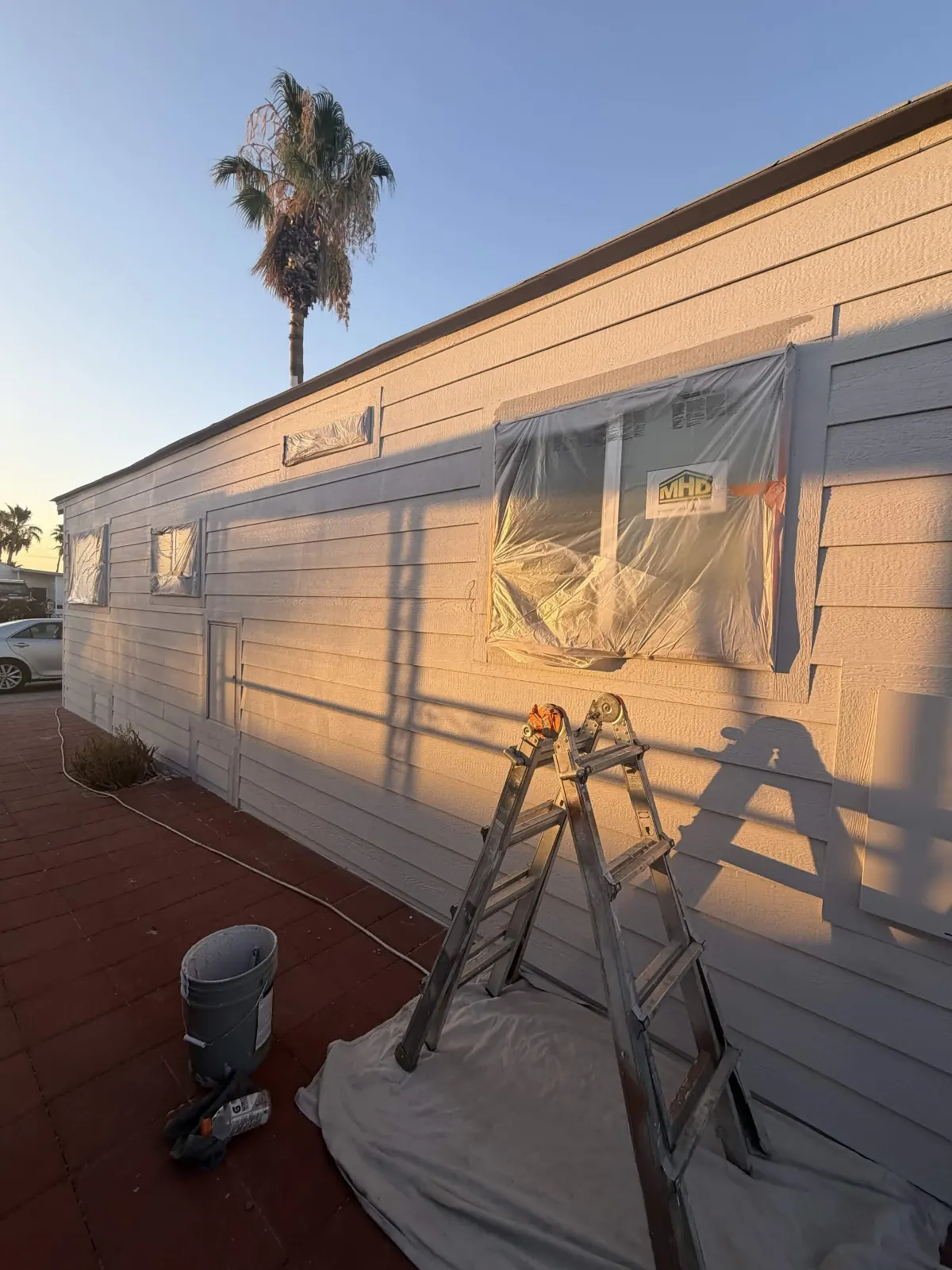
Older houses look best in colors that suit their era. Bungalows carry two- and three-color schemes well, with a body color, a trim color and a darker sash or door. Ranch homes usually look right with a calm body color and contrasting trim. If your home sits in a designated historic district, check with the city before a big color change.
Dark colors on the west side of a house run hotter and fade faster than light ones. If you love a deep color, use it on the front door or shutters, where it is easy to refresh.
How a Glendale exterior job runs
- You call or request a quote, and we ask about the age of the house and what you want painted.
- We visit for a same-day, in-person estimate, check every surface and leave a written quote.
- Together we set the schedule and finalize colors and Sherwin-Williams products; we source the materials.
- Our crew preps, primes and paints, with daily updates that include anything unexpected, such as rotten wood.
- Final walkthrough, touch-ups on the spot, and cleanup.
Photos
Frequently asked questions
- Can you paint a 1950s block house in Glendale?
- Yes. Painted block is cleaned, loose paint and efflorescence are removed, bare spots get Loxon primer, and then two finish coats go on. Block soaks up more paint than smooth stucco, which is part of why two full coats matter.
- How do I find out if my house has lead paint?
- If it was built before 1978, assume it might. A test kit or a certified inspector can confirm it. Tell your painter before work starts so the prep can be planned around it.
- Should I paint my brick?
- That depends on the brick's condition and the look you want. Painted brick can look clean and updated, but it is a permanent choice that adds future upkeep. We talk it through at the estimate rather than assume.
- My wood siding is cracked. Will paint fix it?
- Paint and caulk can seal small checks and open joints. Boards that are soft, rotten or split through should be replaced first, or the new paint will fail at those spots.
- Do you work in every Glendale ZIP code?
- Yes, from 85301 in the south to 85310 in the north, plus 85318. Anywhere in the city is inside our service area.
- Do older homes cost more to paint?
- Often, because the prep takes longer. Scraping, wood repair, priming and hand-brushed trim add labor that a newer stucco home may not need. The written estimate spells out exactly what prep is included.