Epoxy flooring · Glendale
Commercial and Garage Epoxy Flooring in Glendale, AZ
Published
Orange Coatings installs epoxy flooring in Glendale for businesses and homeowners: stockrooms, service bays, small warehouses, shop floors and residential garages. Every floor gets real concrete prep first, then a Sherwin-Williams epoxy floor system with an optional flake broadcast, clear topcoat and anti-slip additive.
For commercial floors we plan the work around your business hours so you are not closed longer than you need to be. For homes, the visit and written estimate happen the same day you call.
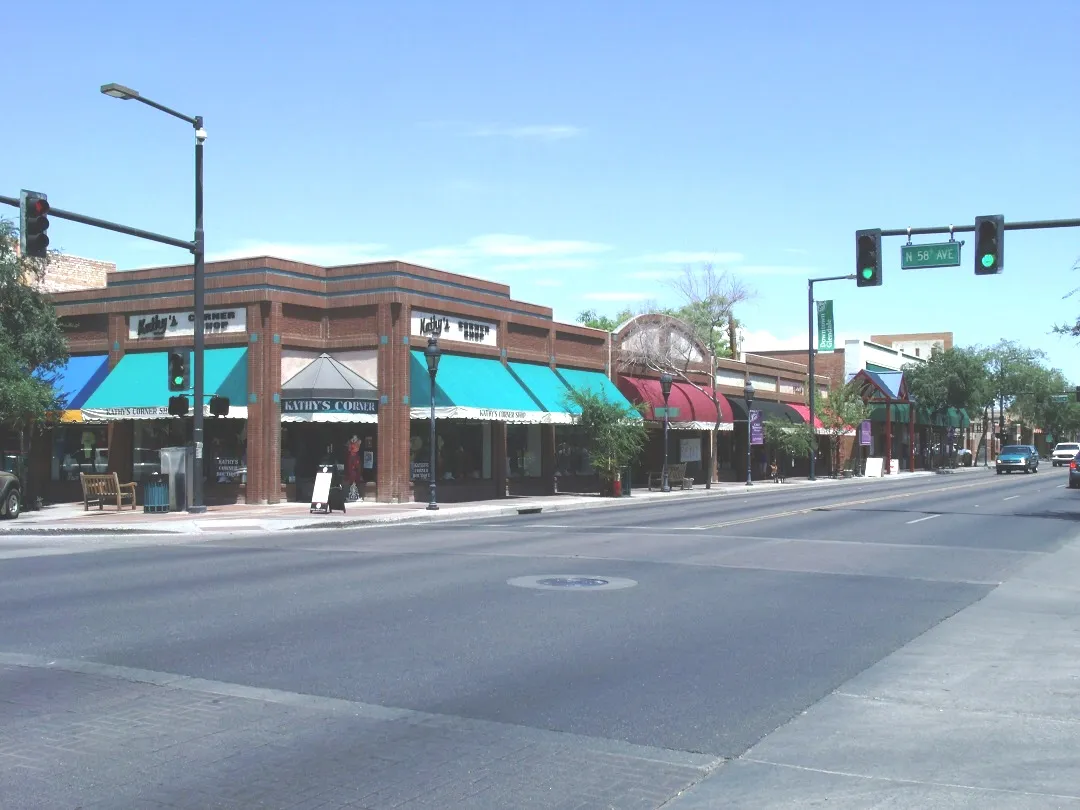
| Glendale ZIP codes | 85301-85312 and 85318 |
|---|---|
| Population | 248,325 (2020 census) |
| Floors we coat | Commercial floors, warehouses, workshops, home gyms, residential garages |
| System | Sherwin-Williams epoxy, optional flakes, clear topcoat, anti-slip additive |
| Credentials | ROC license 365464; bonded and insured on every job |
| Scheduling | Commercial work planned around business hours |
Commercial floors in a busy retail and event city
Glendale is home to State Farm Stadium and Arrowhead Towne Center, and around them sits a lot of retail, food service and light industrial space. The back rooms of those businesses usually run on bare concrete that dusts, stains and is hard to keep clean.
A coated floor is sealed against oil, spills and tracked-in grime, and a lighter color makes a windowless stockroom noticeably brighter under the same lights. It also gives cleaning crews a smooth surface to mop instead of porous concrete that holds dirt.
Bare concrete also sheds a fine dust that settles on stock and shelving. Sealing the surface stops that at the source.
Where a working floor takes the most wear
We look at these spots during the walkthrough. They decide where the clear topcoat matters most, where the anti-slip additive should go, and which stains need the heaviest degreasing before any coating goes down.
- Pallet jack and hand truck paths between the dock door and the shelves
- Service bays where oil, coolant and brake fluid hit the floor
- Entries where grit gets ground in by every pair of shoes
- Wash-down areas and mop sinks that stay wet
- Turning spots where wheels pivot in place
Planning a commercial install around your hours
- Walk the space with you and note traffic paths, drains, stains and old coatings.
- Agree on which areas get done in which order, so part of the business can keep running if needed.
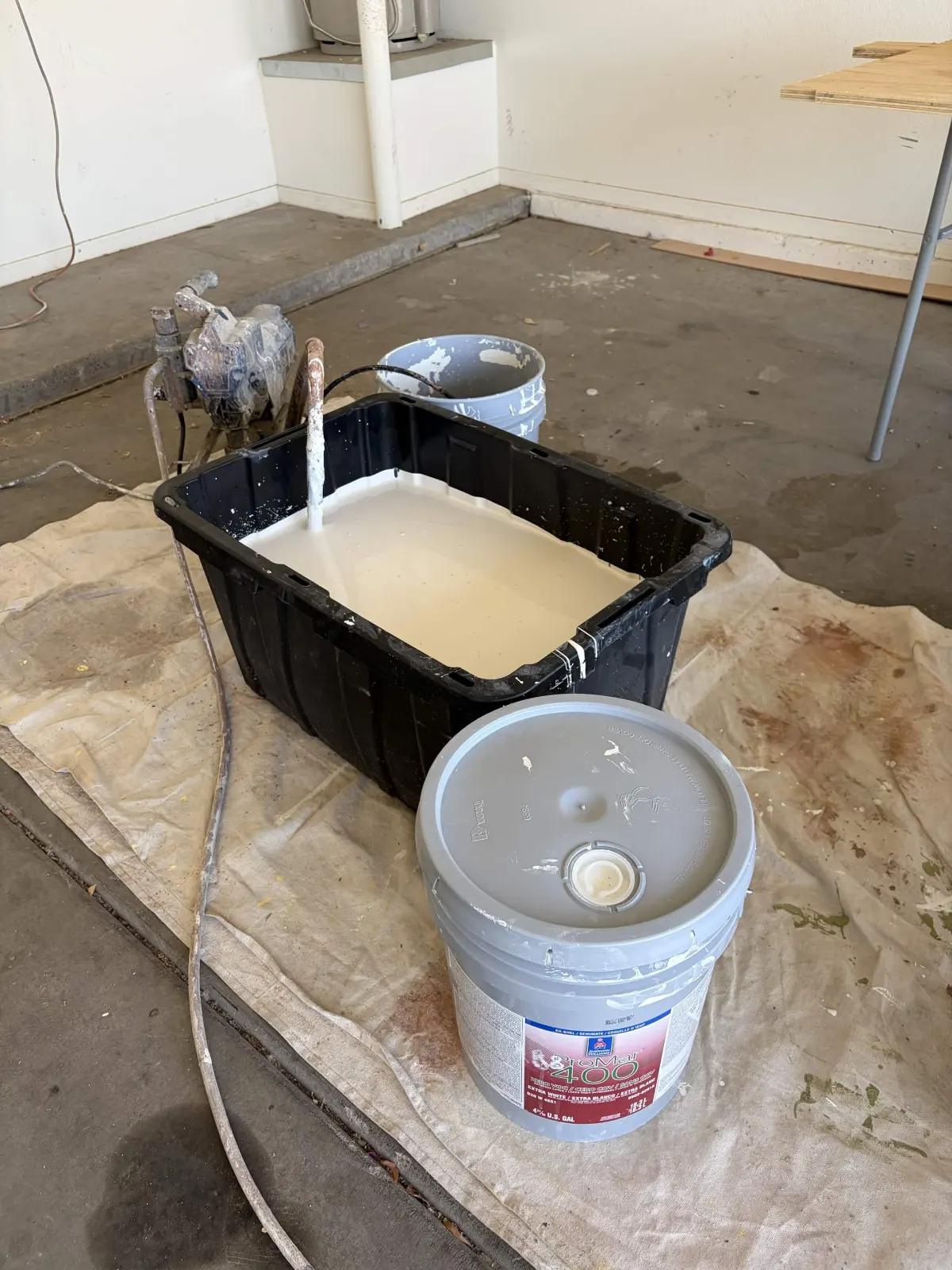
- Clean, degrease, repair and profile the concrete in each area.
- Apply the Sherwin-Williams base coat, any flakes and the clear topcoat.
- Keep traffic off until the coating reaches the cure stage the product label calls for.
- Walk the finished floor with you and hand the space back clean.
Getting a commercial space ready
A short list like this, settled during the walkthrough, keeps the schedule tight and the fresh coating free of footprints.
- Move stock and shelving off the area being coated, or tell us what has to stay
- Plan deliveries for days when that section is not being coated
- Point out drains, floor outlets and anchor bolts we need to work around
- Arrange ventilation or HVAC run times for application days
- Let staff know which areas are closed and for how long
Anti-slip where floors get wet
A glossy topcoat is easy to clean, but water, grease or a dropped drink can make it slick. In back-of-house areas, wash bays and building entries we add the anti-slip additive to the topcoat. It gives a fine texture underfoot while keeping the floor easy to mop.
Grit is a trade-off with cleaning. A rougher finish grips better and takes a little more scrubbing, so we usually put it where people walk on wet surfaces and leave dry storage areas smoother.
Home garages in Glendale's established neighborhoods
Glendale packs about 248,000 people into roughly 65 square miles, and many of its homes are older than what you find farther west. Those garage slabs have often seen decades of oil drips, patching and a coat or two of floor paint.
Old floor paint and sealers have to be removed where they are loose, because epoxy is only as strong as the layer under it. Older slabs, and any poured without a vapor barrier, also get checked for moisture before coating. If vapor is coming up, a moisture-mitigating primer goes down first.
Choosing a color for a floor that works
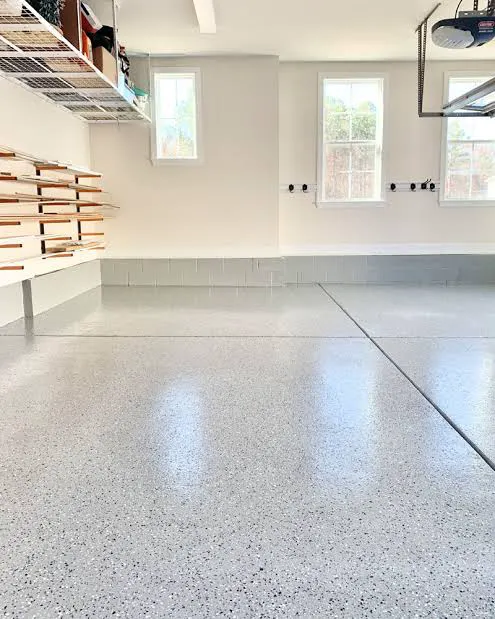
In a stockroom or shop, light gray or tan base colors reflect more light and make dropped parts easy to find. A flake broadcast over that base hides scuffs and the dust that comes in with every delivery. In a home garage the choice is more personal, but the same rule holds: busier blends hide more dirt than solid colors.
Heat inside a closed warehouse
A metal-roofed building with the doors shut can run very hot in summer, and the slab follows. Epoxy sets faster in heat, which shortens the time to spread it and broadcast flakes. We plan commercial coating for the cooler hours, run fans or the building's cooling where available, and stay inside the label's limits for temperature and humidity.
Photos
Frequently asked questions
- Can you coat a Glendale stockroom without closing the store?
- Often, yes. We can split the floor into sections or work outside your open hours, and we plan that with you during the walkthrough.
- Will epoxy hold up to pallet jacks and carts?
- A properly bonded epoxy with a clear topcoat handles wheeled carts and pallet jacks well. Sharp metal wheels and dragged pallets wear any coating faster, so we look at your traffic before recommending the system.
- Is an epoxy floor slippery in a business?
- It can be when wet. Adding the anti-slip additive in wet areas and entries gives better grip while keeping the surface cleanable.
- My service bay floor is soaked with oil. Can it be coated?
- Usually, with heavy degreasing and stain treatment first, then profiling. Oil left in the concrete keeps the coating from bonding, so this part of prep cannot be rushed.
- Do you also paint the walls and doors in a commercial space?
- Yes. Commercial painting is one of our main services, so walls, doors and the floor can be planned as one job.
- Do you install epoxy in home garages in Glendale too?
- Yes. Home garages, workshops and home gyms get the same prep and the same Sherwin-Williams system as a commercial floor, scaled to the space.
- How soon can carts roll on a freshly coated stockroom floor?
- That depends on the product and the temperature. The written quote lists foot-traffic and wheeled-traffic times so you can plan restocking around them.