Exterior painting · Stucco
Stucco Painting in Surprise and the West Valley
Published
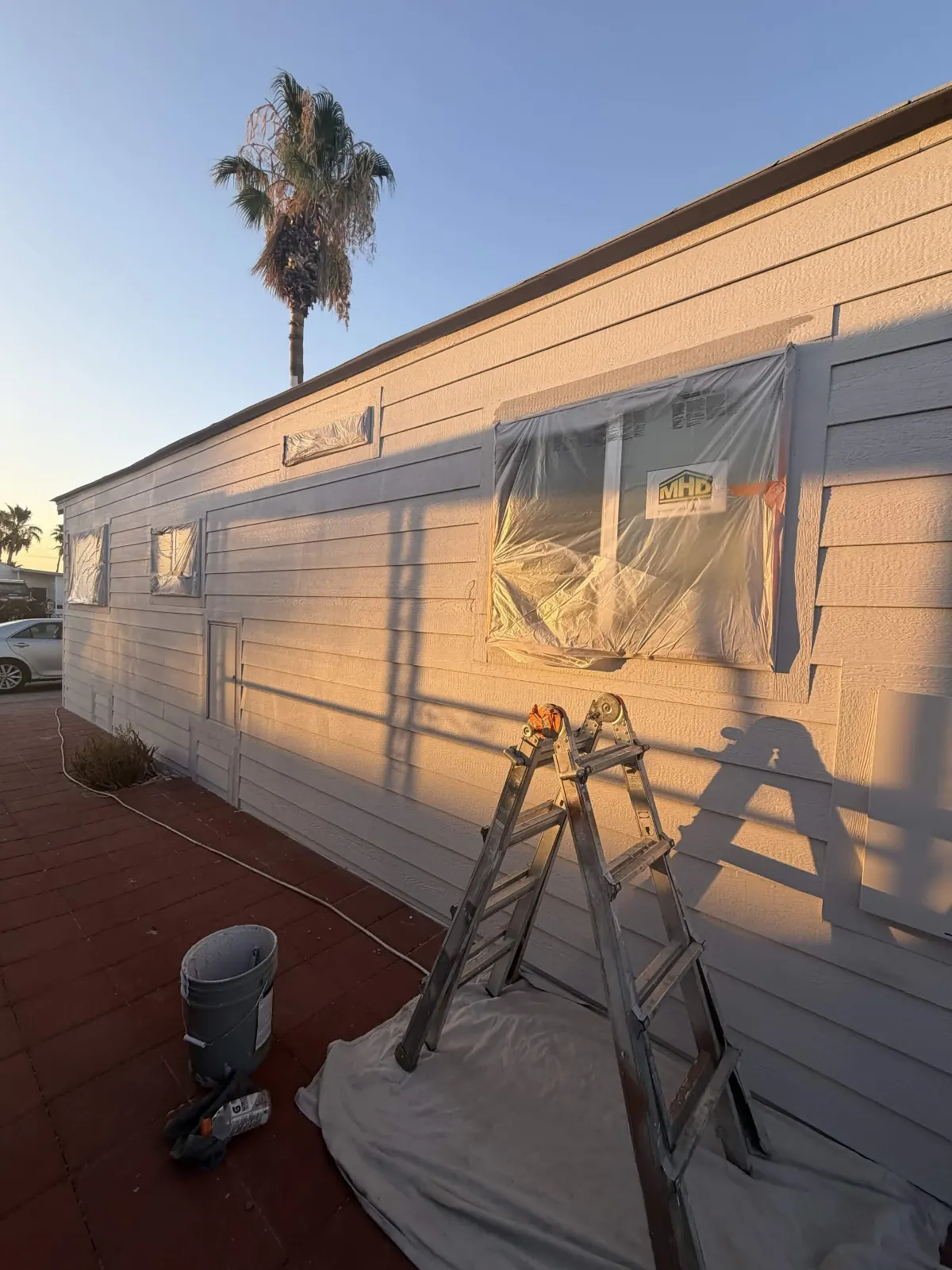
Stucco is the most common exterior in the West Valley, and paint fails on it when it goes over chalk, cracks or bare patches. Our standard stucco job is a wash, crack and patch repair, Loxon masonry primer on bare or patched areas, then two full coats of Sherwin-Williams Emerald Exterior, sprayed and back-rolled.
Orange Coatings is based in Surprise and paints stucco homes from Sun City West to Buckeye. Below is what the work includes, how we prep it, what changes the price and how long a typical house takes.
| Primer | Sherwin-Williams Loxon masonry primer on bare or patched stucco |
|---|---|
| Finish | Two full coats of Emerald Exterior |
| Application | Sprayed, then back-rolled |
| License | Licensed under Arizona ROC 365464; bonded and insured on every job |
What a stucco repaint includes
A stucco repaint covers more than the flat walls. The body of the house is the biggest part, but the job also takes in the pop-outs around windows, the foam trim bands many West Valley builders used, garden walls that match the house, and the columns on a front porch or back patio.
- Pressure washing the full exterior to remove dust, chalk and cobwebs
- Cleaning out and patching cracks, then matching the texture over each patch
- Spot priming bare stucco, patches and repaired areas with Loxon
- Caulking gaps where stucco meets windows, doors, trim and fascia
- Masking windows, light fixtures, walkways, pavers and plants
- Two coats of Emerald Exterior on the body, then trim, fascia and doors
- A final walk-around with you and touch-ups on the spot
Signs your stucco is ready for paint
One sign on its own is not always a reason to repaint. Chalk plus fading on the sunny sides usually is, because the old film has started to break down and will only get thinner.
- Chalky residue when you rub your hand on the wall
- Faded west- and south-facing walls
- Hairline cracks around windows, doors and corners
- Peeling or bubbling paint near the base of the wall
- White, powdery stains (efflorescence) where water gets in
- Dark streaks or hard-water spotting where sprinklers hit the wall
Our stucco painting system
- Wash the walls to remove dust and chalk, then let them dry fully before any coating goes on.
- Open up and patch cracks; blend the texture on patched areas.
- Prime bare and patched stucco with Loxon masonry primer.
- Caulk around windows, doors and trim.
- Mask windows, fixtures, walkways and plants.
- Spray and back-roll two full coats of Emerald Exterior.
- Paint trim, fascia and doors, then do the final walkthrough.
Why primer and back-rolling matter on stucco
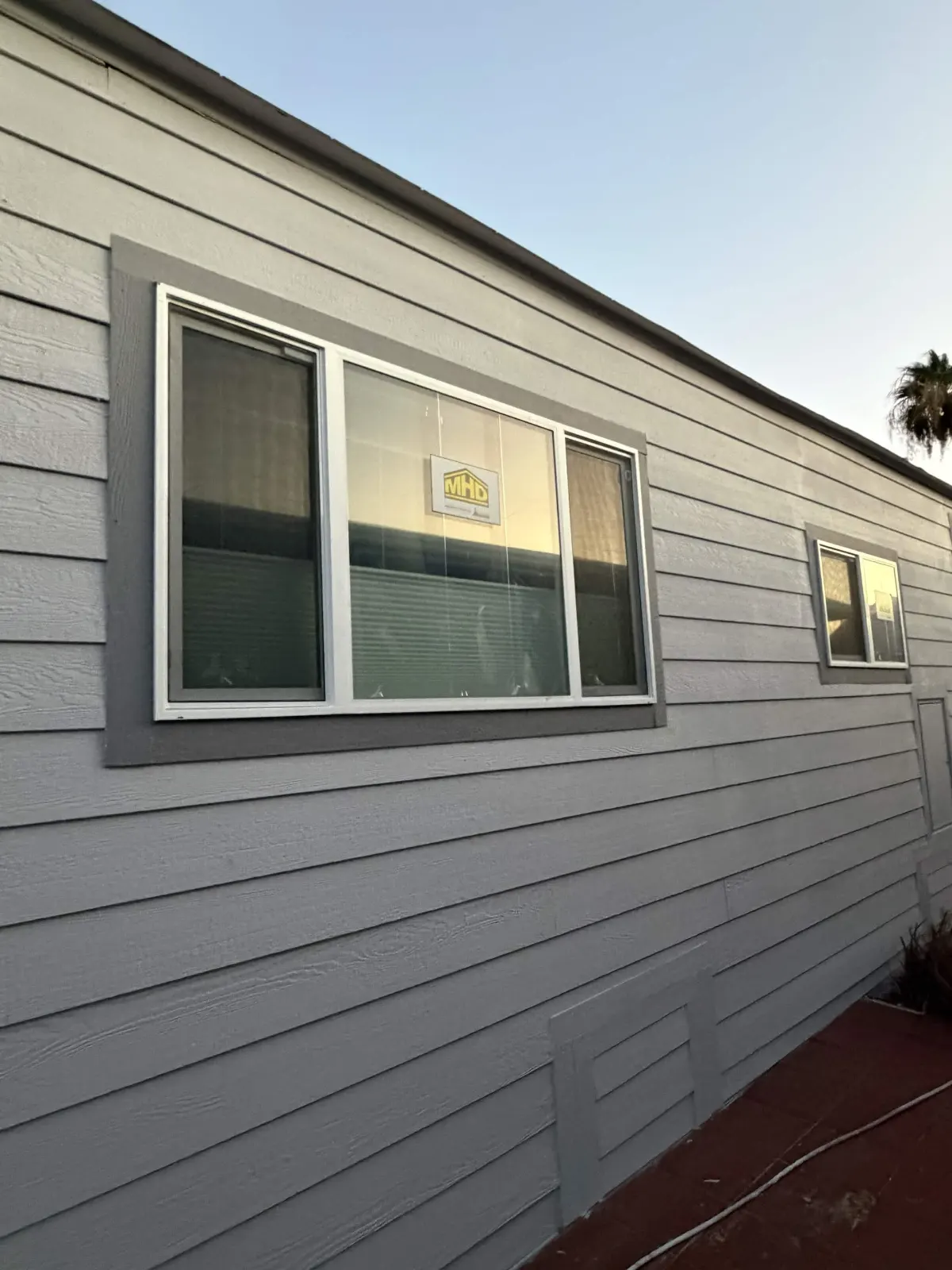
Stucco is porous and rough. Spraying alone can leave thin spots in the low points of the texture, and back-rolling right behind the sprayer pushes paint into those spots for even coverage.
Bare stucco and new patches are alkaline enough to break down a finish coat, which is why they get Loxon masonry primer first. Hairline cracks get a paintable elastomeric caulk, while wider cracks are cut out, patched and feathered so they stop showing through the new color.
We use the same approach on smooth and sand-finish stucco. Sand finish has more surface area and soaks up more paint, so the back-roll matters even more there.
Arizona conditions that wear stucco paint down
Summer highs above 100°F and nearly year-round sun break down the binder in exterior paint, which is what causes chalking. West and south walls take the worst of it, so they fade first.
Walls also expand in the afternoon heat and shrink overnight. That daily movement opens hairline cracks over time, especially at window corners. During monsoon season, from June 15 to September 30, wind-driven rain gets into those cracks and behind loose paint.
Irrigation is the other common problem. Sprinklers that spray the base of a wall leave hard-water deposits and keep the stucco damp, which is where we see the most peeling. We point these spots out at the estimate so you can adjust the heads.
Color choices and HOA approval
Most HOAs in the West Valley have an approved palette, and many require an architectural review before an exterior repaint. We match your pick to the exact Sherwin-Williams color code and can cross-match a palette written in another brand's colors.
Lighter body colors fade less noticeably in full sun than deep ones. Mid-tone earth colors such as Accessible Beige are a common choice because they hide dust between washings.
Stucco repaint timing and pricing factors
A whole-house stucco exterior usually takes several working days. Washing and drying time, crack repair and masking often take as long as the painting itself. Your written estimate lists the schedule for your house.
Price depends on the job, not a flat rate. The main factors are:
- Size of the house and number of stories
- How many cracks and patches need repair
- How much of the wall is bare or chalky and needs primer
- Number of colors (body, trim, accent) and amount of trim
- Access issues such as steep slopes, pools or tight side yards
Getting your house ready
A little preparation on your side keeps the job moving. Trim plants and shrubs back a foot or so from the walls, move patio furniture and grills away from the house, and park cars out of the driveway on spray days. Turn off sprinklers that hit the walls a day or two before washing so the stucco can dry.
If you rent the home out, let tenants know the schedule, since windows will be masked for part of the job. Property managers can meet us for the walkthrough and receive the written estimate directly.
Where we paint stucco
Orange Coatings paints stucco homes across the West Valley and greater Phoenix, from our home base in Surprise:
Photos
Frequently asked questions
- Can you paint over cracked stucco?
- Not well. Paint bridges very fine hairline cracks at best. Cracks get cleaned out and patched first so they don't show through the new color or let water in.
- Why does bare stucco need a special primer?
- Fresh stucco and new patches are highly alkaline, which can ruin a finish coat. Loxon masonry primer is made to handle that alkalinity, so we use it on bare or patched areas.
- Spray or roll on stucco?
- Both. We spray to get even coverage, then back-roll to push the paint into the stucco texture so there are no thin spots or pinholes.
- How do I know my stucco needs repainting?
- Rub the wall: a chalky residue on your hand means the paint is breaking down. Faded west walls, hairline cracks and peeling near the base are other signs.
- Is Emerald worth it over a mid-grade paint on stucco?
- On sun-facing stucco we think so. Emerald Exterior is the top Sherwin-Williams exterior line and holds color better in strong UV. On shaded walls or outbuildings, Duration can be a reasonable way to trim the budget.
- When is the best time of year to paint stucco here?
- October through April is the easiest window, with temperatures between 50 and 90 degrees. We can paint in summer by starting early in the morning and keeping the crew off walls in direct afternoon sun.