Guide · Interior painting
How to Get Your House Ready for Interior Painters
By the Orange Coatings team · Published
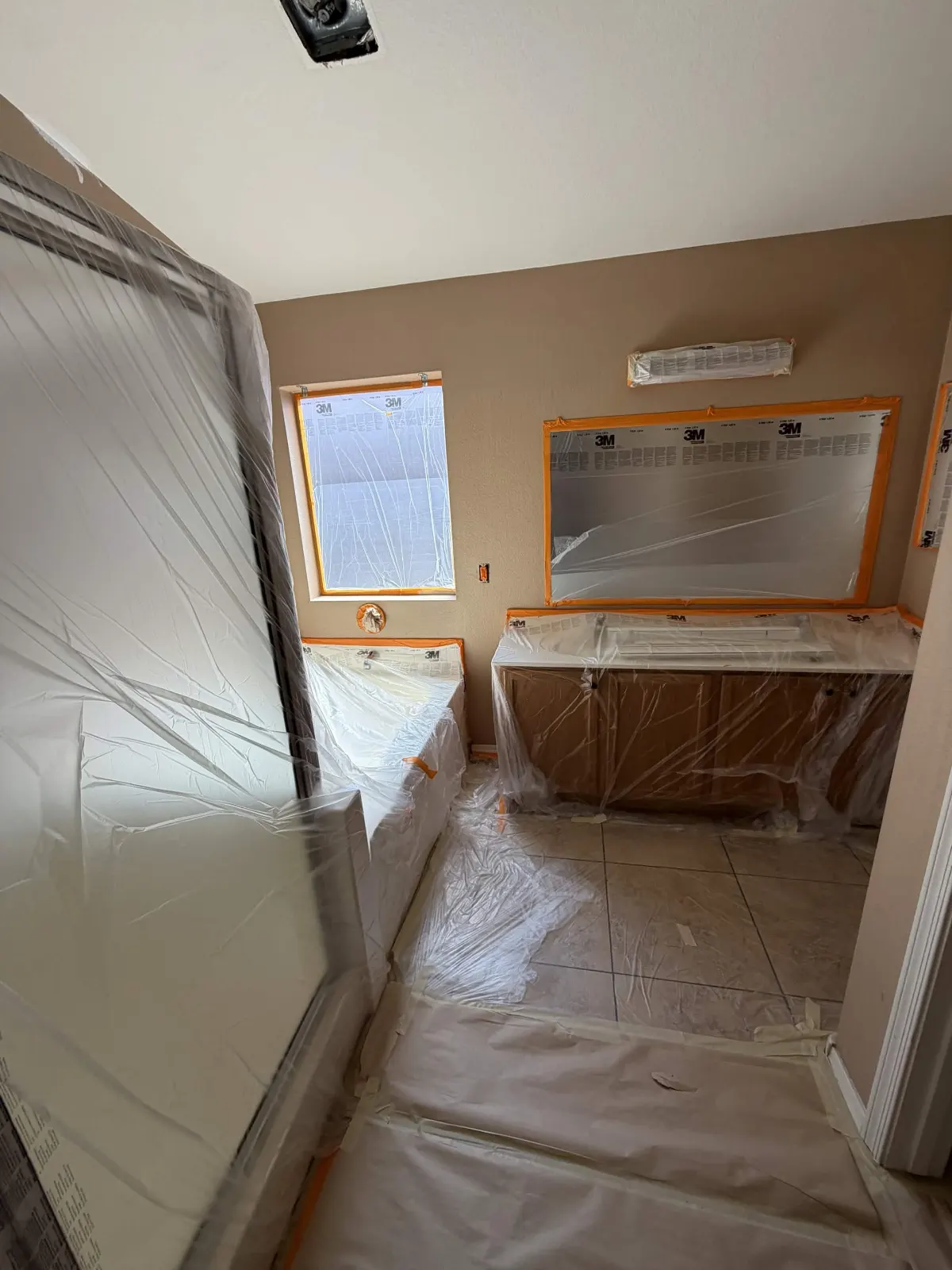
To get your house ready for interior painters, take down pictures and decor, clear small items and valuables off shelves and surfaces, pull furniture toward the middle of each room if you can, and make your color decisions before the start date. The crew handles the heavy protection work: covering floors and furniture with drop cloths and plastic, masking trim and fixtures, and the wall prep itself.
A little preparation on your side means the crew spends day one on your walls instead of packing up knickknacks. Here is a timeline and a room-by-room checklist.
Who does what
It helps to know where the line is between your job and the painter's. On our interior jobs, the crew covers floors and furniture with drop cloths and plastic sheeting, masks off what should not get paint, patches and sands, and cleans up each day. Your part is the small stuff: personal items, valuables and breakables, cleared out of each room on the list so prep can begin the first morning.
Every company is a little different, so ask at the estimate exactly what the crew will move and what they expect you to handle. Get it in the written quote if it matters to you.
One to two weeks before
- Finalize colors and sheens for every room, including ceilings, trim and doors.
- Look at large painted samples on your walls in daylight and at night before deciding.
- Walk the rooms with the painter and point out cracks, nail pops, water stains or damage you want fixed.
- Decide which rooms happen first if you need to keep a bedroom or office usable.
- Arrange care for pets that get anxious with strangers or open doors.
Two or three days before
- Take down artwork, mirrors, clocks, shelves and wall-mounted TVs. Leave the nails in if you want them reused; the crew can fill the holes if you are rearranging.
- Clear tabletops, dressers, bookshelves and windowsills of small items and anything fragile or valuable.
- Remove curtains and curtain rods if the walls or window trim around them are being painted.
- Empty closets that are being painted, or at least clear the floor and lower shelves.
- Unplug and move electronics, lamps and chargers away from the walls.
- Move small furniture out of the room, and push large pieces toward the center if you are able.
Point out repairs before the start date
Drywall cracks, nail pops, dents behind doors and water stains are easy to handle during prep, but only if the painter knows about them. Walk the house before work begins and mark them with small pieces of painter's tape, or list them in an email with photos. A stain on the ceiling needs a stain-blocking primer, and a crack that keeps coming back may point to something other than paint, so mention its history.
Do the same for anything you do not want touched: a wall you plan to wallpaper later, original trim you want left natural, or a built-in that someone else is refinishing. Clear notes up front save time on the first morning.
Room-by-room notes
Kitchens: clear the counters and anything stored on top of the cabinets, and expect limited use of the room while walls and trim are being done. Bathrooms: put away toiletries, towels and anything on the vanity, and remove the shower curtain if the surrounding walls are being painted. Bedrooms: strip beds, or cover them yourself with a sheet, and clear nightstands. Living rooms: take down family photos and move plants away from the walls, since they need water and light while furniture is covered.
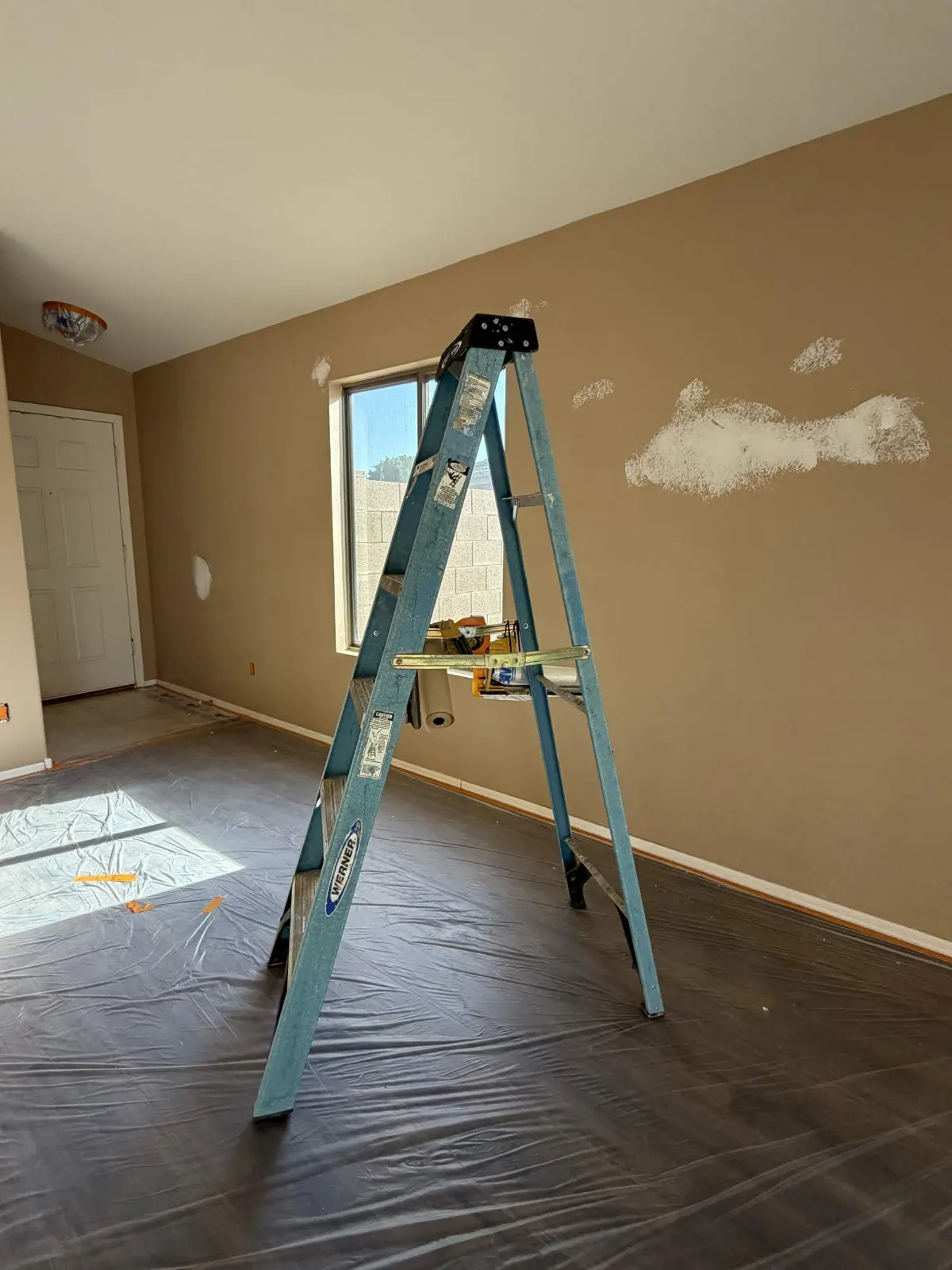
The morning work starts
- Leave room in the driveway or at the curb for the crew's vehicle and equipment.
- Make sure the crew can reach a sink for cleanup and a bathroom they can use.
- Close pets in a room that is not being painted, or keep them out of the house.
- Walk through once with the crew lead to confirm colors, rooms and anything delicate.
- Share the best phone number to reach you during the day.
Living in the house while it is painted
Most families stay home during interior painting. We use low-VOC interior coatings, which cuts down on odor, but it still helps to run the HVAC system and crack windows when the weather allows. In an Arizona summer, keeping the air conditioning on also keeps the house at a temperature where paint dries properly.
Keep kids and pets out of rooms with wet paint and plastic on the floors. New paint is dry to the touch long before it has fully hardened, so wait before scrubbing walls, pushing furniture back tight against them or hanging heavy items. Follow the cure time printed on the product label.
After the crew leaves
Do the final walkthrough in good light and point out anything you want touched up while the crew is still there. Ask for the leftover paint, labeled by room, color and sheen, and store it indoors where it will not bake in a hot garage. When you rehang pictures and move furniture back, lift rather than slide pieces along the new paint.
Frequently asked questions
- Do I have to move all my furniture before the painters arrive?
- Usually not. Most crews move or cover large furniture themselves, and we protect it with drop cloths and plastic. You should clear small items, valuables and anything fragile.
- Should I take down blinds and curtains?
- Remove curtains and rods if the surrounding walls or trim are being painted. Blinds can often stay up and be masked or raised, so ask your painter what they prefer.
- Can I stay home while my house is painted?
- Yes, most people do. Keep out of the rooms being worked on, ventilate when you can, and keep children and pets away from wet paint.
- Should I clean the walls before painters come?
- You do not need to wash walls; cleaning and prep are part of the painter's work. Wiping heavy grease near a stove or dusting tall ledges is a kind gesture but not required.
- What should I do with wall-mounted TVs?
- Have them taken down before painting day, along with brackets if the wall behind them is being painted. Painters generally avoid handling expensive electronics.
- When can I hang pictures again?
- Light pieces can usually go back up after a day or two. Wait longer for heavy mirrors and shelves, and follow the cure time on the paint label.