Guide · Hiring a painter · Estimates
What Happens at an In-Person Painting Estimate
By the Orange Coatings team · Published
At an in-person painting estimate, the painter walks every surface in the scope with you, checks its condition, talks through products, sheens and colors, and then gives you a written quote that spells out the work. For a typical project the walkthrough takes 30 to 60 minutes, longer for a whole house or a full exterior.
This guide follows the visit from the first phone call to the quote in your hand: what the estimator is looking at, what you should have ready, and how to tell whether the paper you get covers what you talked about.
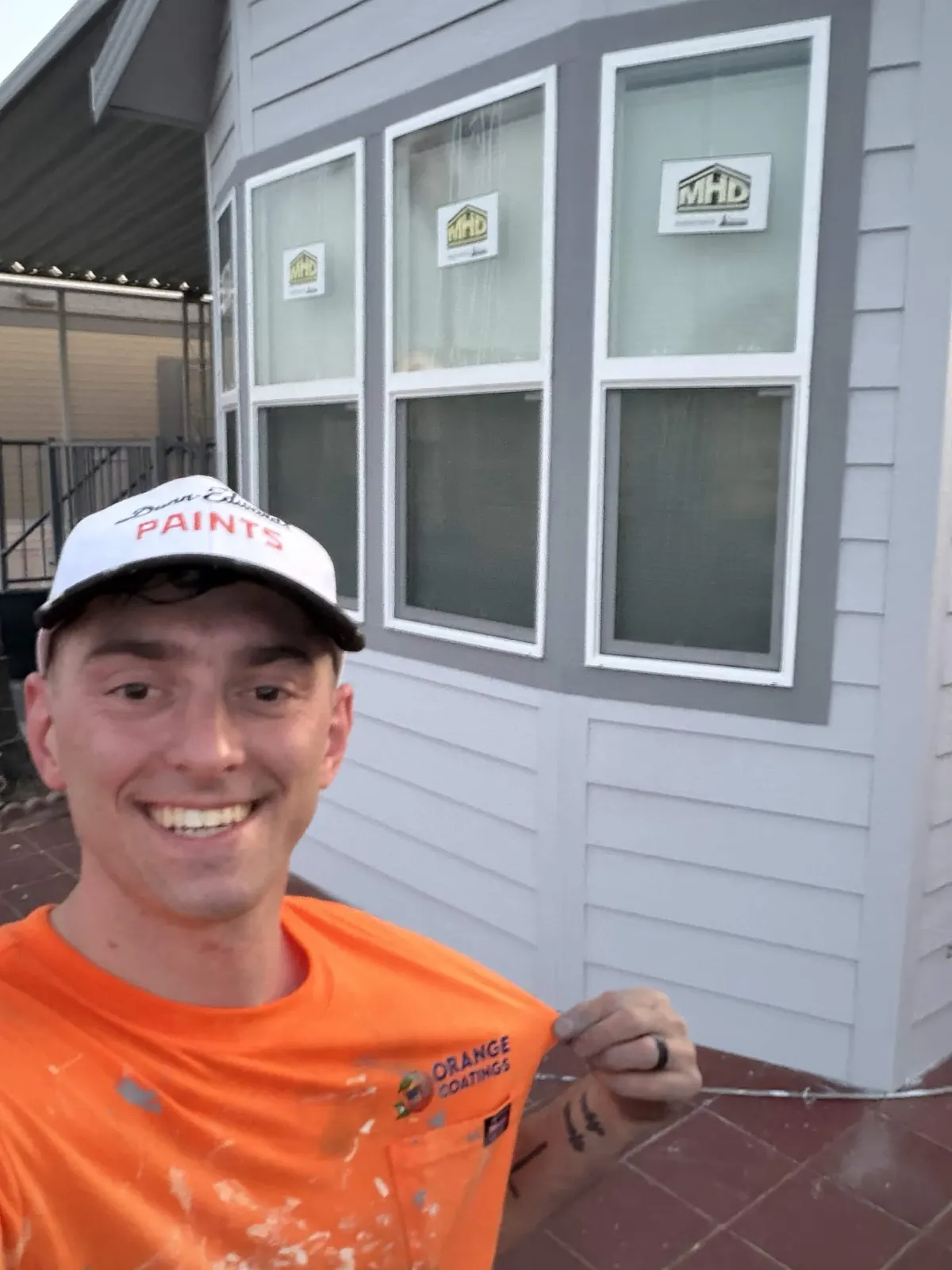
Before the visit: the first call
The estimate starts on the phone or through the website form. Expect a few quick questions: which rooms or which sides of the house, the rough size of the home, whether it is one or two stories, any known problems such as peeling or water stains, and whether an HOA has to approve colors. Those answers let the estimator come prepared, with the right ladder for a look at the eaves or color fans for the rooms you mentioned.
It helps to have the people who will make the decision at home for the visit. Questions about scope, color and timing get settled in one trip instead of three.
What the estimator looks at outside
- Chalk: a hand or dark cloth across a sunny wall shows how much washing the job needs.
- Cracks and patches in the stucco, and whether any need repair before paint.
- Peeling or blistering, especially on patio ceilings, fascia and the base of walls.
- Bare or weathered wood on fascia, doors, shutters and patio covers.
- Rust on wrought iron, railings and metal doors.
- Sprinkler staining and anything else that needs cleaning first.
- Access: tight side yards, two-story walls, pools, rock beds and plants that need protection.
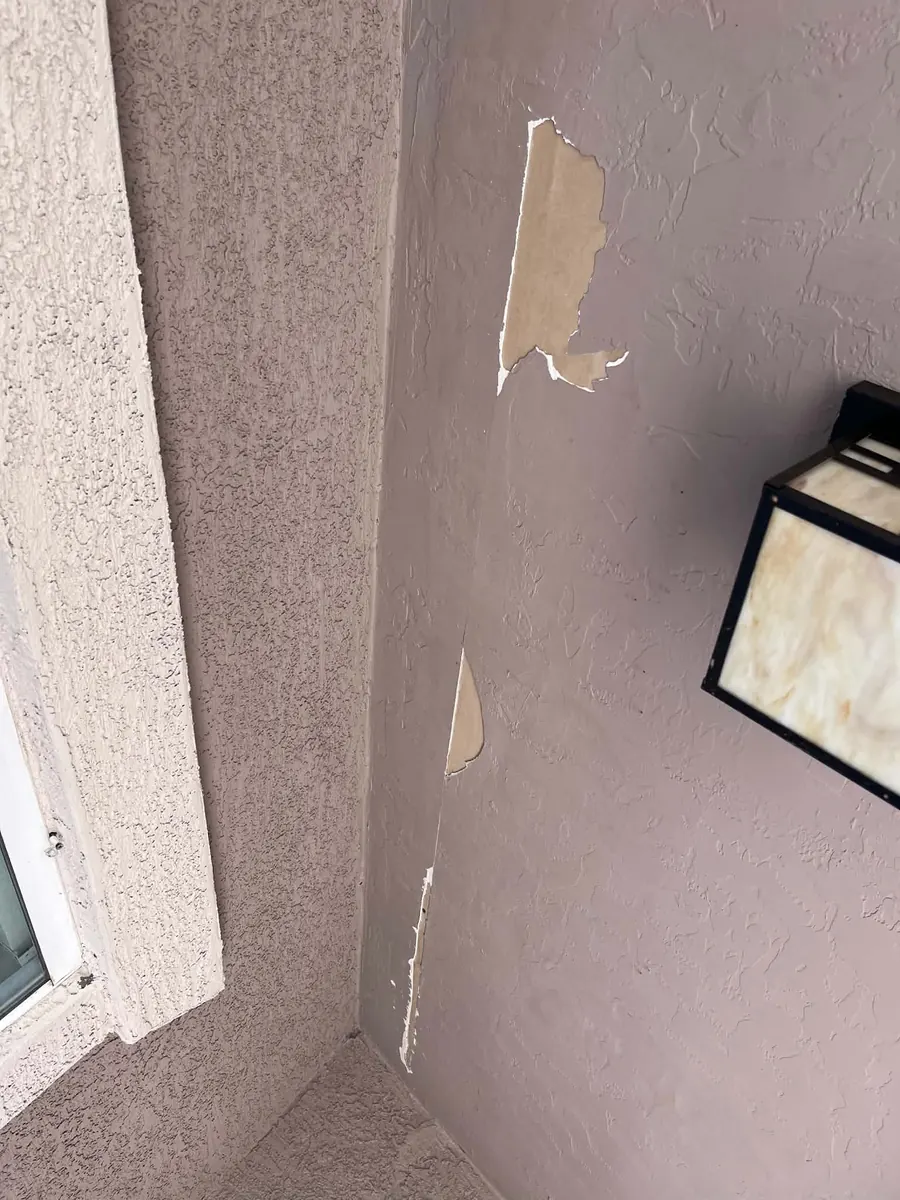
What the estimator looks at inside
- Ceiling heights, especially two-story entries, great rooms and stairwells.
- Wall condition: nail pops, holes from old mounts, cracks at corners and water stains.
- The existing sheen and paint type on trim and doors, since glossy or oil-based finishes change the prep.
- How much furniture has to be moved or covered.
- Which surfaces are in scope: walls only, or ceilings, trim, doors, closets and cabinets too.
The product and color conversation
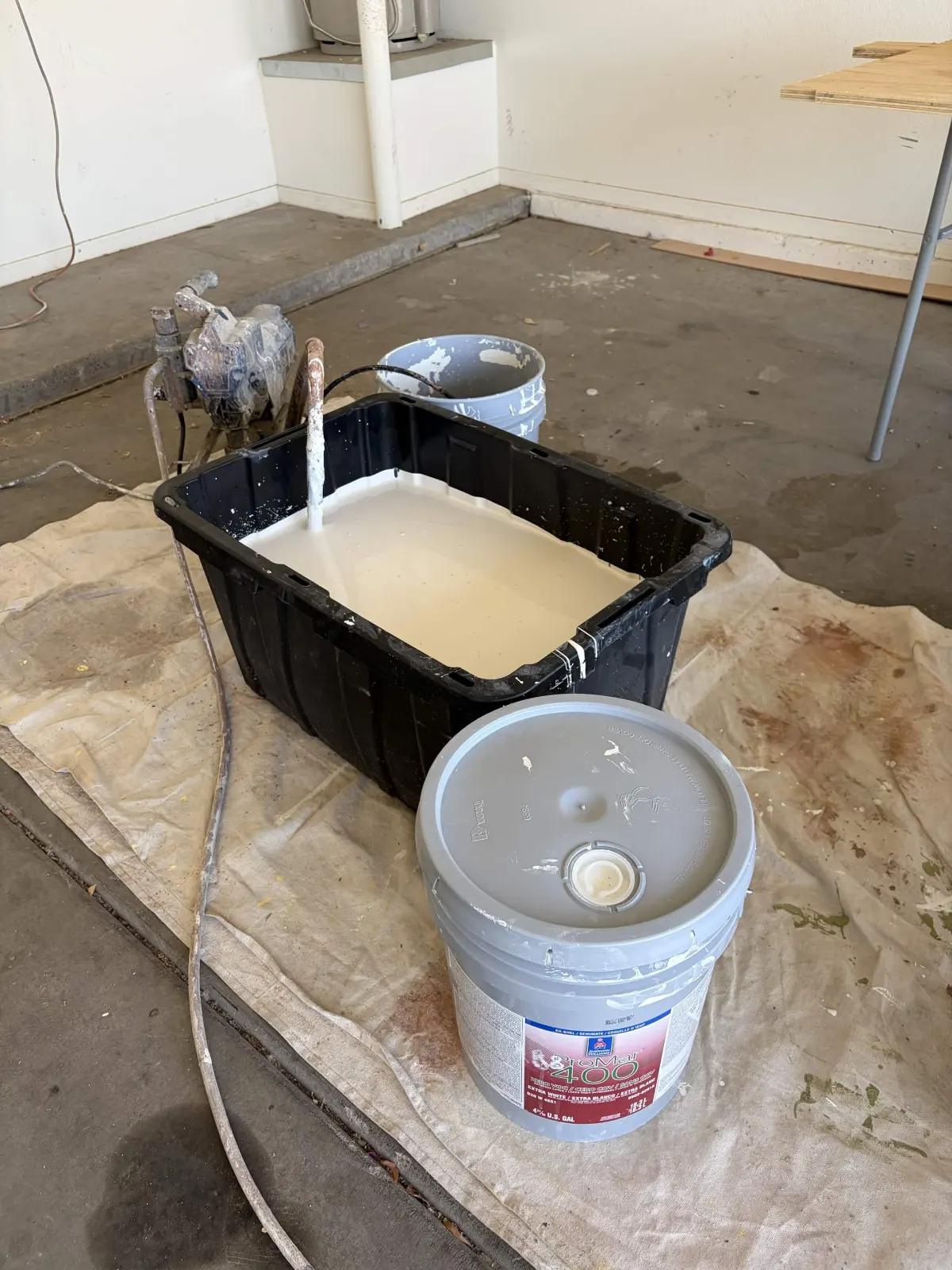
Part of the visit is deciding what goes on the walls. With us, that means Sherwin-Williams: Emerald Interior inside, Emerald Exterior outside, Loxon masonry primer on bare or patched stucco, and on stucco two coats sprayed and back-rolled. If you want to compare product lines on price, ask, and have the estimate show each option so the difference is clear.
You do not need final colors at the estimate. Colors and products are finalized when the job is scheduled. Do bring your HOA's color rules or approval letter if you have one, and any colors you are already leaning toward.
Questions to bring to the walkthrough
- Which areas will be primed, and with what?
- How many finish coats on each surface?
- What will you clean, repair or caulk before painting?
- What will you cover and protect, inside and out?
- Roughly how many days will the job take, and how are weather delays handled?
- Who do I contact during the job?
The written quote
The FTC's home improvement advice says a written estimate should describe the work to be done, the materials, the completion date and the price. For painting, that means the estimate should name each area, the prep steps, the primer, the finish product and sheen, and the number of coats. Read it before the estimator leaves while the walk is fresh, and ask about anything you discussed that is not on it.
Our process is built around that point: Noah or one of our estimators visits, assesses every surface, discusses paint options and hands you a detailed written quote before leaving.
After the estimate
Take your time comparing quotes. The FTC suggests asking for an explanation when estimates differ a lot rather than simply choosing the lowest bid. When you are ready to go ahead, the contract should include the contractor's name, address, phone number and license number, plus estimated start and completion dates, and any promise made during the walkthrough should be written into it.
If you sign a contract at home, the FTC's Cooling-Off Rule generally gives you three business days to cancel, and the contract should include a written statement of that right. The FTC also advises against paying the full cost up front and suggests holding the final payment until the work is finished to your satisfaction.
How it fits our five steps
- Call or request a quote, and answer a few questions about the property and scope.
- Same-day in-person estimate, with a detailed written quote before we leave.
- Scheduling and paint selection: we confirm the start date, help finalize colors and products, and handle material sourcing.
- Our crew paints, protects the property, applies every coat to spec and gives you daily progress updates.
- Final walkthrough and cleanup, with touch-ups handled on the spot.
Frequently asked questions
- How long does a painting estimate take?
- For a typical project, 30 to 60 minutes. A whole-house repaint or a full exterior with patio covers, block walls and fascia can take longer, because every surface needs a look.
- Do I need to be home for a painting estimate?
- For interior work, yes, since the estimator needs to see each room. For an exterior, being there lets you point out problem areas and answer questions, which usually makes the quote more accurate.
- Should I pick colors before the estimate?
- It is not required. Colors are finalized when the job is scheduled, but sharing your ideas and any HOA requirements early helps the estimator plan primer and coats.
- Why do painters need to see the house before giving a price?
- Size alone does not set the price. Chalking, cracks, peeling, ceiling heights and how much prep a surface needs only show up in person, and they change the work a lot.
- What should a written painting estimate include?
- Each area in scope, the prep, where primer goes, the product and sheen for each surface, the number of coats, the timeline and the price. Anything promised out loud should be written in.
- Can I get an estimate for just one room or one wall?
- Yes. Small jobs go through the same visit: the estimator looks at the surface, talks through options and writes up the quote.