Guide · Exterior painting · Timing
Best Time of Year to Paint a House Exterior in Phoenix
By the Orange Coatings team · Published
The best time to paint a house exterior in the Phoenix area is October through April, when daytime temperatures mostly sit between about 50°F and 90°F and paint can level, bond and cure properly. Within that window, October-November and March-April are the sweet spots: warm days, mild nights and little rain.
Summer and winter jobs can still turn out well with the right scheduling. Here is how the year breaks down, what changes in each season, and how HOA approval and booking lead times fit in.
| Best months | October through April |
|---|---|
| Sweet spots | October-November and March-April |
| Workable with care | May and summer mornings; winter midday |
| Watch out for | Monsoon storms June 15 to September 30, hot surfaces and evening dew |
Why temperature matters to exterior paint
Latex paint dries as its water evaporates, and its binder needs time to flow together into a continuous film. If the wall is too hot, the paint skins over before it bonds. Sherwin-Williams notes that extremely high temperatures, over 100°F, can make paint dry too fast to bond properly, which can lead to peeling.
Cold has its own limit. Many latex paints historically needed 50°F or warmer, while Sherwin-Williams lists newer exterior lines such as Duration and SuperPaint that can be applied as low as 35°F. In the Valley, cold is rarely the problem; overnight dew on a winter wall is the bigger concern.
The Phoenix painting calendar, month by month
- October-November: our favorite stretch. The heat breaks, monsoon is over and nights stay mild.
- December-February: cool days paint well. Start after the morning dew burns off and stop early enough for the paint to dry before dusk.
- March-April: excellent conditions again, and the busiest booking season, so plan ahead.
- May: warming fast. Mornings and shaded sides work; afternoons on west walls get hot.
- Early June: very hot but usually dry. Early starts only, chasing the shade.
- Mid-June to September: monsoon season adds humidity, wind, dust and sudden storms to the heat.
Fall or spring: which is better?
Both work well, and the difference is mostly about what comes next. Paint applied in October gets several mild months to cure fully before its first summer, which is easy on a fresh film. Paint applied in April goes straight into the hottest stretch of the year within weeks, which is fine for a properly applied premium coat but leaves less margin for a rushed job.
Fall also lines up with the end of monsoon damage. Cracks opened and stains left by summer storms are easier to find and repair before painting than to guess at in spring. If you are flexible, we lean toward fall for full repaints and spring for touch-up work and trim.
Surface temperature is what counts
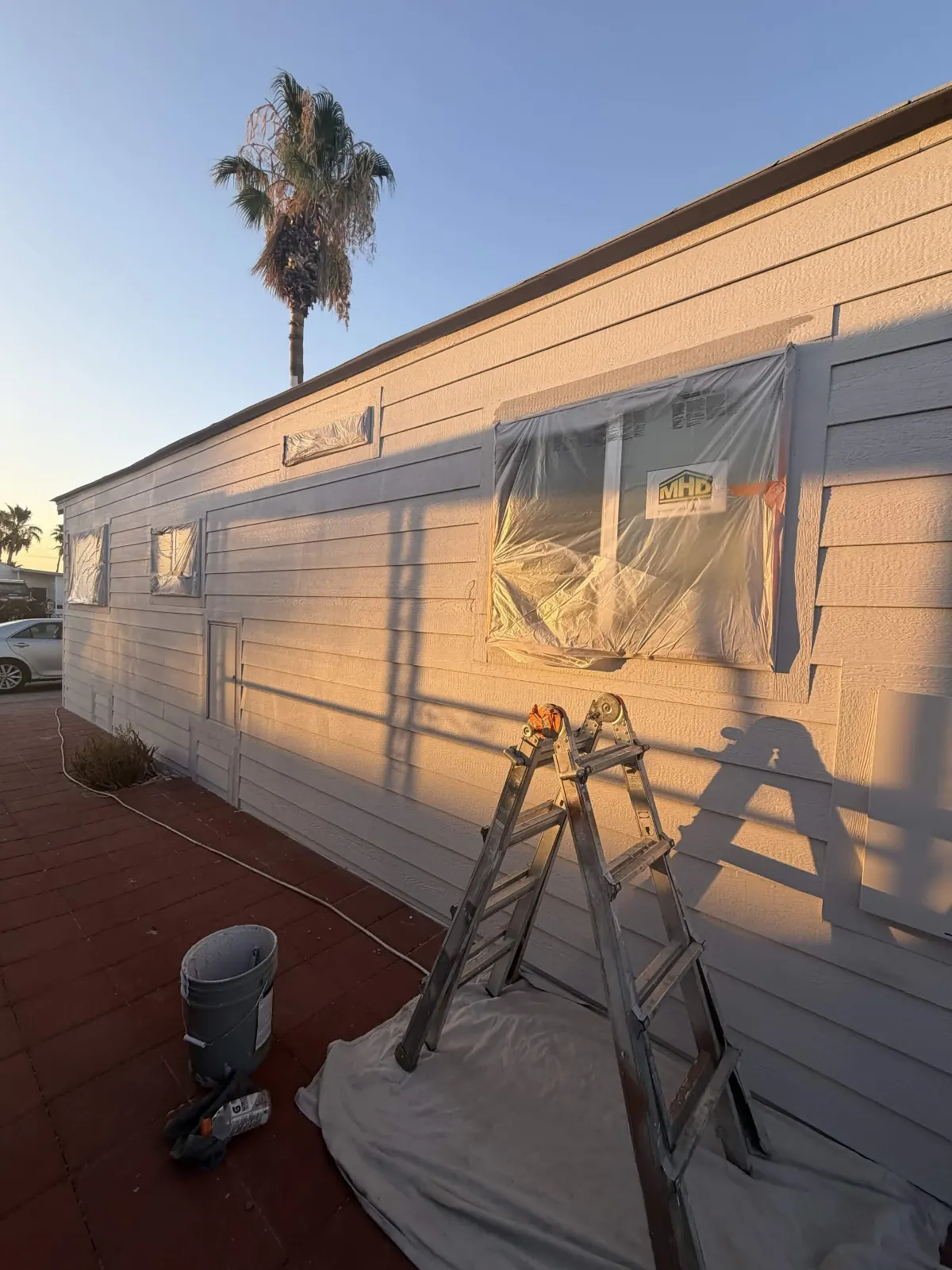
Air temperature on the forecast is not the number that matters most. A west-facing stucco wall in afternoon sun can be far hotter than the air, and dark trim hotter still. That is why crews work around the house with the shade: east walls in the morning, west walls once the sun moves off them or the next morning.
An infrared thermometer settles arguments quickly. If the surface is hotter than the label allows, the crew moves to a shaded side and comes back.
Painting in summer: what changes
Summer exterior work in Surprise and the rest of the West Valley is possible, and our crews do it with early-morning starts. Days are shorter on the wall, so a job takes more calendar days, and paint is applied in smaller sections so it is back-rolled before it flashes.
Avoid painting in direct afternoon sun, which Sherwin-Williams also advises against in the hot months. Keep buckets in the shade too; warm paint thickens and dries in the sprayer lines.
Painting in winter: dew and short days
Desert nights cool quickly, and on clear winter nights dew can settle on walls after sunset. Sherwin-Williams says most products need at least four hours of dry time before moisture settles on them, and ideally the temperature should stay in range and above the dew point for about 48 hours after application.
In practice that means starting mid-morning on surfaces that are dry to the touch and finishing exterior coats by early afternoon. Winter jobs also run fewer hours per day, so they take a little longer on the calendar.
Plan backward from your target month
- Pick the month you want the house finished.
- Subtract booking lead time; spring and fall fill up first.
- Subtract HOA review time if your community requires approval, often up to 30 to 45 days.
- Subtract a week or two for picking colors and testing samples on the wall.
- Book the estimate at that point, which for a fall repaint is often mid-summer.
Does the season change how long paint lasts?
Applied within the label's conditions, paint put on in July can last as long as paint put on in November. What shortens paint life is application outside those limits: on a scorching wall, on damp stucco after a storm, or late in the day before dew. Prep and product quality matter more than the month, which is why we spend most of our effort on washing, crack repair, Loxon primer on bare stucco and two coats of Sherwin-Williams Emerald Exterior.
Tell us your target date at the same-day estimate and we will tell you how we would schedule the sides of your house for that season.
Frequently asked questions
- What month is best to paint a house in Phoenix?
- October, November, March and April usually give the best mix of warm days, mild nights and dry weather. The wider window runs October through April.
- Can you paint a house exterior in the Arizona summer?
- Yes, with early starts, shaded sides first and no painting in direct afternoon sun. The job takes more calendar days because the working hours are shorter.
- Is it too cold to paint outside in a Phoenix winter?
- Rarely. Several premium paints can go on down to 35°F. The bigger winter issue is evening dew, so coats need to be finished early enough to dry first.
- How far ahead should I book an exterior painter for spring?
- Book in winter if you want a spring date, and earlier if your HOA must approve colors. Spring and fall fill up first.
- Does temperature affect paint color?
- Paint applied to a very hot wall can dry unevenly and look patchy, especially on darker colors. Working with the shade keeps the finish even.
- When should I avoid painting in Phoenix?
- Afternoons on sun-baked walls in summer, during or right after monsoon storms, and late on winter afternoons when dew is coming.