Guide · Exterior painting · Monsoon
Painting During Monsoon Season: What to Know
By the Orange Coatings team · Published
You can paint a house exterior during Arizona's monsoon season, which runs June 15 to September 30, as long as the work happens in the mornings, stops well before afternoon storms build, and never goes onto stucco that is still wet from the last rain. The risks are rain or dust hitting fresh paint, high humidity slowing the dry, and wind carrying overspray.
Here is what each of those does to a paint job, how a careful crew plans around them, and when it makes more sense to wait for fall.
| Season | June 15 to September 30 (National Weather Service Phoenix) |
|---|---|
| Main hazards | Sudden rain, dust storms, strong outflow winds, humid nights |
| Best working window | Early morning to early afternoon |
| After heavy rain | Wait at least a day and until the surface is dry |
What monsoon weather does to fresh paint
- Rain on uncured latex can wash it off, spot it or leave sticky tan or white streaks as soluble ingredients come to the surface.
- A dust storm sticks grit into any paint still tacky, leaving a sandpaper texture that has to be sanded and recoated.
- Humid nights slow drying, so paint that would be dry by evening in May may still be soft at dusk in August.
- Outflow winds can push spray mist far past the masking, onto cars, windows and the neighbor's house.
- Painting over damp stucco traps water under the film, which later shows up as blisters.
How storms usually behave in the Valley
The National Weather Service office in Phoenix defines the monsoon as June 15 through September 30, the period when its hazards are most likely. Those hazards include damaging downburst winds, torrential rain and flash flooding, frequent lightning, dust storms, and extreme heat with humid, very warm nights.
Storms in the Phoenix area tend to build over the mountains in the afternoon and move into the Valley in the late afternoon or evening, often with a wall of dust or gusty outflow ahead of the rain. Mornings are usually calm. That daily rhythm is what makes monsoon painting possible.
How we schedule exterior work in monsoon season
- Check the hourly forecast and radar the evening before and again at dawn.
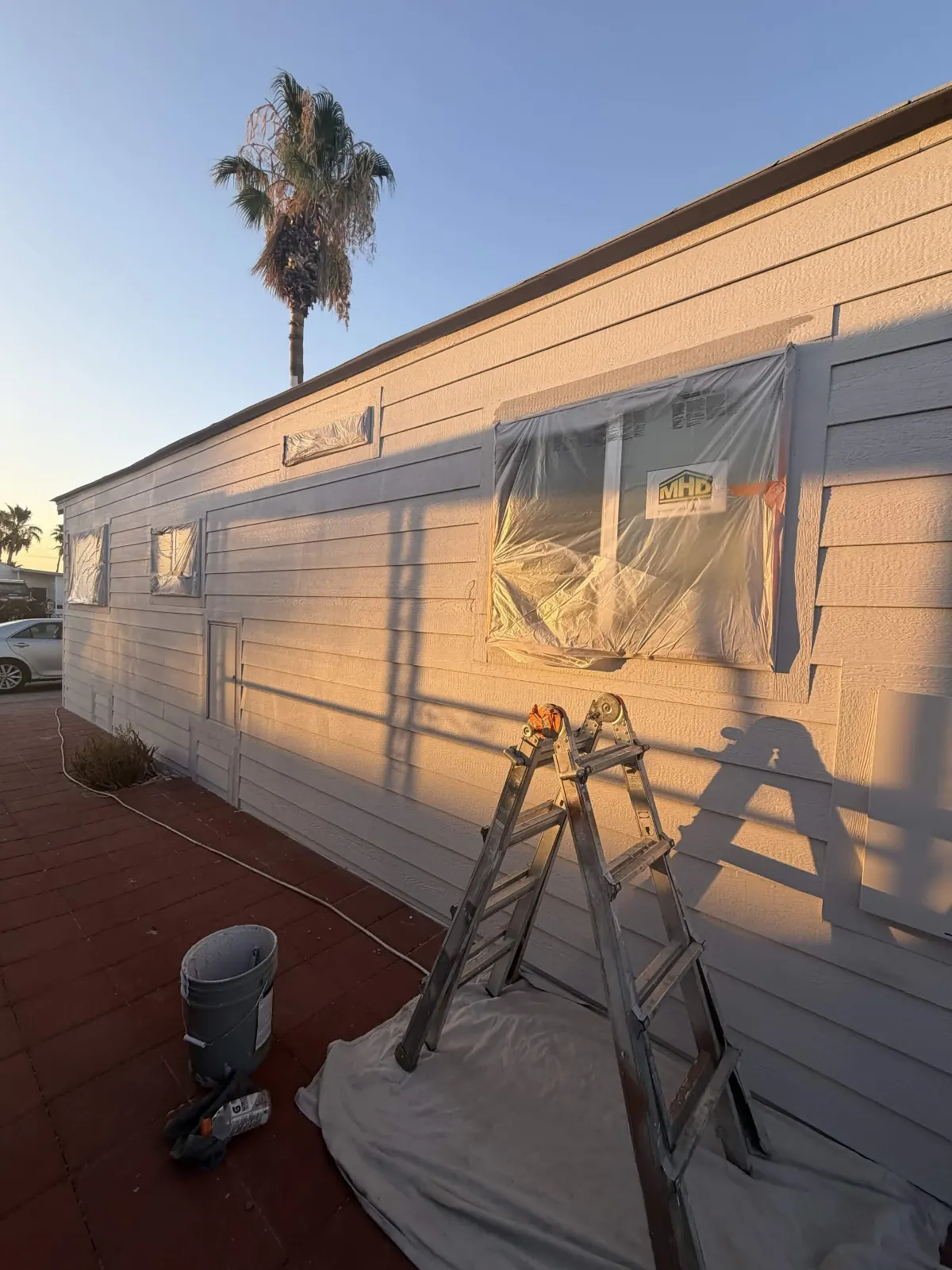
- Start at first light on walls already out of the sun, and work in sections that can be back-rolled while wet.
- Plan the last coat of the day to finish by early afternoon so it has hours to dry before storms arrive.
- Keep tarps and plastic ready to cover open paint, equipment and fresh work if a cell pops up early.
- Stop spraying when gusts pick up, and brush or roll instead where trim allows.
- After a storm, wait at least a day and check that the stucco is dry before painting again.
How long to wait after a storm
Sherwin-Williams advises waiting at least one day after a heavy rain and making sure the surface is dry before painting, adding that porous materials like masonry absorb more water than metal or vinyl. Stucco is porous, so after a big storm the wall can feel dry on the face while still holding moisture inside.
Shaded north walls and areas near downspouts and sprinklers dry last. A moisture meter, or simply waiting through a hot sunny day, avoids trapping water behind the new coat.
If rain hits fresh paint
Light sprinkles on paint that has dried for a few hours usually leave little or no trace. Rain on paint that is minutes old can run or wash it thin. By Sherwin-Williams' guidance, a typical exterior coat wants a dry stretch of about four hours before any moisture lands on it.
Tan, glossy or sticky streaks that appear after a damp night are usually soluble ingredients from the paint drawn to the surface, not a failed coat. They generally rinse off with water once the paint has dried, and they should be washed before they bake on. Areas that washed off or picked up dust get recoated once dry.
Use the monsoon to plan your next repaint
Monsoon season is also the best time to see how your current paint is holding up. Watch where water runs during a storm: down a wall from a missing gutter, through a crack at a window corner, or along the base where sprinklers already hit. After the storm, look for stains, bubbles and peeling on the weather side.
Note those spots and show them at your estimate. Those are the places where crack repair and primer matter most, and where a heavier elastomeric coat is sometimes worth discussing.
Should you paint now or wait for fall?
Either way, the same standards apply: clean, repaired, dry stucco, Loxon masonry primer on bare or patched spots, and two coats of Sherwin-Williams Emerald Exterior.
- Paint now if the job is small, mostly shaded, or urgent, such as peeling fascia letting water into wood.
- Paint now if you are selling and the listing date is fixed.
- Wait for October if the house is large, mostly sun-exposed, or needs a lot of stucco repair that should dry well first.
- Wait if your HOA approval is still pending; summer is a good time to get it.
Frequently asked questions
- Can you paint a house during Arizona monsoon season?
- Yes, by painting in the morning, finishing coats by early afternoon and keeping off wet stucco after storms. Larger, sun-exposed jobs may be easier in fall.
- What happens if it rains on fresh exterior paint?
- Paint that has dried a few hours usually survives light rain. Very fresh paint can wash off or streak and may need a touch-up or recoat once dry.
- How long after a monsoon storm can I paint stucco?
- At least a day after heavy rain, and only once the stucco is dry through. Shaded walls and spots near downspouts take longest.
- Do dust storms ruin fresh paint?
- They can leave grit in paint that is still tacky. Affected areas are lightly sanded, cleaned and recoated after the paint dries.
- Why are there brown streaks on my new paint after a humid night?
- Usually soluble ingredients in the paint drawn out by moisture before it fully cured. They normally rinse off with water once the paint is dry.
- Will Orange Coatings paint my house in the summer?
- Yes. We schedule early-morning starts, work with the shade and watch the forecast closely during monsoon season.