Guide · Interior painting
How to Stop Bathroom Paint From Peeling
By the Orange Coatings team · Published
Bathroom paint stops peeling when you remove the moisture that is pushing it off, usually by running an exhaust fan sized for the room long enough after every shower, and then repaint correctly: scrape back to firmly bonded paint, clean and treat mildew, prime, and finish with a moisture-resistant satin or semi-gloss. Repainting without fixing the moisture just restarts the clock.
Not every peel has the same cause, though. Where the paint lets go is the best clue to why, so start by reading the pattern.
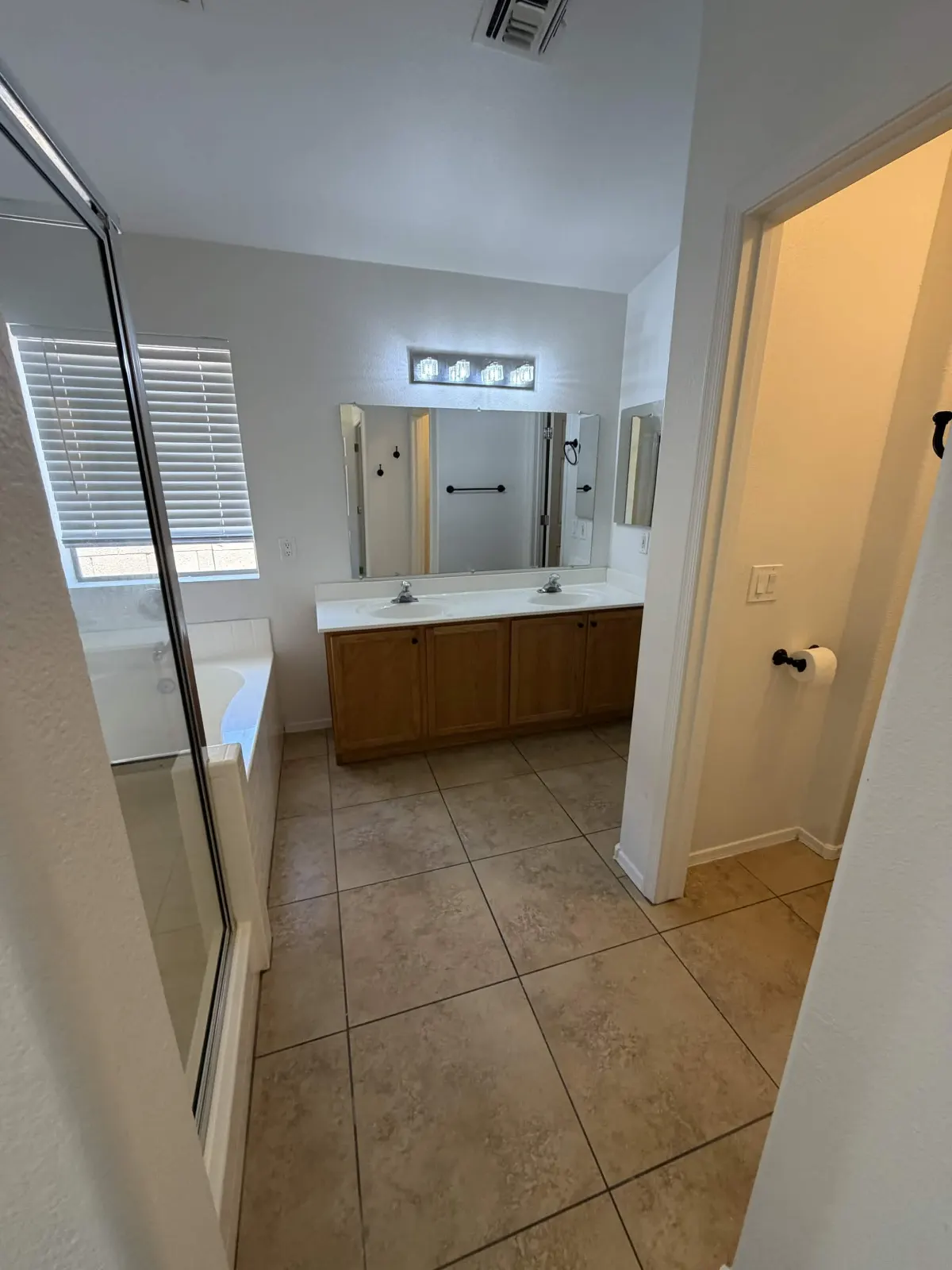
Read the peel: where it fails tells you why
- Ceiling directly over the shower, in sheets or blisters: steam condensing on the ceiling. Ventilation is the problem.
- Wall just above the tub or shower surround: water getting behind the paint at a failed caulk line or grout joint.
- Behind or below the toilet tank, or beside the vanity: condensation off the cold tank, or a slow supply or drain leak.
- Door, casing and trim peeling in long strips: latex applied over old glossy oil enamel without proper priming.
- Peeling in a large patch on new drywall: the wall was painted without a primer, or painted dusty, so the paint never bonded.
- Bubbles that appeared within weeks of a repaint: the room was used for hot showers before the paint had dried and started to cure.
Why moisture pushes paint off
Sherwin-Williams explains it simply: over time, moisture penetrates the paint film and eventually pushes it away from the surface. Steam from a shower condenses on the coolest surfaces, which in most bathrooms are the ceiling, exterior walls and the area around the window. Water that soaks into drywall or into an old flat paint expands the layers behind the film and breaks the bond.
Arizona's dry air does not prevent this. A closed bathroom with a long hot shower and no working fan still reaches saturation in minutes. Homes cooled by an evaporative cooler also carry more indoor humidity than homes on refrigerated air, and that shows up first in bathrooms.
Fix the fan first
Sherwin-Williams' first recommendation for bathroom peeling is an exhaust fan in any bathroom with a shower. Many older fans are undersized, clogged with dust or vented into the attic instead of outside.
The Home Ventilating Institute (HVI) recommends about 1 CFM of fan capacity per square foot of floor for bathrooms up to 100 square feet. Larger bathrooms are sized by fixture: 50 CFM each for a toilet, shower and standard tub, and 100 CFM for a jetted tub. HVI also advises running the fan for 20 minutes after the bathroom is used; a timer switch makes that automatic.
- Hold a square of toilet paper to the running fan grille. If it does not cling, the fan is not moving much air.
- Check the rating on the fan housing against the size of the room.
- Have an electrician or HVAC tech confirm the duct runs to the outside and replace a weak fan before painting.
Track down hidden water
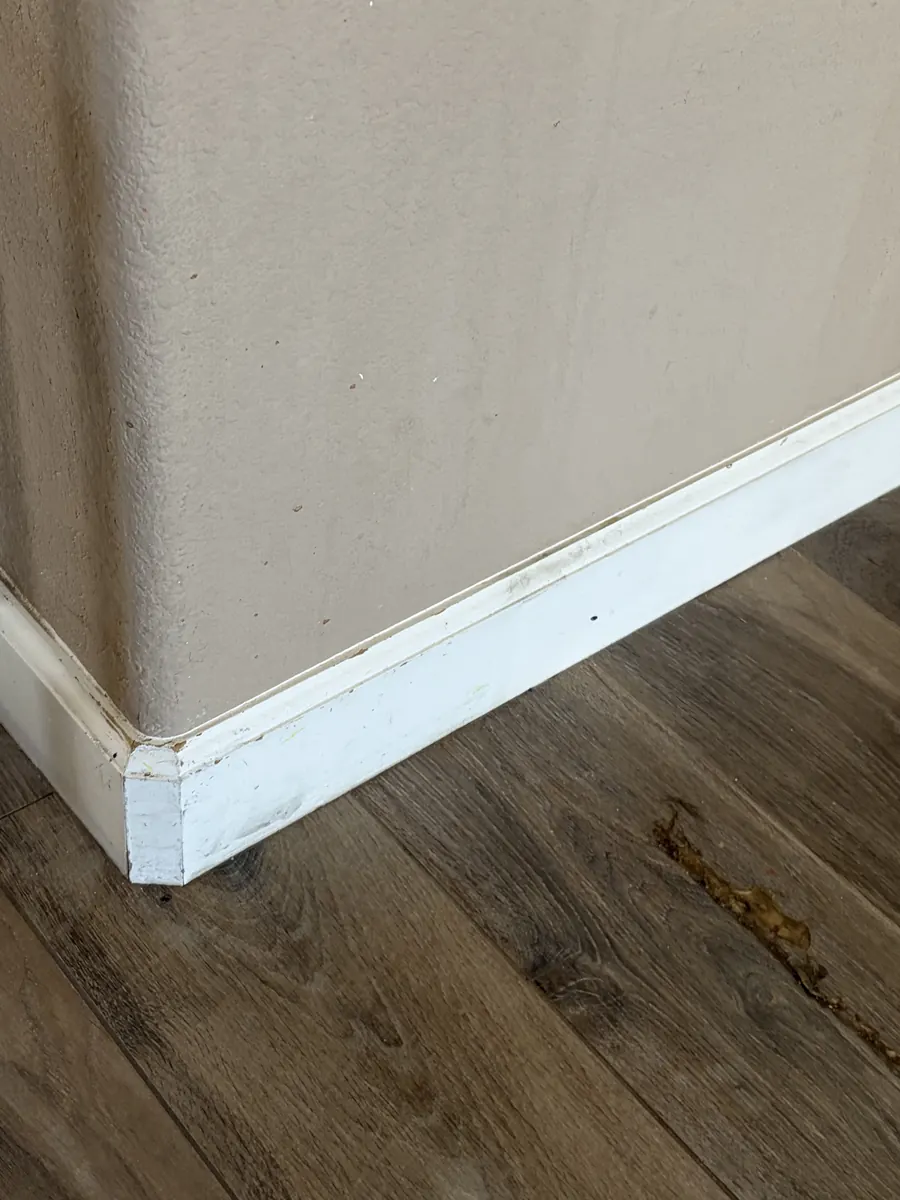
If the peeling is low on the walls or concentrated in one spot, look for liquid water rather than steam. Press on the drywall near the tub, toilet and vanity; soft, swollen or crumbly board means water has been getting in for a while. Gaps in tub and shower caulk, cracked grout and a loose toilet base are the usual entry points. Baseboards with peeling paint and a swollen bottom edge, like the Goodyear corner in our job photos, tell the same story.
Wet drywall has to be repaired or replaced and allowed to dry before any primer goes on. Painting over damp board traps the water and the peel comes back.
Brown drips are not peeling
Tan, brown or clear glossy streaks that run down a freshly painted bathroom wall or ceiling are usually surfactant leaching, not a paint failure. Sherwin-Williams describes it as water-soluble ingredients in the paint rising to the surface when moisture interferes with curing. It washes off with soap and water and may show up once or twice more before it stops. Do not paint over it; wash it, rinse it and let the room dry before showering again.
Repairing the peeled area so it holds
- Scrape away all loose and blistered paint until the edges are firmly attached.
- Test the paint around the damage. Sherwin-Williams suggests checking adhesion in a 6- to 12-inch radius around any peeled area; press tape on it and pull it off quickly, and keep scraping wherever paint comes up.
- Wash the area to remove soap film, hairspray and body oils, and treat any mildew, then rinse and let it dry.
- Sand the edges of the scraped areas so they feather into the surrounding paint. Patch and re-texture dents or torn paper.
- Prime all bare drywall, patches and scraped edges. Use a bonding primer on glossy oil trim.
- Recaulk tub, shower and backsplash joints with a kitchen and bath sealant.
- Apply two coats of a moisture-resistant finish in satin or semi-gloss, ceiling included.
Give the paint time before the first shower
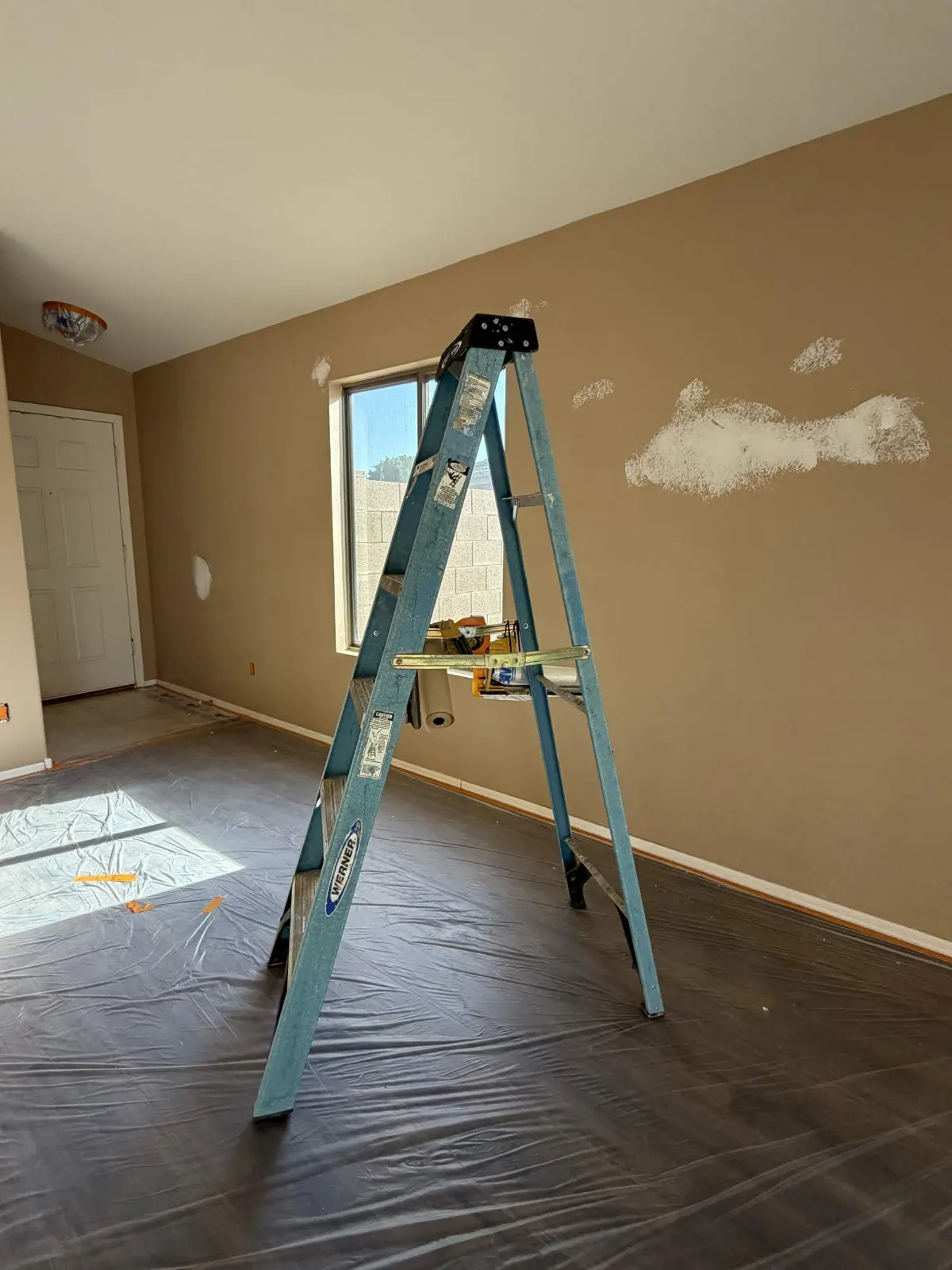
Fresh paint that gets steamed too soon is the most avoidable cause of bubbling. Sherwin-Williams advises letting paint dry thoroughly before the bath or shower is used. Follow the drying time on the label, run the fan through the first few showers, and keep showers short for the first days if you can. If the household has only one shower, schedule the bathroom early in the day so it has the most time to dry before evening.
Full cure takes much longer than surface drying, so avoid scrubbing the walls for the first few weeks.
When to call a painter
A small flake by the light switch is a weekend fix. A ceiling peeling in sheets, a wall that is soft to the touch, or paint that has peeled again after a recent repaint points to a cause that needs to be found first. At the same-day estimate we look at where the paint is failing, check the fan and the caulk lines, and write repairs and priming into the scope. Walls and ceilings are finished with Sherwin-Williams Emerald Interior, a washable low-VOC paint, in a sheen suited to a wet room.
Frequently asked questions
- Why does the paint on my bathroom ceiling peel but not the walls?
- Warm steam rises and condenses on the ceiling first, and many ceilings were finished in flat ceiling paint that absorbs moisture. A properly sized fan and a moisture-resistant sheen on the ceiling usually solve it.
- Can I just paint over peeling bathroom paint?
- No. New paint over loose paint peels along with it. Scrape to a sound edge, prime the bare spots and fix the moisture source first.
- What size exhaust fan does my bathroom need?
- For bathrooms up to 100 square feet, HVI recommends about 1 CFM per square foot of floor area. Larger rooms add 50 CFM for each toilet, shower and standard tub.
- How long should the bathroom fan run after a shower?
- HVI recommends about 20 minutes after the room is used. A timer switch keeps it running after you leave.
- Is semi-gloss always better than satin in a bathroom?
- Both shed moisture far better than flat. Semi-gloss wipes cleaner but shows wall flaws more, so satin is often the better look on textured bathroom walls.
- What are the brown streaks on my newly painted bathroom ceiling?
- Usually surfactant leaching from paint that got steamed before it cured. Wash the streaks off with soap and water; they may return once or twice and then stop.