Interior painting · Ceilings
Ceiling Painting in Surprise, AZ
Published
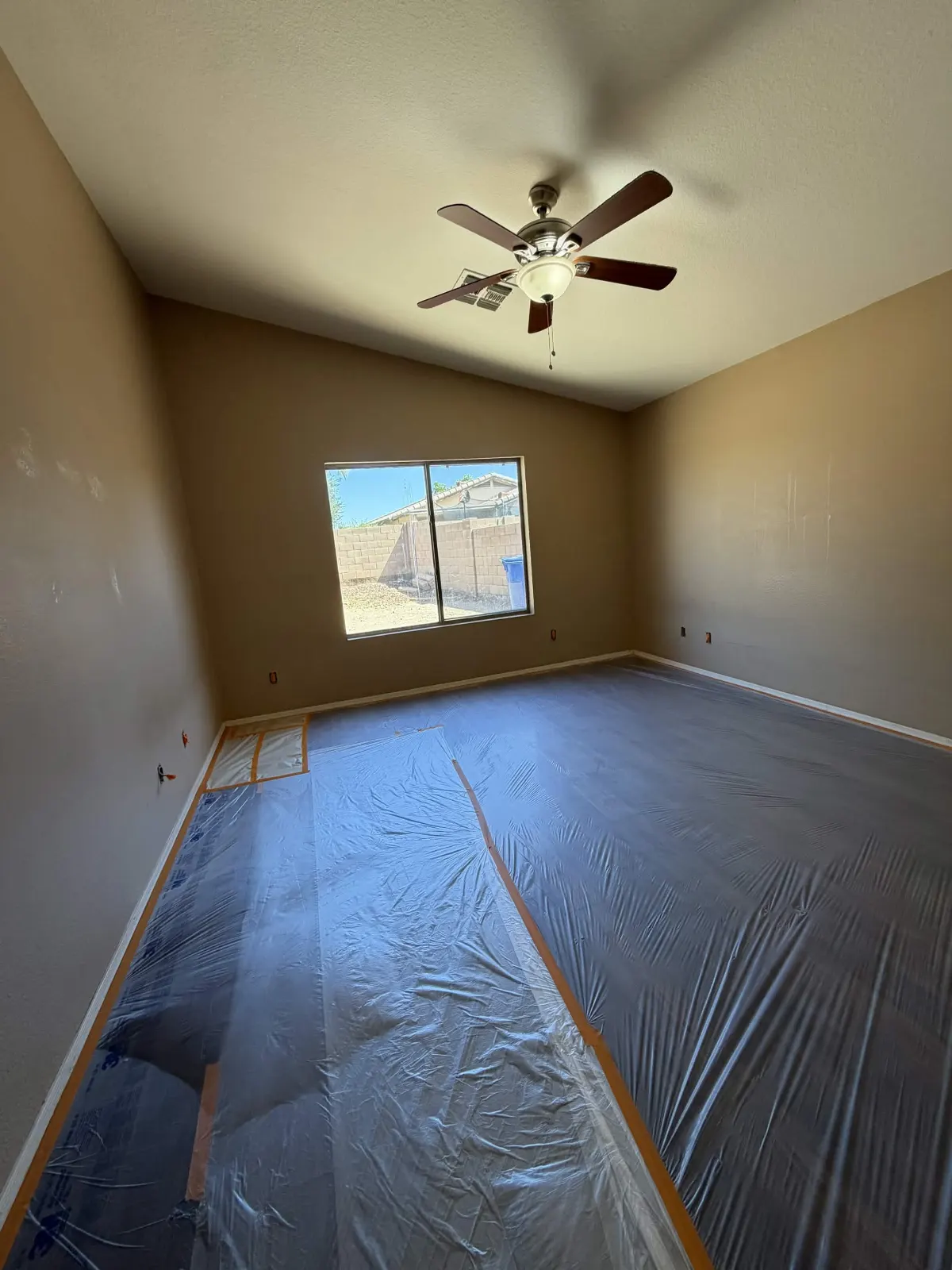
Painting a ceiling brightens a room more than most people expect, because a ceiling that looks white has often turned gray or yellow over the years. We protect the room, seal any stains with a stain-blocking primer, and roll on a flat finish that hides the texture and joint lines, with a clean cut line where the ceiling meets the wall.
Ceilings are hard to do well yourself: the work is overhead, the light shows every lap mark, and vaulted ceilings need ladders or planks. Here is how we approach them in West Valley homes.
| Typical sheen | Flat, to hide texture and patches |
|---|---|
| Stains | Sealed with a stain-blocking primer before the topcoat |
| Ceiling types | Flat, vaulted, coffered and textured drywall ceilings |
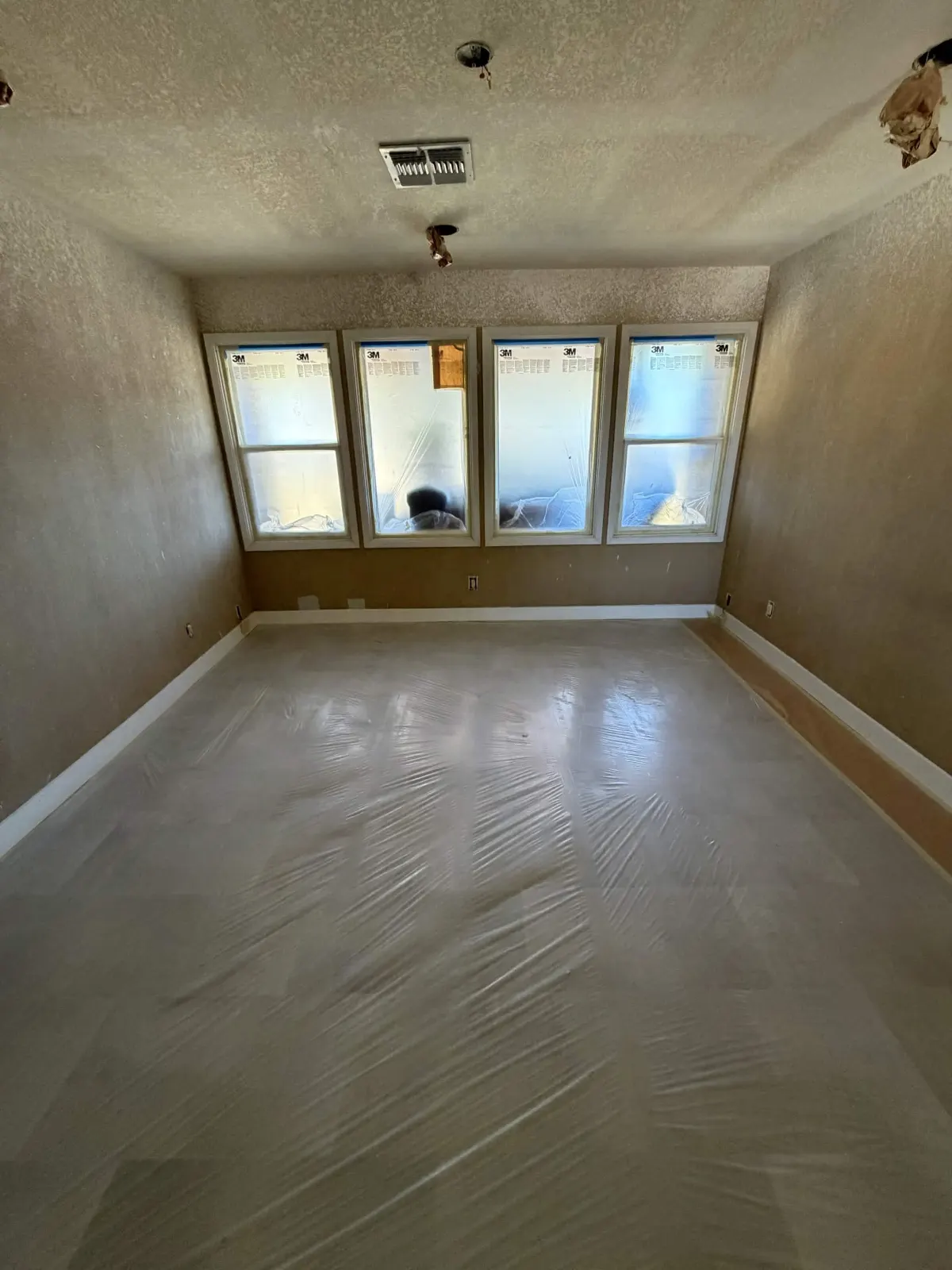
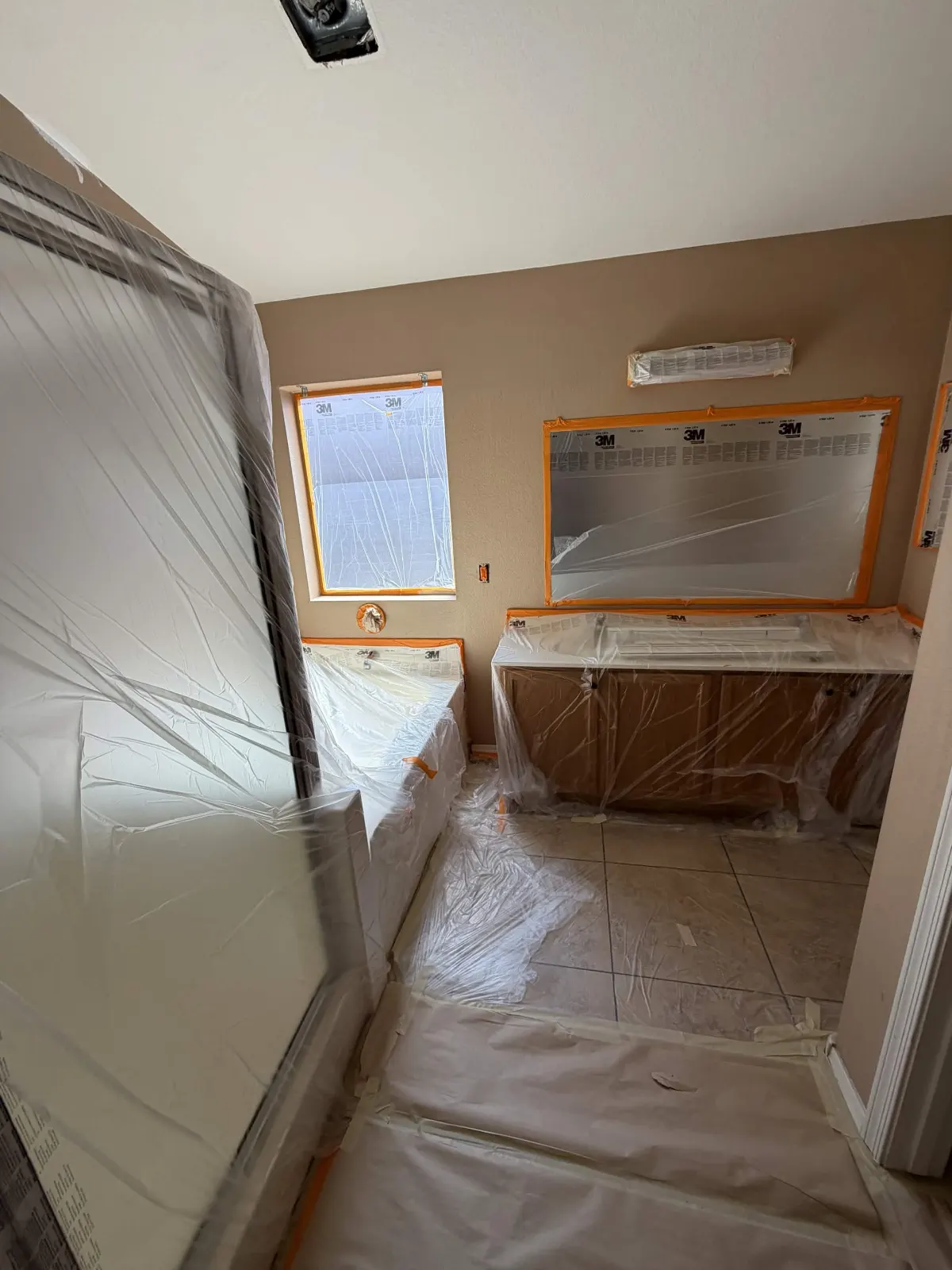
| Protection | Floors and furniture covered in plastic and drop cloths |
What ceiling painting includes
- Covering floors and furniture, and moving what can be moved to the middle of the room
- Removing or masking ceiling fan canopies, light fixtures and smoke detectors
- Patching cracks, nail pops and small holes, with texture matched over repairs
- Spot priming water stains, smoke marks and patches
- Cutting in the ceiling line along the walls and around vents
- Rolling the ceiling in one direction to avoid lap marks
- Cleanup and a walkthrough with you under good light
Signs your ceiling needs paint
- Yellow or brown rings from a past roof leak or AC condensate line
- A dingy gray cast compared to freshly painted walls
- Hairline cracks along drywall seams or corners
- Gray marks above vents and around the ceiling fan
- Patches that were never textured or painted to match
- You are painting the walls and want the whole room to look new
Our ceiling painting process
- Clear and cover the room, then mask the top edge of the walls if they are not being painted.
- Lower or mask fixtures and turn off ceiling fans.
- Repair cracks and holes, and blend the texture.
- Prime stains and repairs with a stain-blocking primer.
- Cut in around the edges and fixtures.
- Roll the field of the ceiling, keeping a wet edge so the finish dries evenly.
- Inspect with a work light at a low angle and touch up thin spots.
Water stains after monsoon storms
Heavy monsoon rain from June 15 to September 30 is when many flat and low-slope roofs in the Valley leak, and the stain shows up on the ceiling below. Air conditioning drain lines in the attic can also overflow and leave a ring. Before we paint, the leak itself has to be fixed by a roofer or HVAC tech, or the stain will come back.
Regular ceiling paint will not cover a water stain. The brown tannins bleed straight through, sometimes within a day. A stain-blocking primer seals them, then the finish goes on top. If the drywall is soft or sagging, it needs to be cut out and replaced before painting.
Vaulted and tall ceilings
Great rooms with vaulted ceilings are common in West Valley homes, from production builds in Surprise and Buckeye to larger custom homes. Tall ceilings take more setup, with extension poles, tall ladders or planks over stairwells, and the lines along sloped walls have to stay straight.
Plant shelves and high ledges, which many 1990s and 2000s homes have, collect dust and need cleaning before any paint goes on nearby.
Flat paint, texture and color
We use a flat finish on most ceilings. It reflects light evenly and hides texture, seams and small repairs that a shinier sheen would highlight. Most homes here have a knockdown or orange peel texture on the ceiling, which takes more paint than smooth drywall.
Most people choose a bright white ceiling, but a ceiling tinted slightly toward the wall color can soften a room. In rooms with lots of sun, a light ceiling bounces daylight deeper into the space.
Time and what affects the price
A standard bedroom ceiling is often done in part of a day. A large great room with vaulted ceilings, or every ceiling in the house, takes longer, especially when stains need primer and dry time first. Your estimate lists the schedule.
- Ceiling height and whether it is vaulted
- Total area and number of rooms
- Stain blocking and drywall repair needed
- Popcorn texture, which may need to be removed or sealed before painting
- Number of fans, fixtures and vents to work around
- Whether walls are painted at the same time
Ceilings in rentals, kitchens and smoking homes
Kitchen ceilings collect a thin film of grease that keeps new paint from bonding, so they get cleaned with a degreaser before priming. Ceilings in homes where people smoked are usually yellow-brown, and that staining will bleed through ordinary paint just like a water stain. A full coat of stain-blocking primer seals it before the finish coat.
For landlords and property managers, a ceiling repaint is often part of a turnover, since ceilings over beds, around fans and near the AC returns get dingy over a lease. We can paint ceilings and walls in the same visit so the unit is ready to show.
Ceiling painting around the West Valley
We paint ceilings in homes, rentals and offices in these and nearby areas:
Photos
Frequently asked questions
- Should the ceiling be painted before or after the walls?
- Ceiling first. Any drips or roller spatter land on walls that are about to be painted anyway, and the wall color is then cut in cleanly against the finished ceiling.
- Why does a water stain come back through new paint?
- The stain contains tannins and minerals that dissolve in water-based paint and rise to the surface. A stain-blocking primer locks them in so the topcoat stays clean.
- Can you paint a popcorn ceiling?
- It can be painted, but rolling can loosen the texture, and older popcorn may contain asbestos and should be tested before anyone disturbs it. Many owners choose removal and a new texture instead.
- Do I need to empty the room to paint the ceiling?
- Not entirely. Small items and breakables should come out, and we move larger furniture to the center and cover it. Beds and sofas can stay under plastic.
- Is ceiling paint different from wall paint?
- Ceiling finishes are usually flat and made to spatter less when rolled overhead. Wall paint is often eggshell or satin so it can be wiped clean.
- Can you match the texture where my ceiling was repaired?
- Yes, patched areas are textured to blend with the surrounding knockdown or orange peel before painting. A flat finish then helps the repair disappear.
- How do you keep paint off my ceiling fan and lights?
- We turn off the power, lower the canopy where possible and wrap the fan and fixtures in plastic. Smoke detectors are covered too, then uncovered before we leave.