Interior painting · Drywall repair
Drywall Repair and Texture Matching in the West Valley
Published
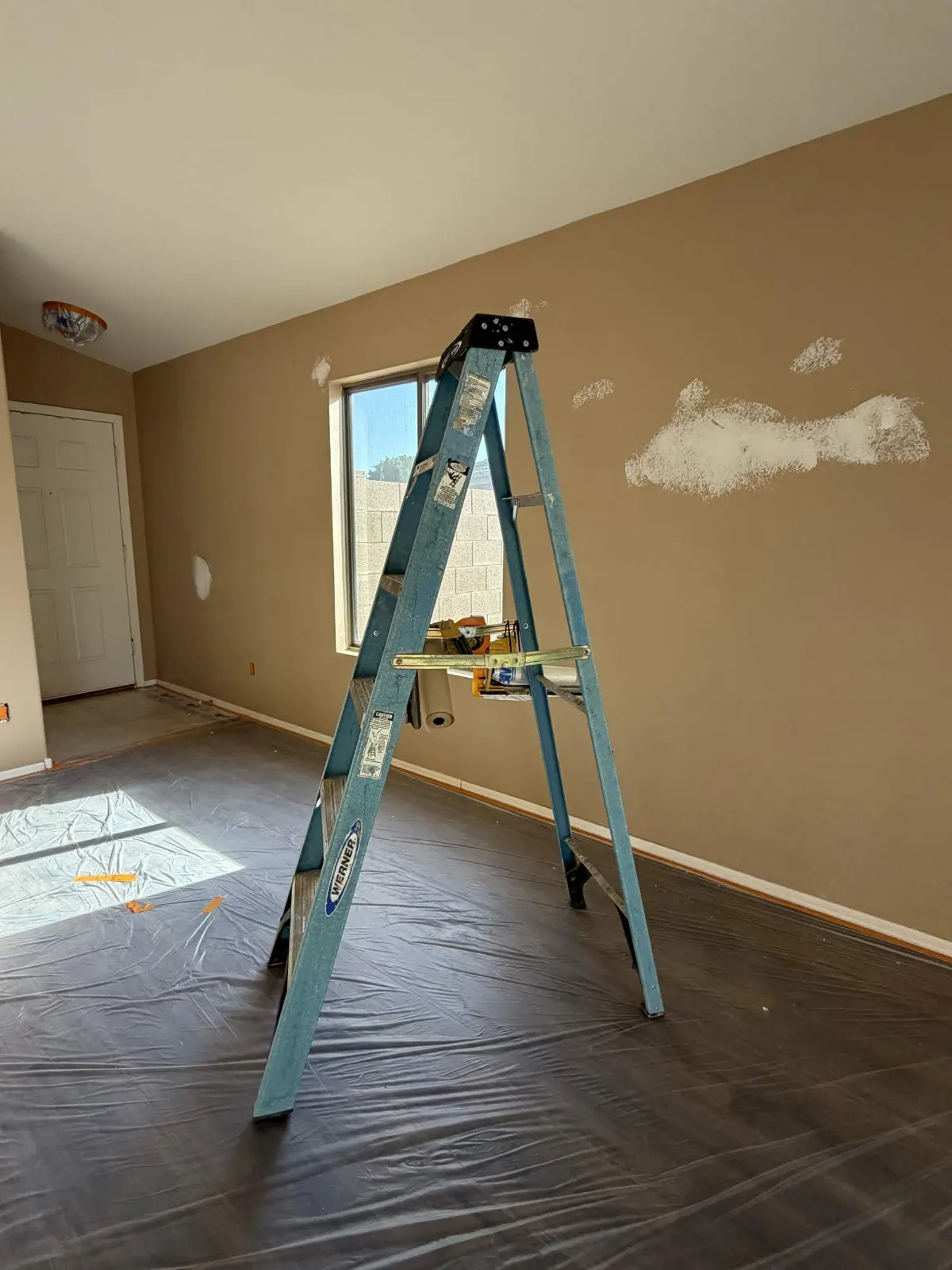
Most drywall damage in a home, from doorknob holes to settlement cracks, can be patched so it disappears once painted, as long as the texture is matched. We fill and tape the damage, rebuild the knockdown or orange peel texture over it, prime the patch, and paint the wall so the repair does not show.
Patching is part of the surface prep on every interior job we do. It is also the step most likely to give away a cheap repair, because a smooth patch on a textured wall shows up the moment light hits it from the side.
| Repairs | Holes, cracks, nail pops, water-damaged spots and anchor holes |
|---|---|
| Textures | Knockdown, orange peel and smooth wall finishes |
| Finish | Patches primed, then painted with Sherwin-Williams Emerald Interior |
| Estimate | Repairs listed in a written estimate on the day we visit |
What drywall repair and texture matching covers
Large-scale drywall replacement, such as whole walls or ceilings after a flood, is a job for a drywall contractor. If your damage is beyond patching, the written estimate will say so before any work starts.
- Nail and screw pops, reset and filled
- Holes from doorknobs, TV mounts, shelving anchors and moving furniture
- Hairline and stress cracks above doors and windows
- Cracked or peeling tape along seams and inside corners
- Small sections cut out and replaced after a leak, once the leak is fixed
- Texture matched over every patch, then primed and painted
Signs of drywall damage worth fixing before painting
- Round bumps in the wall where nails have backed out
- Diagonal cracks running from the corners of doors and windows
- Bubbled or loose tape at a seam
- Old patches that look flat and shiny next to the textured wall
- Soft, stained drywall under a window or near a bathroom
How we repair and match texture
- Find every flaw with a work light held at a low angle and mark it.
- Cut back loose paper and tape, and set or replace popped fasteners.
- Fill holes and cracks; bridge larger holes with a patch or new piece of drywall.
- Apply joint compound in thin coats and sand each one smooth.
- Rebuild the texture to match the surrounding wall, spraying or hand-applying it as needed.
- Prime the patched areas so they absorb paint the same way as the rest of the wall.
- Paint the full wall, corner to corner, so the color and sheen are even.
Matching knockdown and orange peel
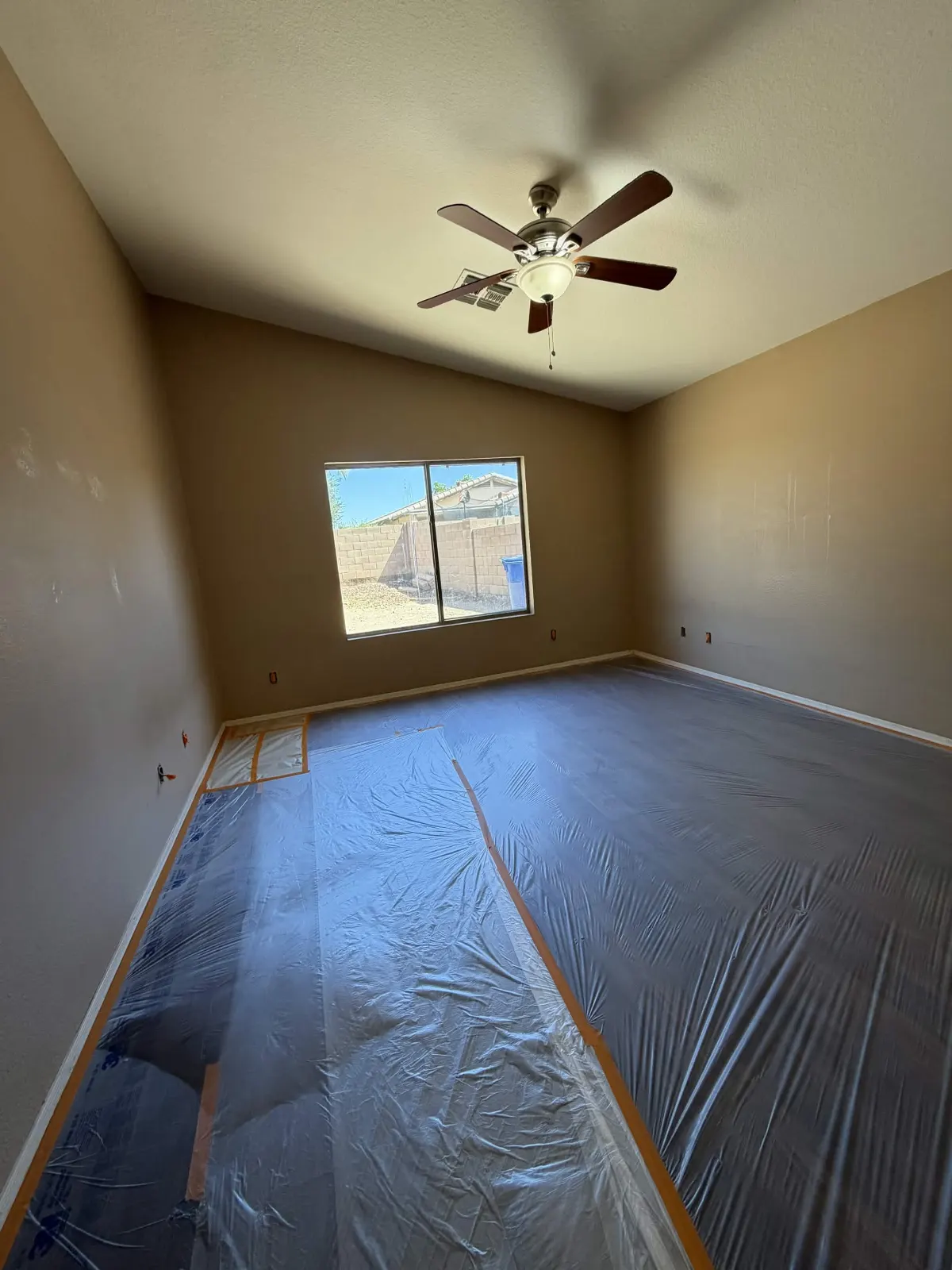
Most homes in the Phoenix area have textured drywall rather than smooth walls. Knockdown is the flattened, splotchy pattern you see in many West Valley homes; orange peel is a finer, bumpy spray texture. Each builder and drywall crew applied texture a little differently, so a match means adjusting the thickness of the mud, the spray pattern and when it is knocked down.
Touching up only the patch rarely works, even with leftover paint from the builder. Paint fades and the patch soaks up paint differently, so the spot looks shinier or darker. That is why we paint the whole wall after a repair.
Why Arizona homes crack
Many homes in the Valley sit on expansive clay soils that shrink and swell with moisture. Combined with big temperature swings between summer and winter, that movement shows up as cracks at the corners of doors and windows and nail pops on long walls. New construction also settles in its first few years, so even a recently built home can show the same small cracks.
Small cracks like these are cosmetic and can be patched. A crack that keeps reopening, gets wider or comes with sticking doors may point to a structural issue, and we will tell you if a repair looks like it needs an engineer's opinion first.
Common situations we patch
Drywall repair comes up most during interior repaints, rental turnovers, preparing a home to sell, and after a TV or shelving is moved. Landlords and property managers often need a batch of patches done between tenants so the unit can be shown quickly.
Garages are another common spot. Car doors, shelving and bikes ding the drywall, and garage walls are often unpainted or have only primer from the builder. Patching and painting the garage can be paired with an epoxy floor for a finished space.
Repair timeline and pricing factors
Joint compound needs dry time between coats, so even a small repair usually spans more than one visit or gets built into a larger paint job. Texture and primer then need to dry before the finish coats. We list the time in your estimate.
- Number and size of holes and cracks
- Whether tape and seams need to be redone
- Ceiling repairs, which are slower than wall repairs
- Texture type and how hard it is to match
- How much wall area is painted after the repair
Where we do drywall repair
Drywall patching and texture matching is available with our interior painting throughout the West Valley:
Photos
Frequently asked questions
- Can you fix a hole from a doorknob?
- Yes. A doorknob hole is cut square, backed or patched, filled in a few thin coats and textured to match. Adding a door stop afterward keeps it from happening again.
- Why can I still see an old patch on my wall?
- Usually because the texture was not matched or the patch was not primed before painting. Bare joint compound absorbs paint differently and looks flatter or shinier than the wall around it.
- Do you only paint the patched spot?
- We paint the full wall after a repair. Spot-painting leaves a visible square because the old paint has faded and the sheen will not match.
- Are cracks above my doors a structural problem?
- Most small diagonal cracks above doors come from normal settling and temperature changes and are cosmetic. If a crack keeps growing or doors start sticking, have the house checked before repairing it.
- Can you repair drywall after a water leak?
- Yes, once the leak is fixed and the area is dry. Wet or soft drywall is cut out and replaced, and stained areas are sealed with a stain-blocking primer before painting.
- Do you do drywall repairs without painting?
- Repairs are done as part of a painting job, since every patch needs primer and paint to blend in. A small repair can be paired with painting just the affected wall.
- What should I do before you come to patch walls?
- Take down pictures, shelves and TV mounts from the walls you want repaired, and leave the anchors in place so we can see every hole. Move furniture away from those walls if you can.