Guide · Pool decks
Kool Deck Repair: Recoat or Replace?
By the Orange Coatings team · Published
If your Kool Deck is faded, stained or lightly cracked but still firmly bonded to the concrete, recoat it: clean it, repair the cracks, and apply a new slip-resistant pool deck coating. If large areas sound hollow, are flaking off in chunks, or the concrete underneath has heaved or broken, those sections need to be removed and rebuilt before any coating, and a badly failed deck may need replacing.
Recoating is far less disruptive and costly than tearing out a deck, so it pays to find out which group yours is in before deciding. Here is how to judge it.
What Kool Deck is
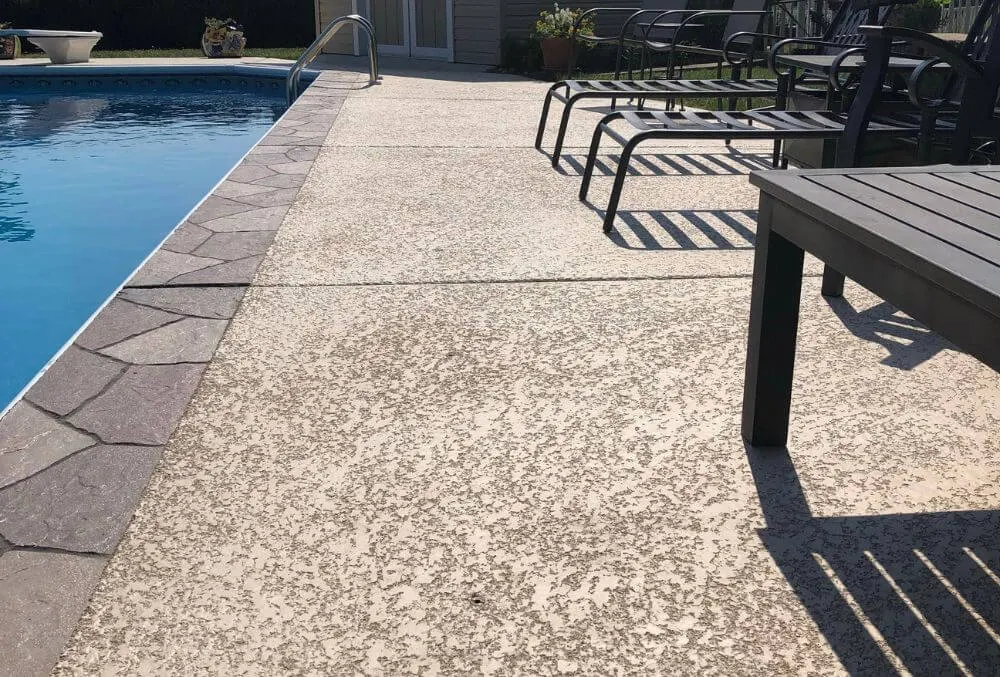
Kool Deck is a trademarked pool deck surface developed by Mortex Manufacturing in Tucson in 1962. It is a cement-based, textured topping applied over concrete, designed to stay cooler under bare feet than plain concrete. Over the decades the name became shorthand for almost any light, textured cool-deck surface around Arizona pools, so the deck around your pool may be genuine Kool Deck or a similar product.
Either way, the repair questions are the same: is the topping still bonded, and is the concrete under it sound?
Signs a recoat will do the job
- Color has faded or turned blotchy from sun and pool chemicals
- Surface is chalky or rough, and the texture is wearing smooth in traffic paths
- Hairline cracks that do not lift at the edges
- Stains from leaves, rust, sunscreen or hard water
- Mildew or algae in shaded corners that cleans off
- Small chips or pop-outs in otherwise solid areas
Signs you need more than a recoat
Loose topping has to come off and be patched before coating. Settled or heaved concrete is a structural problem: a coating will not hold it together, and cracks will reappear. Drainage problems also need fixing first, or water will work under the new surface.
- Areas that sound hollow when tapped, especially near the coping
- The topping peeling or flaking off in sheets or chunks
- Cracks wide enough to catch a toe, or with one side higher than the other
- Concrete that has sunk, heaved or broken into loose pieces
- Water pooling against the house or draining toward the pool after rain
A quick test you can do
- Hose the deck down and look for spots that stay dark long after the rest dries; they often hold water under a loose layer.
- Tap across the deck with a hard plastic handle, listening for hollow sounds.
- Press firmly on the edges of cracks to see if anything moves or crumbles.
- Rub the surface with your palm; heavy powder means a worn, chalky top layer.
- Mark questionable areas with tape and photograph them for your estimate.
What a recoat involves
A good recoat is mostly prep. On our pool deck jobs that means pressure washing and degreasing the deck, repairing cracks and patching chips, spalls and low spots, removing loose or failing coating, and profiling the surface so the new coating can bond. Coping, tile, drains and pool equipment are masked before the coating goes on.
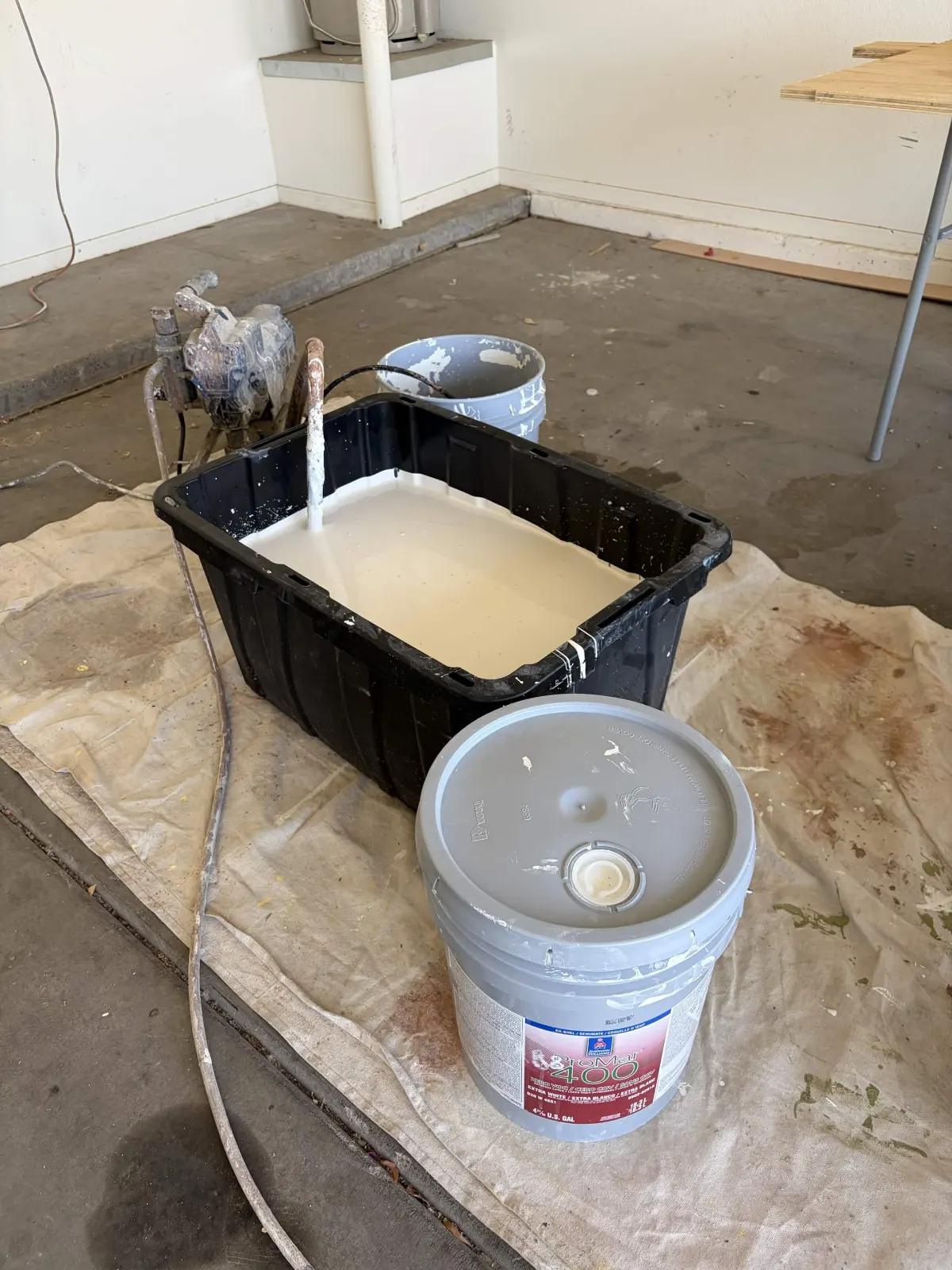
The finish is a slip-resistant Sherwin-Williams pool deck coating system in your choice of color. On a typical backyard deck, prep and coating take a few days, longer when there is a lot of crack repair, and you can usually walk on it again roughly a day after the last coat.
Why patching alone often disappoints
It is tempting to patch the worst cracks and leave the rest. The trouble is that original Kool Deck fades in the Arizona sun, and new patch material is hard to color-match to a weathered surface. Patches usually stand out as lighter or darker spots. A full recoat after repairs gives the deck one even color and texture again, and it seals the repaired areas along with everything else.
The joint between deck and coping
Look closely where the deck meets the pool coping. Most decks have a flexible sealant joint there that lets the deck and the pool shell move separately as they heat and cool. When that sealant dries out and cracks, water gets under the deck edge, and that is often where Kool Deck starts to lift. Replacing a failed joint is a small job, but it should happen before the deck is recoated, not after, so the new surface is not resting on a wet, moving edge.
Color, heat and slip resistance
Keep the new coating light. Pale tans, warm grays and off-white shades bounce back more of the sun and are far more comfortable to walk on in summer than deep colors, which soak up heat. Light colors also disguise dust and water spots better. A deep, trendy color can make a pool deck uncomfortably hot in July.
Texture matters as much as color around water. A slip-resistant texture keeps traction on steps, around the coping and near water features. Ask to see texture samples so you can choose the feel underfoot.
Keeping the new surface in good shape
- Rinse the deck with a hose and scrub with a soft brush instead of blasting it with a pressure washer.
- Keep pool water chemistry balanced so splash-out does not etch the surface.
- Sweep leaves and debris before they stain.
- Keep sprinklers and roof runoff off the deck where you can.
- Plan on a maintenance recoat before the coating wears through, which keeps prep simpler.
Frequently asked questions
- Can you paint over Kool Deck?
- Yes, with a coating made for pool decks, after cleaning, crack repair and surface prep. Ordinary house paint is the wrong product; it gets slippery and wears off quickly around water.
- How many years does a Kool Deck recoat last?
- Plan on recoating every three to five years in the West Valley. The waterline and the sunniest stretches of deck show wear first, and recoating before the old layer starts to flake keeps the next job simpler.
- Can cracked Kool Deck be fixed without replacing it?
- Usually. Hairline and small cracks are cleaned out and filled before recoating. Cracks with movement or heaved concrete beneath them need structural repair first.
- Why does my Kool Deck sound hollow in spots?
- The topping has separated from the concrete in those areas. Hollow sections need to be removed and patched before a new coating, or they will keep breaking loose.
- When is a recoated pool deck ready for bare feet?
- Expect to stay off it for about a day after the last coat for light foot traffic, and longer for patio furniture. The exact wait depends on the coating and the temperature, and your installer should tell you for your deck.