Guide · Pool deck coatings
How Long Does a Pool Deck Coating Last in Phoenix?
By the Orange Coatings team · Published
In the Phoenix area, a well-applied pool deck coating usually needs a fresh coat every three to five years. Decks with full sun, heavy splash-out and lots of foot traffic sit at the short end; shaded decks that get rinsed and cared for sit at the long end.
The concrete or Kool Deck texture underneath can last decades. The coating is the wear layer on top, and how long it holds up depends on prep, the system used, the color, and what the deck goes through every summer.
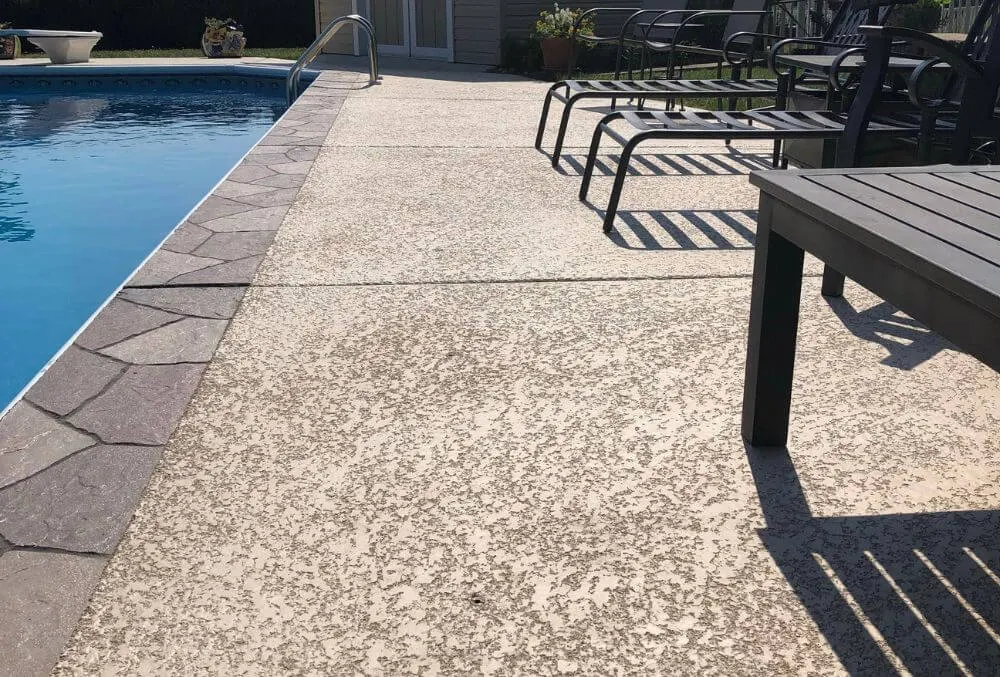
Coating life vs deck life
People often ask how long the deck lasts when they really mean the finish. A sound concrete slab or cementitious deck texture is a long-term surface. The acrylic or other coating applied over it is a sacrificial layer that takes the UV, chemicals and scuffing so the deck does not have to.
That distinction matters when you plan. If the slab is sound, a recoat every few years keeps it looking new. If the slab is heaving, crumbling or badly cracked, no coating will last, and the repair has to come first.
What wears a coating out in the Valley
- UV: months of strong sun break down the binder, which shows up as fading and a chalky film on your hand
- Heat cycling: an EPA summary of an Arizona study measured conventional paving near 152°F at midday, then the slab cools at night and moves every day
- Pool water: splash-out from chlorinated or saltwater pools leaves residue that dries on the surface again and again
- Monsoon runoff: water from roofs without gutters lands in the same strip each storm and erodes the finish there
- Hard water: mineral deposits build up where sprinklers or splash dry, and scrubbing them off wears the coating
- Traffic and furniture: chair legs, grills and planters scrape through in the same spots
Where a pool deck coating fails first
Coatings rarely wear out evenly. The first bare or flaking spots usually show up along the coping where wet feet climb out, on the steps and entry path, in the drip line under a roof edge, and on south- and west-facing sections that get the hardest afternoon sun. Around planters, constant irrigation keeps the edge damp and lets water get under the film.
If those zones look rough but the rest of the deck is fine, you are near the end of the cycle. Recoating now is cheaper than waiting until the whole surface lets go.
What decides lifespan on install day
Most short-lived deck coatings trace back to the day they went on, not to the weather afterward. These are the factors that matter:
- Cleaning: pressure washing and degreasing so the new coat bonds to the surface, not to sunscreen, dirt and old residue
- Removing loose material: any coating that is already lifting has to come off, or the new coat fails with it
- Surface profile: a slightly opened surface gives the coating something to grip
- Crack and spall repair, done before coating so cracks do not show through
- Film build: thin, one-coat jobs wear through fastest
- Cure conditions: Sherwin-Williams notes that air temperatures over 100°F can make paint dry before it bonds, so summer work belongs in the early morning
Color and coating type
Light colors stay cooler, move less in the heat and hide early fading, so they tend to look good longer. Dark decks show sun damage sooner and run hotter under bare feet.
Products differ too. Some deck coatings are built specifically for pool surrounds, with chemical resistance and texture for wet traction; Sherwin-Williams, for example, describes its H&C Acryla-Deck hi-build coating as highly resistant to pool chemicals. Our pool deck work uses slip-resistant Sherwin-Williams pool deck systems in light colors that stay cooler underfoot, applied after a full prep.
Signs your deck is due for a recoat
- A white or colored powder comes off on your palm when you rub the surface
- The color has faded unevenly, with lighter sun-side sections
- The texture has worn smooth on paths and steps, and it feels slick when wet
- Small flakes lift at the coping, along control joints or at the drip line
- Hairline cracks you repaired before are opening again
- Stains no longer rinse out because water soaks into worn areas
How to stretch the time between coats
- Rinse the deck every week or two in summer to clear pool residue, dust and leaves.
- Clean with a mild cleaner and a soft brush, and keep a pressure washer tip well back from the surface.
- Put glides or pads under chair and lounger feet, and lift furniture instead of dragging it.
- Keep pool chemistry balanced so splash-out is not harsher than it needs to be.
- Fix drainage: add a gutter or a splash block where roof water hits the deck.
- Aim sprinklers away from the deck to cut down on hard-water buildup.
- Touch up chips at the coping early, before water gets under the edge.
Why recoating early costs less
When the old coating is still bonded, a recoat is mostly cleaning, light profiling, crack repair and new coats. When it has started to flake across the deck, the loose material has to be scraped or ground off first, and patchy areas take more repair to look even. That extra prep is where the time and cost go.
Fall through spring is the easiest time to schedule. In summer we work early in the day while the slab is cooler, and we give you a return-to-use time for the product and the week's weather. Most residential decks take a few days from first wash to final coat.
Frequently asked questions
- Is three to five years normal for a coated pool deck in Arizona?
- Yes, for a residential deck with normal use. Full-sun decks with heavy splash-out and lots of parties sit closer to three years, while shaded, well-kept decks can stretch toward five or a bit more.
- Does Kool Deck need to be recoated too?
- The texture itself is long-lasting, but its color fades and the surface gets stained and rough over time. Many homeowners coat it to refresh the color and seal it, and the coating then follows the usual recoat cycle.
- Can I just pressure wash and paint over my old deck coating?
- Only if the old coating is still firmly bonded everywhere. Anything loose, chalky or peeling has to come off first, and cracks need repair, or the new coat will fail along with the old one.
- Do saltwater pools wear deck coatings faster?
- Splash-out from any pool leaves residue as it dries, and salt deposits are one more thing to rinse away. Regular rinsing matters more than the type of pool, and a coating made for pool surrounds handles both.
- What time of year should I recoat a pool deck in Phoenix?
- Fall, winter and spring give the coating the best working conditions. Summer recoats are possible with early starts, but avoid peak monsoon weeks when afternoon storms can hit fresh coating.
- How soon can we walk on the deck after a recoat?
- Light foot traffic is usually fine about a day after the final coat, depending on the product and the temperature. Furniture and grills should wait longer, and we give you the exact times for your job.