Guide · Interior painting · Tall walls
Painting a Two-Story Great Room or Stairwell: What to Expect
By the Orange Coatings team · Published
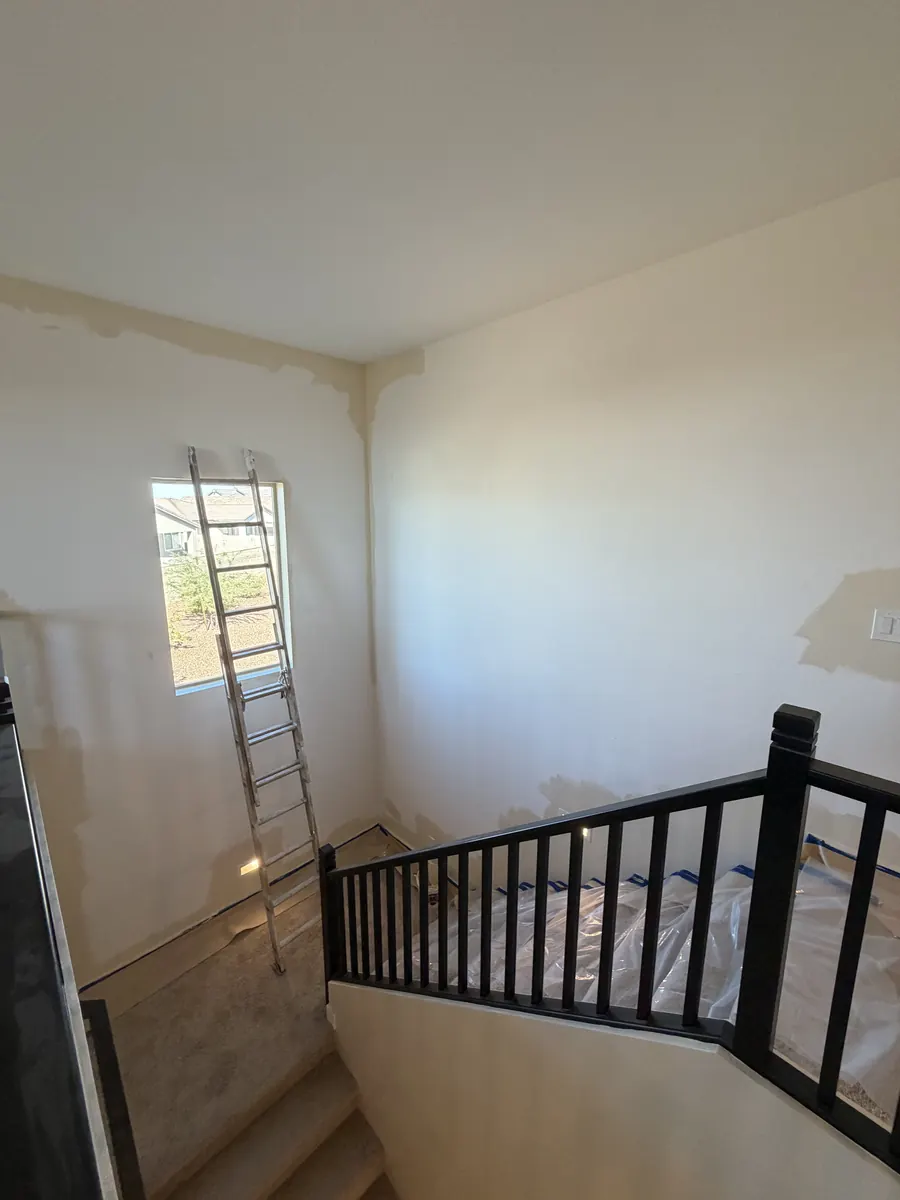
Painting a two-story great room or stairwell takes more setup than any other room in the house: extension ladders or a stair-leveling setup, longer protection runs over carpet and railings, and slow, careful cut lines where a 16- or 18-foot wall meets the ceiling. The painting itself goes on like any wall, but access, safety and keeping the finish even across a huge, sunlit surface decide how the job turns out.
Here is what changes on tall walls, how a crew reaches them, what you should do before the painters arrive, and why many homeowners leave these rooms to a pro even when they paint the rest of the house themselves.
Why tall rooms are a different job
Plenty of two-story West Valley floor plans have a vaulted great room open to a second-floor loft, a two-story entry and a stairwell that shares the same tall wall. These spaces often still carry the builder's original flat paint, and they show it: scuffs along the stairs, fingerprints on the landing and a ceiling line that wanders.
The square footage of wall is not the issue. Reach is. Every square foot above about 10 feet has to be reached from a ladder or a platform, and over stairs the floor under that ladder is not level. That is why tall rooms take longer per wall than bedrooms and why they are priced on their own line in a detailed estimate.
How painters reach the high parts
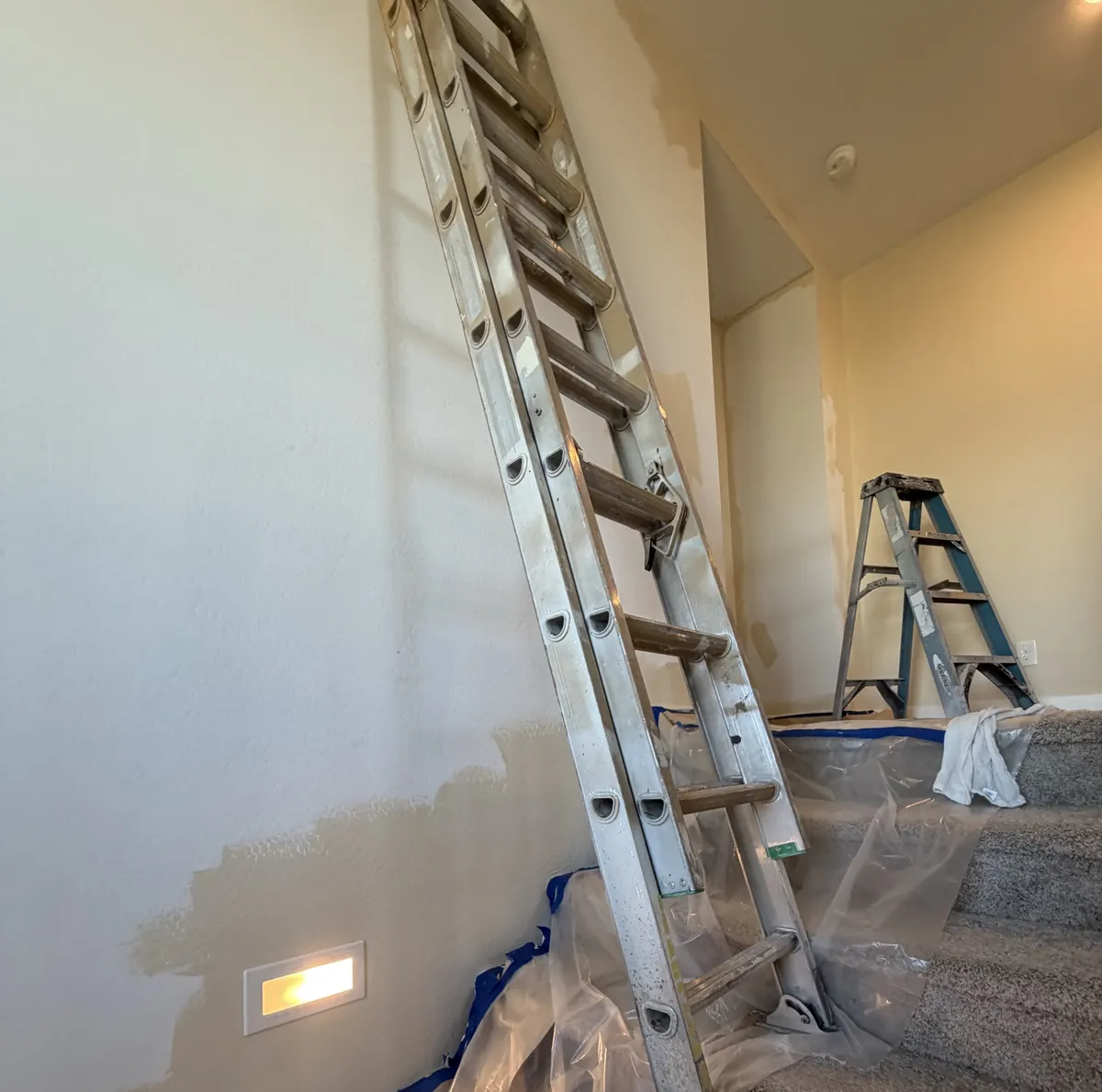
The equipment depends on the room's shape. A flat great-room floor usually means extension ladders and a tall stepladder. A stairwell needs a way to stand level over steps: an articulating ladder that sets up on two different steps, a ladder leveler, or a plank run between a ladder on the landing and one on the stairs. Very high or wide walls sometimes call for a rolling scaffold.
- OSHA's ladder rules are a good yardstick for any setup: place the base about a quarter of the ladder's working length out from the wall.
- Keep three points of contact while climbing, and do not stand on the top three rungs of an extension ladder.
- Use a ladder only on a stable, level surface unless it is secured so it cannot shift.
- Never stack a ladder on boxes or furniture for extra height.
Protecting stairs, railings and floors
Ladder feet and planks sit right on the carpet or wood treads, and a dropped roller from 15 feet throws paint a long way. Expect the crew to cover every step under the work area, wrap the handrail and balusters in plastic, and run drop cloths well past the base of the wall. Ladder tops are padded where they rest against finished walls.
If the railing or spindles are also getting paint, they are usually done after the tall walls so ladders are not leaning on fresh finish.
The ceiling line and the corners
On a tall wall the cut line where wall meets ceiling is the detail everyone sees from the couch or the front door. Cutting a straight line by brush while standing on a ladder is slow work, and the crew has to move the ladder every few feet to stay square to it. Vaulted ceilings make it harder, because the line runs at an angle.
Decide early where each color stops. In open plans the great-room wall often continues into a loft, hallway or kitchen, and the cleanest place to change color is an inside corner, not the middle of a wall. Plant shelves and niches need the same decision: some homeowners paint them to match the wall, others pick them out in an accent color.
Sun, sheen and lap marks on big walls
Tall rooms usually have tall windows, and Arizona light coming through them rakes across the wall at a low angle. That light shows every roller lap, patch and change in sheen. Two things help: keeping a wet edge, so each section is rolled into the last one before it dries, and choosing a sheen that suits the wall. A flat or matte finish hides drywall flaws on a huge surface; eggshell is easier to wipe but shows more texture in side light.
Large walls are also where touch-ups show most. A small patch done months later can flash in that light, so it pays to get the full wall right the first time and keep a labeled can of the exact color and sheen.
Fixtures, fans and things up high
- Chandeliers and pendant lights are bagged or lowered; tell the painter if a fixture is heavy or fragile.
- Ceiling fans in great rooms are turned off and covered.
- Smoke detectors and thermostat covers are masked, not painted.
- High plant shelves should be emptied before the crew arrives.
- Window coverings on upper windows may need to come down for the cut line.
How to get the room ready
- Take down art, mirrors and photos from the stair wall and great-room walls, including the high ones you can reach safely.
- Clear the stairs and landing completely. Crews need every step for ladder footing.
- Move furniture to the middle of the great room or out of it, leaving a clear strip along each wall.
- Plan another route for kids and pets while the stairs are covered, or keep them out of the area.
- Walk the room with the painter and point out cracks, nail pops and water marks you want fixed.
Should you paint it yourself?
Most homeowners can paint a bedroom. A stairwell is different, because the hard part is working from a ladder over steps for hours, often reaching sideways while holding a roller or brush. If you do take it on, rent the right ladder for stairs rather than improvising, work with a second person, and leave the highest cut line for last when you are fresh.
We paint stairwells and great rooms as part of our interior work with Sherwin-Williams Emerald Interior, a low-VOC finish. Our project page on a two-story stairwell repaint in Surprise shows the ladder setup, the covered carpet and the ceiling cut line during the work.
Frequently asked questions
- Do two-story rooms cost more to paint than regular rooms?
- Usually yes, compared with a bedroom of the same wall area, because of the ladders, extra protection and slower cut-in work. A written estimate should list the tall rooms separately so you can see what they add.
- Can we still use the stairs while the stairwell is being painted?
- Often not while ladders are set on them. Ask the crew to plan the work so the stairs are blocked for the shortest time, and keep a clear path at the end of each day.
- Should the ceiling in a great room be painted at the same time?
- If it needs it, yes. The same ladders and protection serve both, and painting the ceiling first lets the crew cut the wall color into a fresh ceiling line.
- What paint sheen works on a two-story wall?
- Flat or matte hides drywall flaws best on large, sunlit walls. If the lower part takes scuffs from the stairs, ask about a more washable sheen, but expect it to show more texture in side light.
- How do painters reach a wall above the stairs?
- With a ladder system that stands level on uneven steps, a plank between two ladders, or a small scaffold. Ask the painter which setup they plan for your stairwell.
- Can the stair wall be a different color from the great room?
- Yes, as long as the change happens at a clean break such as an inside corner. Changing color in the middle of a tall open wall rarely looks intentional.