Guide · Interior painting
Painting Orange Peel and Knockdown Textured Walls
By the Orange Coatings team · Published
To paint orange peel or knockdown walls well, use a roller with a thicker nap than you would on smooth drywall (Sherwin-Williams suggests half an inch or more for textured surfaces, with only the finest textures rolling well on 3/8 inch), load it fully, and roll as close to corners and edges as you can so the brushed cut line does not show as a smooth band. Expect texture to use more paint than the label's coverage figure, and plan on two full coats.
Texture is forgiving in some ways and unforgiving in others. It hides small dents, but it exposes thin coats, roller skips and patches that were never re-textured. Here is what changes when the wall is not flat.
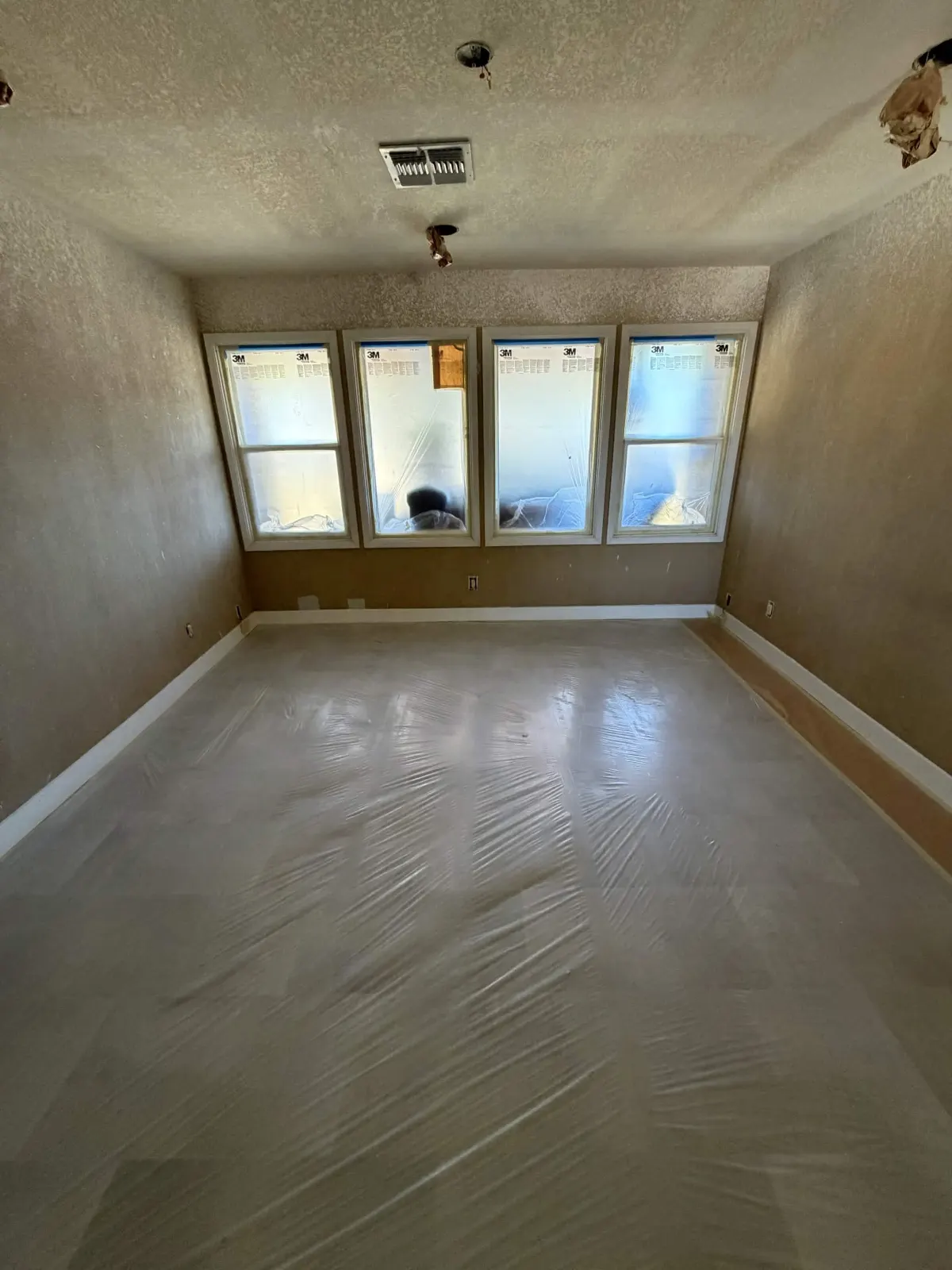
Orange peel, knockdown or skip trowel?
Most Phoenix-area homes built in the last few decades have one of three wall textures. Knowing which one you have helps with roller choice and with patching.
- Orange peel: a fine, even bumpiness like the skin of an orange. Sprayed on and left as is. The lightest of the three.
- Knockdown: sprayed splatters that were flattened with a trowel before drying, leaving flat-topped islands with low valleys between them. Common in West Valley homes.
- Skip trowel or hand texture: troweled by hand in random swirls or patches. Heavier, with deeper ridges, and harder to roll evenly.
Why texture eats more paint
A textured wall has more surface than its measured width times height. Every bump has sides, and every valley has a floor. The spread rate on a paint label assumes a reasonably smooth, sealed wall, so on knockdown or a heavy hand texture the real coverage per gallon drops. Fresh texture is also porous until it is primed and soaks up the first coat unevenly.
The visible result of stretching paint too far is a wall where the high spots look covered and the valleys show the old color or a dull, starved patch. From across the room it reads as blotchy. Two full coats applied at the label's recommended thickness fix that; a second coat thinned out to save paint does not.
Roller choice makes the biggest difference
Sherwin-Williams recommends a 3/8-inch nap for flat and satin paints on smooth walls and a half-inch or thicker nap for rough or textured surfaces, going to 3/4 inch on heavier textures. A longer nap holds more paint and pushes it down into the valleys instead of skating across the peaks.
Too long a nap on light orange peel can leave its own stipple and extra texture, so match the cover to the wall. Sherwin-Williams groups slightly textured walls with smooth ones at 1/4 or 3/8 inch, so a fine orange peel may roll best at 3/8 inch, while a heavier peel takes a half-inch cover. Knockdown and hand textures generally need the heavier end of the range. Use a quality synthetic cover for latex paint and check the paint's product data sheet, which lists the recommended nap.
Cutting in without a smooth picture frame
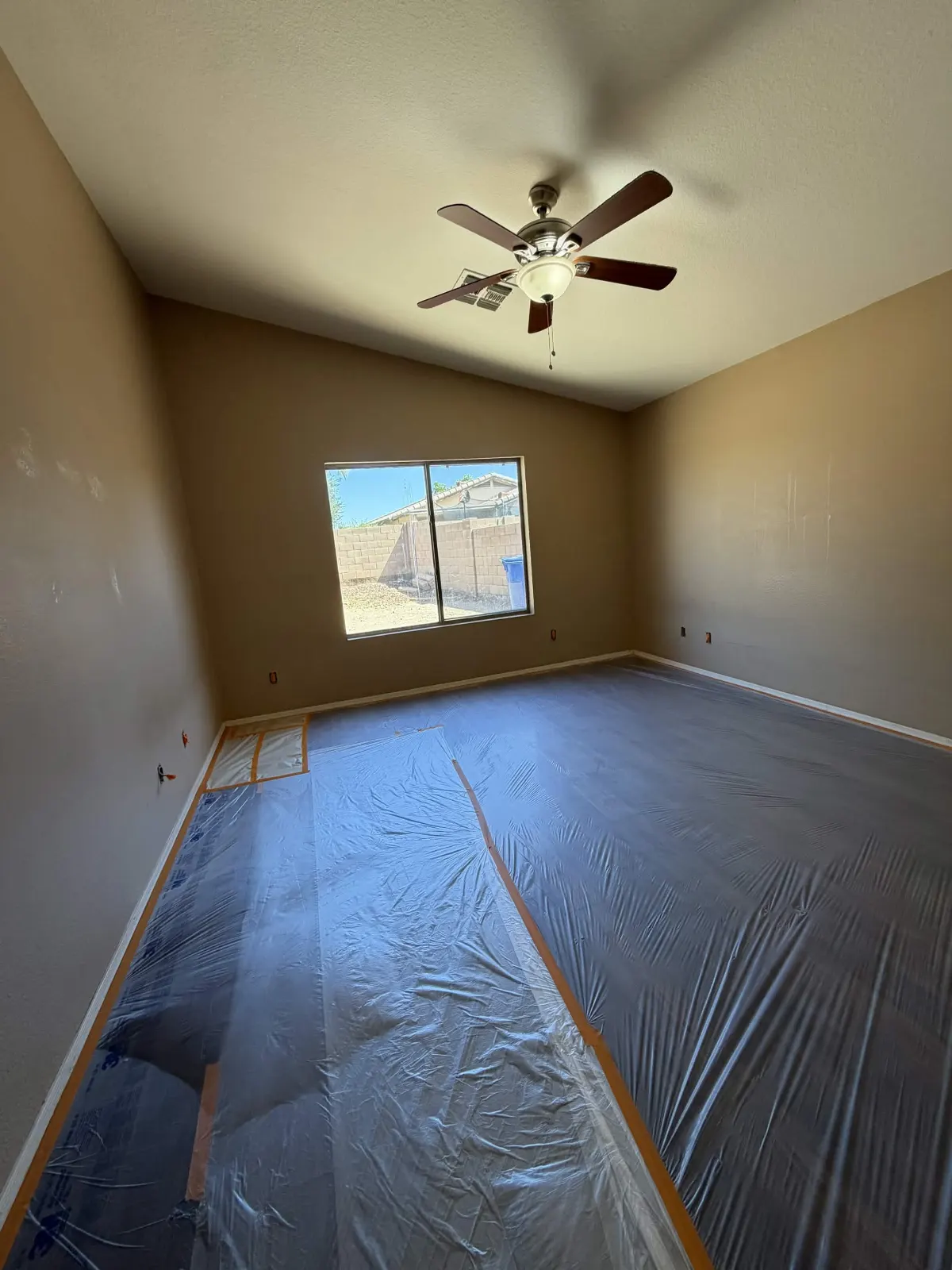
On smooth walls nobody notices where the brush stopped and the roller began. On texture they often do. A brush lays paint flat and fills the bumps, so the two- or three-inch strip it leaves around ceilings, corners and trim can look smoother and slightly shinier than the rolled field. Painters call this picture framing.
The fix is to roll as tight to the edges as the roller allows, so the brushed band is as narrow as possible, and to cut in one wall at a time and roll it while the cut line is still wet. Dabbing the brushed strip lightly with a nearly dry roller before it sets also blends the texture. In a room with strong side light from a big window, these steps are what keep the edges from standing out.
Spraying and back-rolling textured walls
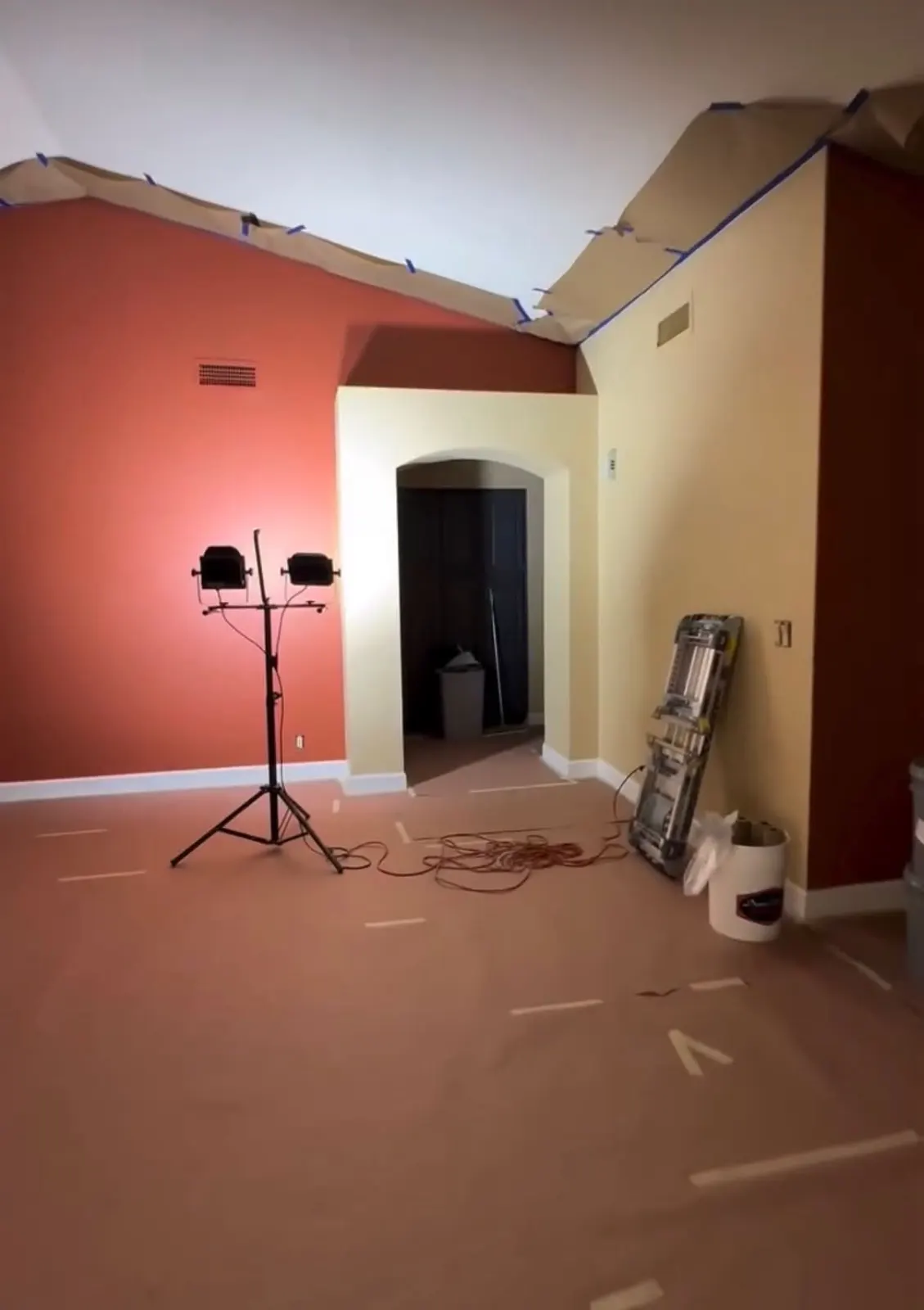
Airless spraying lays an even film into every valley quickly, which is why it is common in empty houses and new construction. Spraying alone can leave a thin, slightly uneven sheen on heavy texture, so painters often back-roll: one person sprays a section and another immediately rolls it to work the paint in and even out the finish.
In a lived-in home, spraying means masking windows, floors, fixtures and furniture far more thoroughly than rolling does, so rolling is often the better choice for a single room or two. Either method gets the same result if the paint goes on thick enough.
Patches need texture before paint
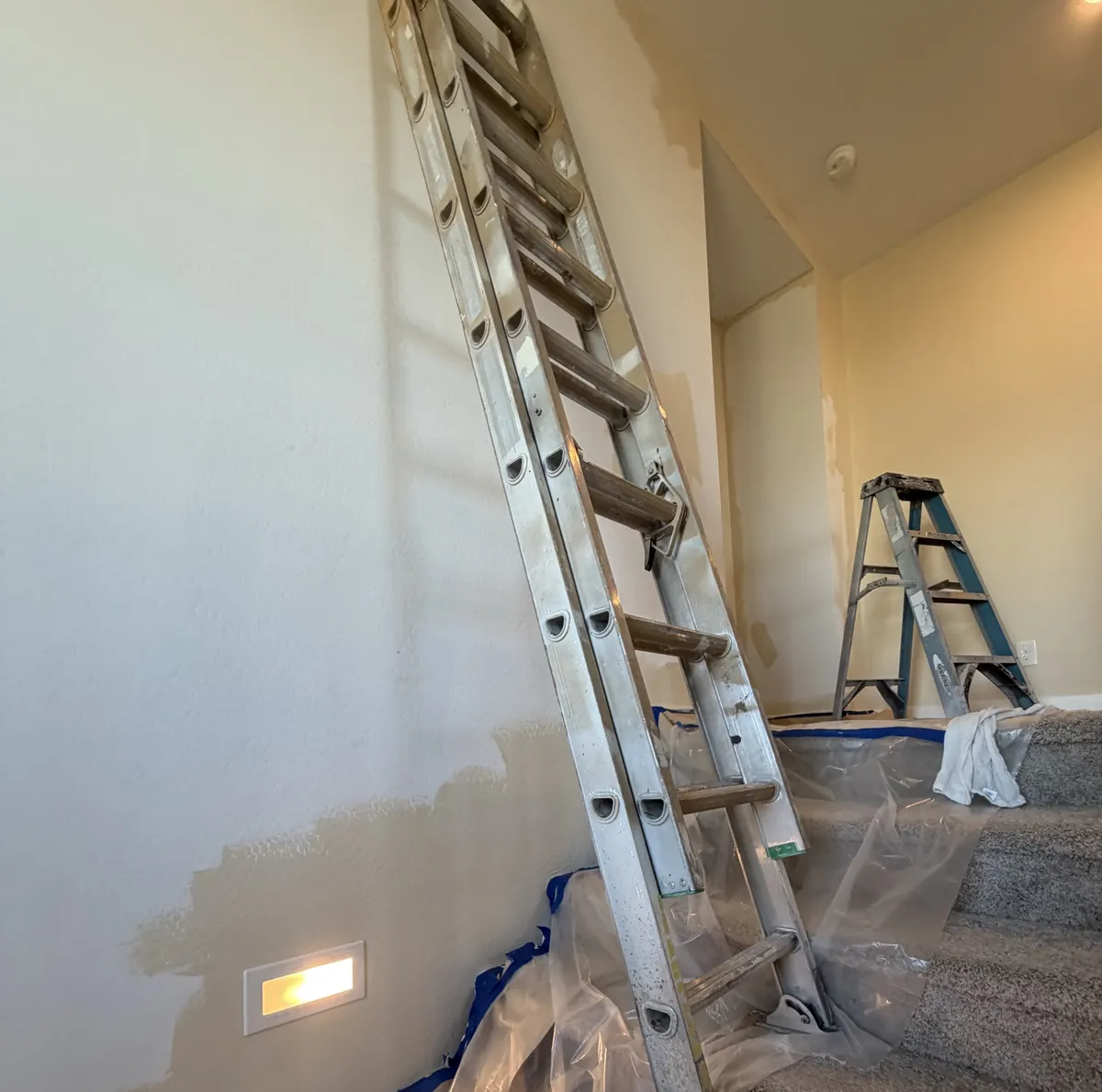
A smooth patch on a textured wall shows up in raking light no matter how many coats go over it. Before painting, every filled hole and crack needs texture rebuilt to match, then primer, because joint compound absorbs paint differently than the painted wall around it and will flash as a dull or shiny spot.
Rebuilding knockdown over a patch takes practice: the splatter size, the timing of the knockdown and the thickness all have to match the original wall. This is the step where do-it-yourself repairs most often give themselves away.
Sheen and touch-ups on texture
Texture and sheen work against each other. Every bump catches light, so the shinier the paint, the more the texture pattern and any unevenness stand out. Flat and matte make textured walls look calm, eggshell is a good middle ground for busy rooms, and satin on heavy knockdown can look busy and streaky in low afternoon sun.
Touch-ups are also harder. A dab of paint with a small brush fills the texture at that spot and reads as a smooth blob. If you touch up, use a small roller with the same nap, feather it out and keep it to flat or low-sheen walls. Higher-sheen textured walls usually need repainting corner to corner when they are marked up.
Should you smooth the walls instead?
Some owners want to remove texture for a modern, smooth look. That means skim-coating every wall with joint compound, sanding, priming and painting, which is closer to drywall finishing than to painting and takes far longer than a repaint. It also makes every future dent and patch more visible, because smooth walls hide nothing.
For most homes a good repaint over the existing texture is the practical choice. If you are considering smoothing, talk it through at the estimate so the time and scope are clear before you decide. We paint walls and ceilings with Sherwin-Williams Emerald Interior, a low-VOC finish, and plan roller covers and coats around the texture we find in each room.
Frequently asked questions
- What roller nap should I use on knockdown texture?
- Start at half an inch and go to 3/4 inch for heavier knockdown or hand texture. Sherwin-Williams recommends half an inch or thicker for textured surfaces; the paint's data sheet gives the final word.
- Why does the edge of my textured wall look different from the middle?
- That band is where paint was brushed rather than rolled. The brush fills the texture and leaves a smoother, sometimes shinier strip. Rolling closer to the edges and rolling while the cut line is wet keeps it from showing.
- Does textured drywall need primer before painting?
- New texture and fresh patches do, because bare joint compound is porous and absorbs paint unevenly. A wall that is already painted and sound usually needs only cleaning and spot priming on repairs.
- Can I spray paint orange peel walls with the furniture still in the room?
- You can, but everything has to be fully wrapped and the floors covered, since overspray drifts. In a furnished room, rolling is usually faster once masking time is counted.
- Why do my textured walls look blotchy after one coat?
- One coat rarely fills the valleys and covers the peaks evenly, especially over a color change. A second full coat at the recommended thickness evens it out.
- Is knockdown texture outdated?
- It is still the standard in most Arizona tract homes and hides wear well. Smooth walls look sleek but show every dent, so many owners keep the texture and update the color instead.