Interior painting · Accent walls
Accent Wall Painting in Surprise, AZ
Published
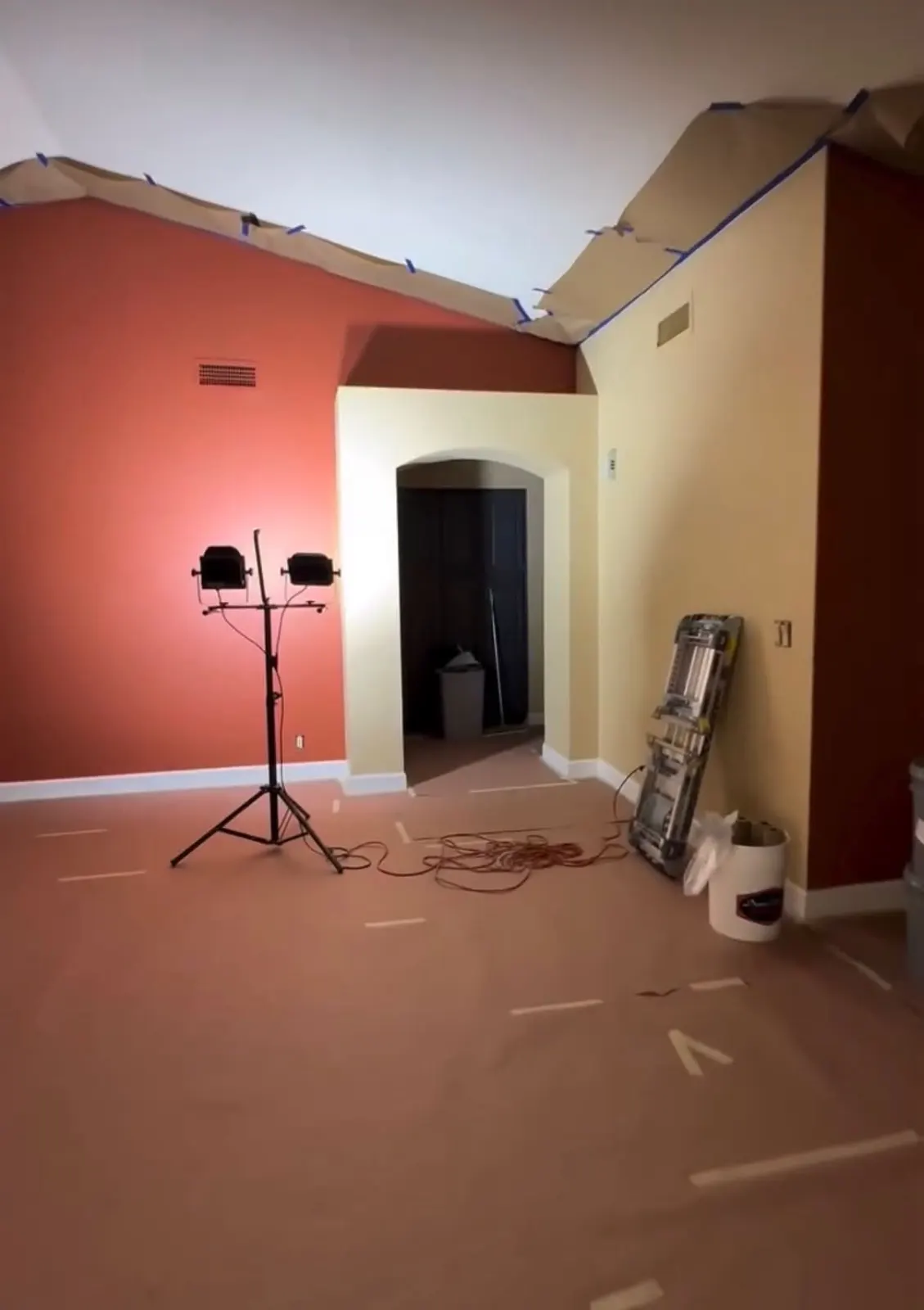
An accent wall adds color and depth to a room for a fraction of the work of repainting the whole space. The catch is that deep colors are harder to apply evenly than light ones, so we use a tinted primer, enough coats for full color, and careful masking to get straight lines where the accent meets the neighboring walls and ceiling.
Most accent walls end up behind a bed, a TV or a fireplace, or at the end of a long great room. This page covers how to pick the wall, what makes deep colors tricky, and how the job is priced.
| Common walls | Bed walls, fireplace walls, TV walls, niches and dining rooms |
|---|---|
| Coats | Multiple coats over tinted primer for deep colors |
| Paint | Sherwin-Williams Emerald Interior |
| Timing | Usually a one-day job for a single wall |
What an accent wall job includes
- Helping you choose the wall and the color, with a sample painted on the wall if you want it
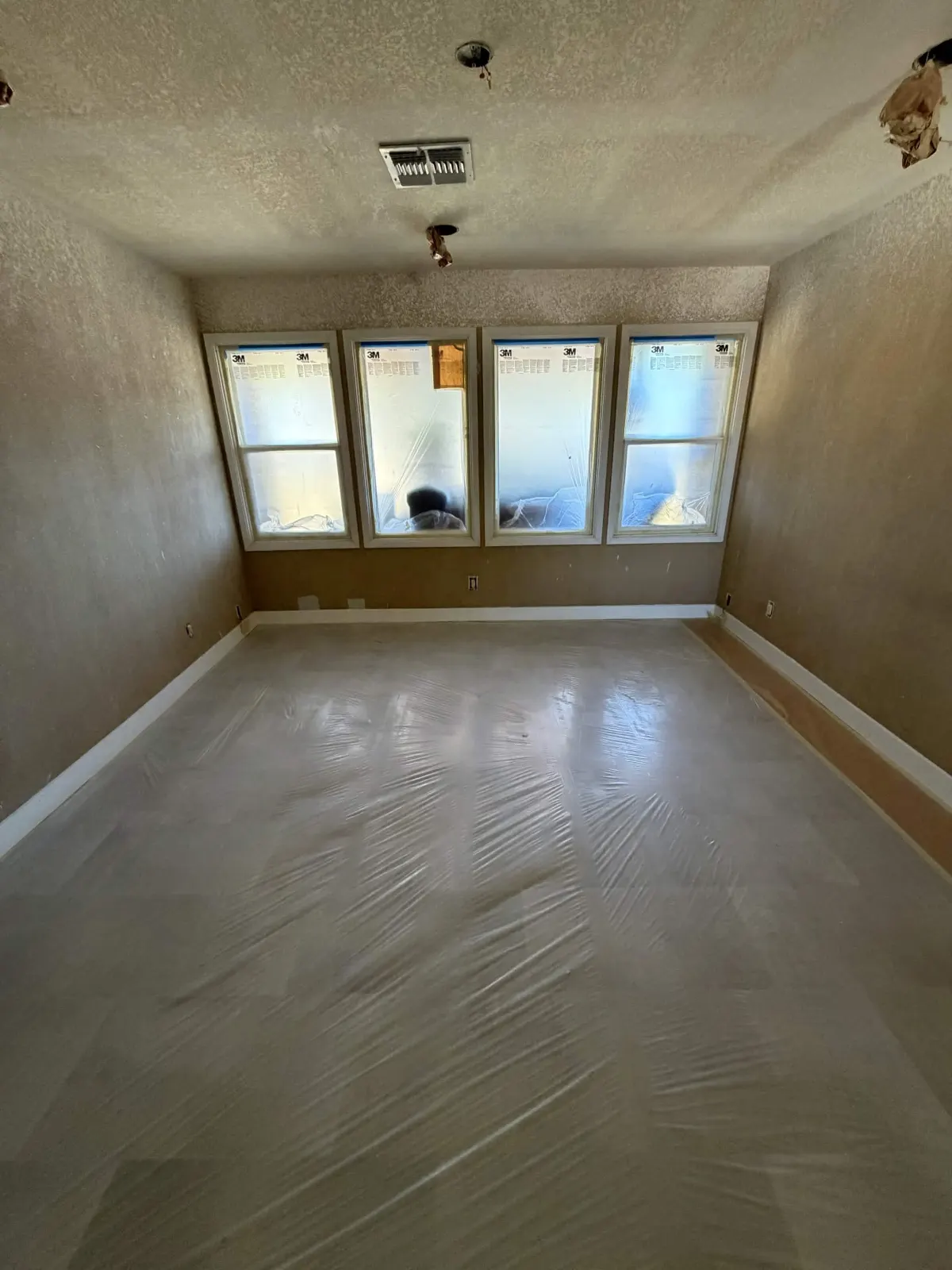
- Covering floors and furniture and removing outlet and switch covers
- Filling nail holes and patching any damage, with texture matched
- Taping off the adjoining walls and ceiling for a crisp corner line
- Tinted primer when the new color is much darker or brighter than the old one
- As many finish coats as it takes for full, even color
- Removing tape and touching up the corners before we leave
Choosing the right wall
The wall your eye lands on first when you enter the room usually makes the best accent. In bedrooms that is the wall behind the headboard. In great rooms it is often the fireplace or TV wall. A wall broken up by several windows or doors makes a weak accent, because the color gets chopped into small pieces.
Niches, which are common in Arizona homes built in the 1990s and 2000s, are another good spot for an accent color. A dark niche makes art or pottery stand out.
Why deep colors need extra care
Deep colors use a lot of tint and less of the white pigment that gives paint its hiding power. Going over a light wall with navy or charcoal in two coats can leave it looking streaky or uneven, especially under raking light from a window. A gray or tinted primer close to the final color fixes that and saves a coat.
Dark paint also shows roller marks and touch-ups more than light colors. We roll each section in one pass from floor to ceiling and keep a wet edge, which keeps the sheen even.
Our process for a clean accent wall
- Confirm the wall, color and sheen, and test a sample if you are unsure.
- Protect the floor and nearby furniture, and remove cover plates.
- Patch and sand, then wipe the wall clean.
- Mask the corners and ceiling line, and seal the tape edge so paint cannot bleed under it.
- Prime with a tinted primer if the color change calls for it.
- Apply the finish coats, allowing the dry time on the label between each.
- Pull the tape while the final coat is still slightly soft, then touch up.
Light, heat and color in Arizona rooms
Strong afternoon sun through west-facing windows makes colors look warmer and lighter than they do on a paint chip. The same navy can look nearly black on a shaded north wall. That is why we suggest a large sample painted on the actual wall, checked in the morning and late afternoon, before you commit.
Dark walls do not make a room noticeably hotter inside, but they can make a small or dim room feel closer. Deep greens, blues and warm browns pair well with the beige tile and wood tones common in West Valley homes.
Sheen for accent walls
Eggshell is the usual choice. It hides small wall flaws better than satin and still wipes clean. Flat finishes look rich in deep colors but mark easily, so they suit low-traffic walls like a bedroom headboard wall better than a hallway.
Time and price factors
A single accent wall usually takes a day, mostly because of dry time between coats. Several accent walls, or an accent wall added to a full room repaint, fit into the same schedule. Price depends on:
- Wall size and height, including two-story great room walls
- How dark or bright the color is, which sets the number of coats
- Whether primer is needed for the color change
- Patching and texture repair
- Number of outlets, windows and corners to cut around
Accent ideas beyond a single wall
An accent does not have to be one flat wall. Painting the back of built-in shelves, a recessed niche or the inside of an arched opening adds color in a smaller dose. A deep color on the lower half of a wall with a lighter color above, separated by a chair rail or a crisp tape line, works well in dining rooms and hallways.
Two-story great rooms are a special case. A full-height accent wall there is a big area of color, so it helps to test a sample at eye level and look at it from the second floor as well. Tall walls also need extra setup and ladder or plank work, which we plan for in the estimate.
Areas we serve
We paint accent walls throughout the West Valley and in Scottsdale and Arcadia:
Photos
Frequently asked questions
- How many coats does a dark accent wall need?
- Usually a primer plus two finish coats, and sometimes a third for very deep or bright colors like reds. The goal is even color with no light patches when the sun hits the wall.
- Can I paint an accent wall back to the original color later?
- Yes. Covering a dark color with a light one takes a primer coat first, then the finish coats. Expect it to take about as long as the accent wall did.
- Which wall should be the accent wall in a bedroom?
- Usually the wall behind the headboard. It is the first wall you see when you walk in and has the fewest windows and doors breaking up the color.
- Should the ceiling be painted with the accent color?
- Usually not, but painting a dark ceiling to match can work in a small room or a reading nook. Most people keep the ceiling white for contrast.
- Will red paint really need three coats?
- Often it does. Reds and bright yellows have the least hiding power of any colors, so a tinted primer and extra coat are common to avoid streaks.
- Can you paint an accent wall the same day as the estimate?
- The estimate is same-day and in person. The painting itself is scheduled after you approve the written quote and choose a color.
- Can you paint a straight accent line without molding?
- Yes. We measure and level the line, tape it, and seal the tape edge with the base color before painting the accent. That stops bleeding under the tape and gives a sharp line.