Guide · Exterior painting
Painting Vinyl in Arizona Heat: What to Know First
By the Orange Coatings team · Published
Vinyl can be painted in Arizona as long as you choose a color no darker than the original vinyl, or a color formulated for vinyl, and use a quality acrylic latex rather than an oil-based paint. A darker color absorbs more of the sun's heat, and Sherwin-Williams warns that vinyl that expands too far can warp or buckle and may not return to its original shape.
On a typical West Valley house the vinyl is not the siding. It is the shutters, a fence or gate, window frames, and sometimes soffit or trim pieces next to painted stucco. Each has its own rules, and in desert sun the color choice matters more than anywhere else on the house.
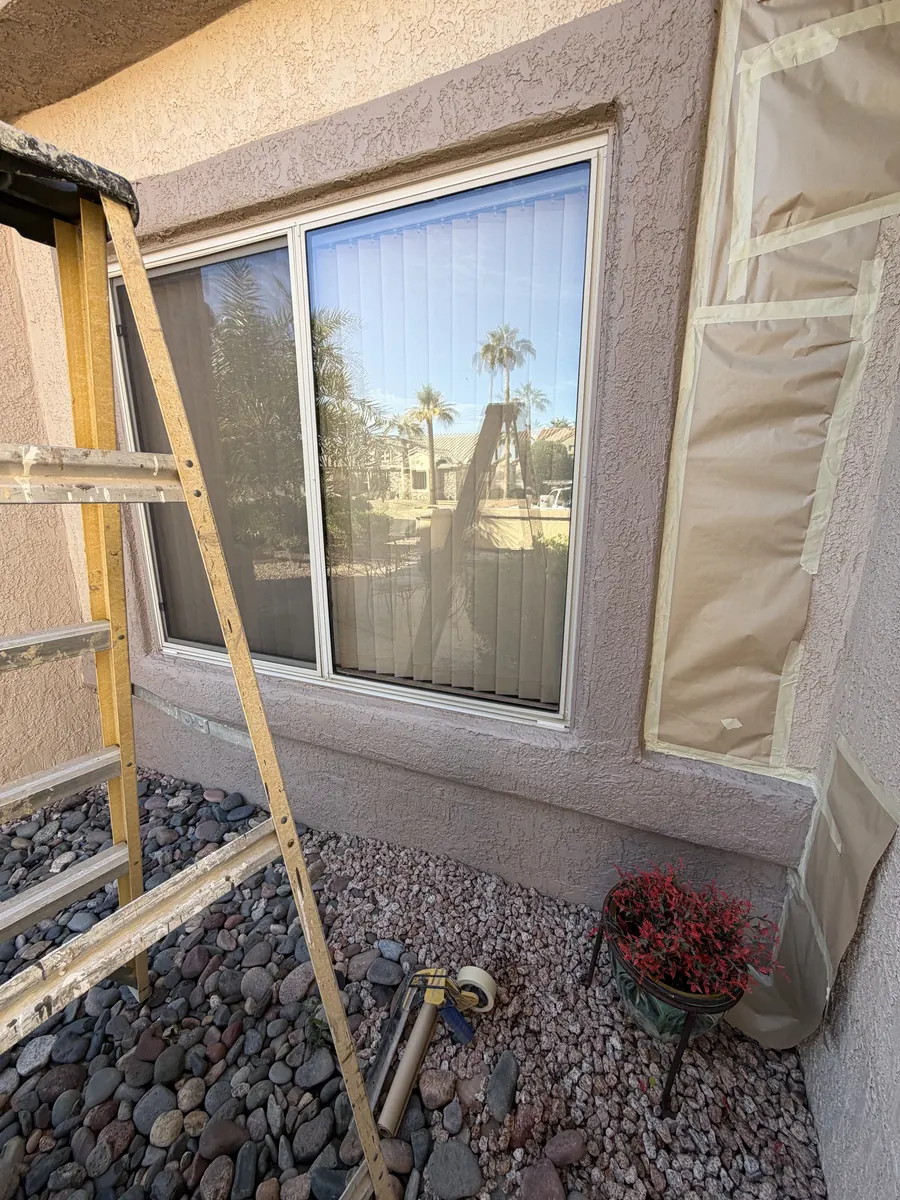
Why heat and dark color are the real risk
Vinyl expands as it heats and contracts as it cools. Manufacturers design each product, including its original color, to stay within a range of movement. Paint changes how much sun the surface absorbs. Sherwin-Williams explains that dark paint absorbs the heat of the sun and transfers it into the vinyl, and that once the vinyl expands far enough, it cannot fully return to its original dimensions. The result is waviness, buckled panels, bowed shutter louvers or a gate that no longer latches.
In the Phoenix area that risk is higher than in most of the country because of long summers with intense afternoon sun. A south- or west-facing shutter painted a deep bronze can get far hotter than the same shutter in its factory white.
Color rules: lighter, or VinylSafe
- Safest: a shade no darker than the vinyl's original color. Sherwin-Williams names whites, off-whites, pastels and other very light colors as good choices.
- Darker options: Sherwin-Williams' VinylSafe palette offers 100 colors, including a limited set of darker shades formulated to resist warping or buckling on sound, stable vinyl.
- Avoid: deep custom colors outside that palette, and anything that turns a white vinyl product much darker.
- If your HOA scheme calls for a dark accent on vinyl shutters, ask whether a VinylSafe color close to it would be accepted before choosing.
Which paint goes on vinyl
Use an exterior acrylic latex. Sherwin-Williams says oil-based coatings are not recommended on vinyl because they lack the flexibility to move with it, and that a primer is usually not needed under an acrylic topcoat on clean, sound vinyl. It lists Emerald, Duration and SuperPaint among the lines its VinylSafe colors can be mixed in.
On vinyl pieces that are part of a larger exterior repaint, we use the same Sherwin-Williams Emerald Exterior that goes on the stucco, in a vinyl-safe color. Always follow the vinyl manufacturer's surface-prep instructions too, since they may have their own requirements.
Prep: chalk and dust are the enemy
Old vinyl in the desert develops a chalky surface and a coat of fine dust. Paint over either one and it peels. Prep is short but it has to be thorough.
- Wash the vinyl with a mild detergent and a soft brush, scrubbing until a dark cloth wiped across it comes away clean.
- Rinse well so no soap film is left behind.
- Let it dry fully. In dry weather this is quick, but water trapped in shutter louvers and fence rails takes longer.
- Lightly scuff any glossy or slick areas so the paint has something to grip.
- Check for cracks, loose fasteners and panels that are already warped before painting.
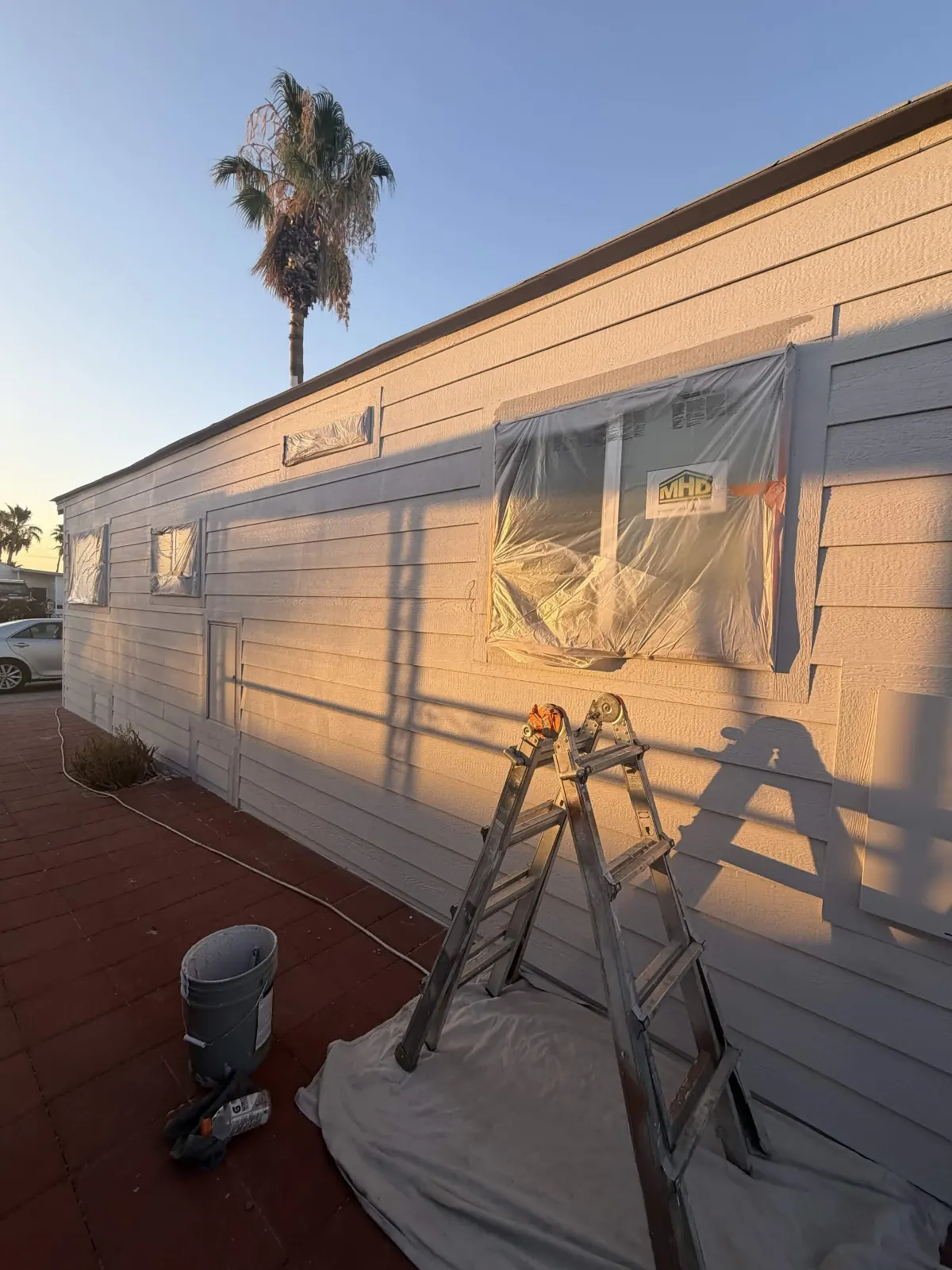
When and how to apply it in Arizona
Hot vinyl is a poor surface to paint. The paint dries too fast to level, leaving lap marks, and the surface is already near its most expanded state. Paint vinyl in the morning or when that side of the house is in shade, and avoid surfaces that are hot to the touch. Check the paint label for its temperature range.
Apply thin, even coats rather than one heavy coat. Thick paint on shutter louvers and in fence grooves stays soft longer and collects dust. Spray works well on louvered shutters, with careful masking of the stucco around them, and a brush handles fence rails and gate hardware edges.
Monsoon afternoons add blowing dust and sudden rain, so leave enough time for the paint to dry before storms typically build.
Vinyl window frames need extra caution
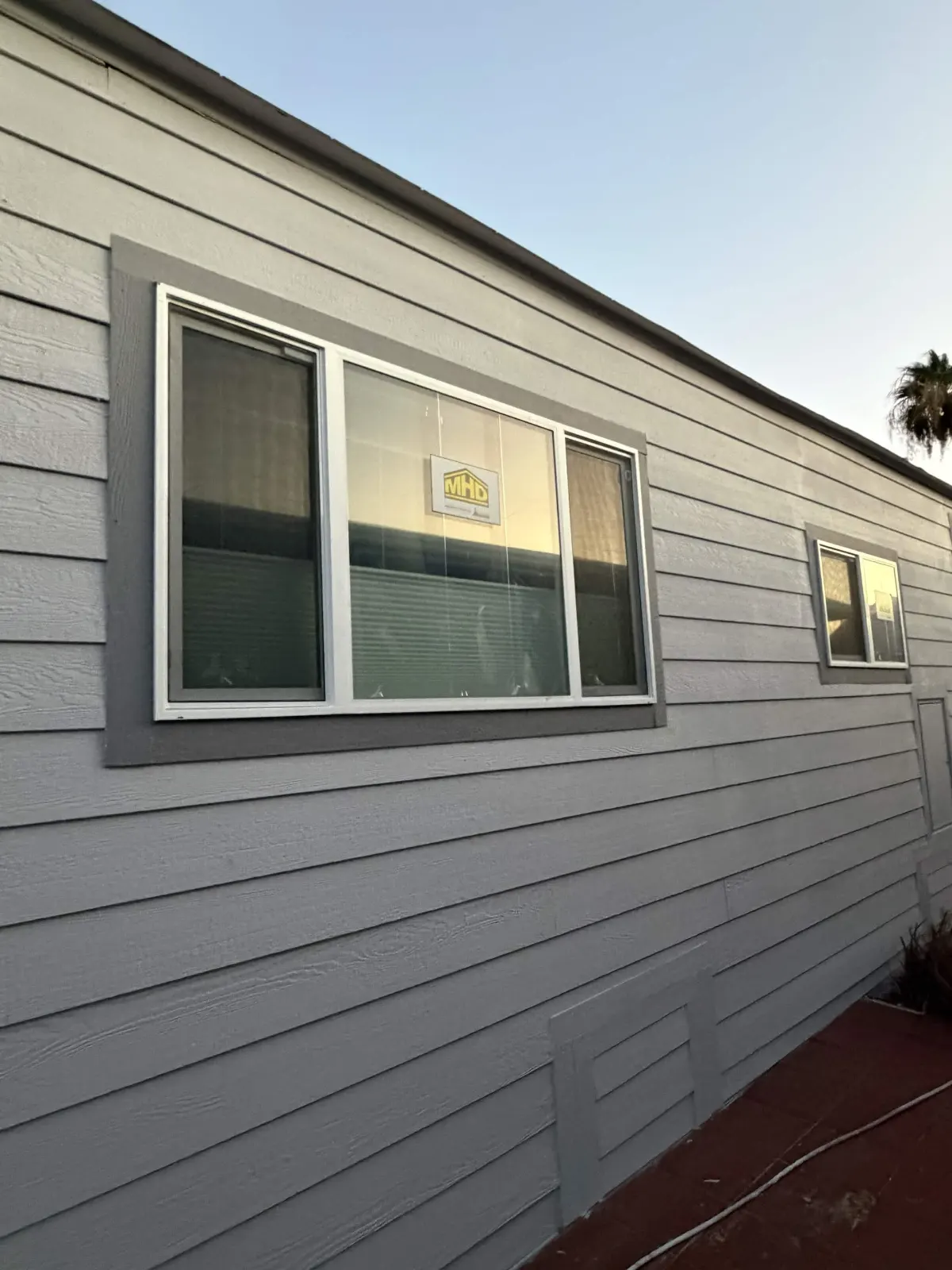
Vinyl windows deserve the most caution of anything on the house. The frames, sashes and tracks move, seal against weatherstripping and have to slide freely, so paint on the wrong part can bind them or break the seal. Dark paint on a white vinyl frame also raises the warping risk on a part that has to stay square to operate.
Some window makers' warranties do not cover painted frames, so read yours before painting. On an exterior repaint, vinyl windows are normally masked and left in their factory finish. If you want the outside of the frames painted, check the warranty first and pick a vinyl-safe color, and keep paint off the weatherstripping and sliding tracks.
Shutters, fences, gates and soffit
- Shutters: the most commonly painted vinyl on a stucco home. Remove them if they unclip easily; painting them flat gives better coverage in the louvers.
- Vinyl fencing and gates: wash thoroughly, especially low rails that collect irrigation overspray and hard-water spots. Light colors only on long fence runs in full sun.
- Vinyl soffit and trim pieces: vented soffit must keep its vents open, so spray lightly rather than loading paint into the slots.
- Already warped pieces: Sherwin-Williams says buckled siding should be assessed by a siding or home repair contractor and may need replacing. Paint will not flatten it.
Bringing vinyl into an exterior repaint
Most of the time vinyl gets painted because the rest of the house is changing color and the shutters or fence would clash. Tell us about the vinyl at the same-day estimate so it is in the scope and the color plan. We check the original vinyl color against your new scheme, suggest a vinyl-safe option if your chosen accent is too dark, and mask windows and adjacent surfaces carefully before any spraying starts.
Frequently asked questions
- Can I paint white vinyl shutters black in Arizona?
- Only with a color formulated for vinyl. A standard black would absorb far more heat than the white vinyl was designed for and could warp the shutters. Sherwin-Williams' VinylSafe palette includes a limited range of darker shades meant for this.
- Do I need a primer before painting vinyl?
- Usually not on clean, sound vinyl when you use an acrylic latex topcoat, according to Sherwin-Williams. Follow the vinyl manufacturer's instructions if they say otherwise.
- How long does paint last on vinyl in the desert?
- It depends on the paint, color and sun exposure. Light colors in a premium acrylic hold up best, while dark colors on west-facing vinyl fade faster, as they do on any surface.
- Can oil-based paint be used on a vinyl fence?
- No. Oil-based paint is too rigid for vinyl, which expands and contracts with temperature, so it cracks and peels. Use an exterior acrylic latex.
- My painted vinyl is now wavy. Can it be fixed?
- Usually not with paint. Once vinyl has warped from heat, it rarely returns to shape. Replace the affected pieces and repaint them in a lighter or vinyl-safe color.
- Should vinyl be painted during an Arizona summer?
- It can be, with care. Paint early in the day or in shade, keep coats thin and avoid surfaces that are hot to the touch.
Related
- Residential exterior painting
- Shutter and exterior trim painting
- Fence painting
- Fascia and eave painting
- Exterior painting in Surprise, AZ
- Exterior painting in Goodyear, AZ
- What dark exterior colors do in Arizona heat
- Exterior colors that fade least in the Arizona sun
- Best Sherwin-Williams exterior paint for Arizona