Guide · Exterior color
What Dark Exterior Colors Do in Arizona Heat
By the Orange Coatings team · Published
In Arizona heat, dark exterior colors absorb much more sunlight than light ones, so the painted surface runs hotter, the paint film breaks down sooner and shows fading and gloss loss, dark paint takes longer to cure, and blistering becomes more likely on walls in direct sun. The effect is strongest on south- and west-facing walls and on anything horizontal.
None of that means dark colors are off the table. It means they belong in the right places and need the right product and timing. This guide explains how to read a color's LRV, what heat does to the film and the surface underneath, and where dark colors work well on a desert home.
LRV: the number that predicts heat
Light Reflectance Value describes how much visible light a color reflects, on a scale from 0, which absorbs all light, to 100, which reflects it all. Sherwin-Williams prints it on the back of every color chip. Dunn-Edwards uses it as a guide for exterior durability: higher values reflect more light and stay cooler in sunlight.
Using calculated values from Sherwin-Williams color data, the spread is wide. SW 6258 Tricorn Black sits around 3, SW 7069 Iron Ore around 6 and SW 7048 Urbane Bronze around 8. SW 7036 Accessible Beige is near 58, and SW 7008 Alabaster is above 80. A wall in Tricorn Black is turning nearly all of the visible sunlight that hits it into heat.
Faster fading and gloss loss
Dunn-Edwards' technical guidance on dark exterior colors explains that the extra heat and energy they absorb can speed the breakdown of the paint's binder, the resin that holds the film together. You see that as color shift, a chalky surface and loss of sheen. Light colors reflect more of the light and UV, which can help the film last, although the specific pigments in a color also play a part.
Horizontal surfaces take the worst of it: the tops of parapet walls, window sills, ledges and the caps of block walls face the midday sun directly.
Slower curing and a soft, tacky feel
Deep colors need much more colorant mixed into the base, which changes the ratio of pigment to resin. According to Dunn-Edwards, that tends to leave a softer film during curing, and additives in store-mixed colorants can slow the cure further, so dark paint can feel tacky for longer than light paint. A freshly painted dark door that sticks to its weatherstripping is a common example of this.
Blistering in direct sun
Blisters can appear in any color, but heat makes them more likely in dark ones. When sun hits fresh paint, the surface can skin over before the rest of the film has released its water or solvent, and as that trapped vapor heats up it pushes bubbles into the surface. Dark colors also expand and contract more with each day's heating and cooling, which stresses the existing paint underneath. Painting a dark color over an old coating that is already weak raises the risk of blisters down to the old layer.
The practical fix is timing. Dunn-Edwards advises shading the surface before, during and after application and keeping it under 90 degrees Fahrenheit. In a Valley summer that means painting sun-facing walls early in the day, after the sun has moved off them, or saving dark colors for the cooler months.
What heat does to the house underneath
- Stucco: bigger daily temperature swings open and close hairline cracks, which can show through dark paint sooner.
- Wood trim and doors: dark, sun-heated wood moves more and can check or split.
- Vinyl and some fiberglass products: many manufacturers limit how dark they can be painted because heat can warp them; check before painting shutters, windows or doors.
- Metal doors and railings: dark steel gets too hot to touch, and paint on it ages quickly.
- Indoor comfort: a hotter wall surface adds some heat load, though insulation, shading and the roof color usually matter more.
Where dark colors work well on a desert home
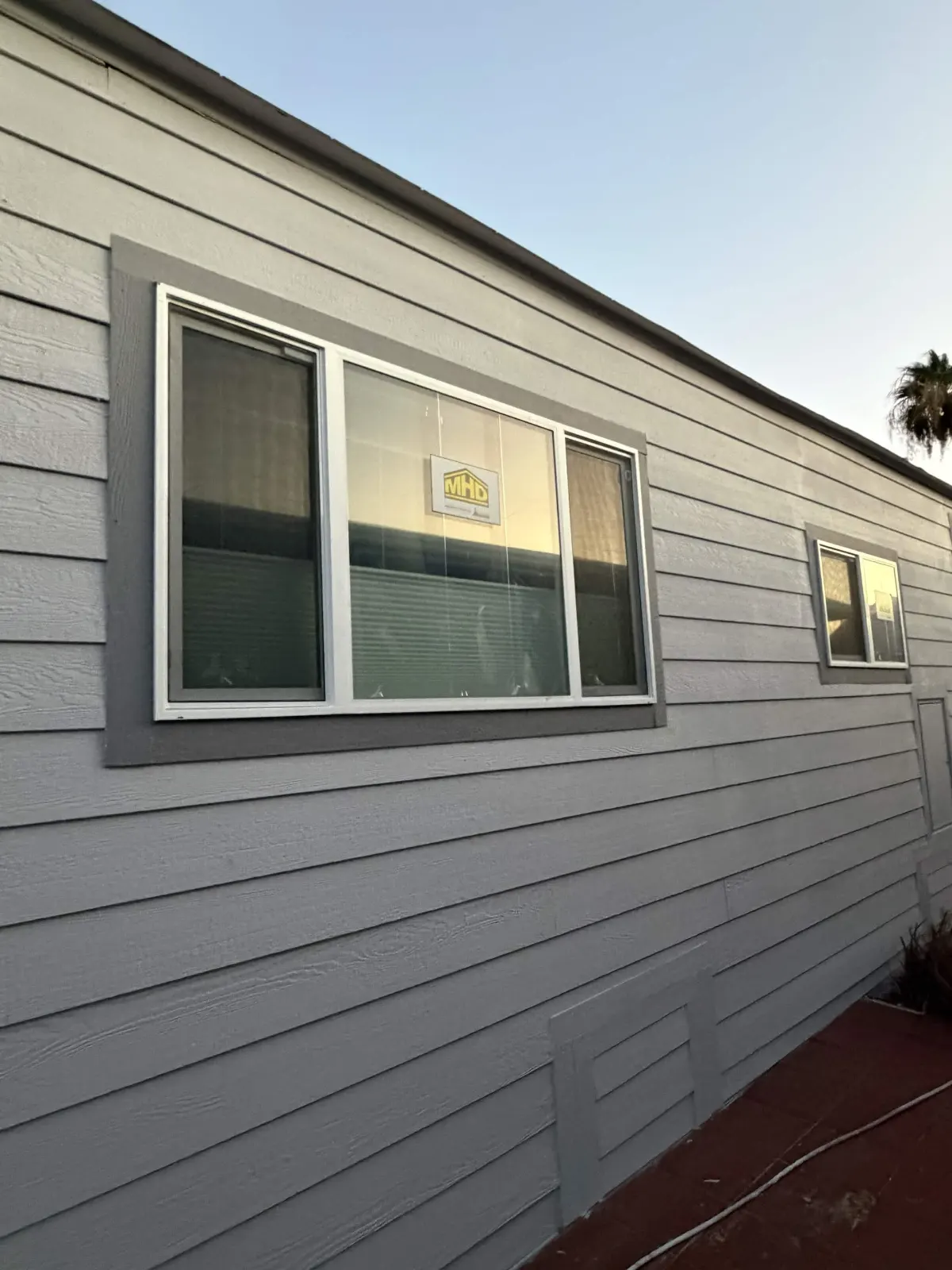
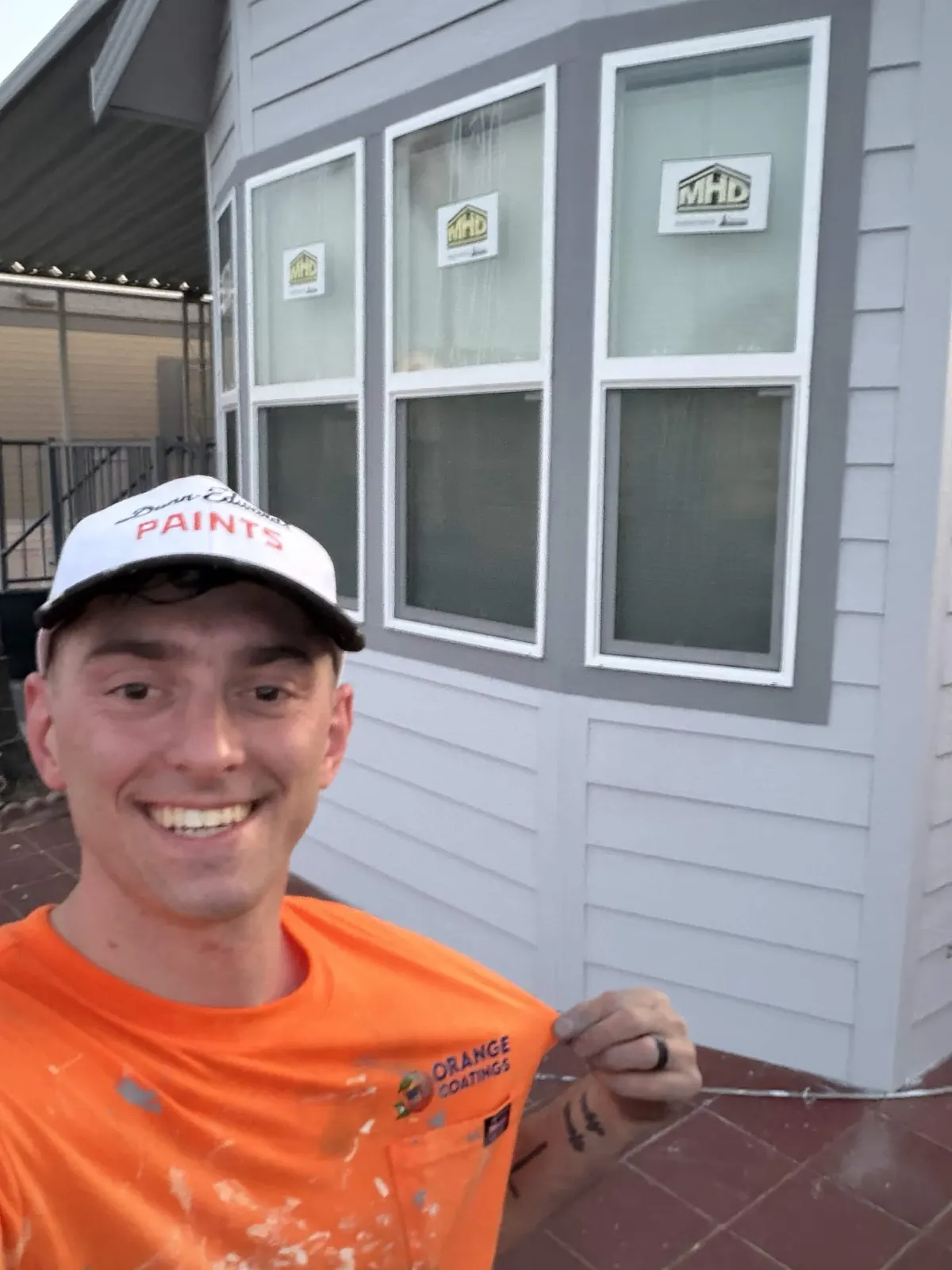
Using a dark color in small, framed areas gives most of the contrast people want from a dark scheme without putting the full heat load on every wall.
- Front doors, especially recessed or shaded ones
- Fascia, trim bands and window pop-outs, where a dark line frames a lighter body
- Shutters, gates and iron work in materials rated for dark colors
- North- and east-facing accent walls or a shaded courtyard
- Garage doors only when they are shaded or the product allows dark colors
If you want a dark body color anyway
- Check your HOA palette first; many West Valley communities limit body colors to earth tones and allow dark shades only as accents.
- Look at the LRV and test a large sample on a sunny wall for a few days.
- Fix cracks and failing paint before the dark coat goes on, so heat does not lift a weak old layer.
- Use a premium exterior acrylic and apply full coats rather than stretching the paint thin.
- Plan to paint each elevation when it is in shade, and expect touch-ups on the hottest walls sooner than you would with a lighter color.
How we help you choose
Our exterior work uses Sherwin-Williams Emerald Exterior, two coats sprayed and back-rolled on stucco. During color selection we look at which walls get afternoon sun, what your HOA allows and where a darker color will hold up, and we will be direct when a deep color is likely to need extra care on a particular wall.
Frequently asked questions
- Will a dark exterior make my house hotter inside?
- Somewhat, mainly through walls and doors in direct sun. In most homes the roof, attic insulation, windows and shading matter more, so the bigger effect of a dark wall is usually on the paint itself.
- What LRV is considered dark for exterior paint?
- There is no single cutoff, but colors below roughly 20 absorb most of the light that hits them. Some building product makers set their own minimum LRV for warranty purposes, so check the product's literature.
- Do dark colors fade faster in Arizona?
- Generally, yes. They absorb more heat, which speeds binder breakdown, and fading is easy to see on a deep color. South- and west-facing walls show it first.
- Is black trim a bad idea in the desert?
- Not necessarily. Trim is a small area and easy to touch up. Use a quality exterior product, paint it in shade, and expect the sunniest pieces to need attention first.
- Why is my dark front door still sticky weeks after painting?
- Deep colors carry more colorant and cure more slowly, and heat from the sun softens them further. Leave the door open when you can and avoid closing it hard against fresh weatherstripping until it has cured.