Guide · Exterior color · Arizona sun
Exterior Colors That Fade Least in the Arizona Sun
By the Orange Coatings team · Published
The exterior colors that fade least in Arizona are light-to-mid neutrals with low saturation: warm whites, beiges, tans, greiges and soft grays. Bright, saturated colors, especially reds, yellows, oranges and vivid blues or greens, fade fastest, and very dark colors show chalking and heat stress sooner even when the pigment itself holds.
The reason is pigment chemistry plus sunlight. Below is why some colors survive the desert better, a short list of Sherwin-Williams colors that fit the bill, and where to put stronger color if you want it.
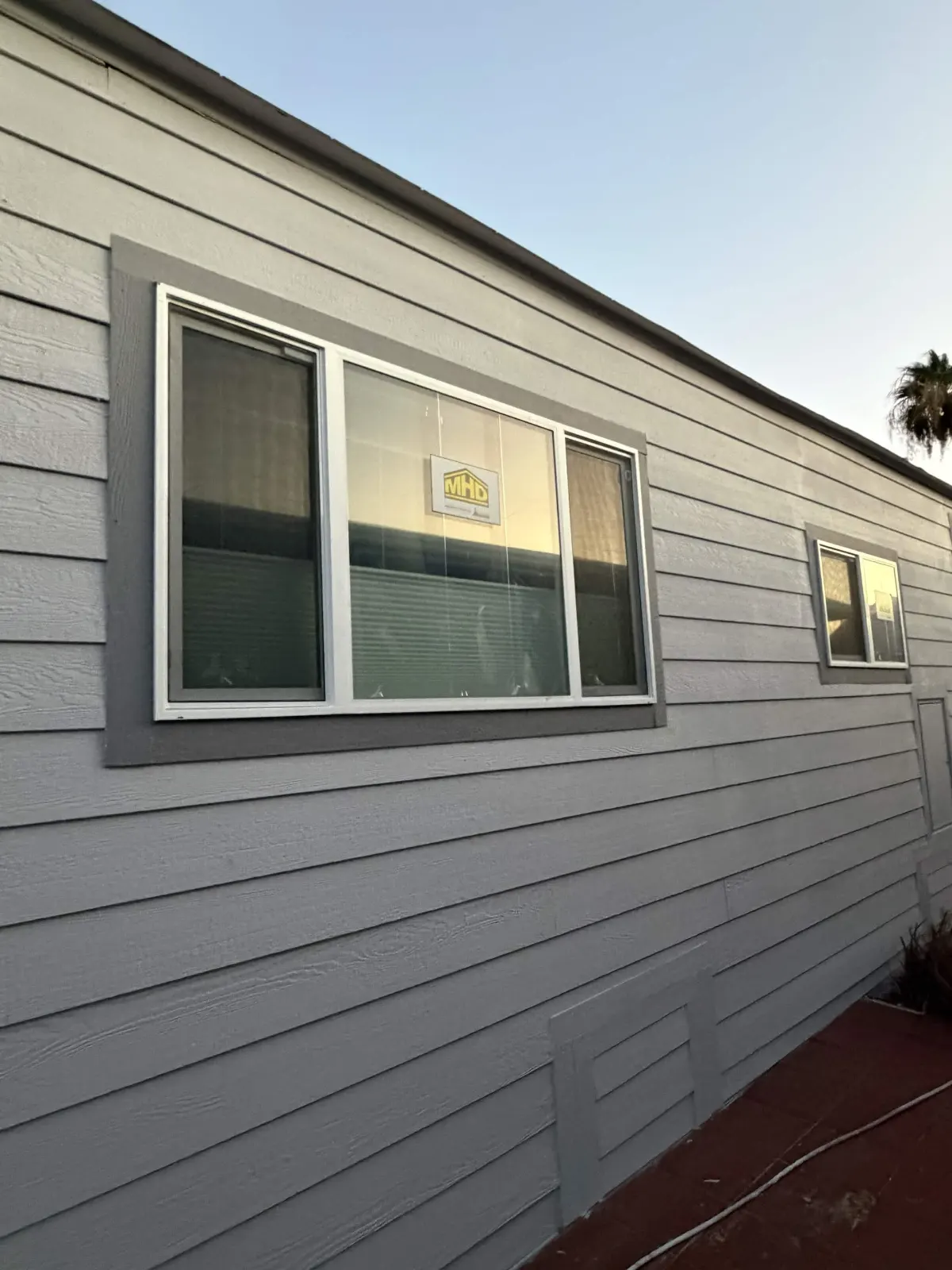
| Fade least | Light, low-saturation neutrals and earth tones |
|---|---|
| Fade most | Saturated reds, yellows, oranges, bright blues and greens |
| Hardest walls | South and west exposures |
| Our exterior paint | Sherwin-Williams Emerald Exterior |
Why some colors fade faster than others
Paint color comes from pigments, and they do not all stand up to ultraviolet light equally. Whites and most earthy neutrals are built largely on mineral pigments such as titanium dioxide and iron oxides, which are very stable in sunlight. Many bright, clean reds, yellows, oranges and some blues and greens rely on organic pigments, which UV breaks down over time.
Arizona gives UV a lot to work with: high sun angles, clear skies most of the year, and summer heat above 100°F. A color that holds for a decade in a cloudy climate can look washed out on a west wall here in a few summers.
Heat adds to the damage. A dark wall in July can run much hotter than a light one beside it, and repeated heating and cooling stresses the paint film. Once the film starts to chalk, the color looks faded even if the pigment is fine, because a thin white powder now sits on top of it.
Light colors also hide the fading they do have
Every exterior color shifts a little over the years. On a light neutral, a small shift is hard to see, because there is not much color to lose. On a deep red or navy, the same breakdown shows as a pale, chalky cast, especially next to an area protected by an overhang.
Light reflectance value (LRV) gives a quick read on this. It runs from 0 for black to 100 for pure white. Body colors in roughly the 45 to 70 range tend to balance fade resistance, heat and glare well in the desert; above that, some HOAs worry about glare, and Verrado, for example, caps body and trim colors at 76.
Sherwin-Williams body colors that hold up well
These are all soft neutrals that suit stucco and tile roofs. The LRVs below are approximate, calculated from Sherwin-Williams' published color values.
- SW 6126 Navajo White, a warm off-white, LRV about 73
- SW 7531 Canvas Tan, a pale sandy neutral, about 65
- SW 7029 Agreeable Gray, a light warm gray, about 60
- SW 7015 Repose Gray, a light cool gray, about 58
- SW 7036 Accessible Beige, a classic greige, about 58
- SW 6106 Kilim Beige, a warm beige, about 57
- SW 6099 Sand Dollar, a soft desert tan, about 58
Trim and accent colors that age gracefully
Trim and fascia take as much sun as the body, sometimes more, since fascia boards face the sky. Mid-tone earth colors are a safe choice: SW 7038 Tony Taupe and SW 6108 Latte, both around 37 LRV, pair with most of the body colors above and fade slowly.
For a deep accent, an earthy dark neutral like SW 7048 Urbane Bronze is usually a better bet than a bright primary color. It will still get hot in direct sun, so it suits doors under a porch, shutters and small details better than large walls.
Where to use bright color, if you want it
Avoid saturated colors on west-facing garage doors and large south walls. Those surfaces get the most sun in the Valley and will show fading first.
- A front door under a covered entry, where it gets little direct sun.
- Pots, cushions and other things you can replace instead of repaint.
- North-facing details that see mostly indirect light.
- Small accents you are willing to refresh every few years.
The paint matters as much as the color
A fade-resistant color in a cheap paint still fails. Lower-grade paints use less durable binders, so the film chalks and erodes, and the color goes with it. Top-tier 100% acrylic exterior paint holds pigment in place far longer.
That is why we use Sherwin-Williams Emerald Exterior on every exterior, applied in two coats over proper prep, with Loxon masonry primer on bare or patched stucco. Prep keeps the film attached; a full two-coat film gives the pigment enough thickness to last.
How to test a color for sun before committing
- Paint two sample boards with the color you like.
- Put one on a west or south wall in full sun and one in a shaded spot.
- Compare them in the same light after a few weeks of summer sun.
- If the sunny board has visibly shifted, choose a less saturated version of that color.
- If you live in an HOA, choose your shortlist from the approved palette before testing.
Frequently asked questions
- What exterior paint color lasts longest in Arizona?
- Light-to-mid neutrals such as warm whites, beiges, tans and soft grays. Their mineral-based pigments resist UV, and small color shifts are hard to see on light colors.
- Why does red paint fade so fast in the sun?
- Many bright reds rely on organic pigments that ultraviolet light breaks down. Earthy, brick-toned reds made with iron oxides hold up better than clean, bright reds.
- Do dark exterior colors fade in Arizona?
- Dark neutrals often hold their hue reasonably well, but they absorb more heat and show chalking clearly. They work best on small, shaded details.
- Does paint sheen affect fading?
- A slightly higher sheen can shed dirt and chalk a little better, but many HOAs require flat on the body. Pigment choice and paint quality matter more.
- Which side of an Arizona house fades fastest?
- West and south walls, which take the strongest afternoon and midday sun. Compare them with the north side to judge how much your paint has faded.
- Can Orange Coatings help me pick fade-resistant colors?
- Yes. At the estimate we talk through your exposures, your HOA palette if you have one, and colors that will look right for years in the West Valley sun.
- Do white houses fade in Arizona?
- White barely changes hue, but it shows dust, rust stains and sprinkler marks, and many HOAs limit very bright whites. A warm off-white or light greige gives most of the same fade resistance with less glare.