Exterior painting · Fascia and eaves
Fascia and Eave Painting in Surprise, AZ
Published
Fascia boards and eaves are usually the first part of an Arizona house to peel, because they are bare wood trim sitting in full sun at the roof edge. We scrape and sand the loose paint, spot prime bare wood, caulk the joints, and apply two coats of Sherwin-Williams Emerald Exterior so the wood is sealed before monsoon rain gets into it.
Fascia work can be done on its own between full repaints, or as part of a whole exterior job. Either way, it is worth doing before peeling turns into rot, since replacing fascia boards costs far more than painting them.
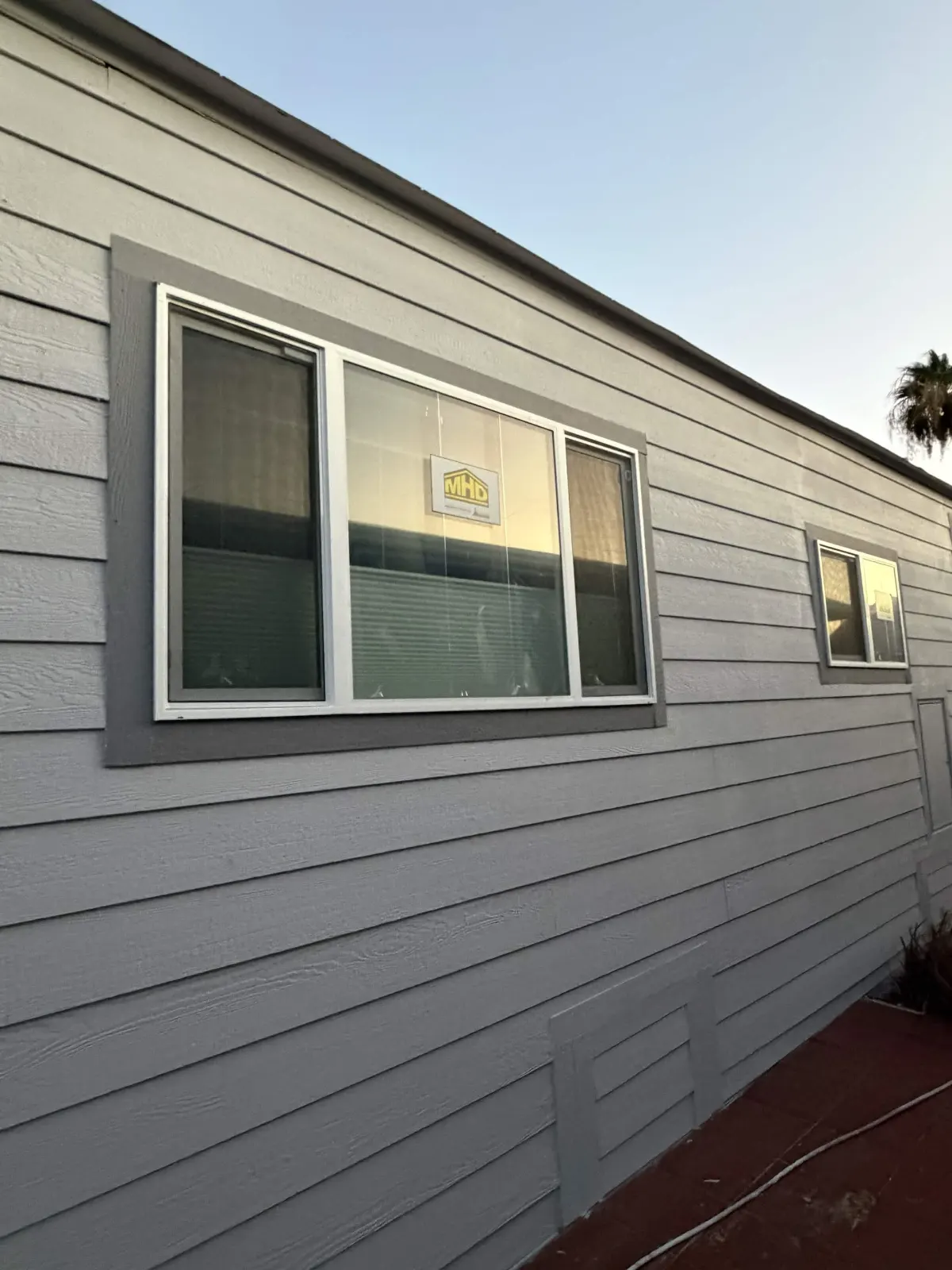
| Surfaces | Fascia boards, rafter tails, soffits, eave overhangs and gable trim |
|---|---|
| Prep | Scrape, sand, spot prime bare wood, caulk seams |
| Finish | Emerald Exterior, two finish coats |
| Contractor | Orange Coatings LLC, Arizona ROC License 365464 |
What fascia and eave painting includes
- Setting ladders safely at the roof edge, with roof tile and gutters protected
- Scraping and sanding all loose and peeling paint
- Spot priming bare wood, end grain and patched areas
- Caulking seams between boards and the gap where fascia meets stucco
- Painting exposed rafter tails on all sides, including the end grain
- Painting soffits and eave undersides, with vents masked or cleaned
- Two finish coats along the full roof line, gables included
Signs your fascia needs paint
- Paint curling or flaking along the bottom edge of the fascia
- Gray, bare wood showing on the south and west sides
- Cracks running along the grain of the boards
- Dark stains where roof water drips over the edge
- Gaps opening at joints and corners
- Soft or crumbling wood at rafter ends, which points to rot
Why fascia fails first in Arizona
Most stucco houses in the West Valley have wood fascia around the roof edge. Unlike the stucco below it, wood swells and shrinks with heat and moisture, and the paint has to stretch with it. Under summer temperatures above 100°F and constant UV, the paint film gets brittle and cracks along the grain.
Many homes here have no gutters, so during monsoon storms, from June 15 to September 30, roof runoff pours over the fascia edge and soaks any bare wood. Water then gets behind the paint, which is why peeling often starts at the bottom edge. End grain on rafter tails soaks water up like a straw and rots first if it is not sealed.
How we paint fascia and eaves
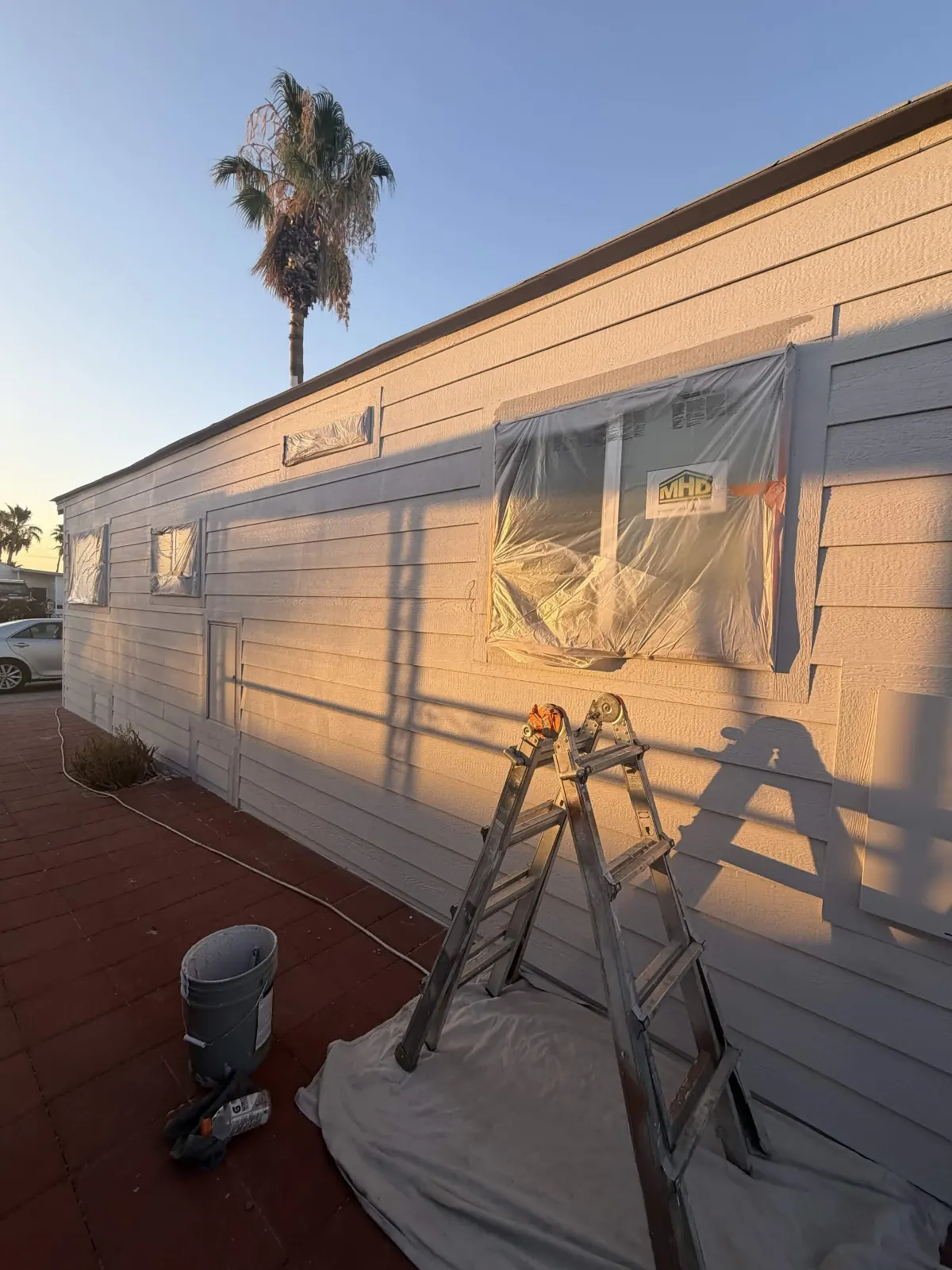
- Walk the roof line with you from the ground and note bare wood, gaps and any soft spots.
- Cover landscaping, walkways and the stucco directly below.
- Scrape and sand peeling paint, then dust off the boards.
- Prime bare wood, including the end grain of every rafter tail.
- Caulk joints and the fascia-to-stucco seam with a paintable exterior caulk.
- Brush and roll the first coat along the full length, working into the wood grain.
- Apply the second coat and check every side of the house from the ground and the ladder.
Rot, repairs and when to call a carpenter
Paint protects sound wood; it does not fix rot. If a screwdriver sinks into the end of a rafter tail or the bottom of a fascia board, that section needs replacing before painting. We check for soft spots during the walkthrough and list them so you can have a carpenter or roofer replace the wood first. Painting over rot only hides it for a season.
Small surface checks and cracks in otherwise solid wood can be filled and primed as part of normal prep.
Color, HOAs and matching the rest of the trim
Fascia is usually painted the trim color in your HOA scheme, which is often a shade lighter or darker than the body. If you are only painting the fascia, we match the existing trim color or cross-match it to a Sherwin-Williams code from your HOA palette. Faded trim rarely matches its original color, so painting all the trim at once gives the most even result.
Lighter trim colors hold up better on the sunny roof edge. Very dark fascia absorbs more heat, which speeds up the cracking described above.
Timing and cost factors
Painting the fascia and eaves on a single-story house is usually a short job of a day or two. Two-story homes, heavy peeling or lots of exposed rafter tails take longer. Price is based on:
- Total length of roof line and number of stories
- Exposed rafter tails versus a flat, boxed fascia
- Soffits and eave undersides included or not
- Amount of scraping, priming and caulking
- Ladder access around pools, slopes and landscaping
- Whether the job is standalone or part of a full exterior repaint
Why ladder work at the roof edge takes care
Fascia sits at the roof edge, so nearly all of the work happens from ladders. Concrete tile roofs, common on West Valley homes, crack if someone leans a ladder or steps on them carelessly, so ladders should rest against the fascia or on a stabilizer, never on the tile. Landscaping, gravel and AC units below the roof line are covered before any scraping starts.
Two-story homes, roof lines over a pool, or eaves above a steep slope take more setup time. We look at access during the walkthrough so the estimate reflects it.
Fascia painting across the West Valley
We paint fascia, eaves and rafter tails on homes and small commercial buildings in:
Photos
Frequently asked questions
- Can I paint just the fascia without painting the whole house?
- Yes. Fascia often needs paint every few years before the stucco does. We match your existing trim color so the fresh fascia blends in.
- Why does my fascia peel when my stucco still looks fine?
- Wood moves much more than stucco with heat and moisture, and fascia takes direct sun and roof runoff. The paint on wood cracks and lifts sooner as a result.
- Do you paint the ends of rafter tails?
- Yes, all sides including the end grain. Unsealed end grain absorbs water and is where rot usually starts.
- Will you replace rotted fascia boards?
- We find and flag rotted sections at the estimate. Replacing the wood is carpentry work and needs to happen before painting, so that the new boards can be primed and painted with the rest.
- Do you paint soffit vents?
- We clean and paint around them, or paint the vent covers to match if they are faded. Vents should never be painted shut.
- How often should fascia be repainted in Arizona?
- Sunny sides usually need attention sooner than the rest of the house. Inspect the south and west fascia every couple of years and touch up any bare wood before it cracks.
- Do you paint the soffit and fascia on two-story homes?
- Yes. Two-story roof lines need taller ladders and more setup, which is reflected in the estimate. The prep and paint system are the same as on a single-story home.