Guide · Ceilings
Popcorn Ceiling Removal Before Painting: What to Expect
By the Orange Coatings team · Published
Removing a popcorn ceiling before painting means testing the texture for asbestos, sealing off the room, soaking and scraping the texture off, repairing the drywall underneath, applying a new texture or smooth finish, priming, and then painting. It is a messy, multi-day job per area, and the scraping is the quick part; the repairs and refinishing take most of the time.
Here is each stage in order, what can go wrong, and the questions to settle before anyone picks up a scraper.
Step zero: test for asbestos
Some popcorn and acoustic ceiling textures were made with asbestos. The EPA banned spray-applied asbestos surfacing materials in 1978, but existing stock could still be used after that, so homes built or remodeled into the 1980s can have it. That includes many older houses in Sun City, which Del Webb opened in 1960, and older neighborhoods in Glendale, Phoenix and Arcadia.
You cannot tell by looking. A small sample sent to an accredited lab gives a clear answer, usually within days. If the result is positive, do not scrape, sand or disturb the ceiling yourself; removal should be handled by a licensed asbestos abatement contractor following the rules that apply in Arizona. If it is negative, removal can go ahead as a normal remodeling job.
Why people remove popcorn at all
- It looks dated and makes rooms feel lower and darker.
- It collects dust and cobwebs and cannot really be cleaned.
- It is hard to touch up: patches and water stains show and paint can loosen it.
- It hides drywall seams and flaws, which is also why removing it reveals them.
Preparing the room
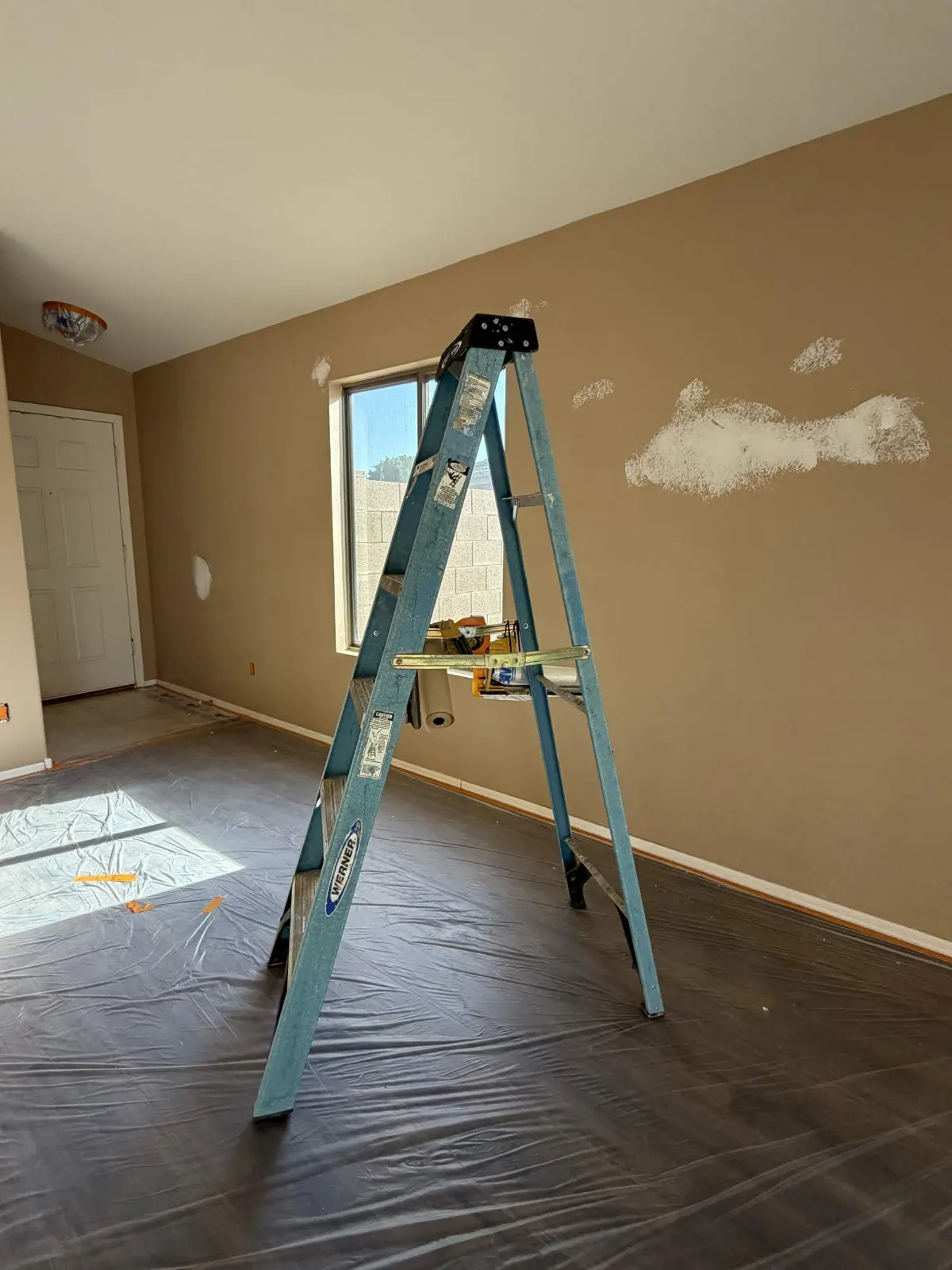
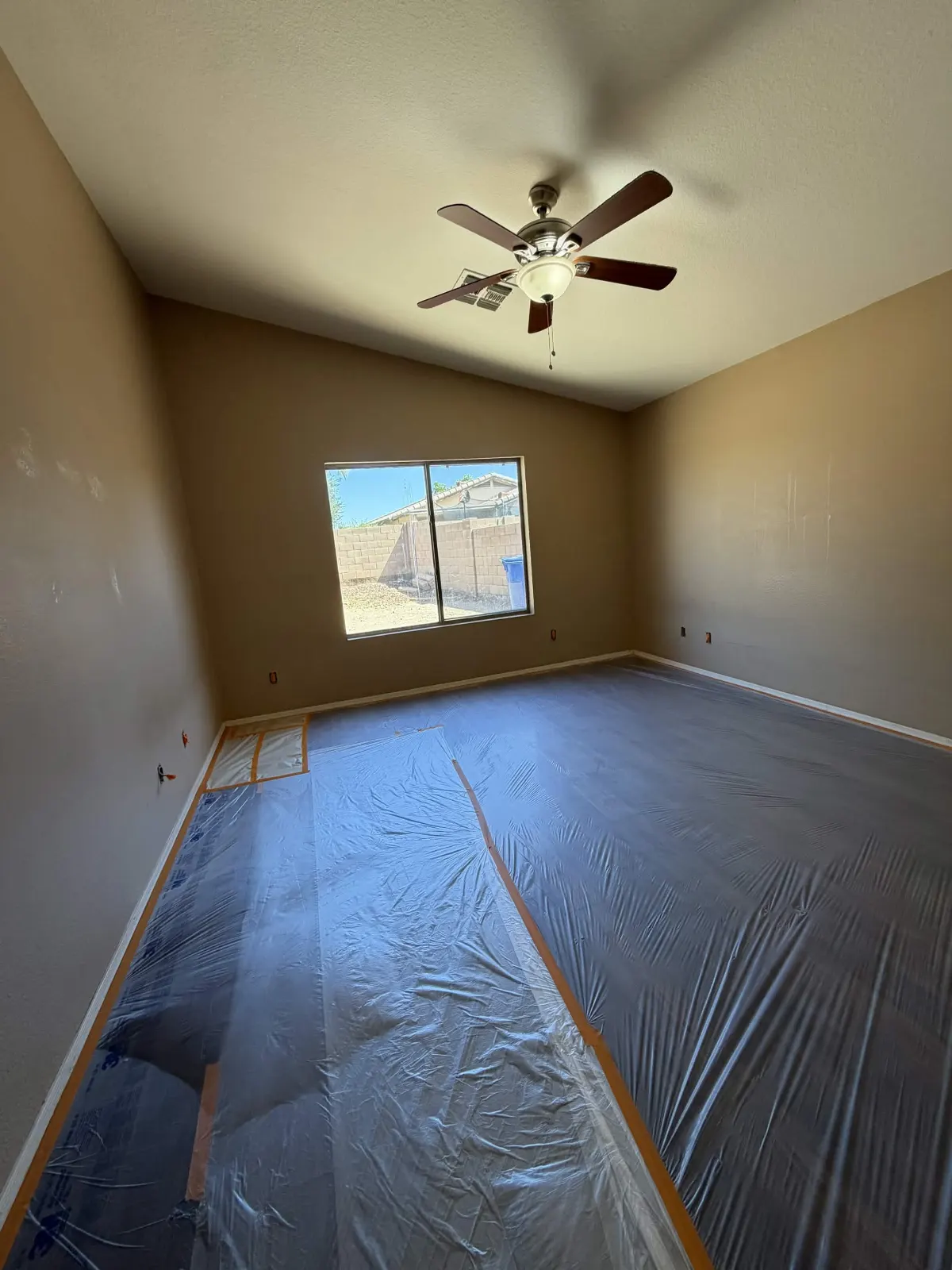
Popcorn removal is wet and dusty, so the room has to be emptied and sealed. Expect furniture out, floors covered with plastic and a protective layer on top, walls covered with plastic from the ceiling down, and HVAC vents and ceiling fans covered or removed. Light fixtures are usually taken down and the wires capped by someone qualified.
Plan to live around it. Bedrooms are out of use while the ceiling is being stripped, repaired and finished, and in an open floor plan the work area can be large.
Wetting and scraping
Untreated popcorn usually softens when it is sprayed with water and allowed to soak for a few minutes; then it scrapes off in sheets with a wide blade. Popcorn that has been painted is harder, because the paint seals the texture and keeps water out. Painted ceilings take longer, may need scoring or a removal product, and are more likely to tear the drywall paper underneath.
Too much water is its own problem. Saturated drywall can sag or blister, and the paper face can peel. Careful crews wet small sections at a time.
What you find underneath
Popcorn was often sprayed over drywall that was only roughly finished, because the texture hid everything. Once it comes off, you may see tape seams, screw heads, uneven joints, gouges from the scraper, and old water stains that were never sealed.
Those all have to be repaired before paint. Seams get fresh joint compound, gouges and torn paper are sealed and patched, and stains are sealed with a stain-blocking primer so they do not bleed through the new paint. On some ceilings a full skim coat is the only way to get a good result.
New texture or smooth?
A perfectly smooth ceiling looks clean but shows every flaw, especially under the strong, low-angle light Arizona homes get through large windows. It takes the most finishing work. A light texture, such as knockdown or orange peel, is common in local homes, hides minor imperfections, and usually matches the walls. Choose this before work starts, because it changes how much drywall finishing is needed.
Primer and paint
- Let all joint compound and texture dry completely.
- Apply a primer suited to new drywall and patch material so the ceiling absorbs paint evenly.
- Spot-seal any stains with a stain-blocking primer.
- Apply two coats of flat ceiling paint, which hides small flaws and reduces glare.
- Check the finished ceiling with a work light held at an angle before the plastic comes down.
Doing it yourself versus hiring it out
Scraping a tested, asbestos-free popcorn ceiling is physically simple, which is why many homeowners try it. The hard parts are the containment, the overhead drywall finishing and getting a ceiling that looks right in raking light. A first-timer often spends more time sanding and re-coating joint compound than removing the texture.
A sensible split for some households is to have the removal and drywall work done by people who do it every week, then have the ceilings and walls painted as a separate step. Whoever does each part, get clear on who repairs gouges and seams, because that is the step most likely to fall between trades.
How long it takes
A single room often runs several days from setup to final paint, because each round of joint compound, texture and primer needs drying time. A whole house can take a week or more. Dry Arizona air helps compound dry faster than in humid climates, but each layer still needs to dry fully before the next. Ask for a written schedule that separates removal, repair, texture and painting so you know when each room will be usable again.
Frequently asked questions
- Does every popcorn ceiling contain asbestos?
- No. Many do not, especially in homes built after the 1980s. The only way to know is a lab test of a sample, and it is worth doing before any scraping.
- Can I just paint over a popcorn ceiling?
- You can, usually with a sprayer, but rolling can pull the texture loose. Painted popcorn is also much harder to remove later, so decide whether you will ever want it gone.
- Is popcorn removal messy?
- Very. Wet texture falls in clumps and dust spreads during sanding, so the room has to be emptied and sealed with plastic. Good containment keeps it out of the rest of the house.
- Will my ceiling be perfectly smooth after removal?
- Not without extra work. The drywall underneath often needs seam repair or a skim coat before it will look smooth, which is why many homeowners choose a light texture instead.
- What paint goes on a ceiling after popcorn removal?
- A drywall primer first, stain blocker where needed, then two coats of flat ceiling paint. Flat hides minor flaws and glare better than higher sheens.