Guide · Exterior painting
Repainting a Fence in Arizona: Stain or Paint?
By the Orange Coatings team · Published
For a bare or weathered wood fence in Arizona, a penetrating semitransparent stain is usually the easier finish to live with: it does not peel, it shows the grain, and recoating is a quick brush-and-wipe job. Choose paint or a solid-color stain if the fence is already painted, if you want it to match the house or an HOA color, or if the wood is too mismatched to look good under a see-through finish, and plan to repaint before the film starts to fail.
Both finishes wear faster in desert sun than the national averages suggest. Here is how each one behaves, how to tell which your fence has now, and what the prep looks like.
The quick decision
- Fence is bare, gray or rough-sawn and you like the wood look: semitransparent penetrating stain.
- Fence already has paint or solid stain on it: stay with paint or solid stain. A see-through stain will not soak into a painted board.
- You want an exact color to match trim, stucco or an HOA palette: paint or solid-color stain.
- Boards are a mix of old and replacement lumber: solid color hides the difference; semitransparent will show it.
- You want the least effort per visit and do not mind more frequent visits: semitransparent stain.
What the sun does to an unfinished fence
Ultraviolet light breaks down the surface fibers of wood. Left bare, a fence turns gray, roughens, checks and slowly erodes. The USDA Forest Products Laboratory explains that finishes slow this mainly through their pigment: pigment particles block UV from reaching the wood, which is why clear finishes fail quickly outdoors and why paint, with the most pigment, protects the surface most completely.
In the West Valley that UV load is high almost every day of the year, and the boards facing south and west weather fastest. The north side of a fence often looks years younger than the south side of the same run.
How penetrating stain works and wears
A semitransparent stain soaks into the wood instead of forming a skin on top. The Forest Products Laboratory recommends oil-based versions for this, because they let the wood breathe, so the finish does not blister or peel even when the boards take on moisture. Latex semitransparent products form a thin film and behave more like paint. Penetrating stains perform best on rough-sawn or weathered wood and can go onto weathered boards with little surface prep.
As it wears, stain fades and erodes rather than peeling. That makes maintenance simple: clean the fence, brush on a generous coat, and wipe off whatever has not soaked in after a short while. The FPL's general lifespan figures put semitransparent stains at roughly three to eight years; on a sun-baked Arizona fence, expect the low end.
How paint and solid stain work and wear
Paint and solid-color stain form a film over the wood. They hold color well and give the most UV protection, and the FPL notes that a good acrylic latex house paint generally outlasts an oil-based one. The trade-off is how they fail. When water gets behind the film or the wood moves, paint cracks and peels, and peeling paint has to be scraped before the next coat.
Cedar and redwood fences need a stain-blocking primer under latex paint, because water-soluble extractives in those woods can bleed through as brown streaks. The FPL's advice is to repaint before the first coat fails, ideally when the topcoat has worn just thin enough to show primer.
Repainting a fence that is already painted
- Wash off dust, cobwebs and sprinkler mineral spots and let the boards dry.
- Scrape every loose or peeling area, then sand the edges smooth.
- Replace split, rotted or loose boards and reset popped fasteners.
- Spot-prime bare wood, using a stain-blocking primer on cedar or redwood.
- Apply two coats of exterior acrylic, working paint into board edges and the tops of pickets where water sits.
Arizona-specific trouble spots
- Sprinklers and drip lines that wet the bottom of the boards every day
- Soil or gravel piled against the fence, which keeps the lower edge damp
- Monsoon wind-driven rain on the side of the fence facing the storm
- Fence tops and horizontal rails that bake in direct sun all afternoon
- Painting in summer heat; the FPL notes latex needs to stay above 50 degrees Fahrenheit, but hot boards in full sun cause their own problems, so work early in the day
Block walls and iron fences
Many West Valley yards are enclosed by concrete block walls rather than wood, often with iron view panels or gates. Those materials need different products and prep: masonry primer and breathable paint on block, and rust-inhibitive primer on iron. If your fence is a mix, the job is planned so each material gets the right system and the colors still read as one.
Getting a fence painted with Orange Coatings
Fence work can be booked on its own or added to an exterior repaint so the fence and house colors match. At the same-day estimate we check what finish is on the fence now, how many boards need replacing, and where water is reaching the wood, then put the prep and finish in a written quote. If your HOA controls fence colors, we can help you pull the approved color numbers for your submittal.
Frequently asked questions
- Can I put stain over a painted fence?
- Not a penetrating stain; it cannot soak through the paint film. A solid-color stain can go over sound paint after cleaning and scuffing, since it behaves like a thin paint.
- How can I tell if my fence has paint or stain on it?
- Look for peeling and a smooth film: that is paint or solid stain. If the grain and texture show clearly and the color has faded evenly without flaking, it is likely a penetrating stain.
- How often should a wood fence be re-stained in Arizona?
- Plan on every few years, and sooner on sections in full afternoon sun. Recoat when the color has faded and water no longer beads on the wood.
- Should I wait before finishing a new fence?
- New lumber needs to be dry before finishing, but the FPL advises against leaving wood to weather for long, since sunlight damages the surface fibers. Finish it once it is dry rather than after a full season outdoors.
- Is spraying a fence a good idea?
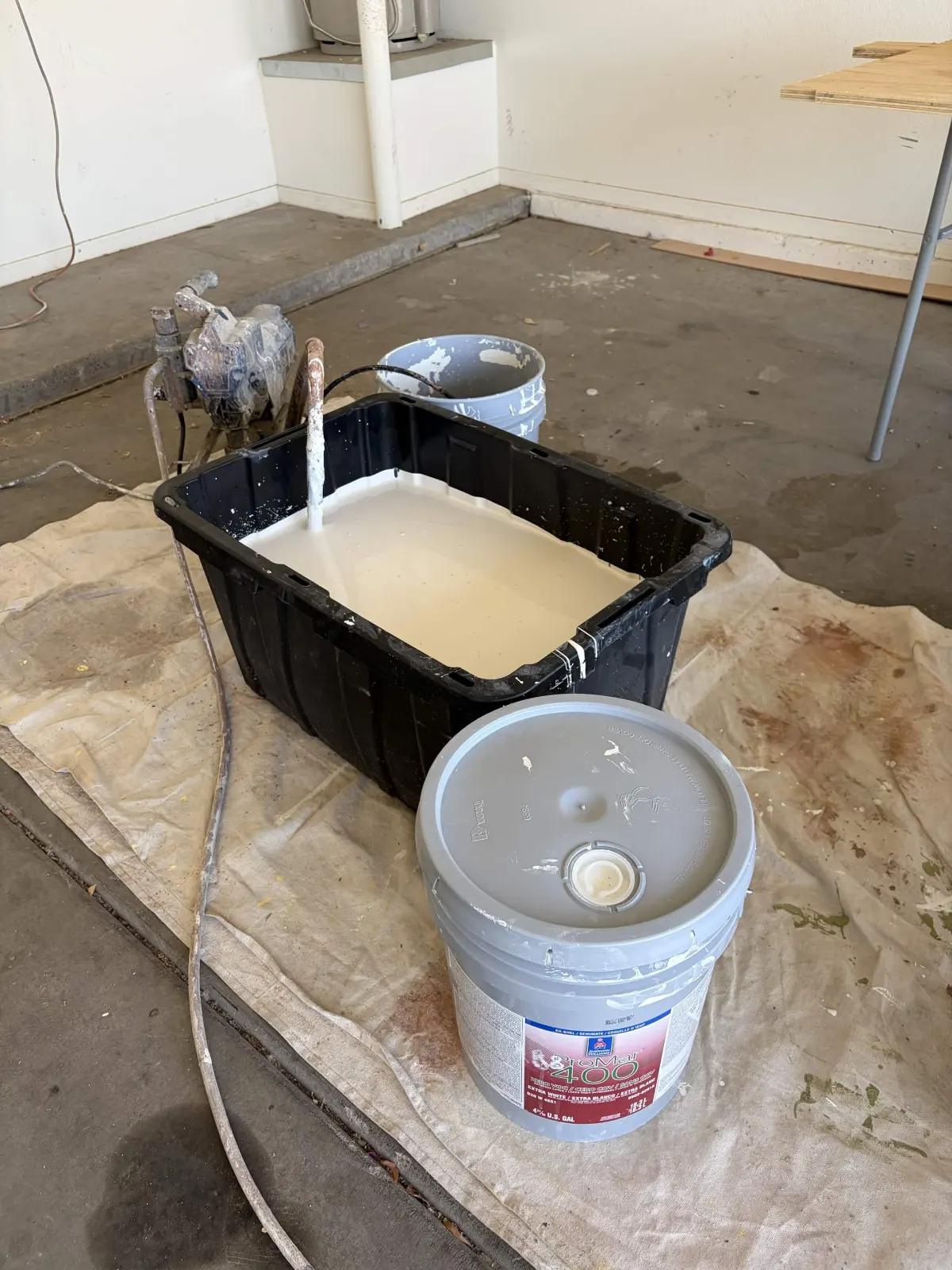
- Spraying is fast, but overspray drifts onto cars, walls and the neighbor's side. Back-brushing after spraying works the finish into the wood, and on windy days brushing or rolling is the safer choice.
- Do I need my neighbor's permission to paint a shared fence?
- It is good practice to talk first, since they see the other side. HOA rules may also control fence colors, so check your guidelines before choosing a color.