Guide · Exterior painting
Should You Paint Brick or Slump Block in Arizona?
By the Orange Coatings team · Published
Paint brick or slump block in Arizona when it is already painted, when patches and stains have made it look mismatched, or when you want a color the masonry cannot give you; leave it bare if it is sound, unpainted and you like how it looks. The deciding fact is that painting masonry is close to a one-way choice: once paint goes on, it needs repainting every so often, and it is very hard to strip from brick without damaging it.
If you do paint, the job lives or dies on moisture, efflorescence and alkalinity, not on the color. Here is how to decide, and what proper prep looks like on Valley masonry.
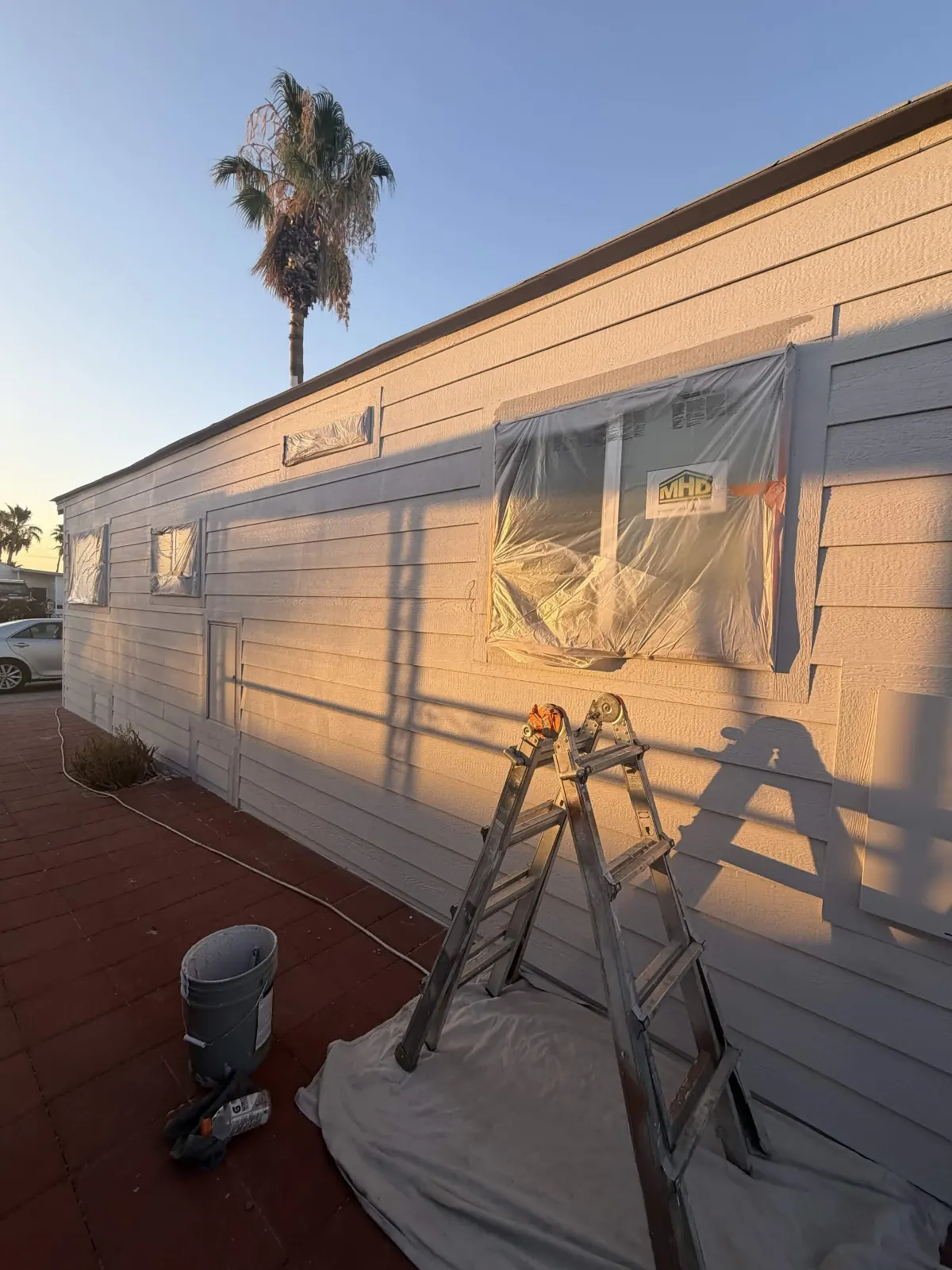
What changes when you paint masonry
Unpainted brick and block need no paint maintenance at all. The Brick Industry Association points out that painted exterior brickwork turns into a recurring maintenance item and that removing paint later is difficult without harming the surface. That is the trade: you gain color control and a clean, uniform look, and you take on a repaint cycle for as long as you own the house.
Paint also changes the texture. A film softens the edges of each unit and fills the small hollows in the face, which some owners love and others miss once it is gone.
Slump block, brick and standard block are not the same
Concrete block is the easiest case: it was often meant to be painted. Slump block and brick are the ones where owners hesitate, because the bare finish is part of the home's character.
- Slump block: concrete block pulled from the mold while soft so the face bulges and sags, giving an adobe look. It shows up on many mid-century Phoenix-area ranch houses and garden walls. The rough, porous face drinks paint.
- Fired clay brick: less common on Valley houses, more often seen as a chimney, planter or accent wall. Brick itself is close to pH neutral, but the mortar around it is strongly alkaline.
- Gray concrete block (CMU): the standard material for back yard and side walls across the West Valley. Very porous and alkaline, and usually painted or stuccoed to match the house.
Good reasons to paint, and reasons to wait
- Paint it if it already has old paint that is fading or peeling; stripping it back to bare is rarely practical.
- Paint it if repairs, filled holes or replaced units have left a patchwork you cannot match.
- Paint it if your HOA palette or a new exterior scheme calls for the walls to match the stucco.
- Wait if the wall shows white salt deposits, damp bands at the base, or crumbling mortar. Those need fixing first.
- Leave it bare if the masonry is sound and unpainted and you like it; a cleaning may be all it needs.
Moisture and efflorescence come first
Efflorescence is the white, crusty salt that appears on block and brick when water moves through the wall and evaporates at the face. Sherwin-Williams lists the usual causes as moisture moving through the wall, poorly sealed surfaces and new mortar that has not cured long enough. In the desert the water rarely comes from the sky. It comes from sprinklers and drip lines spraying the base of a wall, from planters built against it, and from soil piled up on one side.
Painting over efflorescence traps the moisture and the salts keep pushing, which lifts the paint from behind. Stop the water source, brush or low-pressure wash the salts off, then watch the wall for a few weeks to see whether they return before it is coated.
Breathability: why the paint choice matters
Masonry takes on moisture and needs to give it back. The Brick Industry Association recommends treatments that let water vapor escape, and notes that acrylic latex paint forms a surface film that is only semi-permeable, so heavy coats or too many layers lower the wall's ability to dry. Mineral treatments such as limewash and silicate mineral paint soak into the pores instead and keep the masonry breathing, at the cost of a narrower color range.
For most painted block in the Valley, a quality exterior acrylic over a masonry primer is the practical choice. Keep the film to the coats the product calls for rather than piling on extra.
Alkalinity and the right primer
Fresh mortar and concrete block are strongly alkaline, and alkalinity breaks down ordinary paint binders. The BIA recommends an alkali-resistant primer or a paint made for masonry. On bare or patched masonry we use Sherwin-Williams Loxon masonry primer, the same primer we put on bare stucco, and very open block can take a block filler first so the finish does not look pitted.
Prep and painting, step by step
- Repair first: repoint mortar joints with cracks wider than a business card and replace loose or broken units.
- Let new mortar or new block cure; the BIA calls for at least 30 days before any treatment.
- Clean with the gentlest method that works: a stiff non-metal brush and soapy water, or low-pressure washing. The BIA warns against muriatic acid on brick.
- Let the wall dry at least 24 hours after washing, longer after rain or monsoon humidity.
- Check for trapped moisture by taping a square of plastic sheet to the wall for 16 hours; condensation underneath means it needs more drying time.
- Prime bare and patched areas with an alkali-resistant masonry primer.
- Apply two finish coats, spraying and then back-rolling so the paint reaches the hollows of slump block and the mortar joints.
Color choices for painted block in the desert
Most West Valley HOAs want yard walls to match or sit close to the house body color, and many limit walls to earth tones. Lighter colors also run cooler in direct sun and show less fading on long south and west runs. Warm mid-tones such as SW 6106 Kilim Beige or SW 7036 Accessible Beige tend to hide dust and irrigation spotting better than bright whites.
How we approach a masonry wall
At the same-day estimate we look for salt bloom, damp bases, bad joints and old coatings, and we tell you plainly if a wall should stay bare. When painting makes sense, the work follows the prep above, finished with the same two coats, sprayed and back-rolled, that we put on stucco.
Frequently asked questions
- Can painted slump block be returned to bare block later?
- Rarely without some damage. The rough face holds paint in every hollow, and chemical strippers and blasting can erode the block. Treat painting as a long-term decision.
- Is elastomeric coating a good idea on block walls?
- It can bridge hairline cracks, but it is a thick, less breathable film. On walls with moisture at the base it can trap water, so we only suggest it where cracking is the main problem and the wall stays dry.
- How often does painted masonry need repainting in Arizona?
- It depends on sun exposure, sprinkler spray and the paint used. Sun-facing walls show wear first. Inspect each spring and touch up chips before water gets behind the film.
- Can I limewash slump block instead of painting it?
- Limewash is a mineral treatment best suited to clay brick and other porous masonry, and it weathers gradually by design. On slump block, test a small area first, because the look varies a lot from block to block.
- Why is paint peeling off the bottom of my block wall?
- Almost always moisture. Sprinklers, drip emitters or soil against the wall keep the base wet, and salts push the paint off. Fix the water source before repainting or it will peel again.
- Do I need HOA approval to paint a yard wall?
- Usually, yes, for any wall visible from the street or a neighbor's lot. Check your community's architectural guidelines and submit the color before work starts.