Exterior painting · Block walls
Block Wall Painting in Surprise, AZ
Published
Painted block walls in the West Valley fade, stain and flake faster than the house because they sit in full sun and get hit by sprinklers every day. We wash them, remove efflorescence and hard-water stains, prime bare and patched block with Sherwin-Williams Loxon masonry primer, and finish them to match or complement the house.
Block walls make up a lot of square footage on a typical lot: the back and side yard perimeter, courtyard walls, and the garden walls along the front. Done with the house or on their own, they need masonry prep, not the shortcuts that work on a smooth wall.
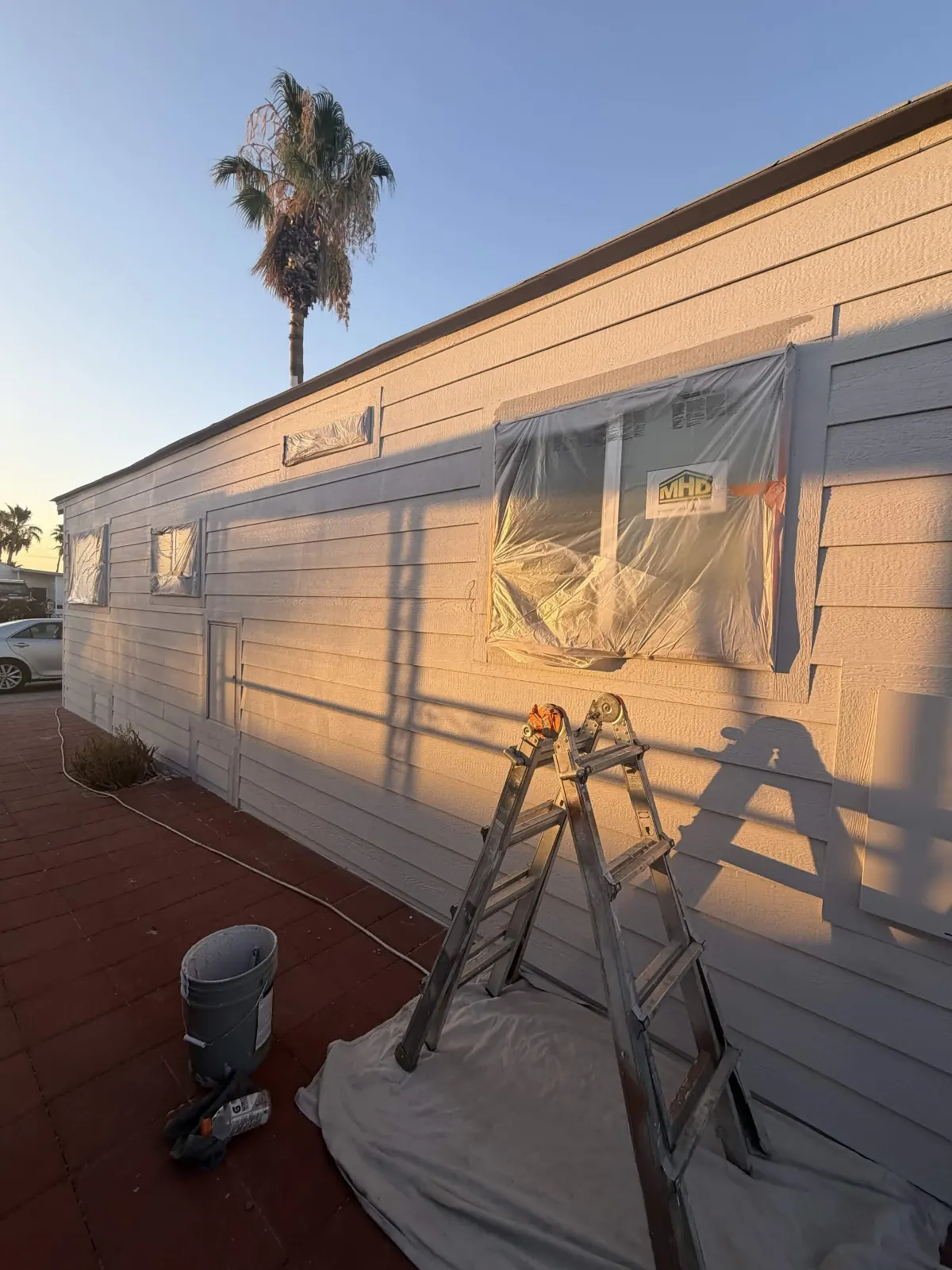
| Walls | Perimeter, courtyard and garden walls in CMU, slump block and stucco-covered block |
|---|---|
| Primer | Loxon masonry primer on bare, patched or chalky block |
| Application | Sprayed and back-rolled into the block pores and mortar joints |
| Licensed | ROC 365464; bonded and insured in Arizona |
What block wall painting includes
- Pressure washing both faces, or just your side, to strip dust, chalk and loose paint
- Treating efflorescence and hard-water stains at the base
- Scraping and sanding peeling areas
- Patching cracked mortar joints and chipped block
- Priming bare or patched masonry with Loxon
- Two finish coats, sprayed and back-rolled
- Painting the wall caps and pilasters, and masking gates, lights and plants
Signs your block wall needs work
- White, crusty deposits near the bottom of the wall
- Orange or brown staining from sprinkler water
- Paint peeling in sheets from the lower courses
- Wall color that no longer matches the freshly painted house
- Cracks in mortar joints or along the cap
- An HOA notice about wall condition
Efflorescence and sprinkler damage
Efflorescence is the white, powdery salt that appears when water moves through block and evaporates on the surface. In the West Valley it usually comes from sprinklers or drip lines watering the wall instead of the plants, or from soil piled against the base. Paint does not stick to it, and painting over it without fixing the water source leads to peeling within a season or two.
We wash and scrub off the salts, let the wall dry out, and recommend redirecting heads away from the wall. Our hard water also leaves mineral stains that paint alone may not cover evenly, so those areas get cleaned and primed before the topcoat.
Our block wall process
- Walk the wall with you and note cracks, stains, irrigation problems and access.
- Pressure wash and let the block dry fully, since block holds water longer than stucco.
- Scrape loose paint and remove efflorescence.
- Patch joints and chips.
- Prime with Loxon masonry primer where the block is bare, patched or chalky.
- Mask gates, lights, pavers, gravel and plants.
- Spray and back-roll two coats, working the paint into the porous block and the joints.
- Finish the caps and do a final walk with you.
Why block needs masonry primer and back-rolling
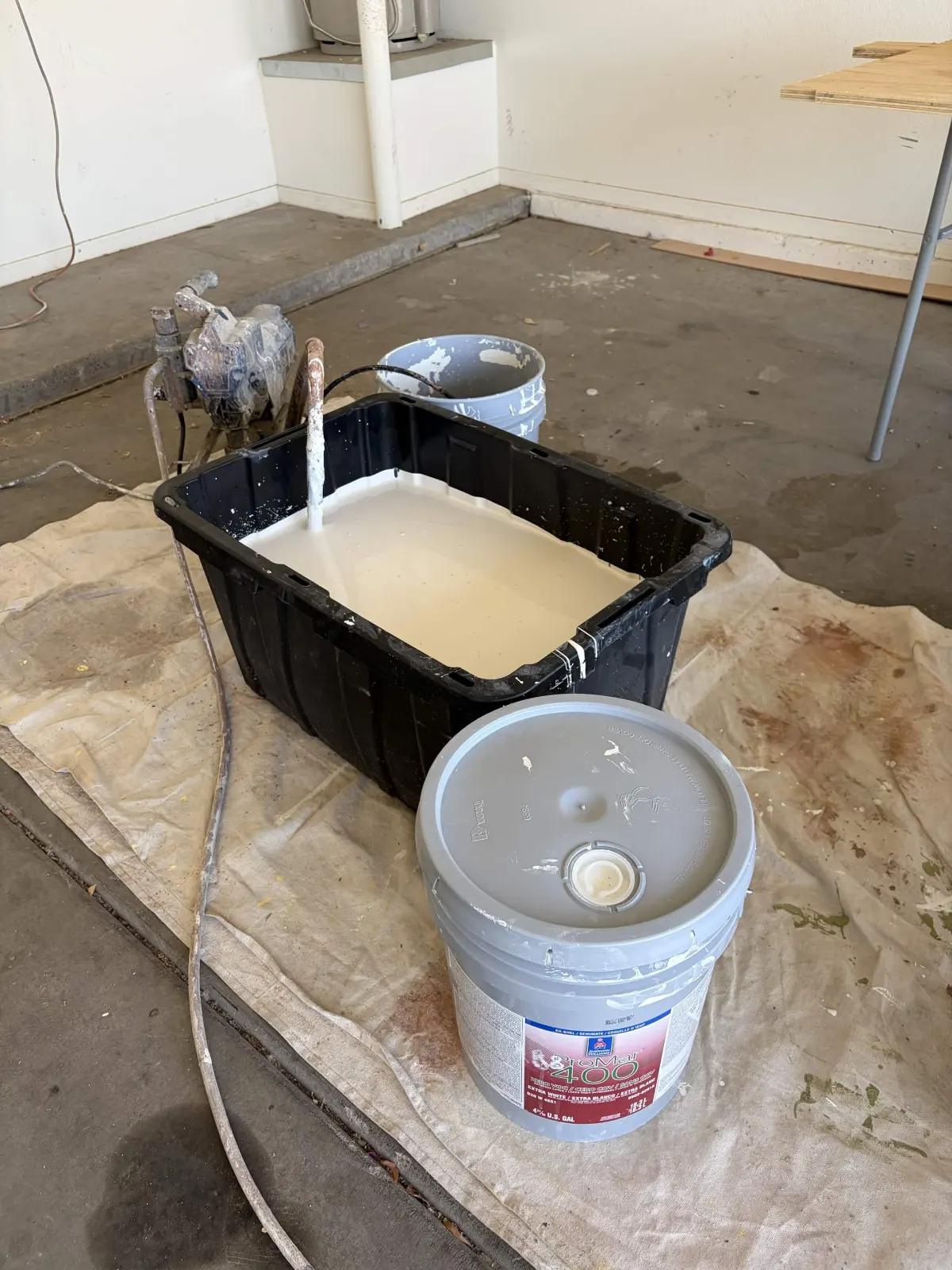
Concrete block is alkaline and very porous. The alkalinity can attack a finish coat that goes straight onto bare or patched block, and Loxon is made to handle it. The pores and deep mortar joints also swallow paint, so a sprayed-only coat looks fine from the street but leaves pinholes up close. Back-rolling right behind the sprayer fills them.
Split-face and slump block have even more surface texture than smooth CMU and take noticeably more paint per square foot.
Shared walls, HOAs and color
Many perimeter walls are shared with a neighbor or face an HOA common area. Painting your side is your call, but painting the other face needs the neighbor's or HOA's agreement, so sort that out before we schedule. Walls that face a street or common area may also fall under your HOA's color rules, so check your community's guidelines.
A common choice is the house body color, or one shade darker so the wall hides dust and splash marks.
Block wall timing and cost factors
A typical backyard perimeter is usually a one- to two-day job, longer when there is a lot of peeling or efflorescence to deal with. Block needs time to dry after washing before any primer goes on. Price is based on:
- Total length and height of the walls
- One face or both faces
- Block type: smooth, split-face or slump
- Amount of peeling, efflorescence and patching
- Access through gates, over landscaping or along a pool
- Painting the walls alone or with the house
Walls for HOAs, landlords and businesses
Long runs of block wall along community streets and common areas are a frequent HOA maintenance item. They get the same masonry prep as residential walls, but the work has to be planned around traffic, sidewalks and residents. We can phase long walls by section and give the board a written scope for each phase.
Rental owners and commercial property managers often paint block walls at the same time as the building so the colors match. Walls facing a parking lot or street also collect tire splash and graffiti, which needs cleaning or spot priming before the finish.
Areas we serve
We paint block walls for homes, HOAs and businesses across the West Valley:
Photos
Frequently asked questions
- Should I paint a block wall that has never been painted?
- Bare block can be left as it is, but once painted it needs repainting on a schedule. If you do paint it, a masonry primer like Loxon goes on first, then two finish coats.
- Why is the paint peeling only at the bottom of my wall?
- Almost always water. Sprinklers, drip lines or soil against the wall keep the lower courses damp, and the moisture pushes the paint off. Fix the water source before repainting.
- Can you paint my neighbor's side of the wall?
- Only with their permission, or the HOA's if it faces a common area. Many owners paint just their own face, which is fine as long as the street side meets HOA rules.
- How do you get rid of efflorescence?
- We wash and scrub it off, let the wall dry, and prime before painting. If the water source is not fixed, the salts will come back through the new paint.
- Do block walls need two coats?
- Yes. Block is porous enough that one coat leaves thin spots and pinholes. Two coats, sprayed and back-rolled, give even color and better protection.
- Can you match the wall to my house color?
- Yes. We use the same Sherwin-Williams code as your house body, or a coordinating shade if your HOA scheme calls for a different wall color.
- Is it better to paint or seal bare block?
- A clear sealer keeps the natural block look but does little against fading or stains. Paint over a masonry primer gives a uniform color that matches the house and hides sprinkler marks better.