Guide · Stucco
Signs Your Stucco Needs Repair Before Painting
By the Orange Coatings team · Published
Your stucco needs repair before painting if you see cracks you can fit a fingernail into, patches that sound hollow when tapped, stucco crumbling near the ground, or rust and water stains bleeding through. Fine hairline cracks are normal and get handled during ordinary prep, but anything loose, soft or wet has to be fixed first, because new paint will not hold a failing wall together.
Here is how to walk your own house and sort the cosmetic issues from the ones that need a patch, a stucco contractor, or a closer look at where water is getting in.
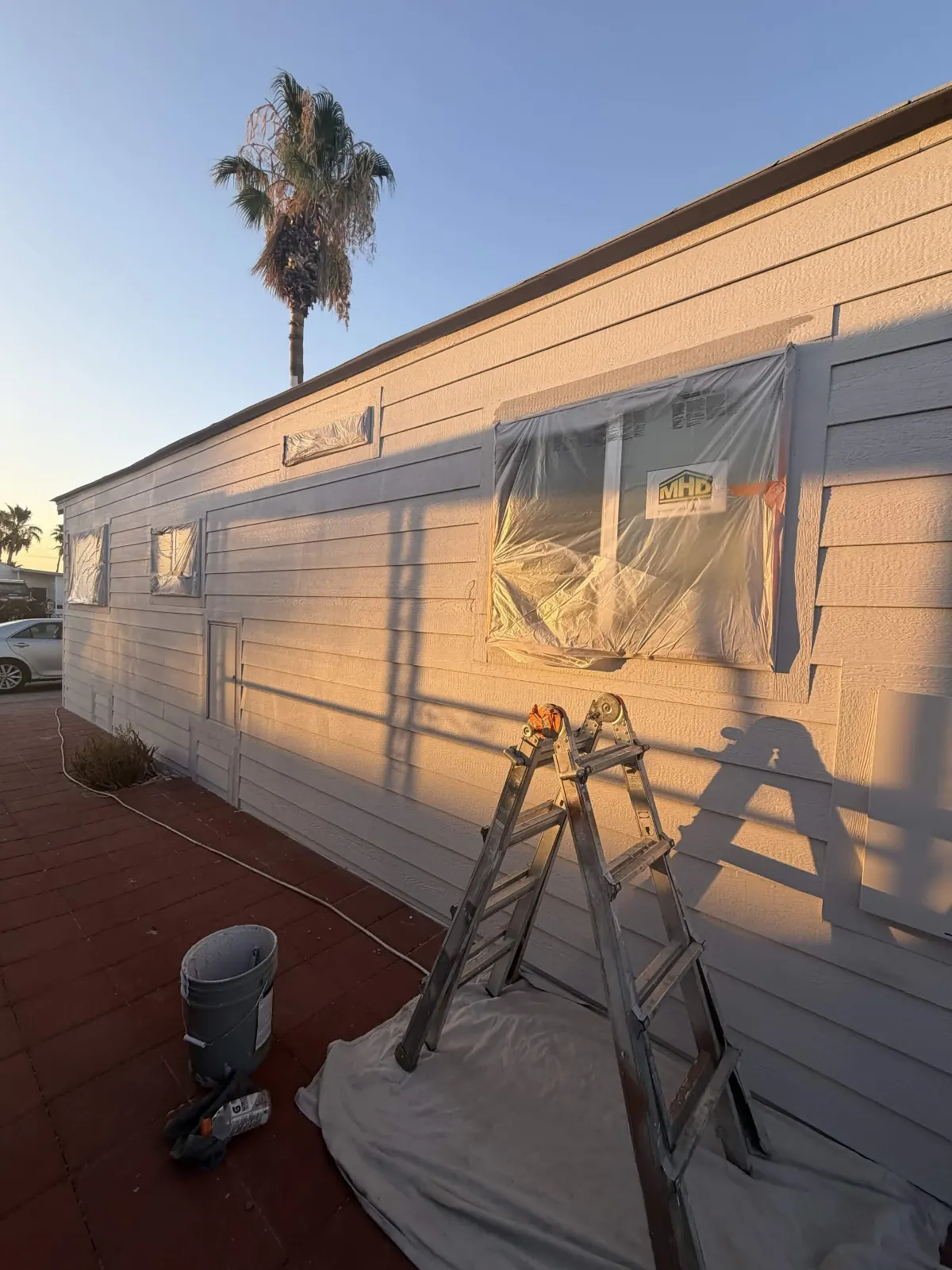
Why repair has to come before paint
Paint is a thin film, a few thousandths of an inch thick. It can bridge a hairline gap and it can seal a sound surface, but it cannot glue loose stucco back to the lath or stop water that is already moving behind the wall. When paint goes over damage, the damage keeps moving and takes the new coating with it.
Arizona makes this worse. Walls heat up past the air temperature on summer afternoons and cool off at night, so every crack opens and closes daily. Monsoon storms from mid-June through September then push wind-driven rain into whatever openings the heat created.
Cracks: which ones are cosmetic and which are not
Almost every stucco house in the West Valley has some cracking. The pattern tells you more than the count.
- Spiderweb or map cracking, finer than a credit card edge: usually shrinkage in the finish coat. Cleaned and filled during normal prep.
- Diagonal cracks running off window and door corners: common stress points. Fine ones get filled; wider ones get opened up and patched.
- Cracks about 1/8 inch wide or more: need to be cut out and patched with stucco patch, then textured to match.
- Cracks where one side sits higher than the other, or that keep growing: possible movement in the structure. Have it evaluated before anyone paints.
Hollow, bulging or loose sections
Stucco should feel and sound solid. Tap along the wall with the plastic handle of a screwdriver, especially around windows, at corners and under roof lines. A dull, papery or hollow sound means the stucco has separated from what is behind it.
A bulge you can see from the street, or a section that flexes when you press it, is past the point of patching over. That area has to be cut back to sound material and rebuilt. Painting a delaminated section only hides it until the next monsoon season.
Damage at the bottom of the wall
The bottom foot of an Arizona stucco wall takes a lot of abuse. Sprinklers and drip lines spray it, landscaping rock gets piled against it, and soil can bury the metal weep screed that is supposed to let water drain out from behind the stucco.
Look for stucco that is soft, sandy or crumbling near grade, white powdery deposits, and paint that bubbles or flakes off in sheets in that band. These point to water sitting in the wall. Fix the source first: redirect sprinkler heads, pull soil and rock back so the weep screed is exposed, then let the wall dry before patching.
Stains that tell you water is getting in
Rust stains will bleed through new paint unless the source is dealt with and the spot is sealed. Efflorescence has to be brushed off and the moisture source found, or it will push the new coating off again.
- Rust-colored streaks: often corroding corner bead, lath or fasteners behind the finish coat
- Dark streaks under windows or roof edges: water running off a ledge or a missing drip edge
- White crusty efflorescence: salts carried out by moisture moving through the wall
- Brown or tan staining at roof-wall joints: a flashing problem, which is a roofing repair, not a paint job
Gaps around windows, doors and penetrations
Check where stucco meets window frames, door jambs, hose bibs, light fixtures, vents and the electrical panel. Old sealant shrinks and pulls away in the heat, leaving a dark line you can see from a few feet back. These gaps are easy to fix but they are also where monsoon rain gets behind the finish. Old, failed caulk gets cut out and replaced with a paintable exterior sealant before any coating goes on.
A 15-minute walk-around you can do yourself
- Start on the west and south walls, which take the most sun and usually show problems first.
- Rub your palm on the wall. Heavy white chalk means the old paint is breaking down and the wall needs a thorough wash.
- Tap around each window corner and along the base with a screwdriver handle, listening for hollow spots.
- Press a strip of masking tape on peeling areas and pull it off fast. If paint comes off on the tape, that area needs scraping.
- Look at the bottom of every wall for crumbling stucco, buried weep screed and sprinkler overspray.
- Photograph anything you find so you can show it to whoever gives you an estimate.
What a painter fixes and when you need a stucco contractor
Normal prep on a stucco repaint covers washing, filling hairline cracks, cutting out and patching small cracks and dings, re-caulking around openings, and priming patched areas. On our jobs, bare or patched stucco gets Sherwin-Williams Loxon masonry primer, then two full coats of Emerald Exterior go on, sprayed and back-rolled.
Large delaminated areas, structural cracking, rotted framing behind the stucco, or a roof leak are different trades. If we find those during a same-day estimate, we point them out and recommend getting them repaired before painting, so you are not paying to coat a wall that still has a problem underneath.
Frequently asked questions
- Can I paint over hairline cracks in stucco?
- Yes, after they are cleaned out and filled with a flexible, paintable patch or sealant. Paint alone will not hide them for long, because the crack keeps moving with the temperature swings.
- How do I know if stucco is delaminating?
- Tap it with a hard plastic handle and listen. Solid stucco gives a sharp knock, while separated stucco sounds dull or hollow, and badly loose areas may bulge or flex. Those sections need to be cut out and rebuilt, not painted.
- Why is my stucco crumbling at the bottom of the wall?
- It is almost always water. Sprinklers, buried weep screed or soil piled against the wall keep the base wet, and the stucco breaks down. Stop the water first, let the wall dry, then repair and coat it.
- Will elastomeric paint fix cracked stucco?
- Elastomeric coatings stretch over small cracks better than standard acrylic paint, but they do not repair loose or structurally cracked stucco. The wall still needs patching first, and elastomeric has its own drawbacks on walls that trap moisture.
- Should stucco repairs dry before painting?
- Yes. Fresh stucco patch is wet and alkaline, and coating it too soon can cause poor adhesion and discoloration. Follow the patch product's label for cure time, then prime the patch before the finish coats.
- Does a painter's estimate include stucco repair?
- Routine crack filling and small patches are normally part of prep, so ask the painter to list them in the written estimate. Large repairs are often quoted separately or handled by a stucco contractor.