Guide · Primer · Interior and exterior
When You Need Primer Before Painting (and When You Don't)
By the Orange Coatings team · Published
You need primer on anything bare (new drywall, patches, raw wood, new or patched stucco, bare metal), on glossy or oil-based paint, over stains, and usually for a big color change. You can usually skip it when repainting a clean, sound, previously painted wall in a similar color; Sherwin-Williams puts it simply, saying that is generally the only time primer is not needed.
Primer is not extra paint. It does a different job: it seals porous surfaces, gives the finish something to grip, and blocks stains and old colors. Here is a surface-by-surface guide, plus the quick tests that tell you which case you are in.
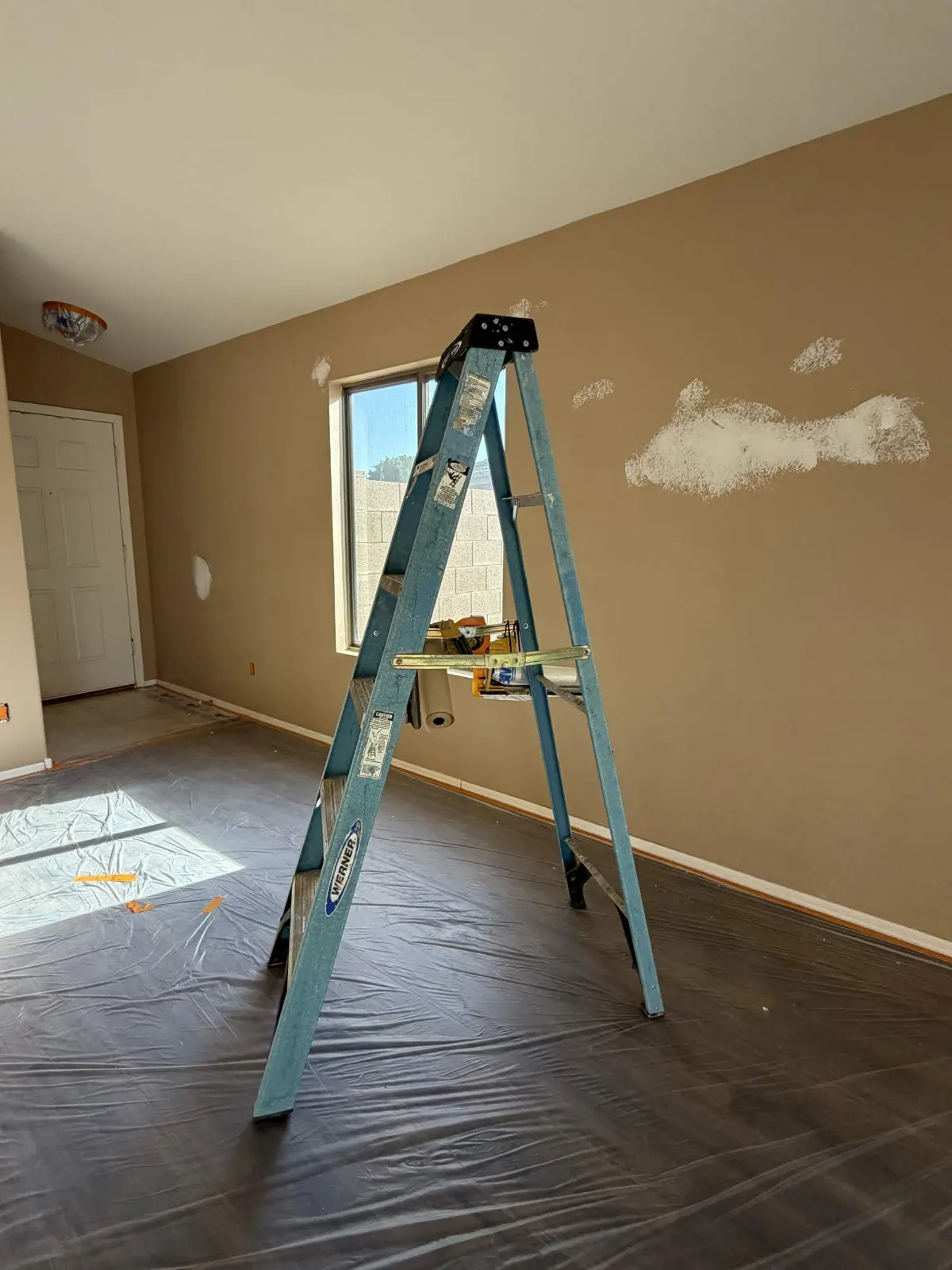
What primer actually does
- Adhesion: Sherwin-Williams describes primer as made to make sure the topcoat adheres to the surface below.
- Sealing: it evens out how much a porous surface soaks up, so the finish dries to one sheen instead of blotches.
- Hiding: it reduces how many finish coats it takes to cover a previous color.
- Blocking: stain-blocking primers stop water marks, smoke, marker and tannins from bleeding into the new paint.
- Protection: on wood and metal, primer helps keep out moisture and, with the right product, rust.
Interior surfaces that need primer
- New drywall and skim-coated walls: the paper face and joint compound absorb paint at different rates. A drywall primer prevents the seams from showing through as dull stripes.
- Drywall patches: spot-prime each one, or it can flash as a dull spot in the finished wall.
- Bare or stripped wood trim and doors: Sherwin-Williams calls primer a necessity on porous bare wood.
- Glossy enamel or oil-based paint on trim and cabinets: scuff-sand, then use a bonding primer so latex does not peel off in sheets.
- Water stains, smoke and nicotine: use a stain-blocking primer, or the mark will come back through the paint.
- Large color changes, especially dark to light: a white or light-tinted primer saves coats.
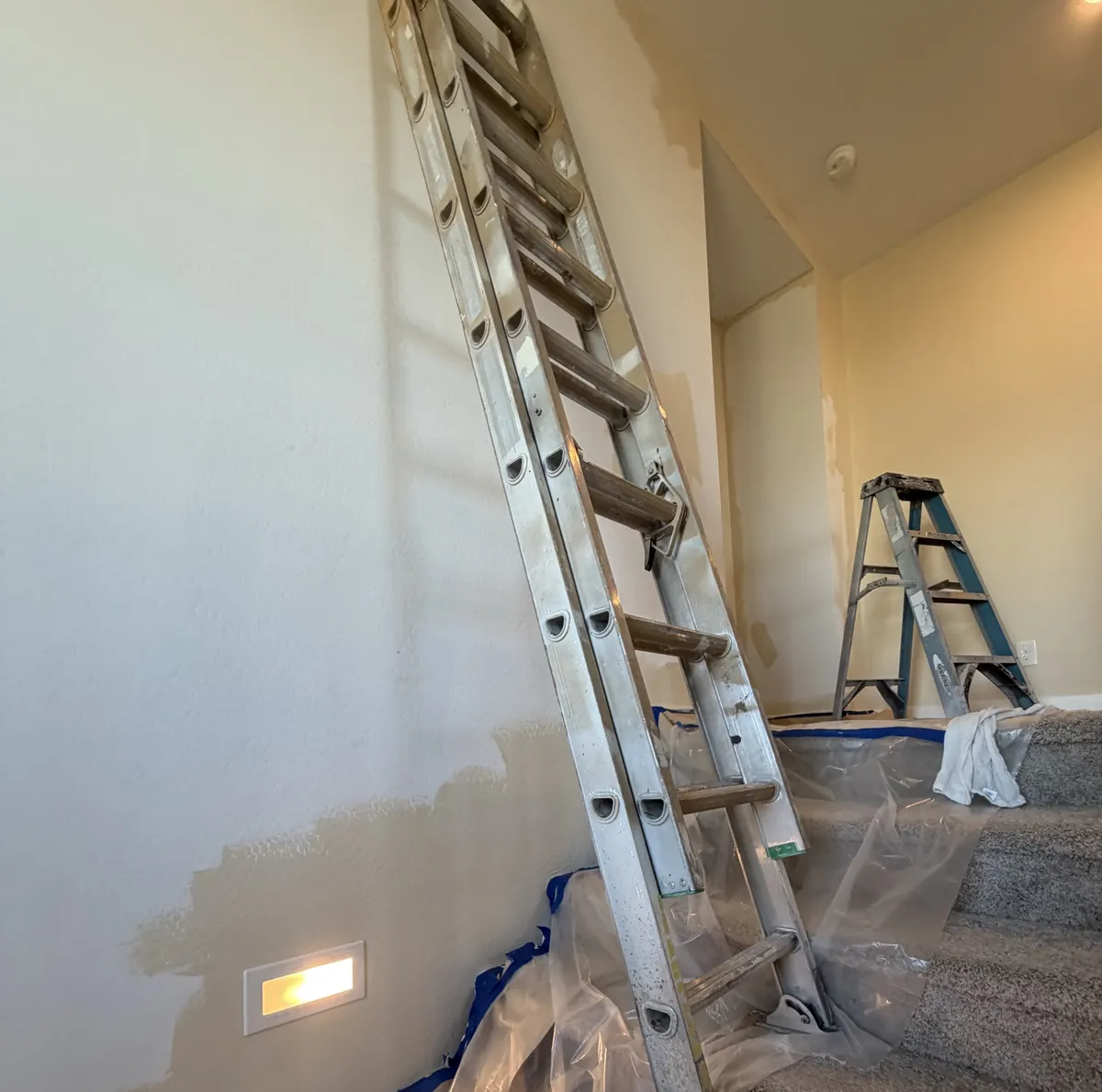
Exterior surfaces that need primer
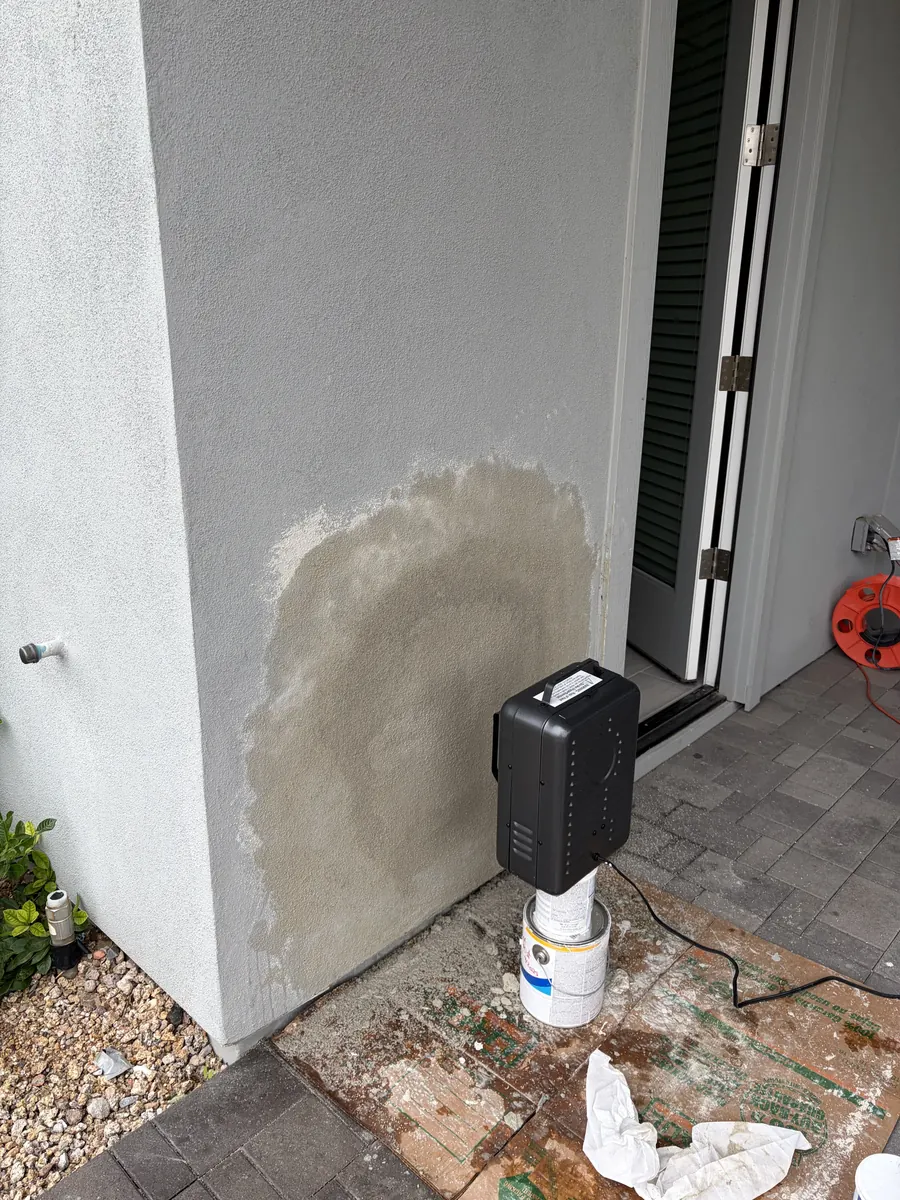
- Bare or new stucco and fresh patches: they are alkaline and can break down a finish paint, so they need a masonry primer. We use Sherwin-Williams Loxon masonry primer on bare or patched stucco.
- Chalky old paint: wash it first, then use a primer made for chalky surfaces if powder remains.
- Bare block or slump block: porous and alkaline like stucco, so it needs a masonry primer or block filler.
- Bare steel and wrought iron: Sherwin-Williams recommends primer, especially where the metal sees moisture. Use a rust-inhibiting metal primer after removing loose rust.
- Galvanized metal and aluminum: these need a primer labeled for them, or paint can lose adhesion.
- Raw wood on fascia, doors and patio covers: prime, and prime the ends and cut edges too.
When you can skip primer
If the existing paint is clean, firmly attached, not glossy and in a similar color, and you are using the same kind of paint, a separate primer usually adds cost without benefit. Many premium paints are sold as self-priming over previously painted surfaces, and this is the case that claim is meant for.
Even then, spot-priming still applies. Every patch, every spot sanded to bare drywall or bare stucco, and every stain gets primer before the finish coats go on.
Does paint-and-primer-in-one replace primer?
On a sound painted wall, it does the job a primer would have done there, which is not much. It does not replace a dedicated primer on bare drywall, bare stucco, glossy enamel, metal or stains. Those surfaces need a product made for that specific problem, whether that is sealing, bonding, blocking or alkali resistance, and a self-priming finish is not built to do all of it.
Quick tests before you decide
- Tape test: press a strip of masking tape on the old paint, rub it down and pull it off fast. Paint on the tape means poor adhesion, and the loose paint must be scraped and the area primed.
- Rubbing alcohol test: rub a small spot of trim with a cotton ball dampened with rubbing alcohol. If color comes off, it is latex. If nothing happens, it is likely oil-based, which needs sanding and a bonding primer before latex.
- Chalk test: wipe an exterior wall with a dark cloth. White or colored powder means wash first and possibly prime.
- Gloss check: if the surface is shiny enough to reflect a window clearly, scuff it before priming or painting.
- Stain check: if a mark is still visible after washing, plan on a stain-blocking primer.
Primer timing and tinting
Primer has a recoat window on its label. Wait at least the minimum dry time before the finish coat, and do not leave exterior primer exposed for weeks, because sun and dust degrade it. When the finish color is deep, a primer tinted gray or toward the topcoat helps it reach full color with fewer coats. When the finish color is light, use white primer.
How it shows up on an estimate
A good written estimate says where primer goes and which product. "Spot-prime patches and bare areas" and "full prime coat on all walls" are very different amounts of work. If one bid lists primer and another does not, ask the second painter how they plan to handle the patches, the stained ceiling or the bare stucco. At our same-day estimate we assess every surface, and the detailed written quote you get before we leave is the place to check where primer goes.
Frequently asked questions
- Does new drywall really need primer?
- Yes. Joint compound and drywall paper absorb paint differently, and without primer the seams and patches often show through as dull stripes or spots, even after two coats.
- Can I paint latex over oil-based paint without primer?
- Not reliably. Latex does not grip glossy oil paint well and can peel off in strips. Clean, scuff-sand and use a bonding primer first.
- Should I prime before repainting the same color?
- Usually not, if the old paint is clean and sound. Spot-prime any patches or bare spots, then apply the finish coats.
- What primer goes on new stucco?
- A masonry primer that is made to handle alkalinity. We use Sherwin-Williams Loxon masonry primer on bare and patched stucco before the finish coats.
- Is one coat of primer enough?
- Usually. Two coats can help over heavy stains, very porous patches or a deep red being covered with white. Follow the label for dry time between coats.
- Can I use interior primer outside?
- No. Interior primers are not made for sun, rain and temperature swings. Use an exterior primer made for the surface you are painting.