Guide · Interior and exterior painting
Why Paint Touch-Ups Show (Flashing) and How to Avoid It
By the Orange Coatings team · Published
A touch-up shows when it reflects light differently from the paint around it, which painters call flashing. The color can be a perfect match and the patch still shows, because the sheen, the texture, the surface underneath or the age of the paint is different.
You avoid it by touching up with the same paint and the same tool, priming patches first, feathering the edges, and knowing when a spot fix will never blend so the whole wall should be repainted instead. In Arizona there is one more factor: sun-faded exterior paint almost never accepts a fresh touch-up without showing.
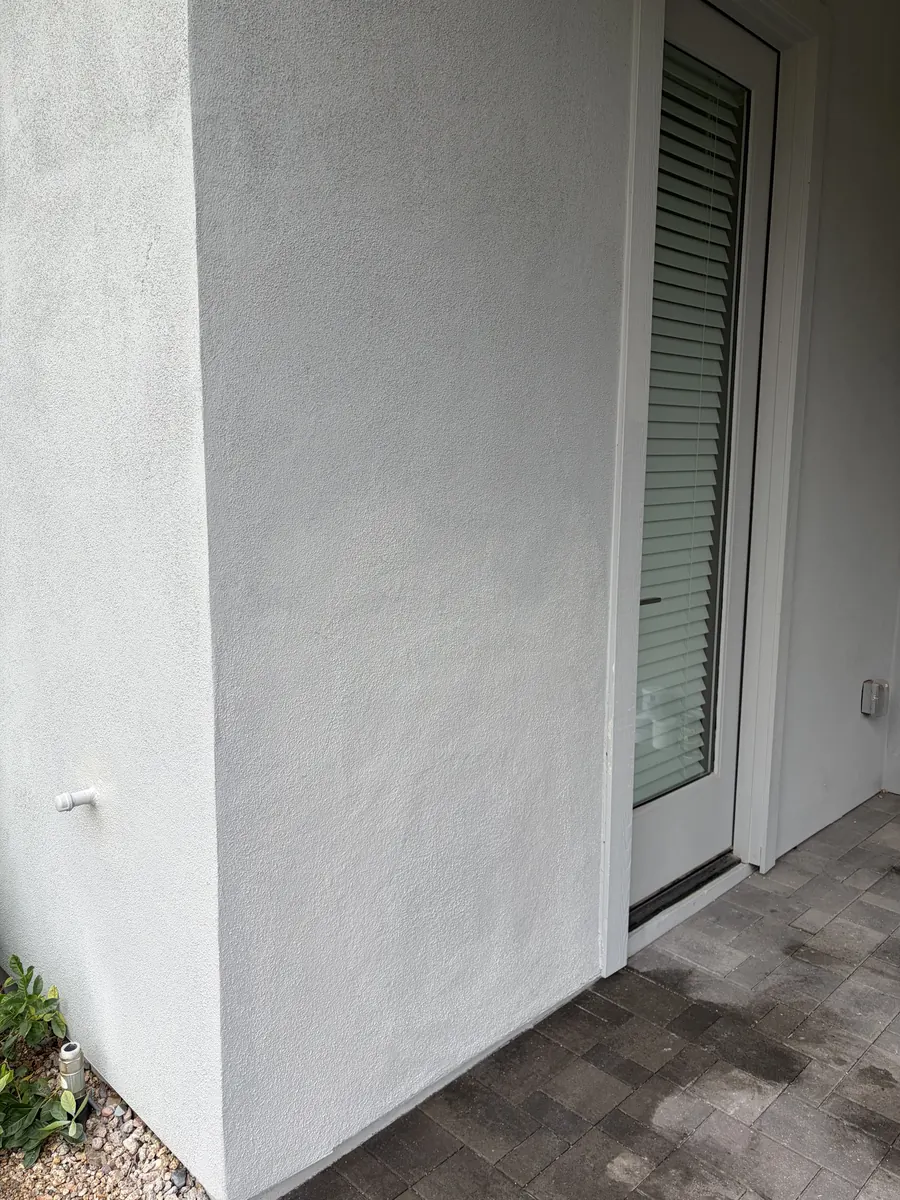
What flashing actually is
Sherwin-Williams defines flashing as an uneven appearance of a coating's gloss, sheen or luster. Look at the wall straight on and it seems fine; look along it toward a window and a shiny or dull rectangle appears where the touch-up went. That is why touch-ups often look invisible at noon and obvious in the late-afternoon light that rakes across the wall.
Sherwin-Williams also has a name for the broader problem, an obvious repair: a repainted area that is noticeably different from the surface around it, whether in sheen, texture or color.
The usual causes
- Porosity: a patch of spackle, joint compound or new stucco absorbs paint differently from painted wall, so the same paint dries flatter or shinier over it
- A different tool: Sherwin-Williams lists touching up a rolled wall with a brush as a common cause, because the brush leaves a smoother, different texture
- A different batch: new paint mixed months or years later can differ slightly from the original
- Different conditions: touching up at a very different temperature or humidity from the original job
- Film thickness: a heavy dab of paint builds a thicker film than the rest of the wall, and Sherwin-Williams lists uneven film thickness and thin coats among the causes of flashing
- Age: the paint on the wall has dulled, faded or chalked since it was applied, and the new paint has not
Why sheen makes it better or worse
The shinier the paint, the more any difference in film or texture shows. Flat paint scatters light, so a touch-up in flat usually disappears. Eggshell is forgiving. Satin and semi-gloss reflect more light, and on those finishes even a careful touch-up can show at an angle.
That is a trade-off worth knowing when choosing sheens. A washable satin in a busy hallway resists scuffs, so it needs fewer touch-ups, but the ones it does need are harder to hide. On ceilings and low-traffic walls, flatter sheens make future repairs easier.
How to touch up so it blends
- Use paint from the original job if you have it, stirred well. If not, match the exact product, sheen and color, not just the color.
- Spot-prime any patched area first so the topcoat dries over an even surface. Sherwin-Williams recommends spot-priming patches for this reason.
- Use the same kind of tool as the original: a roller of the same nap for rolled walls, a brush only where the original was brushed.
- Load the tool lightly. Apply a thin coat and feather it out past the repair rather than dabbing paint onto the spot.
- Sherwin-Williams notes that thinning the touch-up coat slightly may help it blend; check the label before thinning.
- Let it dry fully and look at it in the light that made the problem obvious before deciding whether it worked.
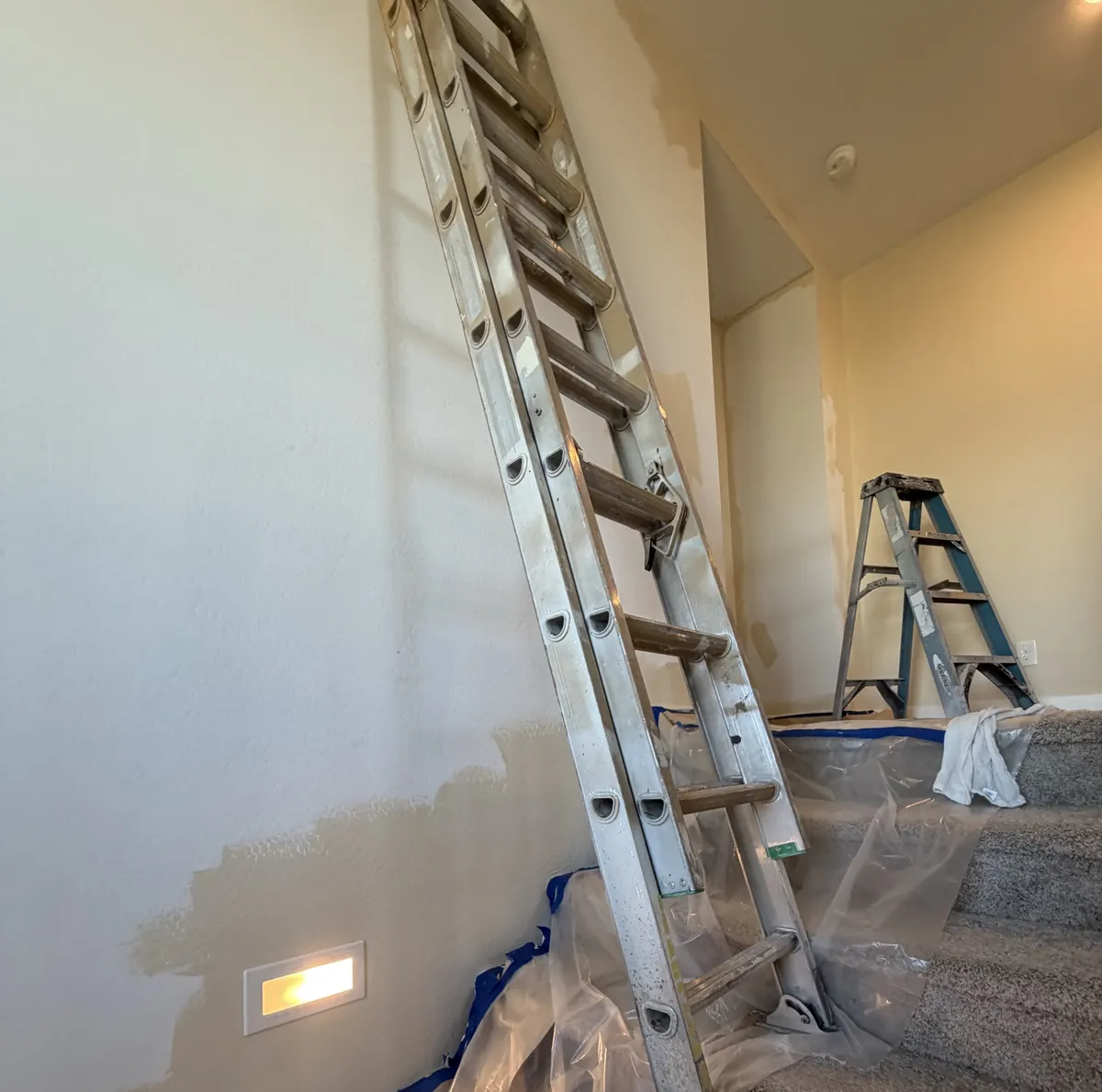
When to stop touching up and repaint
Some repairs will never blend, and chasing them only adds more shiny spots. Repaint the whole section, corner to corner, when:
- The wall has many patches from moved art, a TV mount or old anchors
- The paint is several years old and has dulled or yellowed
- You do not have the original paint and do not know the exact product or sheen
- The finish is satin or glossier and the wall faces a window
- The patch is large, such as after drywall repair or a plumbing access cut
Exterior touch-ups in the Arizona sun
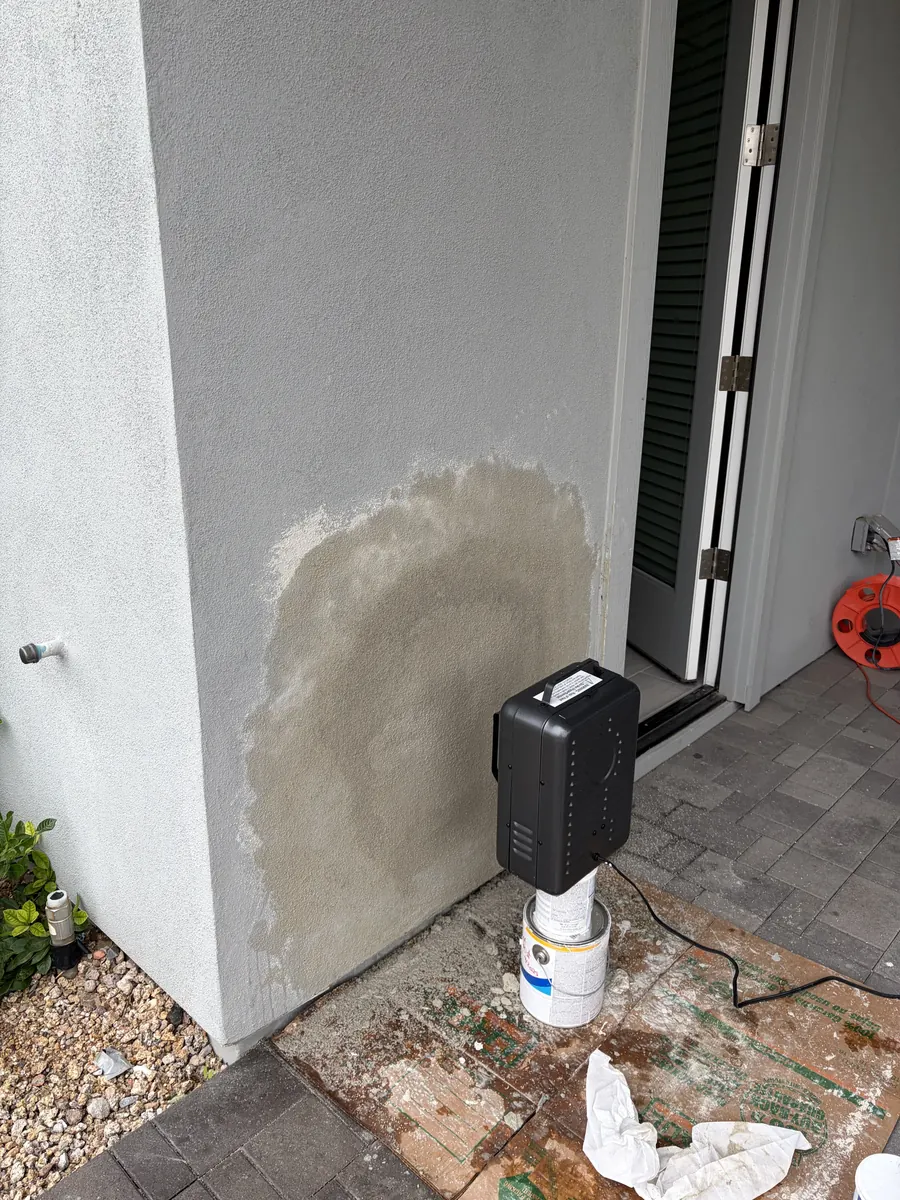
Outside, age is the problem that beats everything else. Strong year-round sun fades and chalks exterior paint, so a wall that went up a few years ago is no longer the color on the can. Fresh paint in the original color will usually show as a darker, richer patch on a sun-faded wall, even when the product and sheen are identical.
That is why exterior repairs are usually painted to a natural break: a corner, a control joint, a pop-out or the edge of a wall. A stucco patch also needs its texture matched and the bare patch primed before paint; we use Sherwin-Williams Loxon masonry primer on bare or patched stucco. Many West Valley HOA palettes also state that their colors are meant for full repaints, not touch-ups.
Set yourself up for easy touch-ups later
- Keep a labeled container of leftover paint from every room, with the product name, sheen, color code and date
- Store it indoors, not in a hot garage, where summer heat can ruin latex paint
- Take a photo of the can label and keep it with your house records
- Ask your painter for a written list of the products and colors used
- Choose sheens with future repairs in mind, flatter where marks are rare and washable where they are common
Frequently asked questions
- Why does my touch-up look shiny even though it is the same paint?
- The patch underneath absorbed the paint differently, or the touch-up went on thicker than the rest of the wall. Priming the patch and feathering a thin coat usually fixes it.
- Does flat paint really touch up better?
- Yes. Flat paint scatters light, so small differences in film or texture do not show. Satin and glossier finishes reflect light and reveal them.
- Can a paint store match my wall from a chip?
- It can match the color closely, but not the age of the paint on your wall. On faded or older paint, plan to repaint to a corner rather than spot-fix.
- Should I touch up with a brush or a roller?
- Use whatever applied the original. Touching up a rolled wall with a brush is one of the most common reasons a repair shows.
- Why do exterior touch-ups look darker than the wall?
- The wall has faded in the sun and the new paint has not. That is why exterior repairs are painted to a natural break, such as a corner or the edge of a wall.
- How long should I keep leftover paint for touch-ups?
- As long as it stays usable, stored sealed and out of the heat. Even when it is too old to use, the label tells you the exact product, sheen and color for a new batch.