Guide · Exterior painting
Why Exterior Paint Chalks in Arizona and What to Do
By the Orange Coatings team · Published
Exterior paint chalks when sunlight and weather break down the binder that holds the pigment in place, leaving a fine powder on the surface. Arizona's intense, year-round UV speeds that up, so sun-facing walls here chalk sooner than the same paint would in a milder climate.
Light chalking after several years is normal aging. Heavy chalking early on points to the paint or how it was applied. Either way, the powder has to be washed off before anything goes over it, or the new paint will not stick.
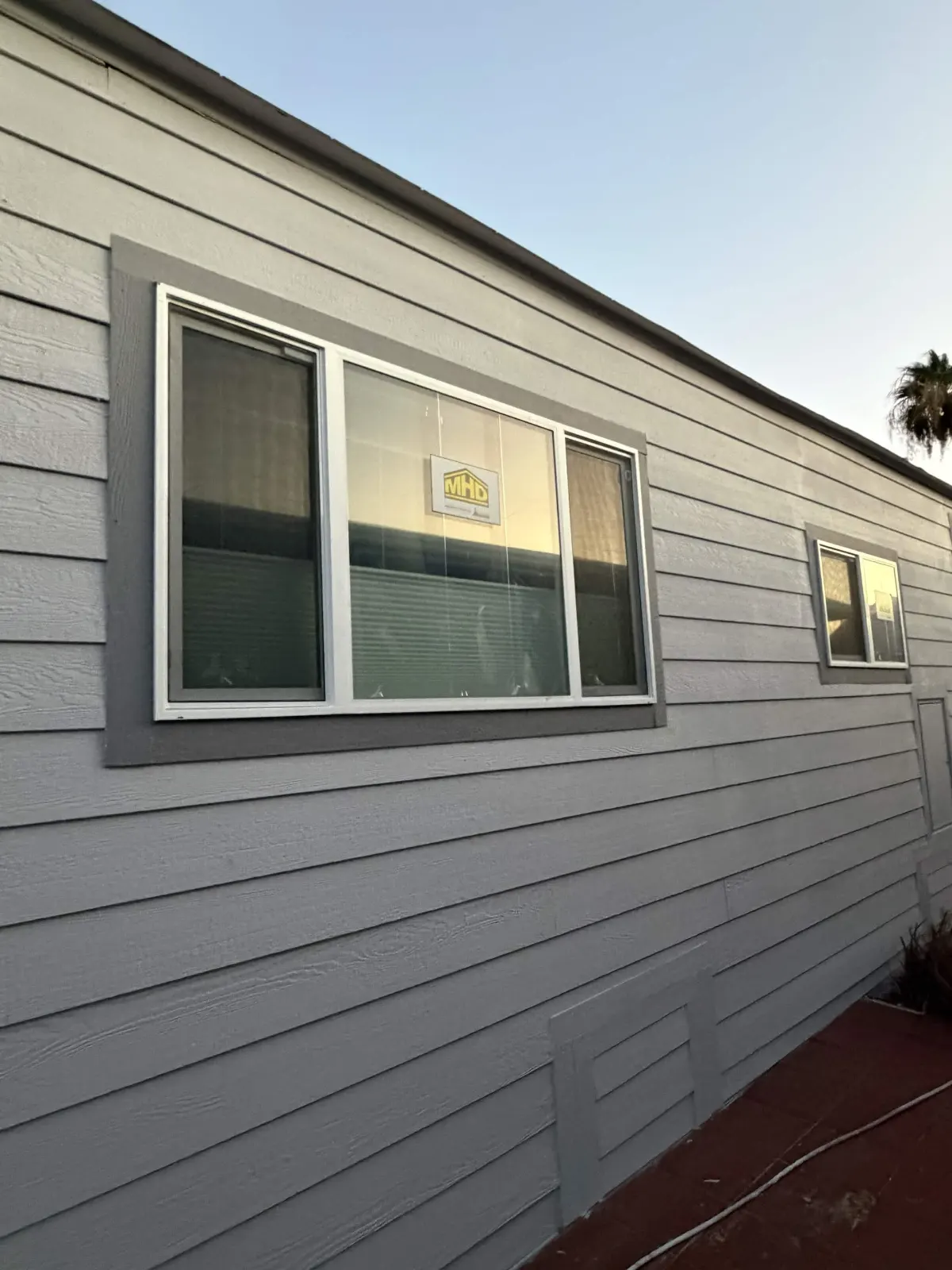
What chalking actually is
Paint is pigment held together by a resin binder. Ultraviolet light, heat and moisture slowly break that binder down at the surface. As it erodes, the loose pigment is left behind as a dusty layer that rubs off on your hand or shirt, usually white or a pale version of the wall color.
A little chalking is designed into some exterior paints so dirt washes off with the rain, but on a stucco house in the desert it more often means the top of the film is wearing away.
Why Arizona walls chalk faster
- UV exposure is strong and nearly constant, with few cloudy days to give the paint a break
- South- and west-facing walls take the hottest afternoon sun and chalk first
- Daily heat swings make the paint film expand and contract
- Monsoon rain carries the loose chalk down the wall, leaving streaks below windows and on lower walls
- Deep and saturated colors show chalk more because the white powder stands out against them
Normal aging or premature failure?
If a decent paint job is many years old and the chalk is light, the paint has simply done its work. If walls chalk heavily within a couple of years, Sherwin-Williams lists the usual culprits:
- Low-grade, highly pigmented paint, which chalks more than quality acrylics
- Oil-based paint used outdoors, which chalks more than latex
- Interior paint used on an exterior surface
- Porous surfaces that were not sealed or primed first
- Paint thinned too much, or spread too thin to build a proper film
How to test for chalk
Rub a fingertip or a piece of dark cloth firmly across the wall in a few places: the sunniest wall, a shaded wall and under an eave. Compare how much powder comes off each. Painters and inspectors rate chalking with a standard test, ASTM D4214, that transfers chalk to fabric, a fingertip or tape and compares it to reference standards.
You do not need the lab version to make a decision. If your finger comes away clearly coated on the sunny side and almost clean under the eave, the paint on the exposed walls is near the end of its life.
Chalking vs fading
They often show up together but are different problems. Fading is the color pigments themselves losing strength in the sun. Chalking is a powder layer sitting on top, which can make the color look washed out even when the paint below is still close to the original.
That is why a good wash sometimes brings a dull wall back to near its old color. If it still looks pale after cleaning, it has faded as well, and color choice matters on the next repaint.
What to do about it: clean first
Sherwin-Williams notes you do not have to repaint just because a wall chalks, since a good cleaning restores much of the look. Expect a worn coating to chalk again, though, and plan a repaint if it returns quickly.
- Wet the wall and scrub or power wash with a suitable exterior cleaner, working from the bottom up to avoid streaks.
- On stucco, keep the pressure moderate and the tip back so you do not erode the texture.
- Rinse thoroughly with clean water from the top down.
- Let the wall dry completely, at least a full day for stucco.
- Do the rub test again; if chalk still comes off, wash again.
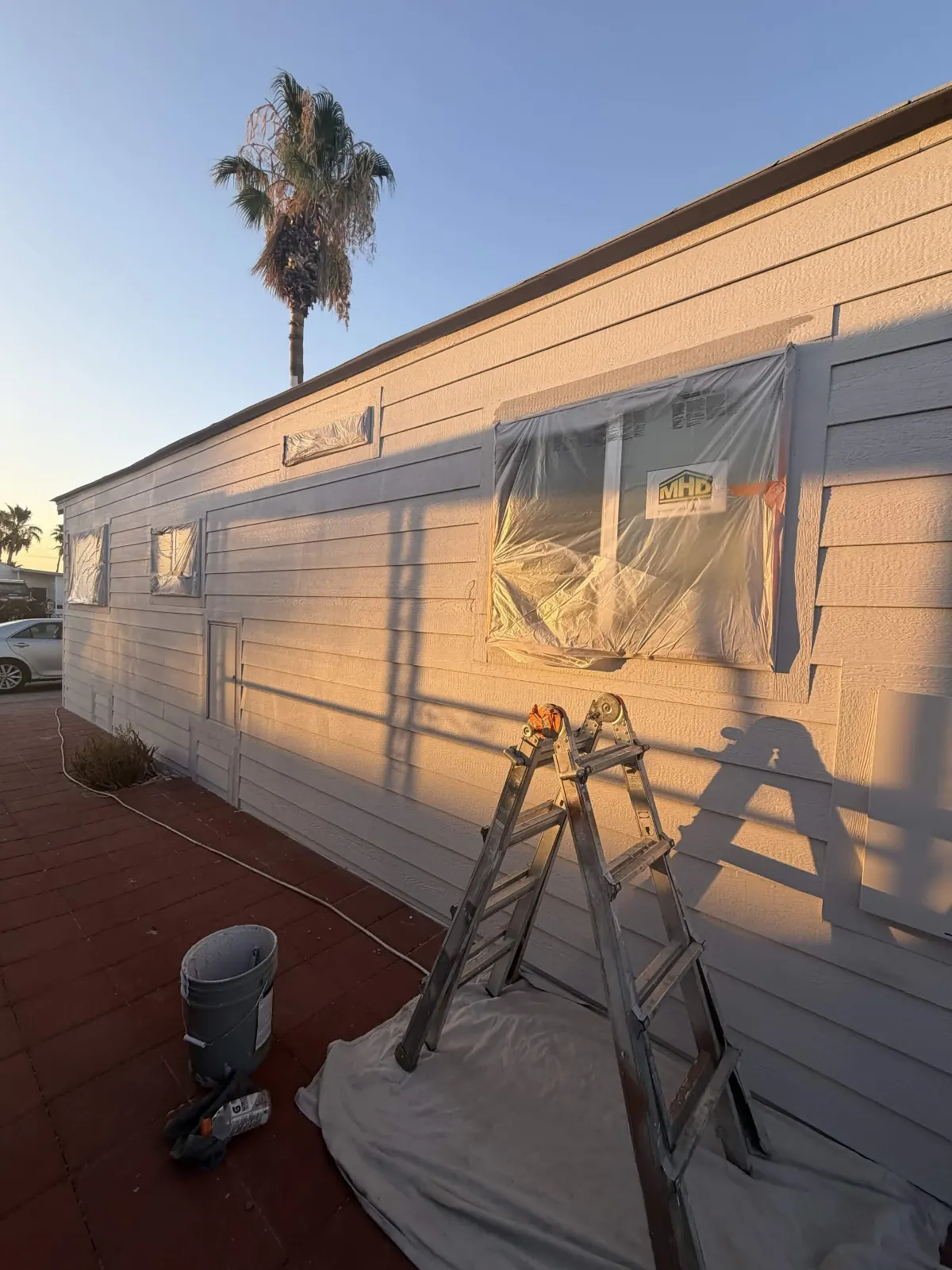
Repainting over a chalky wall
Never paint over chalk that is still on the surface. New paint bonds to the loose powder instead of the wall, and it peels in sheets, often within a year or two. After washing, chalky stucco needs a masonry primer to lock down any remaining residue and give the topcoat a sound base.
Our process on a chalky stucco house is a thorough wash, crack repair, Sherwin-Williams Loxon masonry primer on chalky, bare or patched areas, then two coats of Emerald Exterior sprayed and back-rolled. Sherwin-Williams recommends high-quality acrylic coatings for the best chalk resistance, and Emerald Exterior is its top exterior acrylic.
Cleaning chalk run-down off block, brick and pavers
Rain carries chalk from painted walls onto anything below: block walls, brick, pavers, window glass and the edges of a pool deck. Sherwin-Williams suggests scrubbing chalk-stained brick with a stiff brush and detergent, with professional cleaning for stubborn stains. Clean these areas after the wall itself so you are not washing new runoff onto them, and protect plants from cleaner with a rinse before and after.
Frequently asked questions
- Is chalky paint a sign my house needs repainting?
- Not by itself. Light chalk on older paint can be washed off and the paint left alone, but heavy chalk that returns soon after washing means the coating is worn out.
- Can I just paint over chalky stucco?
- No. The chalk has to be washed off and the wall dried, and chalky stucco should be primed with a masonry primer before the finish coats, or the new paint will peel.
- Why is there white powder on my dark trim?
- Dark colors show chalk most clearly because the pale powder contrasts with them. It may also be chalk washed down from lighter walls above.
- Does elastomeric paint chalk?
- All exterior coatings weather eventually, elastomerics included. Prep and product quality matter more than coating type for how soon and how heavily chalk appears.
- Will pressure washing damage my stucco?
- It can if the pressure is too high or the tip too close, which erodes the texture. Use moderate pressure, keep the tip back and let the cleaner do most of the work.
- How long does exterior paint last before it chalks in Arizona?
- It depends on the product, color, prep and how much sun each wall gets. Quality acrylics on well-prepped walls hold off heavy chalking far longer than low-grade paint, and shaded walls outlast sunny ones.