Paint color · Sherwin-Williams tan
Latte (SW 6108): A Classic Warm Tan for Arizona Stucco
Published
Latte (SW 6108) is a warm mid tan, the color of coffee with plenty of milk. It is one of the most natural body colors for Arizona stucco: it echoes desert soil and stone, hides dust well and gives a house a solid, settled look.
Its hex is #BAA185, and its LRV calculates to about 38 from the RGB values. That is a mid-to-deep reading, so before choosing it for a whole house it is worth understanding what it means for heat on sunny walls and for fading over time.
Color swatch: Latte SW 6108, #BAA185
| Code | SW 6108 |
|---|---|
| Hex | #BAA185 |
| RGB | 186, 161, 133 |
| LRV | About 38, calculated from the RGB values; Sherwin-Williams' own LRV is the official one |
| Color family | Warm mid tan with a caramel lean |
What Latte looks like on a wall
Latte's values fall 53 points from red to blue, about twice the spread of a greige like Accessible Beige, and its red sits 25 points above its green. That is a genuinely warm color, a tan with a soft caramel or light-brown lean rather than a gray or a beige.
In warm light it can look slightly orange or peachy, especially next to cool grays or crisp white. With warm whites, wood and stone, it reads as a mellow, earthy tan.
Why Latte suits desert stucco
Much of the Sonoran Desert landscape is tan, buff and brown: soil, decomposed granite, flagstone, adobe. Latte sits right in that range, so a Latte house looks rooted in its setting. It also pairs naturally with terracotta, brown and tan concrete tile roofs.
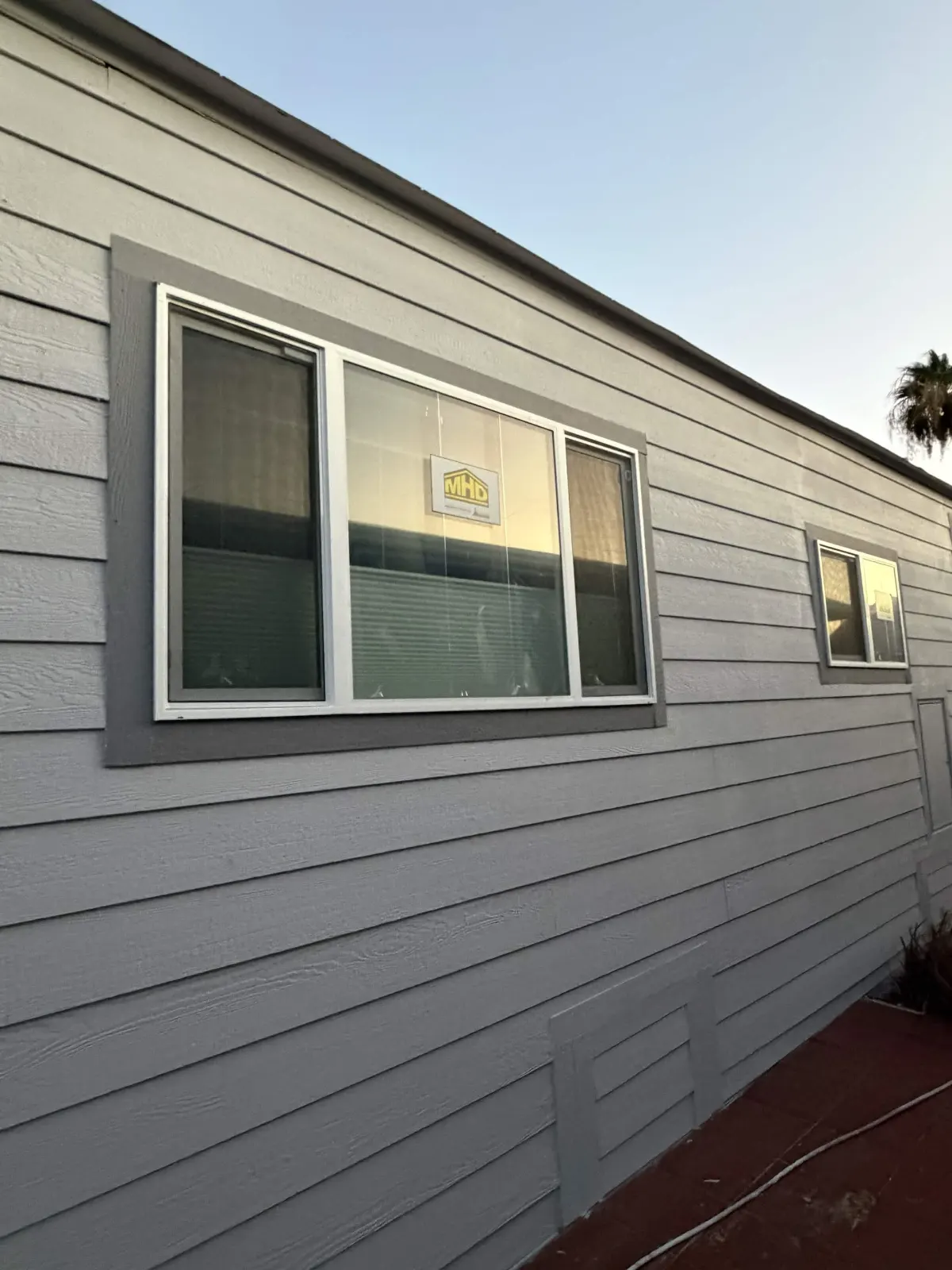
In full sun, Latte looks lighter and more golden than the chip. On shaded walls and under patio covers it reads as a rich mid tan. A light warm trim and a dark accent finish the scheme.
Heat at an LRV of about 38
Light reflectance value puts black near 0 and white near 100. At about 38 by our calculation, Latte reflects a bit more than a third of the light that hits it. A west-facing wall in Latte will run noticeably warmer in summer than the same wall in a light beige or off-white.
That does not make Latte a bad choice; mid tans have been used on Arizona stucco for decades. But on the hottest elevations, a lighter color reduces the heat load on the wall and the stress on the paint film. Some homeowners use Latte on accents and a lighter beige such as Kilim Beige on the main body.
How Latte fades, and how to slow it
Latte carries more tint than lighter colors, so UV exposure shows over the years as a gradual lightening on south and west walls, while areas under eaves stay deeper. Warm earth tones like this fade more evenly and less obviously than saturated colors, but the difference between sunny and sheltered walls becomes visible with time.
Thorough prep, primer on bare or chalky stucco and two coats of a premium exterior paint with strong color retention keep Latte looking even longer. Its tan tone also hides desert dust very well, which is a real advantage in monsoon season.
Coordinating colors for Latte
- Sherwin-Williams lists Divine White (SW 6105), SW 9180 and SW 6256 as coordinating colors for Latte.
- Divine White, a warm off-white with a calculated LRV near 72, makes a natural trim and fascia color.
- Latte is also a listed coordinating color for Kilim Beige (SW 6106), which makes a lighter partner for a two-tone body.
- Front doors and shutters on a Latte house: Smokehouse (SW 7040), Black Fox (SW 7020) or Urbane Bronze (SW 7048).
- A muted green door for a desert palette: Retreat (SW 6207) is lighter, Pewter Green (SW 6208) deeper.
Latte indoors
- Accent walls in living rooms with leather, wood and woven textures.
- Dining rooms and dens where you want a warm, enclosed feel.
- Lower cabinets or an island beside cream uppers.
- Avoid it in small, dark rooms, where it can feel heavy.
- With gray floors, it can look orange; it is best with warm finishes.
Sheen and product for a mid-tone tan
Deeper colors show uneven sheen and touch-ups more than light ones. On stucco we spray and back-roll two coats of Sherwin-Williams Emerald Exterior, with Loxon masonry primer on bare or patched areas, which helps Latte dry to an even, uniform finish. A flat body finish suits stucco; satin suits trim, doors and fascia.
Inside, low-VOC Emerald Interior in eggshell or satin is a good choice for Latte walls, and satin or semi-gloss for cabinets.
How to sample Latte
- Paint a large sample on your sunniest wall and look at it at midday and late afternoon.
- Hold Divine White and your door color beside it to see the full scheme.
- Compare it with Kilim Beige if you are weighing a lighter body color.
- If you live in an HOA, confirm Latte is approved before scheduling exterior work.
Frequently asked questions
- Is Latte a good exterior color for Arizona?
- It is a classic choice that suits desert landscaping and tile roofs, and it hides dust well. With a calculated LRV of about 38, it absorbs more heat than light colors, so consider it carefully for west-facing walls.
- Does Latte look orange?
- It can look slightly orange or peachy next to cool grays or crisp white. With warm whites, wood and stone, it reads as a mellow tan.
- What trim color goes with Latte?
- Divine White (SW 6105) is the trim Sherwin-Williams lists for it, and its warmth keeps the scheme consistent. Other warm off-whites also work well.
- Will a Latte house fade?
- Over the years, the sunniest walls will lighten somewhat compared with sheltered areas. Good prep and a premium exterior paint slow that down.
- What color pairs with Latte for a two-tone exterior?
- Kilim Beige (SW 6106) is a lighter partner from the same warm family. Use one on the body and the other on pop-outs or a base band.
- What door color suits a Latte house?
- Deep warm neutrals like Smokehouse (SW 7040) or Black Fox (SW 7020), or a muted green like Pewter Green (SW 6208).
- Does Latte hide dust and dirt?
- Very well. Its tan is close to the color of desert soil, so dust after a monsoon storm and splash marks at the base of walls are far less visible than on a light color.