Paint color · Sherwin-Williams
Sea Salt (SW 6204): The Shifting Gray-Green in Desert Light
Published
Sea Salt (SW 6204) is a light gray-green that can lean soft blue, a color that changes noticeably with the light around it. Using the RGB values, we calculate its LRV at about 63, so it stays light and airy on walls while still showing a tint of color.
It is mainly an interior color in Arizona homes, especially for baths, bedrooms and laundry rooms, though it can work on a shaded exterior. Because it shifts so much, sampling it in the actual room matters more for Sea Salt than for most colors.
Color swatch: Sea Salt SW 6204, #CDD2CA
| Color | Sea Salt |
|---|---|
| Code | SW 6204 |
| Hex | #CDD2CA |
| RGB | 205, 210, 202 |
| LRV | About 63 (calculated from the RGB values, not Sherwin-Williams' published figure) |
| Family | Light gray-green with a soft blue lean |
Why Sea Salt looks different in every room
Its RGB values (205, 210, 202) are very close together, with green slightly ahead. A color that close to gray takes on whatever the light and surroundings add, so it reads green in one room, gray-blue in another and nearly off-white in a third.
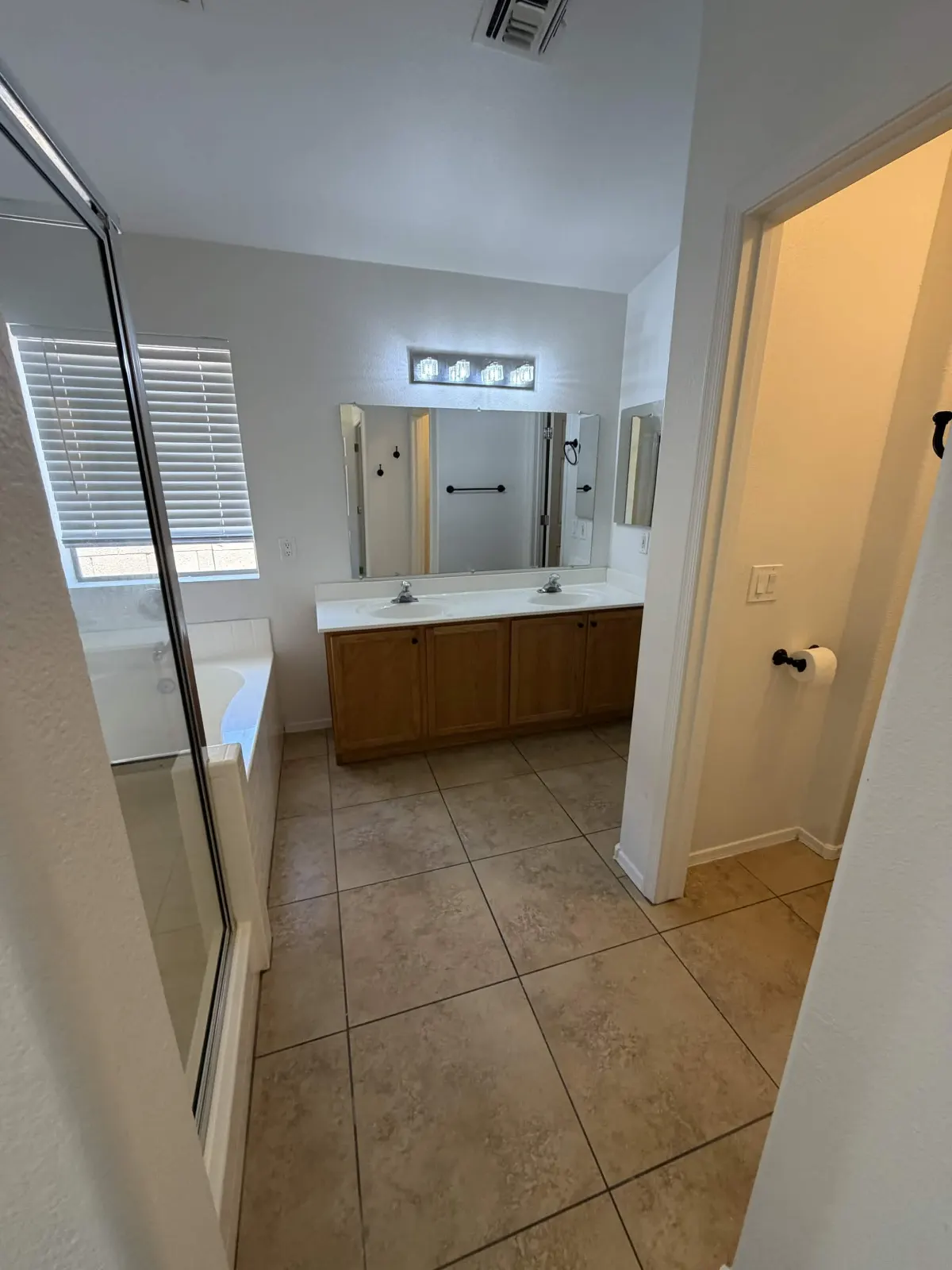
Warm surroundings, such as beige tile or oak, push it greener by contrast. Cool surroundings, like white marble and chrome, bring out a blue-gray side. That chameleon quality is why people either love it or find it hard to predict.
Sea Salt under north light
North-facing rooms get cool, even light, and there Sea Salt tends to read as a soft gray with a hint of blue-green. It can look slightly cool, so pair it with warm wood or textiles if the room already feels chilly.
In rooms with strong west or south sun it turns greener and brighter, sometimes close to a pale celadon. Lamps with warm bulbs at night push it toward gray-green.
Sea Salt on an exterior
In direct desert sun a light gray-green like this can almost disappear, reading as a pale gray or near-white from the street. In shade it regains its color, so a house with deep porches will look more clearly green-gray than an exposed one.
It looks most natural on homes with white or gray trim, gray roofs and cooler hardscape. Against warm tan block walls and red tile, the cool side can look out of place, so it is less common as a body color in neighborhoods built around desert tans.
Best rooms and roles for Sea Salt
- Bathrooms and powder rooms, where it gives a clean, fresh look
- Bedrooms and nurseries that should feel calm
- Laundry rooms and mudrooms with white cabinets
- Ceilings of covered patios on a gray or white house, as a soft hint of color overhead
- Exterior body only on shaded homes with cool-toned roofs and trim
Pairings for Sea Salt
- Extra White (SW 7006) or Pure White (SW 7005) for clean trim and cabinets
- Comfort Gray (SW 6205), its next code, as a slightly deeper wall or cabinet color
- Passive (SW 7064) for an adjoining room in a quiet cool gray
- Iron Ore (SW 7069) for a vanity, door or hardware with real contrast
Sea Salt with tile, stone and fixtures
White subway tile, gray-veined marble and white quartz suit it well. Chrome and polished nickel fixtures keep it crisp, while brushed brass adds warmth without fighting it.
Beige travertine and tan porcelain are the harder combination. They can make Sea Salt look more mint than intended, so hold the sample right against the tile before deciding.
LRV of about 63: light, heat and fading
Calculated from the RGB values, Sea Salt's LRV is about 63; Sherwin-Williams publishes its own value on the color page. Indoors, that means it bounces plenty of light around a room. Outdoors, it keeps sun-facing walls relatively cool, close to a light beige.
On an exterior, cool light tints tend to fade toward a plainer, grayer version of themselves. Because Sea Salt is so close to gray already, the change is subtle, though shaded and sunny walls can drift apart in tone over the years.
Sheen and the paint we use
For a Sea Salt bathroom we use low-VOC Emerald Interior in a satin finish, which handles humidity and wiping. Bedrooms usually get eggshell, and ceilings stay flat.
If you use it outside, our system is Sherwin-Williams Emerald Exterior, two coats sprayed and back-rolled, with Loxon masonry primer on bare or patched stucco. A flat or low sheen on the walls keeps a light tint from looking shiny or uneven.
How to test Sea Salt
- Paint a large board and move it around the room through the day; this color changes more than most.
- Compare it next to your tile, counters and trim white, not on a blank wall alone.
- Look at it at night under the bulbs you actually use.
- For an exterior, check it in direct sun, where it may look almost white, and confirm HOA approval before painting.
Frequently asked questions
- Is Sea Salt green, blue or gray?
- It is a light gray-green that can lean blue. Which one you see depends on the light and on the finishes around it.
- Is Sea Salt good for a bathroom?
- It is one of the classic bathroom colors because it looks clean and calm with white tile and chrome. Use a satin finish so it stands up to moisture.
- Does Sea Salt work on an Arizona exterior?
- It can on a shaded home with cool-toned trim and roofing. In full desert sun it may look close to white-gray, and it can clash with warm tan hardscape.
- What is the difference between Sea Salt and Comfort Gray?
- Comfort Gray (SW 6205) is the next code and a step deeper, with a calculated LRV of about 54 versus about 63 for Sea Salt. Comfort Gray reads more gray-green and holds its color better in bright light.
- What white trim goes with Sea Salt?
- Clean whites like Extra White (SW 7006) or Pure White (SW 7005) keep it fresh. A creamy white can make it look greener.
- Will Sea Salt look cold in a north-facing room?
- It can lean slightly cool there. Warm wood, textiles and warm-white bulbs balance it if the room already feels chilly.