Paint color · Sherwin-Williams ivory
Ivory Lace (SW 7013): A Muted Ivory for Stucco and Interiors
Published
Ivory Lace (SW 7013) is a soft, slightly muted ivory: warmer and deeper than a white, lighter than a beige. On an Arizona stucco house it gives a warm, light look with less glare than a bright white, and inside it reads as a calm, cozy neutral.
Its hex value is #ECE5D8, and its LRV calculates to about 79 from the RGB values. That keeps it in the heat-reflective range while giving the walls a gentle, aged-plaster warmth.
Color swatch: Ivory Lace SW 7013, #ECE5D8
| Code | SW 7013 |
|---|---|
| Hex | #ECE5D8 |
| RGB | 236, 229, 216 |
| LRV | About 79, derived from the RGB values rather than taken from Sherwin-Williams |
| Color family | Muted ivory, warm with a hint of gray |
Ivory Lace's undertone, in plain terms
Ivory Lace follows the same warm pattern as Creamy (SW 7012), with red highest and blue lowest, but every channel sits a few points lower. That small drop adds a trace of gray, so Ivory Lace looks softer and a little more muted, like old lace or unbleached linen.
That muting is the useful part. It keeps the warmth from looking sugary or yellow, and it lets Ivory Lace sit quietly next to stone, wood and stucco.
A warm body color without the glare
Some homeowners want a light house but find bright whites hard to look at on a sunny afternoon. Ivory Lace is a good middle ground. It reads as a light, warm color in full Arizona sun, and its slight depth knocks back the glare from large stucco walls.
It suits ranch homes, Southwestern styles and older stucco houses with brown or tan tile roofs. With dark trim or iron accents, it gives a classic territorial look; with matching trim in a higher sheen, it looks soft and unified.
On a house with a lot of shade from mature trees or deep patios, Ivory Lace will look a little deeper than on an exposed lot, so judge it on the wall that gets the least sun as well as the one that gets the most.
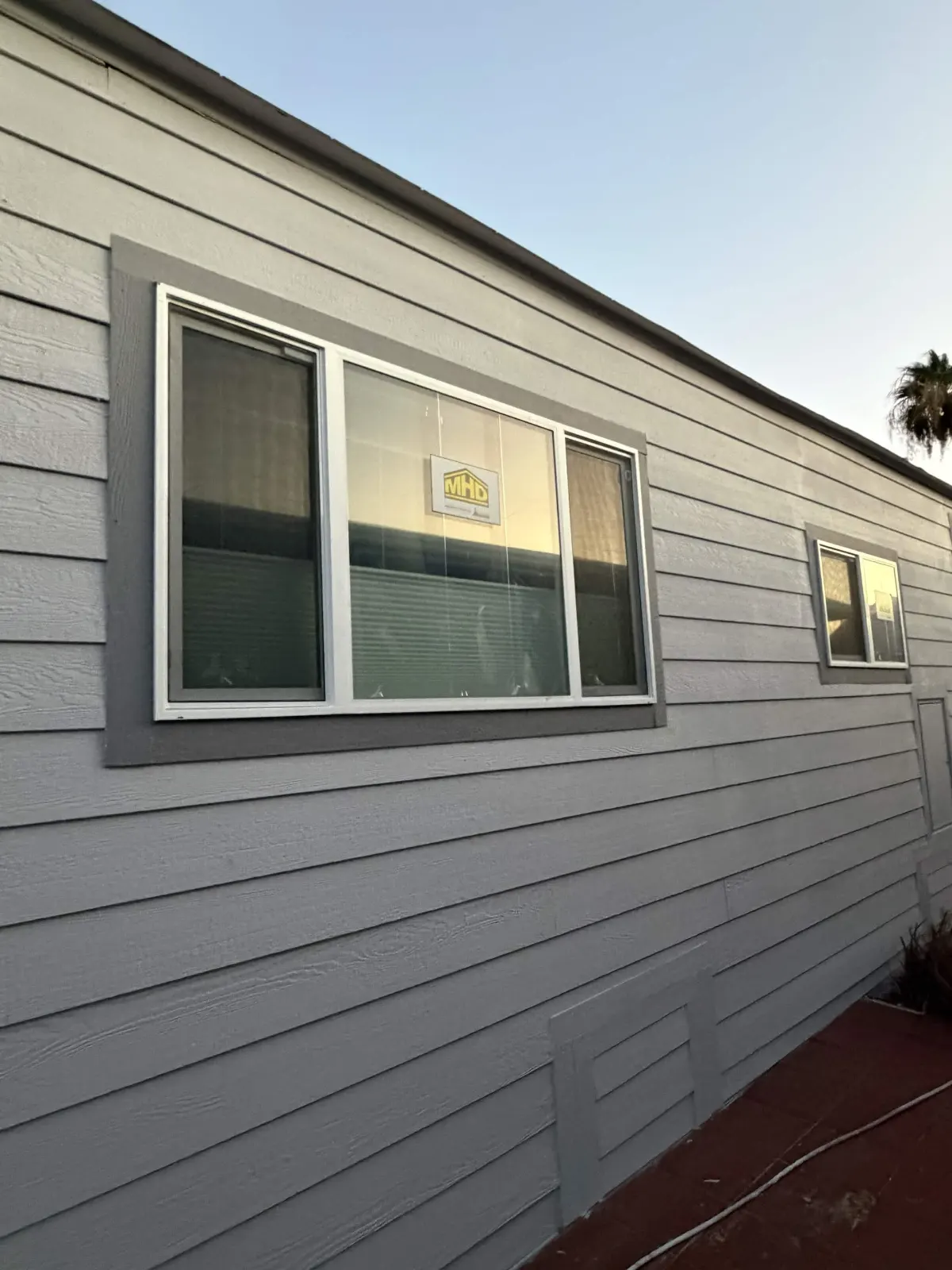
How Ivory Lace shifts with light
- Noon sun on stucco: a light, warm off-white.
- Shaded walls and porches: a clear, soft ivory.
- North-facing rooms: a gentle warm neutral that may look slightly beige.
- West-facing rooms in late sun: rich and golden; sample before using it in a room that already runs warm.
- Cool LED bulbs: can make it look a little gray; warmer bulbs bring back the ivory.
Rooms and roles that suit Ivory Lace
- Living and dining rooms with cherry, walnut or oak furniture.
- Bedrooms where you want a warm, restful wall color that isn't beige.
- Kitchen cabinets paired with warm stone counters.
- Exterior trim for deeper tan or taupe bodies.
- Whole-house interiors in homes with travertine or saltillo floors.
Coordinating colors and pairings
- Sherwin-Williams lists SW 1015 and SW 9159 as coordinating colors for Ivory Lace.
- Bodies that take Ivory Lace trim well: Latte (SW 6108), Tony Taupe (SW 7038) or Stone Lion (SW 7507).
- Doors and shutters: Smokehouse (SW 7040), Black Fox (SW 7020) or Pewter Green (SW 6208).
- Earthy accents for a Southwestern look: Cavern Clay (SW 7701).
Heat, fading and dust with an LRV of about 79
LRV tells you how much visible light a color reflects on a 0 to 100 scale. At roughly 79 by our calculation, Ivory Lace reflects most of the light that hits it, so it keeps a stucco wall much cooler than a mid-tone. It runs a few points warmer than the brightest whites, a difference most homeowners won't feel.
The small amount of warm tint fades slowly, and the muted cast is forgiving of the dust that drifts onto Arizona walls. Most of what wears an exterior here is sun-driven chalking and cracking at the base of walls, which proper prep and a quality paint address.
Ivory Lace versus Dover White
Both are warm, but they behave differently. Dover White (SW 6385) is brighter, with a calculated LRV near 83, and its warmth reads as yellow cream. Ivory Lace is deeper, around 79, and its warmth is softer and grayer.
If you liked the warmth of Dover White but found it too sunny or too yellow, Ivory Lace is often the next one to sample. If Ivory Lace looks too beige in your room, step up to Creamy or Dover White.
Sheen, product and testing
We use Sherwin-Williams Emerald Exterior on stucco, two coats sprayed and back-rolled, with Loxon masonry primer wherever the stucco is bare or patched. Inside, low-VOC Emerald Interior in eggshell or satin handles busy walls; trim and doors look best in semi-gloss.
- Paint a large sample on a sunny wall and another in a shaded spot.
- Hold it beside your roof tile, stone or flooring.
- Compare it against one brighter cream so you can judge the depth.
- If an HOA reviews your exterior colors, get approval before the work is booked.
Frequently asked questions
- Is Ivory Lace a white or a beige?
- It is an ivory, between the two. In bright sun it reads as a warm off-white; in dim or north light it can look like a very light beige.
- Does Ivory Lace look yellow?
- Less than many creams, because a touch of gray mutes the warmth. It can look golden in strong west light or under very warm bulbs.
- Is Ivory Lace a good exterior color in the desert?
- Yes. Its calculated LRV of about 79 keeps walls fairly cool, and its slight depth cuts glare compared with a bright white. It also hides dust well.
- What trim goes with an Ivory Lace house?
- You can use Ivory Lace itself on trim in a higher sheen for a soft look, or go darker with Smokehouse (SW 7040) or Black Fox (SW 7020) for contrast.
- Does Ivory Lace go with cherry or walnut furniture?
- It usually does. Its muted warmth suits deep woods without competing with them.
- How is Ivory Lace different from Creamy?
- Ivory Lace is slightly deeper and grayer. Creamy is brighter and its warmth is more obvious.
- Will Ivory Lace look gray under LED lights?
- Cool LED bulbs around 4000K to 5000K can pull it toward a grayish ivory. Bulbs in the 2700K to 3000K range keep its warmth intact.