Paint color · Sherwin-Williams terracotta
Cavern Clay (SW 7701): Terracotta for Doors, Entries and Accent Walls
Published
Cavern Clay (SW 7701) is a warm, rusty terracotta, the color of fired clay pots and red desert rock. It is a bold accent rather than a background: front doors, recessed entries, courtyard walls and interior feature walls are where it looks its best on an Arizona home.
Its hex is #AC6B53, and its LRV is about 20 when calculated from the RGB values. Sherwin-Williams files it in its orange family. Because it is both deep and saturated, it raises two questions a neutral does not: how fast will it fade, and will your HOA allow it? Both are answered below.
Color swatch: Cavern Clay SW 7701, #AC6B53
| Code | SW 7701 |
|---|---|
| Hex | #AC6B53 |
| RGB | 172, 107, 83 |
| LRV | About 20 (calculated from RGB, not Sherwin-Williams' published figure) |
| Color family | Rusty terracotta, in Sherwin-Williams' orange family |
Terracotta by the numbers
Red is 172, green 107, blue 83. Red outruns green by 65 points, a far wider gap than any neutral has, so this is a true color rather than a tinted beige. Green sits above blue, which pushes the red toward orange and brown instead of pink. The result is a clay or rust tone, not a brick red.
Those proportions are also why it looks natural in the desert. Weathered sandstone, adobe and the red soils around Arizona carry the same orange-brown balance.
As dark as a taupe, but far louder
Anonymous (SW 7046), a deep taupe-gray, calculates to an LRV of about 20 as well. On paper the two are equally dark. On a door they could not look more different: Anonymous recedes, while Cavern Clay pulls the eye straight to it.
That is the key point about saturated colors. LRV tells you about heat and depth, not how strong a color will feel. A small dose of Cavern Clay does as much visual work as a whole wall of a neutral, which is why it is best kept to focal points.
Front doors and entry niches
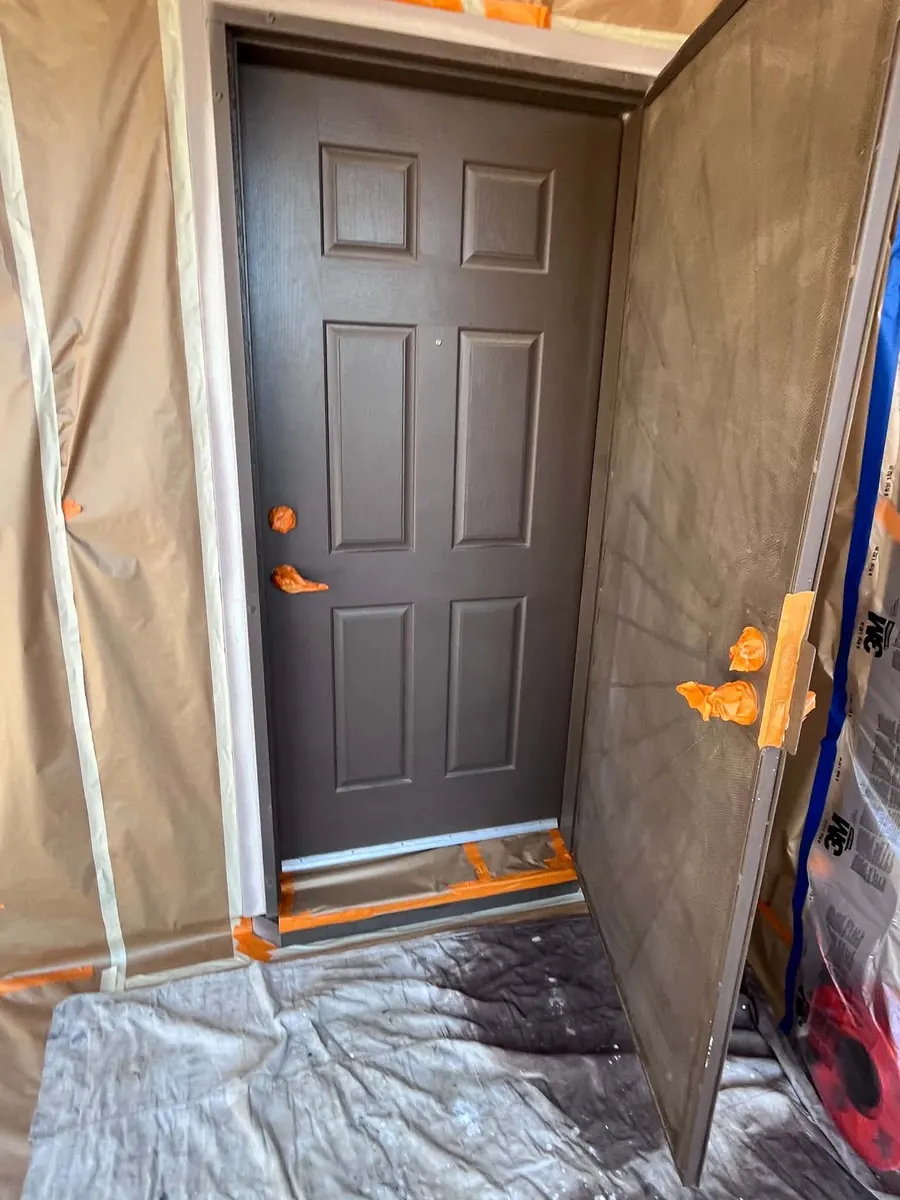
A Cavern Clay door on a cream or light tan stucco house gives a welcoming, Southwest look that suits Spanish, Mission and Santa Fe styles. In a recessed entry or under a porch roof it is also shielded from the worst of the sun, which helps it hold its color.
Doors need careful prep: clean, sand and prime as the surface requires, mask hardware and glass, and use an exterior finish with a satin or semi-gloss sheen so it can be wiped. If your door is fiberglass or a material with its own paint rules, follow the manufacturer's guidance on dark colors.
An accent wall that warms a room
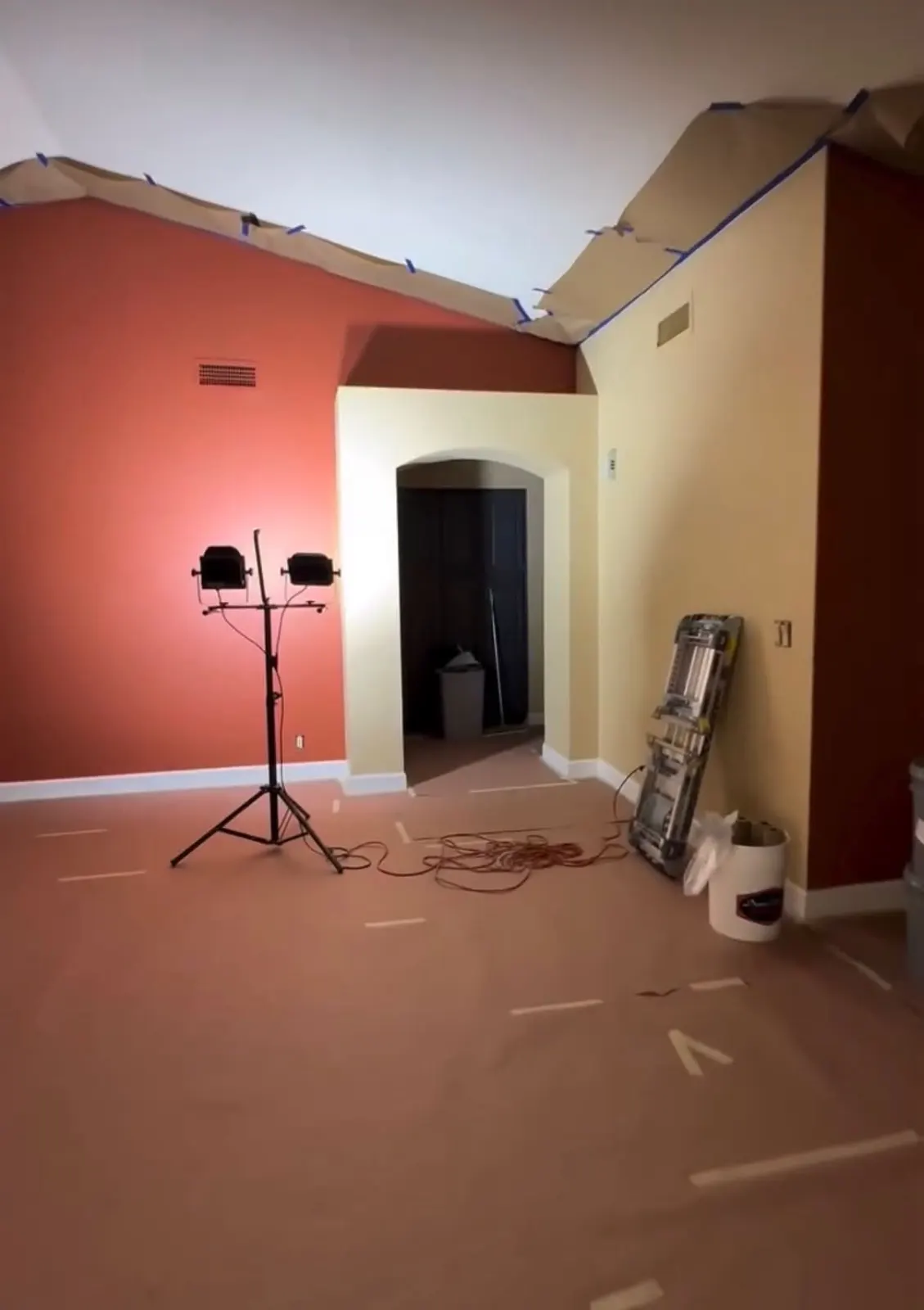
Indoors, one Cavern Clay wall behind a sofa, a bed or a dining table makes a room feel warmer and more enclosed. West-facing rooms intensify it in the late afternoon until it glows. North-facing rooms mute it toward a brick brown.
Saturated colors often take more coats than neutrals to cover evenly, and a tinted primer can help. Expect the wall to look patchy after the first coat; that is normal for deep, rich colors and evens out with the finish coats.
Fade risk in Arizona sun
Strong colors use a lot of tint, and in direct desert UV that tint breaks down faster than the pale colors on most stucco. A sun-baked Cavern Clay surface can lighten and lose some of its richness within a few summers, while the same color under a porch roof changes much more slowly.
Practical steps help: use it where there is some shade, choose a premium exterior paint, and plan to refresh exposed accents on their own schedule. Doors and shutters are small enough that a recoat is a short job.
Whites and neutrals to pair with it
- Sherwin-Williams lists Creamy (SW 7012), SW 9155 and SW 7717 as coordinating colors.
- Creamy is a warm white with a calculated LRV of about 81, a soft, friendly background for a terracotta door or accent wall.
- Warm tans and beiges on the body echo the clay without competing with it.
- Avoid icy blue-whites and cool grays beside it, which make the orange look harsher.
- Dark bronze or black hardware and light fixtures complete the look.
Bold colors and HOA rules
Many West Valley HOAs approve exterior colors from a fixed palette, and some allow brighter accent colors only on doors or not at all. Before you plan a Cavern Clay door or courtyard wall, check your community's approved list and ask whether accent colors need a separate request.
Testing a bold color
- Paint a sample board at least the size of a door panel; small chips understate how strong it is.
- Hold it in place at midday and in the evening, and beside your stucco and roof tile.
- Indoors, view a wall sample under your normal bulbs at night.
- On the job, exterior accents get Sherwin-Williams Emerald Exterior and interior walls get low-VOC Emerald Interior, applied after the prep each surface needs.
Frequently asked questions
- Is Cavern Clay orange or brown?
- It is a terracotta between the two. Its red channel leads strongly and green sits above blue, which gives an orange-brown clay tone rather than a pure orange or a brick red.
- Is Cavern Clay a good front door color in Arizona?
- It suits Southwest and Spanish-style homes with cream or tan stucco. A door under a porch roof or in a recessed entry will hold its color longer than one in full afternoon sun.
- Will Cavern Clay fade outside?
- Saturated colors fade faster than neutrals in strong UV, so expect a sun-exposed surface to lighten over a few summers. Shade, a premium exterior paint and periodic recoats keep it looking rich.
- What white goes with Cavern Clay?
- Creamy (SW 7012), one of its listed coordinating colors, is a warm white that softens the contrast. Cool, blue-leaning whites tend to make the orange look harsher.
- How many coats does Cavern Clay need on a wall?
- Deep, saturated colors often need more coats than neutrals to look even, and a tinted primer can help. The exact number depends on the surface and the product.
- Can I use Cavern Clay on a whole stucco house?
- It is possible, but the heat from an LRV near 20, the fading of a saturated color and HOA palettes all argue for keeping it to accents.