Epoxy flooring · Waddell
Epoxy Floors for Shops and Garages in Waddell, AZ
Published
Orange Coatings coats garage, workshop and outbuilding floors in Waddell with Sherwin-Williams epoxy floor systems. We test and prep each slab, then apply the epoxy with your choice of decorative flakes, a clear topcoat and an anti-slip additive.
Waddell sits just west of our home base in Surprise, so a same-day estimate here is an easy drive. Many properties in the 85355 ZIP have more than one building with a concrete floor, and we can look at all of them in one visit.
| ZIP code | 85355 |
|---|---|
| Type of place | Unincorporated area of Maricopa County, no city government |
| Town site laid out | Laid out in 1935 by Donald Waddell, Waddell Road and Cotton Lane |
| Floors we coat | Garages, detached shops, tack and feed rooms, hobby buildings |
| System | Sherwin-Williams epoxy; flakes, clear topcoat and anti-slip if wanted |
| Nearest Orange Coatings shop | 18428 West Bridger Street, Surprise |
How Waddell got its name and its big lots
Waddell is an unincorporated community northwest of Phoenix. It is named for Donald Ware Waddell, a partner in a New York investment firm that arranged financing for the dam that created Lake Pleasant. He laid out the town site in 1935 on land he owned at the northeast corner of Waddell Road and Cotton Lane.
The area kept much of its rural character as Surprise and the rest of the West Valley grew around it. That is why so many properties here have room for a shop, a barn or a detached garage, and why so many floors here work harder than a suburban two-car slab.
Which buildings are worth coating
Stalls are a different story. Steel horseshoes and stall waste are very hard on a floor coating, so for barns we usually talk about coating the tack and feed rooms rather than the stalls themselves.
Hay, dirt and feed sweep off a coated floor in minutes, and spilled supplements or fly spray stay on the surface instead of soaking in.
- Attached and detached garages that hold vehicles, trailers and tools
- Workshops for woodworking, fabrication or small-engine repair
- Tack rooms and feed rooms where dust and spills build up
- Hobby buildings and home gyms set apart from the house
- Storage buildings where bare concrete dust settles on everything
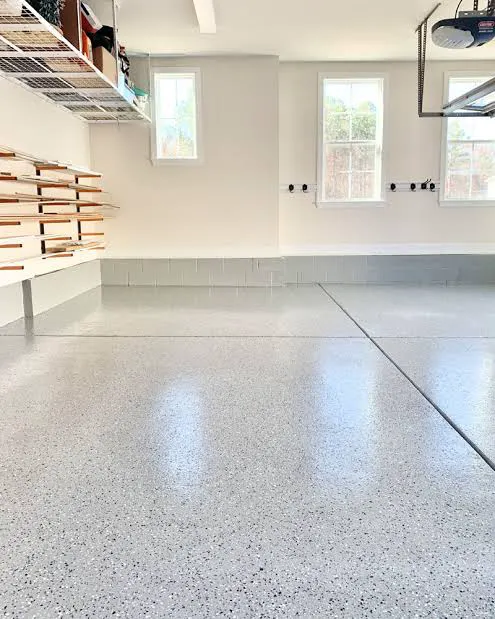
Testing a slab before it gets coated
Detached buildings were often poured with less care than a house slab, and some have no vapor barrier at all. Moisture moving up through concrete can push a fresh coating off from below, so testing comes before quoting.
There are a few ways to check. A sheet of plastic taped to the floor for a day shows obvious dampness. Calcium chloride kits measure how much moisture the slab gives off over a set time, and relative humidity probes read moisture inside the concrete. The product label sets the limits, and if a slab is over them a moisture-mitigating primer goes down before the epoxy.
What we put down, layer by layer
- Sweep, wash and degrease, including feed and fertilizer residue.
- Repair cracks and chipped edges, which outbuildings tend to have plenty of.
- Profile the surface so the epoxy has something to bite into.
- Prime for moisture if testing showed it is needed.
- Roll the Sherwin-Williams epoxy base in your chosen color.
- Broadcast flakes, then seal everything under a clear topcoat with anti-slip where you want it.
Planning around animals and equipment
Coating days mean the building is off limits. Move feed, tack and tools somewhere dry before we arrive, and decide where trailers and tractors will sit while the floor cures.
Keep dogs, cats and chickens out of the building until the coating has cured. Paw prints in fresh epoxy are permanent, and wet coatings are no place for curious noses.
Hard water and wash-downs
Valley water is hard, and rinsing a floor or washing equipment indoors leaves mineral spots when it dries. On a coated floor those spots sit on the surface instead of staining the concrete. A squeegee after washing, followed by a pass with a mild cleaner now and then, keeps them from building up.
If you wash trailers, tools or animals' gear inside, ask for the anti-slip additive in that area. A wet clear topcoat with no texture is slick.
White mineral rings around a hose bib or wash rack show where water sits. Those spots need a wipe more often than the rest of the floor.
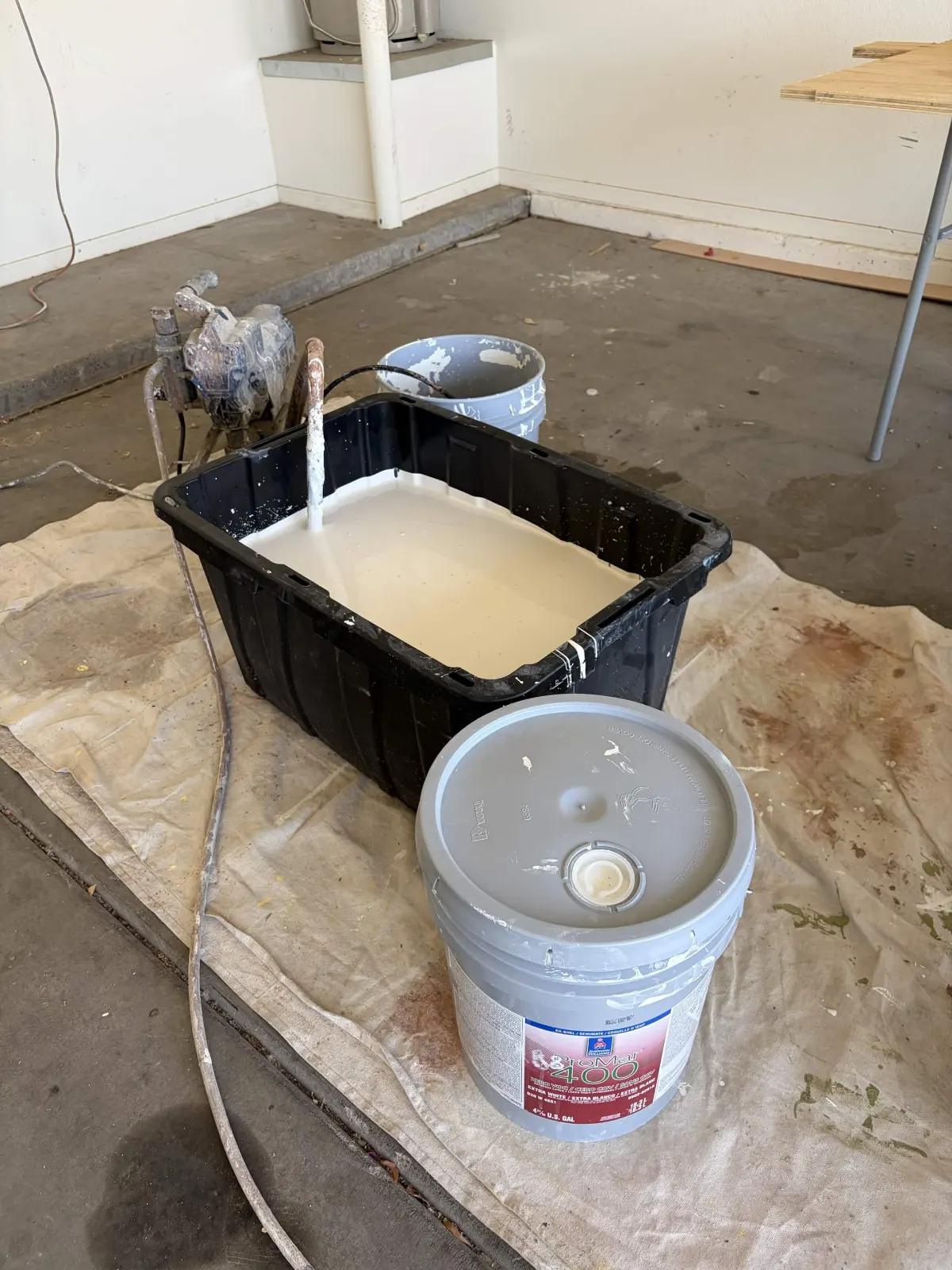
Coating a building with big doors
Shops and barns often have large roll-up or sliding doors that let in wind, dust and insects. Fresh epoxy will catch anything that lands on it while it is wet, so we keep doors closed during application where ventilation allows, and we time the work for calm mornings.
Summer heat matters even more in a building with a metal roof. We work inside the temperature and humidity limits on the label and push to cooler hours, or another day, when a building runs too hot.
Daylight work also means fewer insects drawn to work lights and landing in the wet coat.
Driveways and approaches
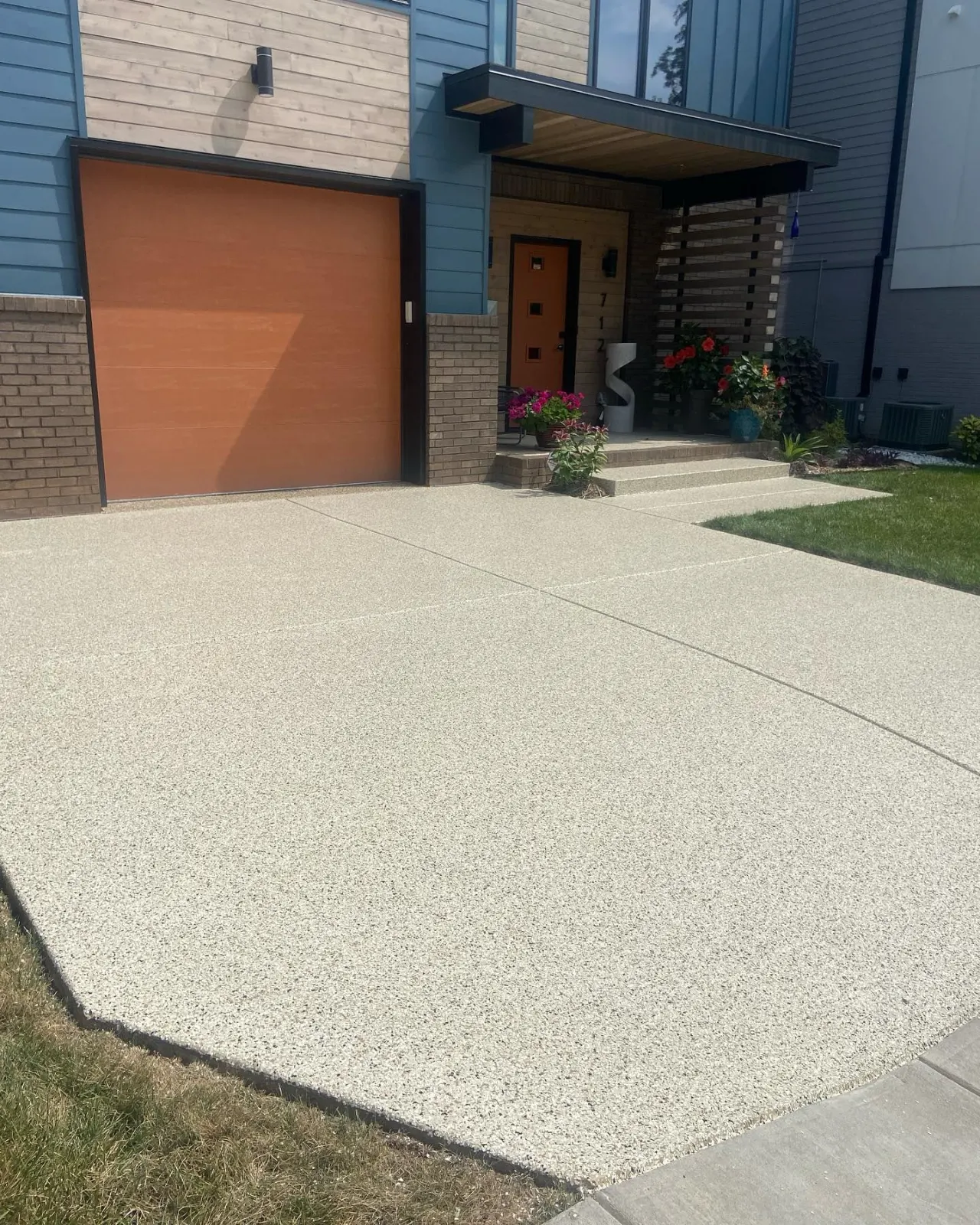
A coated shop floor next to a dusty approach still gets dirt tracked across it. Where there is a concrete apron or driveway, a coating or sealer makes it easier to sweep and keeps less grit heading inside.
Gravel drives are a different case. There is no concrete to coat there, so a heavy door mat and a broom by the shop door do more for the floor.
Photos
Frequently asked questions
- Can you coat a tack room or feed room in Waddell?
- Yes. A coated floor makes it much easier to sweep up feed, dust and spills. For horse stalls, steel shoes and waste are hard on any coating, so we usually leave stalls out.
- My detached shop slab has no vapor barrier. Can it still be coated?
- Often, yes. We test it first, and if moisture is above the product's limits we use a moisture-mitigating primer before the epoxy.
- Can you look at several buildings in one visit?
- Yes. The estimate covers whatever floors you want quoted, and the written quote lists each building.
- Will dust ruin the coating while it cures?
- Dust that lands on wet epoxy gets locked in, so we keep doors closed when we can and work on calm mornings. Once cured, dust just sweeps off.
- How close is Waddell to your shop?
- Very close. Our shop is on West Bridger Street in Surprise, just to the east.
- Can you coat a shop slab that has a floor drain?
- Yes. We prep around the drain, coat to its edge and keep the slope so water still runs to it. Anti-slip near the drain is a good idea since that area stays wet.
- Do I need to be home while the floor is coated?
- Someone should be reachable and the building has to be open for the crew. What matters most is access and keeping people and animals out while the coating is wet.