Industrial painting · Litchfield Park
Industrial Painting in Litchfield Park, AZ
Published
Litchfield Park has little heavy industry, so industrial painting here means smaller facility jobs: maintenance buildings, block equipment enclosures, steel gates and fencing, storage buildings and shop floors. Orange Coatings handles those with the same surface prep and commercial-grade Sherwin-Williams coatings we use on large industrial sites.
Most of these structures sit within sight of houses. That makes overspray, odor and noise control as important as the coating itself.
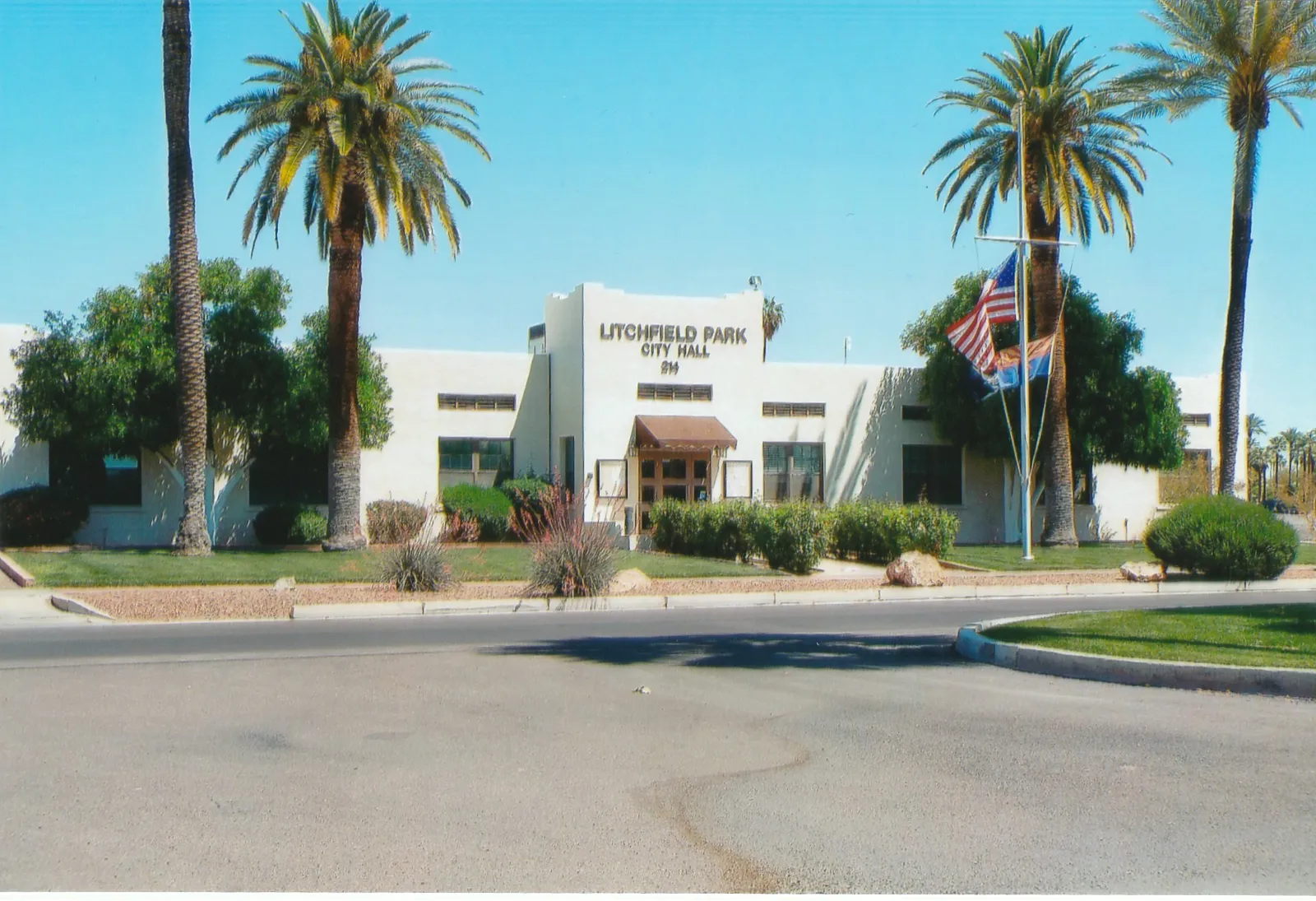
| Population | 6,847 (2020 census) |
|---|---|
| City area | 3.31 square miles |
| Location | About 19 miles west of Phoenix |
| ZIP code | 85340 |
| Typical work | Maintenance buildings, gates, block enclosures, shop floors |
| Credentials | AZ ROC 365464, licensed, bonded, insured |
Industrial work in a city of three square miles
With 6,847 residents on 3.31 square miles, this is one of the smallest cities we serve, and it is mainly residential. The larger warehouses and plants in this part of the West Valley are just over the line in Goodyear and Avondale. What the city itself has are the buildings that keep a community running: public facilities, school and maintenance buildings, utility structures, and the service areas behind shops and offices.
Those buildings are small, but they get the same abuse as industrial ones. Steel doors rust from the bottom, block walls bloom with efflorescence where sprinklers hit them, and concrete floors take oil and chemical spills.
Small structures that still need industrial prep
A single building can mix four or five materials. We price each one with the prep it needs instead of treating the whole structure as one wall.
- Maintenance and storage buildings with steel doors and frames
- Block enclosures around pumps, electrical gear and trash bins
- Wrought iron and tubular steel gates, fences and railings
- Steel shade structures and carports over service vehicles
- Equipment shops with stained concrete floors
- Exposed pipes, valves and backflow preventers, painted to the owner's standard
Working a few yards from someone's home
Spraying steel next to a residential street takes planning. We spray only in calm air, put up screens or drop cloths where wind could carry mist toward cars and houses, and switch to brushes and rollers when it is too close to control. Products with lower odor and lower VOC content are our first choice where neighbors are near, as long as they suit the surface.
Start times are agreed with the owner before the job begins. In summer, early starts beat the heat, and we balance that against the people living next door.
Public and school facilities
Public owners usually buy painting through written quotes or bids, with insurance and license requirements spelled out in advance. Noah's background includes municipal construction, so public-sector documentation and compliance requirements are familiar ground for us. Certificates of insurance can go to the agency before we mobilize, and closeout documents go with the final invoice.
Schools add another limit: active campuses need work zones fenced off from students, and coatings with strong odor are best saved for breaks.
Gates, fences and utility equipment
Backflow preventers and exposed valves are often painted to protect them from sun damage and make them easier to spot. Tags, test ports and moving parts stay clear of paint so required testing is not slowed down.
- Confirm ownership first: transformers and cabinets owned by a utility are not ours or yours to paint without its permission.
- Degrease the steel and remove loose rust and flaking paint.
- Prime bare spots with a rust-inhibiting primer the same day they are cleaned.
- Brush an extra coat onto welds, hinges and the bottom rails where water sits.
- Finish in the color the owner or the neighborhood standard calls for.
Picking colors that sit well next to homes
A maintenance building that faces houses should look like it belongs. Earth tones and soft neutrals blend with stucco homes, and a lower-sheen finish shows fewer surface flaws on block. Lighter colors also run cooler and fade less in full sun. Safety colors still go where they are needed, on bollards, curbs and hazard edges, so the building looks calm without hiding what workers need to see.
Coated floors in maintenance shops
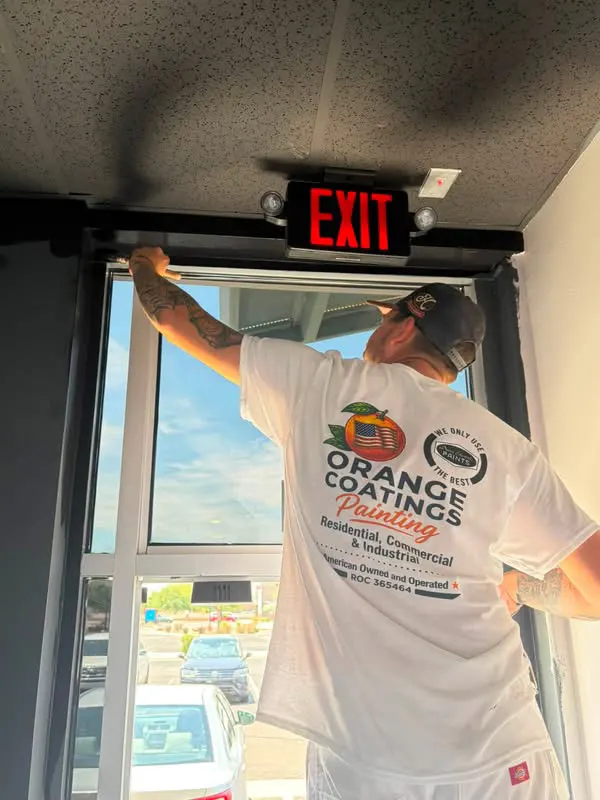
In a maintenance shop, we strip the slab of grease, fill cracks and grind or etch a profile, test older concrete for moisture, and then lay down a Sherwin-Williams epoxy floor system. Anti-slip additive near wash bays and doors keeps wet concrete from turning slick.
If the shop stores pesticides, fuel or pool chemicals, tell us which ones. The floor system and any wall coating near those products should be chosen with that exposure in mind.
Photos
Frequently asked questions
- Is Litchfield Park too small a city for industrial painting work?
- No. The buildings are smaller, but steel, block and concrete still need industrial prep and coatings. We quote single buildings and small sites as well as large ones.
- How do you keep overspray off the houses next to our building?
- By spraying only in calm conditions, screening and covering anything downwind, and brushing or rolling where spraying is too close to control. We walk the site with you to decide which surfaces get which method.
- Can we paint the utility boxes on our property?
- Only if you own them. Equipment owned by a power, water or telecom utility needs that utility's permission, so we confirm ownership before anything gets painted.
- Do you work for schools and public agencies?
- Yes. Public and school projects fit our background in municipal construction, and we carry ROC License 365464 along with bonding and insurance. We can provide the quotes, certificates and closeout paperwork public owners ask for.
- Do steel shade structures over service vehicles need special paint?
- They need the same rust prep as any exterior steel, plus attention to the tops of beams where dust and water collect. A finish rated for full sun in a lighter color helps, since these structures have no shade of their own.
- Can you paint one maintenance shed instead of a whole site?
- Yes. A small structure still gets a same-day, in-person estimate and a written scope listing the prep and coatings for each surface.
- What finish hides wear best on a block service building?
- A lower-sheen finish in a mid-tone neutral hides dirt and minor surface flaws better than bright white or high gloss. Doors and trim can go a shade darker to hide scuffs.
Related
- Industrial painting
- Painters in Litchfield Park, AZ
- Industrial painting in Goodyear
- Industrial painting in Avondale
- Industrial painting in Glendale
- Commercial painting in Litchfield Park
- Epoxy flooring in Litchfield Park
- Wrought iron and railing painting
- Industrial painting safety
- Painting services by city
- Photo credits