Interior painting · Doors and frames
Interior Door Painting in Surprise and the West Valley
Published
Interior door painting covers the door slabs, frames and casings in your home: cleaning off years of hand grime, sanding, priming where needed and applying a hard, wipeable finish in the sheen you choose. It is one of the quickest ways to make a whole house look newer, because doors are in every room and get touched every day.
We paint doors as part of a full interior repaint or as their own job. Many West Valley homes still have the off-white builder doors they came with, and changing them to a crisp white, a soft gray or a deep color like black changes the look of every hallway.
| Surfaces | Panel, flat slab and bifold doors, frames and casings |
|---|---|
| Finish | Satin, semi-gloss or high-gloss enamel |
| Prep | Degrease, sand, fill dings, prime as needed |
| Estimate | Same-day and in person |
What interior door painting includes
- Cleaning hand oils and grime from the latch side and edges
- Filling dents, dog-scratch gouges and old hardware holes
- Scuff-sanding the existing finish so new paint bonds
- Bonding primer on stained or varnished doors and on repairs
- Masking or removing hinges, knobs and strike plates
- Two finish coats on both faces and the visible edges
- Frames and casings painted to match or contrast with the doors
Who it is for
Homeowners updating builder-grade doors after years in a house, buyers repainting before they move in, and sellers getting a house ready to list all ask for door painting. Landlords repaint doors at turnover because the latch side gets so dirty.
It also comes up after a flooring project, when new tile or wood makes old doors look tired, and when people switch hardware from brass or nickel to matte black and want doors to match the new look.
Signs your doors need paint
- A gray or yellow film around the knob that does not scrub off
- Chips along the latch edge and the bottom corners
- Paint that has yellowed, especially on doors in darker hallways
- Thick, drippy paint in the panel grooves from past jobs
- Doors that no longer match newly painted trim
- Pet scratches on bedroom and laundry doors
Our process for doors
- Agree on color, sheen and whether frames match at the same-day estimate.
- Protect floors and nearby walls, and mask or remove hardware.
- Clean and degrease, then fill dents and holes.
- Scuff-sand, vacuum and wipe down so no dust is left in the panels.
- Prime bare wood, repairs and any glossy or stained surface.
- Apply two finish coats, brushing the panel details and rolling or spraying the flat areas.
- Leave doors propped open to dry, then reinstall hardware and walk the house with you.
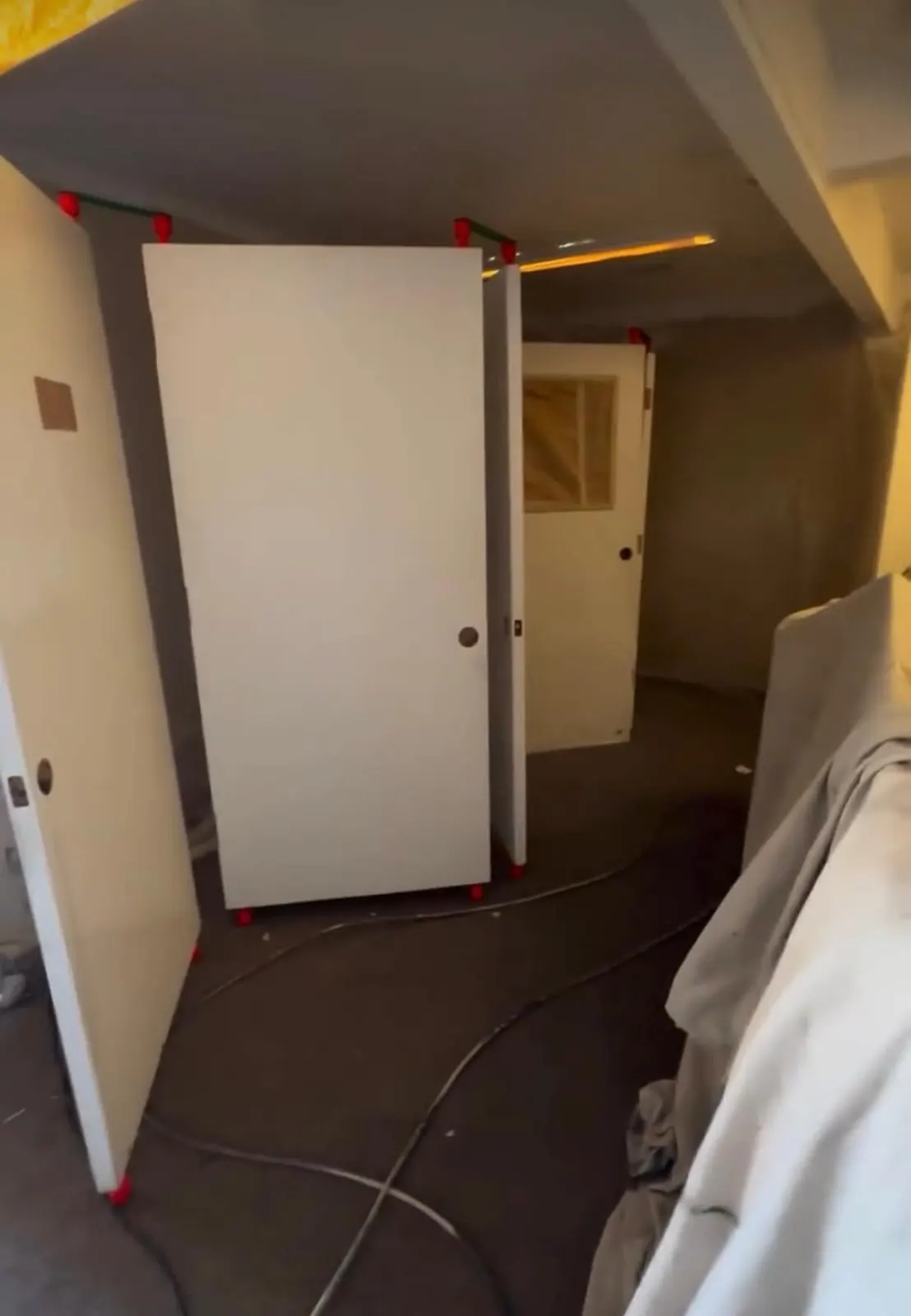
Paint in place or take them down
Doors painted in place on their hinges keep the house usable, and a careful brush-and-roll finish looks clean on most panel doors. Taking doors down and spraying them flat gives the smoothest finish with no sags, but it means a day or two with doors off and a place to lay them out.
We recommend one or the other at the estimate based on the doors, the finish you want and how you live. Sprayed doors suit high-gloss and dark colors best, where brush marks show most.
Hollow-core doors, common in production homes, paint well but dent easily, so we fill dents before priming. Bifold closet doors have hinges and tracks between panels that need careful masking, and louvered bifolds take the longest of any door because every slat is brushed by hand.
Dry air, heat and sticky doors
Arizona's dry air makes paint dry fast on the surface, which can leave lap marks and brush lines if the painter cannot keep a wet edge. We work one door at a time from top to bottom and keep the house cool while we paint.
Fresh enamel stays slightly soft for days, even when it feels dry. A door closed too soon can stick to the stop or weatherstrip and tear the new paint. We leave doors open or propped while they set, and we tell you how long to wait before closing them fully. Wood doors also shrink in the dry climate, so we check that thick old paint is not making them rub.
Timing and price factors
A handful of doors can be done in a day or two including dry time. A whole house of doors and frames usually takes a few days, since each door needs drying time between coats. We give you a schedule at the estimate.
- Number of doors and whether both faces and frames are included
- Panel style, since six-panel doors take longer than flat slabs
- Bifold and double closet doors
- Stained or varnished doors that need bonding primer
- Color change, especially white to black or the reverse
- Painting in place versus removing and spraying
Areas served
We paint interior doors in homes throughout the West Valley, including:
Photos
Frequently asked questions
- What sheen is best for interior doors?
- Satin or semi-gloss for most homes, since both wipe clean and resist scuffs. High-gloss looks sharp on smooth doors but shows every dent and brush line, so it is best sprayed.
- Can you paint stained wood doors?
- Yes. Varnished or stained doors get cleaned, scuff-sanded and primed with a bonding primer so the paint does not peel. Skipping that primer is the usual reason painted wood doors chip.
- Should the frames match the doors?
- Most homes keep doors and frames the same color for a clean look. Some owners paint doors darker and leave frames white to match baseboards, which works well with black or charcoal doors.
- How long before I can close a freshly painted door?
- Wait at least overnight, and longer in humid weather or with deep colors. Enamel needs days to harden, so leave a gap or close doors gently for the first week.
- Do you remove the hardware?
- We either remove knobs and hinges or mask them carefully, depending on the door and what you prefer. Hinges caked with old paint can be cleaned or swapped while the door is being painted.
- Can black doors work in a desert home?
- Yes, indoors they hold up well since they are out of the sun. They show dust and fingerprints more than white, so a satin sheen and good prep matter.