Guide · Block walls · West Valley HOAs
Block Wall Paint Colors HOAs Approve in the West Valley
By the Orange Coatings team · Published
Most West Valley HOAs approve two kinds of block wall color: the body (base) color of your house for walls inside or attached to your lot, and a single community standard color for walls that face streets, golf courses or open space. Walls the association owns along main roads usually cannot be painted by owners at all.
The exact color names change from one community to the next, so below are real examples from published guidelines in Vistancia, PebbleCreek, Sun City Grand, Verrado and Estrella, followed by what it takes to paint block so it lasts.
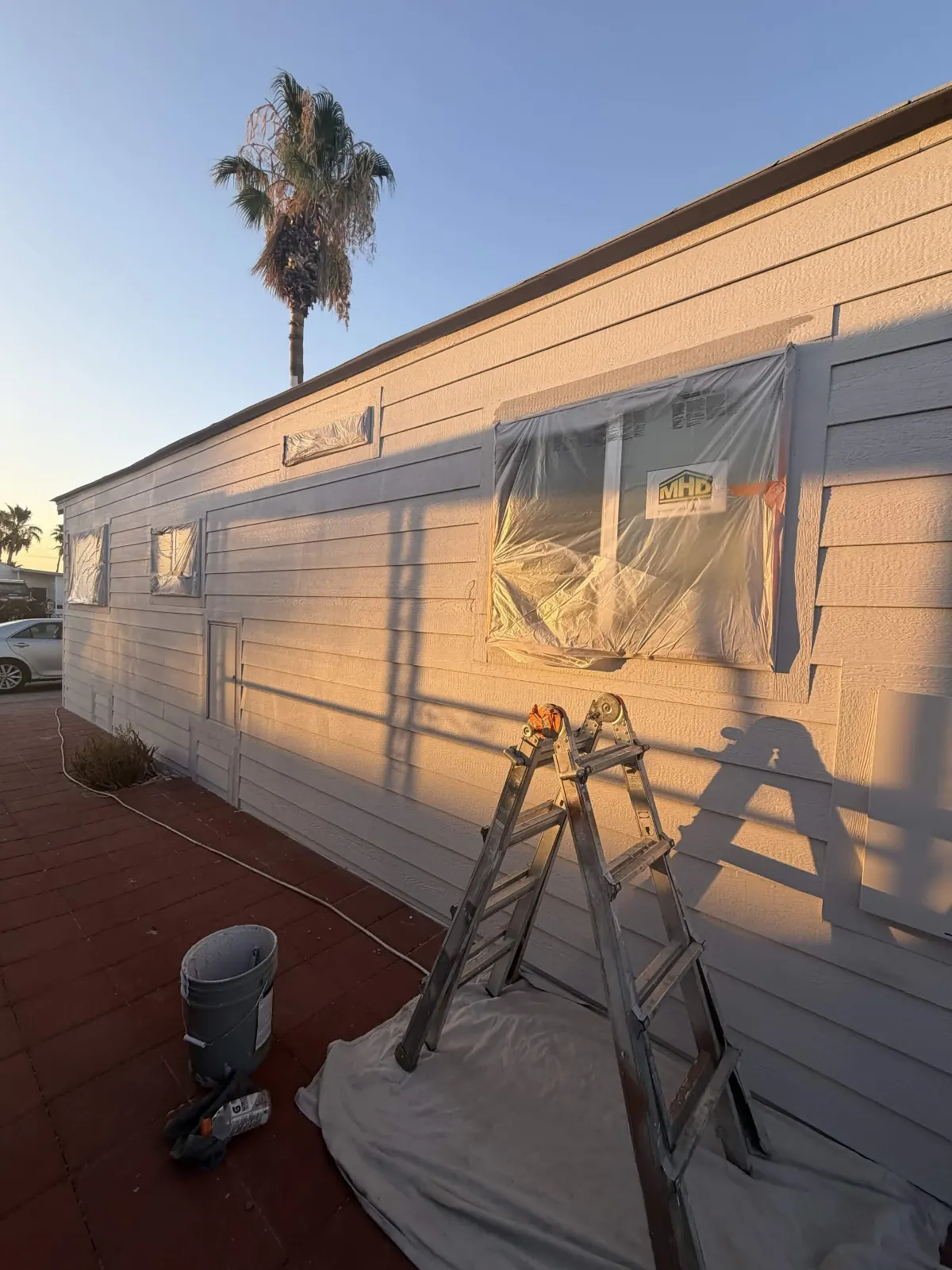
| Inside and courtyard walls | Usually the house body or base color |
|---|---|
| Street and open-space faces | Usually one named community color |
| Common-area walls | Maintained by the HOA; owners typically may not paint them |
| Approval | Most guidelines require approval before a wall color changes |
The pattern most HOAs follow
Desert master plans treat walls as part of the streetscape. A run of rear walls along a collector road or a golf fairway is supposed to read as one continuous surface, so associations fix a single color for those faces. The sides that face into your yard, and short walls attached to the house like courtyards and planters, are treated as part of the house and follow your scheme.
Party walls between two lots add a wrinkle, because each owner sees a different face. Several communities spell out who paints which side and in what color.
Vistancia: Colorado Trail on the outside
In the Village at Vistancia, a new owner-built masonry wall either matches the builder's block or gets stucco and paint: house colors on the yard side, community wall color on the street side. That street-side color is Dunn-Edwards Colorado Trail, named in the Design Guidelines. Courtyard and decorative walls must match the body of the home in color, material and texture, with stucco covering all block joints in at least two coats.
PebbleCreek: Mommia walls and Diesel iron
PebbleCreek's Architecture and Landscape Guidelines name Mommia for streetscape walls along side streets and for spline walls at the back of lots, and Diesel for party wrought iron fences. Where iron sits on a short block base, the block is Mommia on the outside and top and the house base color on the inside.
PebbleCreek also answers the party wall question directly: the neighbor's side is painted the neighbor's body color, or Mommia if that lot has no house. Landscape walls take the house base color, though the cap of a decorative wall may match the pop-outs.
Sun City Grand: base color, and hands off common walls
In Sun City Grand, stucco courtyard, rear patio, equipment screen, planter and landscape walls must be the scheme's Color #1 base, with caps in the base or Color #2. The inside face of a rear patio wall may use any color in the scheme. Walls designated as common area, such as those along main roads, trails, culverts and retention basins, may not be painted or altered by owners.
Dunn-Edwards' posted repaint guidelines for the community also list two colors for yard fences and gates, DEC750 Bison Beige or Potato Skin, applied by electrostatic painting where the guidelines call for it.
Verrado and Estrella: walls follow the house
Verrado's repaint submittal form lists fence walls exposed to the street or open space under Color A, the primary stucco body color, so those faces change only when the house body color is approved. Side yard gates are grouped with the garage door color.
Estrella's Community Handbook requires privately owned exterior walls on lots visible from neighboring property, open space, lakes or golf course parcels to be painted at a minimum. Approved wall color schemes for each subdivision are held at the management company's office, and painting any wall needs prior written approval from the Design Review Committee.
Before you paint a wall in your community
- Find out whether the wall is yours, shared with a neighbor, or common area owned by the HOA.
- Ask which face gets which color, and get the community color name and code in writing.
- Tell the neighbor before you paint a shared wall, even if the rules let you paint your side.
- Include walls, caps and gates in the same approval request as the house when you repaint.
- Check whether wrought iron or view fencing has its own required color.
Painting block so it holds up
Bare block is porous and alkaline, and it often shows efflorescence, the white salt bloom that pushes out of masonry. Paint applied over it without the right prep tends to blister or peel within a few seasons in the Arizona sun.
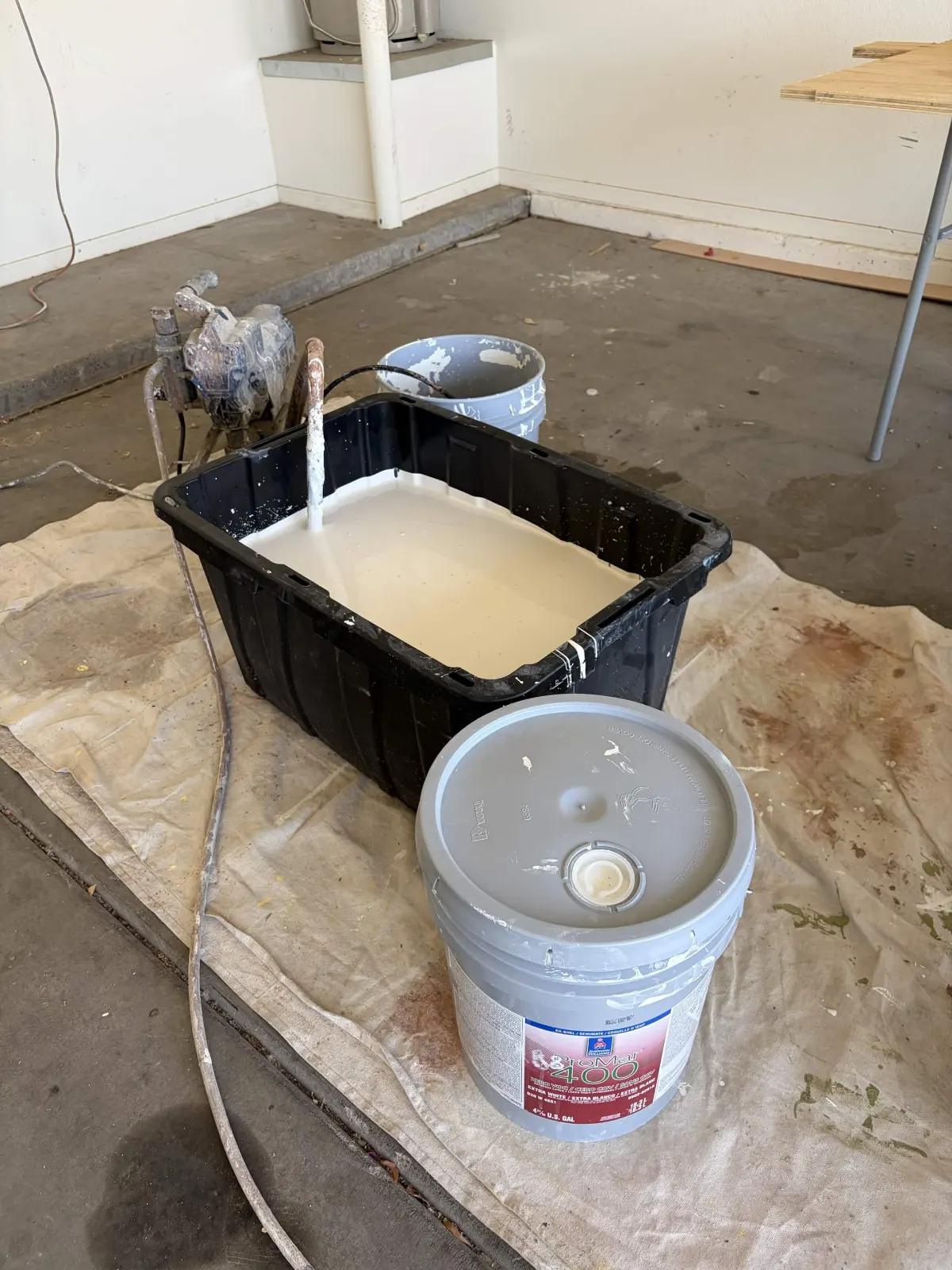
Our approach on block walls: wash off dirt and salts, scrape loose paint, fill cracks, then prime bare block or patched spots with Sherwin-Williams Loxon masonry primer before two finish coats, sprayed and back-rolled into the block texture. Caps take the most sun and water, so they get extra attention.
Color choice affects upkeep too. Walls near sprinklers pick up mineral spots, and the warm tan and light brown community colors most HOAs choose hide that splash far better than white or dark gray would.
Frequently asked questions
- What color should I paint my backyard block wall in an HOA?
- Usually your house body or base color on the side facing your yard. Faces toward a street, golf course or open space often must be a named community color, so check your guidelines.
- Can I paint the HOA wall behind my house?
- Not if it is common area. Several West Valley associations, including Sun City Grand, bar owners from painting or altering walls the association owns.
- Who paints the neighbor's side of a shared block wall?
- It depends on the community. PebbleCreek, for example, says the neighbor's side is painted the neighbor's body color. Talk to your neighbor and your HOA before you start.
- Do I need HOA approval to paint a block wall?
- In most planned communities, yes, especially if the color changes or the wall is visible from outside the lot. Include walls in the same request as a house repaint.
- Why does paint peel on block walls?
- Usually moisture and salts in the block, or paint applied over unprimed masonry. A clean surface and a masonry primer before the finish coats solve most of it.
- Can a block wall be painted the same day as the house?
- Often, yes. We schedule walls alongside the house repaint so they are prepped, primed and painted with the approved colors in one visit.
Related
Sources
- Village at Vistancia Design Guidelines (December 2024)
- PebbleCreek Architecture and Landscape Guidelines (2024)
- Sun City Grand Residential Design Guidelines (May 2026)
- Dunn-Edwards Color Ark Pro: Sun City Grand community repaint guidelines
- Verrado Guide to Exterior Residential Repainting
- Estrella Community Handbook (October 2026)