Guide · Stucco · Exterior prep
Cleaning Sprinkler Hard-Water Stains Off Stucco Before Painting
By the Orange Coatings team · Published
To clean sprinkler hard-water stains off stucco before painting, first re-aim or replace the heads so the wall stops getting wet, then dissolve the white mineral crust with a mild acid such as diluted white vinegar, scrub it with a soft brush, rinse with low pressure and let the wall dry completely. Paint over a mineral crust bonds to the crust, not the stucco, so it flakes off where the spray hits.
Below is how to tell hard-water marks from other white stains, the cleaning order that works, when to step up to a stronger cleaner, and what to do with a stain that will not fully come out.
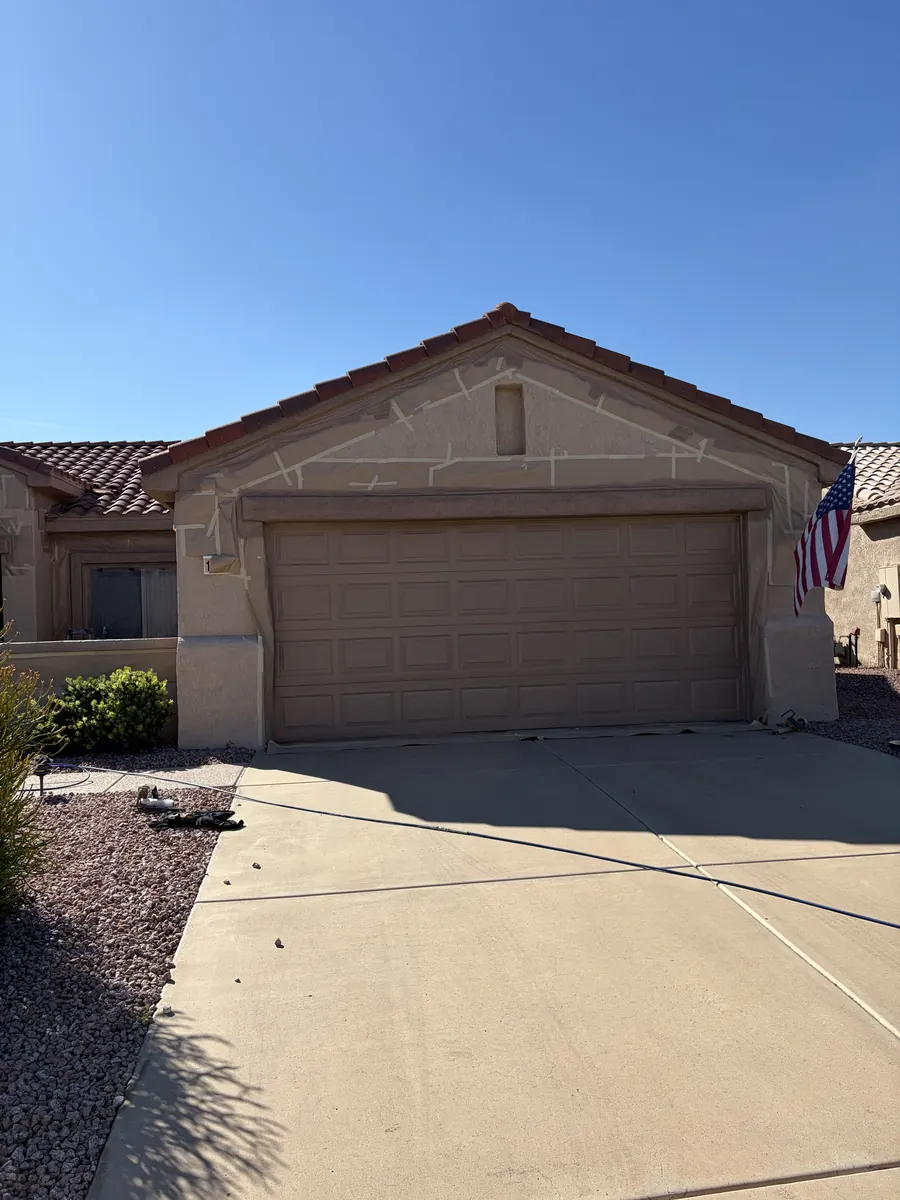
What those white rings actually are
Water hardness is mostly dissolved calcium and magnesium, according to the U.S. Geological Survey. Every time a sprinkler throws water against a wall, the water evaporates in the sun and leaves those minerals behind. One night of watering leaves a film you can barely see. A few summers of it builds a chalky white or tan crust in the exact arc of the spray, usually in a band from the ground up to about knee or hip height.
If your shower glass spots, your sprinkler water will spot your stucco too. The marks are most common on the street-facing wall behind lawn or shrub beds, on garden walls next to drip lines, and on the low parts of columns near turf.
Hard water, efflorescence or rust?
Before you clean anything, check the shape and the color of the stain, because each cause needs a different fix.
- Hard-water marks sit on the face of the wall in a spray-shaped arc or fan, and they line up with a sprinkler head you can find.
- Efflorescence comes out of the wall from inside, often in patches or along joints, and it keeps coming back after cleaning until the moisture behind it is dealt with.
- Orange or brown streaks usually mean iron, from well water, rusty metal or fertilizer splashing on the wall. Vinegar does little to these; they need a rust stain remover made for masonry.
- Green or black spots in shaded, damp corners are mildew or algae, which need a mildew wash rather than an acid.
Why you cannot just paint over the stain
A mineral crust is a weak, powdery layer. Paint grips whatever it touches first, so on a stained wall it grips the crust, and the crust is only loosely attached to the stucco. Within a season or two the paint lifts in the same arc the sprinkler drew, and the wall looks worse than it did before.
Water is the second problem. If the sprinkler keeps hitting the new paint, the minerals build up again on the fresh film and the constant wetting softens the paint at the base of the wall. Cleaning without fixing the spray only buys a few months.
Step one: stop the spray
- Run each zone during the day and watch where the water lands.
- Turn or adjust spray heads so the pattern stops short of the wall, or swap them for heads with a half or quarter pattern.
- Convert beds along the house to drip irrigation where you can, with emitters pointed away from the foundation.
- Lower the pressure on zones that mist and drift in the afternoon wind.
- Pull mulch, rock and soil back so the base of the stucco is not sitting against wet ground.
Step two: dissolve and rinse the deposits
Calcium deposits dissolve in mild acid, so start gentle and test a hidden spot first, especially on painted or integrally colored stucco, where acid can lighten the surface.
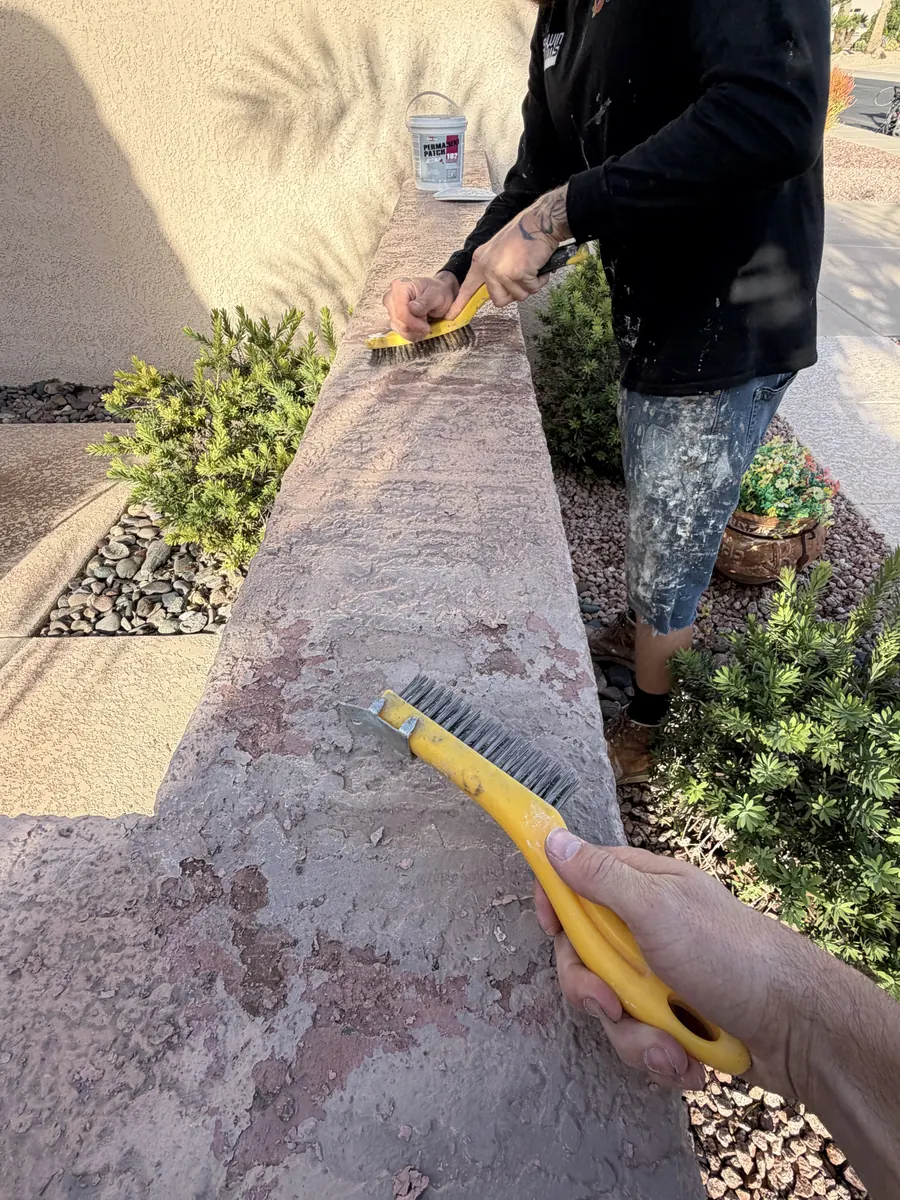
- Dry-brush loose crust off with a soft or medium nylon brush.
- Wet the wall and nearby plants with plain water so the cleaner does not soak in too fast or burn the landscaping.
- Apply a solution of white vinegar and water with a pump sprayer or sponge, working a small section at a time.
- Let it sit a few minutes, then scrub in circles with the brush. Do not let it dry on the wall.
- Rinse thoroughly from the top of the stained area down with a garden hose or a low-pressure wash.
- Repeat on heavy spots. Thick crust can take two or three rounds.
When vinegar is not enough
Years of buildup sometimes need a stronger masonry cleaner. Sherwin-Williams' guidance for heavy alkaline deposits on masonry is a mild concrete etching solution or diluted muriatic acid, followed by a thorough rinse. These products are much harsher than vinegar: read the whole label, wear eye and skin protection, keep them off glass, metal and plants, and never mix them with bleach or other cleaners.
Skip the high-pressure wand. A narrow tip held close to stucco can cut the sand finish, open hairline cracks and force water deep into the wall, which then has to dry out before anyone can paint. Moderate pressure from a wide fan tip, or a hose and brush, does the job with less risk.
Drying, priming and painting the cleaned wall
Stucco holds water long after the surface looks dry, and the base of a wall that has been sprayed for years can be damp inside. Give it dry weather and time, and longer after cool nights or a monsoon storm. If the sprinkler cannot be shut off for that stretch, turn that zone off until the paint is on and dry.
A faint shadow of the old ring is normal after cleaning and paints over fine once the surface is sound and dry. Where the cleaning took the old paint off down to bare stucco, that area needs a masonry primer. Our standard is Sherwin-Williams Loxon primer on bare or patched stucco, then two coats of Emerald Exterior, sprayed and back-rolled.
Keeping the new paint clean
Light colors show mineral spotting less than dark ones, so if the street wall takes spray from a neighbor's sprinkler or a shared common-area bed you cannot control, that is worth weighing when you pick the body color. Check the heads again each spring and after any landscaping work, since a bumped head is the most common reason the rings come back. A quick rinse with a hose after a few windy watering days keeps new spots from baking on.
Frequently asked questions
- Will CLR or other bathroom lime removers work on stucco?
- Some household lime removers will dissolve the deposits, but they are stronger than vinegar and can lighten painted or colored stucco. Test a hidden spot, follow the label and rinse well. On a wall you plan to repaint, a mild cleaner and a few rounds of scrubbing are usually enough.
- How long should stucco dry after acid cleaning before painting?
- Wait until the wall is dry through, not just on the surface, which takes longer at the base of a wall that has been wet for years. Follow the dry-surface requirement on the primer and paint labels, and avoid painting the morning after heavy watering or rain.
- Can elastomeric paint cover hard-water stains?
- It will hide them for a while, but it has the same problem as any paint: it bonds to the crust instead of the stucco. Clean the deposits off first, then choose the coating.
- Do hard-water stains damage stucco itself?
- The minerals are mostly a cosmetic and adhesion problem. The water that brings them is the bigger risk, because a wall that stays wet at the base can soften, crumble and peel over time.
- Should I clean the stains myself or leave it to the painter?
- You can re-aim the sprinklers and do a vinegar wash yourself. Mention the stains at the estimate so the painter can see them, plan the cleaning and decide whether those areas need primer.
- Why did the white rings come back after I painted last time?
- Usually the sprinkler was never adjusted, so the new paint started collecting minerals right away. Less often, the crust was painted over and the paint is now flaking off with it.