Guide · Interior painting · Air and odor
How Long Paint Smell Lasts After Interior Painting
By the Orange Coatings team · Published
With water-based latex paint and steady fresh air, the paint smell is strongest while the walls are wet and fades over roughly two to three days, which is the ventilation window the EPA and the Consumer Product Safety Commission recommend after indoor painting. Oil-based primers and enamels, closed-up rooms and cool or humid air can stretch it to a week or more.
The smell fading does not mean the paint is done drying underneath, and not every lingering odor comes from the paint. Here is the timeline, what slows it down, how to clear the air when the house is shut for the AC, and when a smell that will not go away means something else.
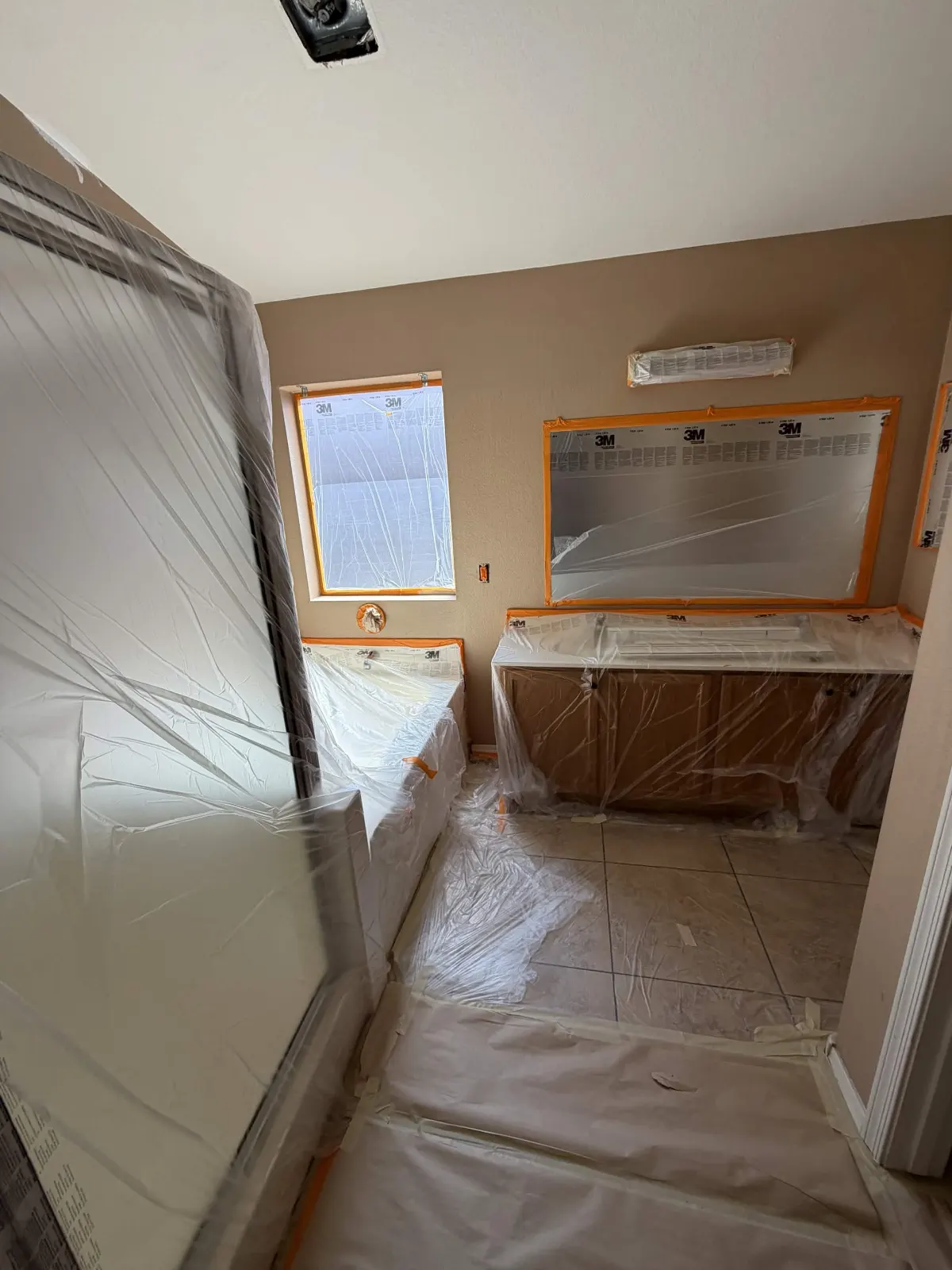
A typical timeline for latex wall paint
- While painting: the strongest smell, as water and solvents leave the wet film fastest.
- First evening: still noticeable in the painted room, faint in the rest of the house if doors are closed.
- Days two and three: fading, mostly noticeable when you first walk into the room.
- After about a week: usually gone in open rooms. Closets, cabinets and small closed bathrooms can hold it longer.
- Weeks two to four: no smell, but the film is still curing, so treat the walls gently.
Why the smell outlasts the drying
Paint feels dry to the touch within hours because the surface skins over first. Below that skin, water and small amounts of solvents keep working their way out for days. The EPA and CPSC safety guide warns against assuming dry paint is finished: some products contain solvents or drying oils that take several days to leave the film, which is why their rule of thumb is to keep ventilating for two to three days after the job.
Oil-based paints carry more solvent than latex. The same guide notes that short-term exposure to solvents from alkyd paints can be significantly higher than from latex, so a room with oil-based trim or a solvent primer smells stronger and longer.
What makes paint smell linger
- Oil-based or shellac primer used to block stains or seal odors.
- Enamel on doors, trim and cabinets, which goes on thicker and in smaller, enclosed spaces.
- Doors and windows closed all day, with no fan moving air outdoors.
- Cool rooms and humid weather, which slow evaporation.
- Thick coats, extra coats or deep colors that took more paint.
- Small spaces: closets, pantries and windowless bathrooms.
Clearing the air in a closed-up Arizona house
For much of the year, Valley homes stay shut with the AC running. The EPA and CPSC guide is clear that an air conditioner is not a substitute for a fan, because it mostly recirculates indoor air. It also points out that bathroom and kitchen exhaust fans do not always vent outdoors, so they should not be counted on as your ventilation.
What works is moving air out of the painted room. Set a box fan securely in a window blowing outward, open a window or door on the far side of the house for cross-flow, and keep it running while painting and for a few days after. In summer, run the fan during the cooler night and early morning hours when opening up costs the least.
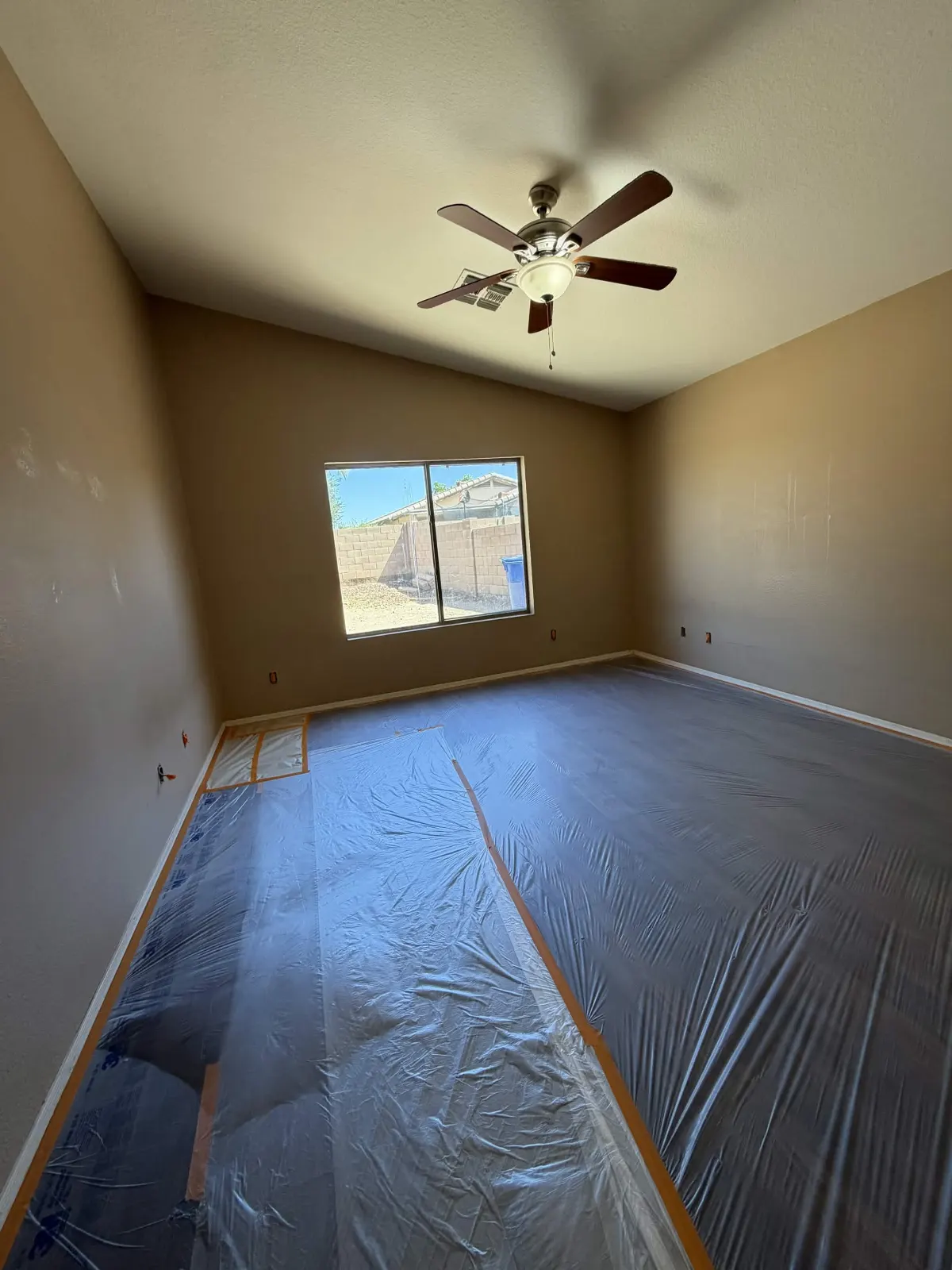
Who should stay out, and for how long
The EPA and CPSC guide recommends avoiding freshly painted rooms for two to three days when possible and keeping young children and people with breathing problems out of them. It also advises pregnant women to limit time in freshly painted rooms, especially when oil-based paint is used. Anyone who gets watery eyes, a headache or dizziness should leave the area and get fresh air.
For bedrooms, the practical answer is to paint them first in the job, or plan to sleep in another room for a night or two. Pets are best kept away from the work area for the same stretch.
When the smell is not the paint
A smell that hangs on for weeks, or gets stronger when the room warms up, is worth a second look. Some common causes:
- A musty smell around a repaired water stain can mean the drywall or insulation behind it is still damp.
- A sour or rotten-egg smell from a can of paint means the paint spoiled before it was used.
- Smoke or pet odors that were covered with ordinary paint can come back through it; they need an odor-blocking primer.
- Open cans of leftover paint, thinner or used rags stored inside keep releasing fumes. Seal them and move them out of the living space.
Choosing products that smell less
Water-based paints, the guide notes, generally release fewer chemicals and lower levels of vapor than oil-based ones. Low-VOC products cut the smell further. Our standard interior finish, Sherwin-Williams Emerald Interior, is a low-VOC coating. When a stain or odor problem calls for a stronger primer, ask the painter to keep it to the affected spots and to plan the order of rooms so bedrooms have time to air out.
Frequently asked questions
- How can I get rid of paint smell fast?
- Move air out of the room: a box fan in a window blowing outward plus an open window or door elsewhere for cross-flow. Keep it going for two to three days. Bowls of baking soda or charcoal do little compared with steady ventilation.
- Is it safe to sleep in a room the night it was painted?
- The EPA and CPSC guide suggests avoiding freshly painted rooms for two to three days when you can. If you must, use low-VOC latex, ventilate hard all day, and keep children and anyone with asthma elsewhere.
- Why does my house still smell like paint after a week?
- Usually the rooms have been closed up without a fan moving air out, or oil-based primer or enamel was used. Check closets and cabinets, which trap odor, and make sure no open cans are stored inside.
- Does running the AC help clear paint fumes?
- Not much. It cools and filters indoor air but mostly recirculates it. Exhausting air from the painted room with a window fan works better.
- Do zero-VOC paints have no smell at all?
- They usually have far less, but tints, primers and the water evaporating still give off some odor. Expect a mild smell for a day or so.
- Does paint smell longer in winter?
- Often, because cooler air slows drying and windows stay closed. Here, mild spring and fall days are the easiest time to air a freshly painted house.
Related
- Residential interior painting
- Kitchen and bathroom painting
- Cabinet painting
- Low-VOC paint: when it matters
- How long interior paint takes to cure
- Getting ready for interior painters
- Painting over water stains on ceilings
- What to expect from a painter
- Painting a Two-Story Great Room or Stairwell: What to Expect
- What Happens at an In-Person Painting Estimate