Guide · Interior painting
Painting Baseboards and Trim: Which Sheen, and in What Order
By the Orange Coatings team · Published
Most trim and baseboards look and wear best in semi-gloss, with satin as the softer choice for homes where trim dents easily or the profiles are plain. For the order, paint the room from the top down: ceiling, then walls, then trim, and within the trim work down from crown and window casings to doors and finally baseboards, so drips and dust fall on surfaces you have not painted yet.
There are good reasons to break that order sometimes, especially on a trim-only job or when spraying an empty house. Here is how sheen and sequence work together, and where each choice goes wrong.
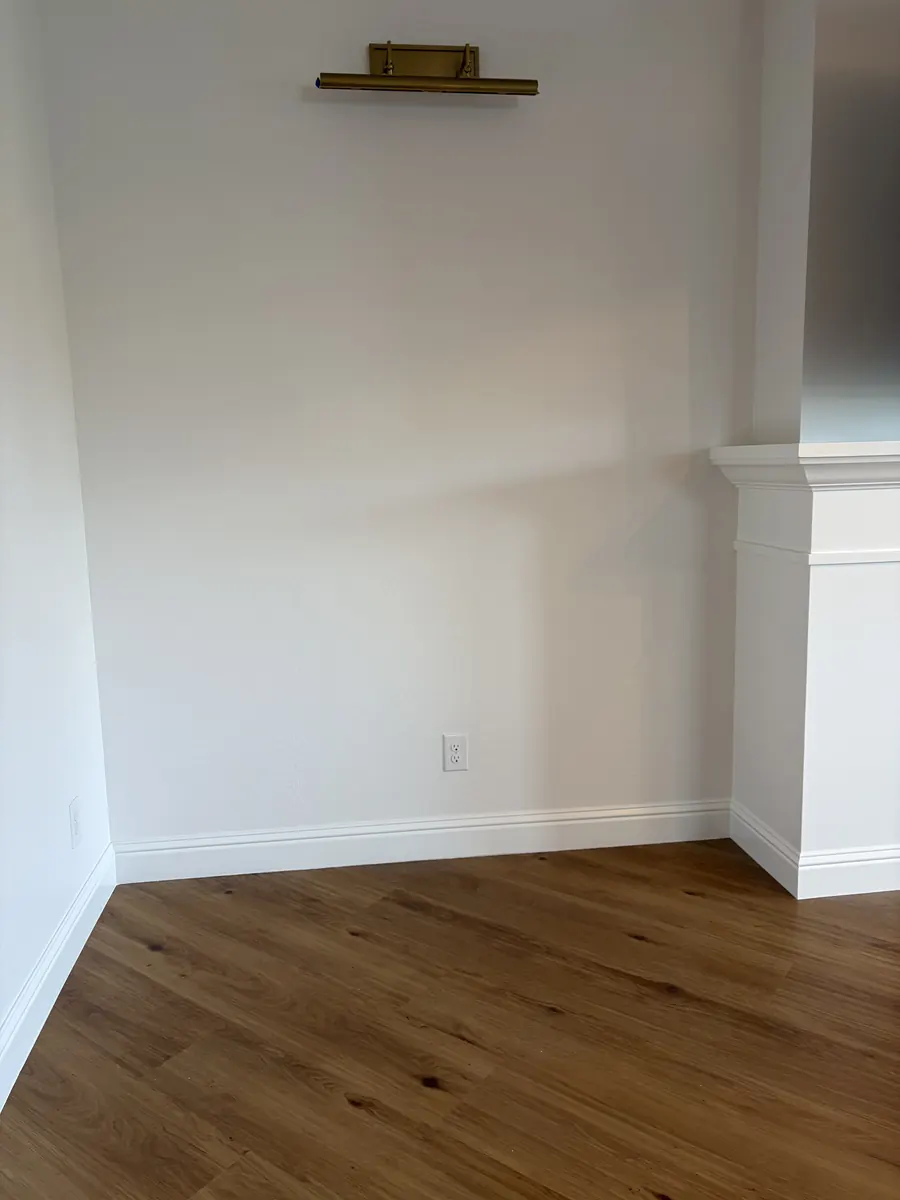
Semi-gloss, satin or gloss for trim?
Sherwin-Williams' sheen guide calls semi-gloss great for trim and moldings, lists satin as a fit for woodwork in high-traffic rooms, and suggests gloss to highlight trim, doors and cabinets. Sheen names vary between product lines, so look at a painted sample of the actual product before choosing.
- Semi-gloss: the standard for baseboards, casings and doors. Hard, very washable and bright enough to make white trim look crisp against an eggshell wall. Shows dents and filler marks more than satin.
- Satin: a lower shine that hides dings, wavy MDF and old repairs better. Easier to touch up. A good fit for rentals, homes with big dogs and modern rooms where shiny trim feels dated.
- Gloss: the hardest and most reflective. Looks sharp on a front-door casing or a stair railing in a formal entry, but it magnifies every flaw, so the prep has to be near perfect.
- Same sheen as the walls: possible, but trim gets kicked and wiped more than walls, so it usually wants a step more durability.
Let the trim condition choose the sheen
Before picking a sheen for appearance, look at the trim in low light from the side. If the baseboards are dented from vacuums, the casings have been filled many times or the joints are open, satin will forgive more of it. If the trim is in good shape or new, semi-gloss looks cleaner and stands up longer to cleaning.
Dark trim is a special case. A deep color in semi-gloss shows dust, scratches and every brush mark, and on baseboards near tile floors it collects a visible film of desert dust within days. Satin is the easier finish for dark trim.
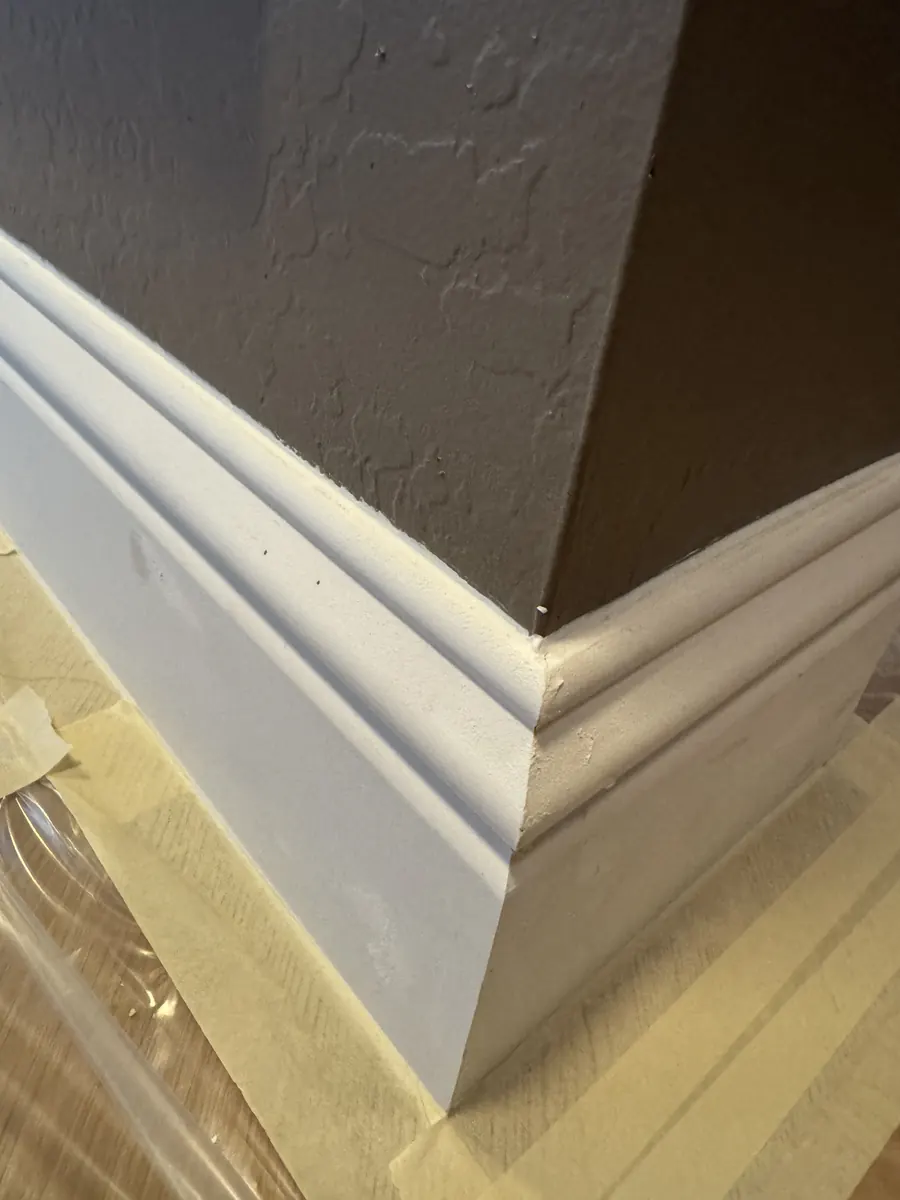
The usual room order: top to bottom
Painting trim after the walls means the final, most visible line is the one cut in glossy enamel against a flat or eggshell wall, which is the easiest line to keep straight.
- Prep everything first: fill nail holes, caulk trim joints, sand and spot prime. Caulk needs to set before paint goes over it.
- Ceiling: drips and roller spatter land on walls and trim that have not been painted.
- Walls: cut in along the ceiling and roll, letting wall paint lap slightly onto the trim edge.
- Trim: cut a clean line from the trim onto the wall, covering the slight overlap. A trim brush gives a straighter line on a hard edge than on a flat wall.
- Doors last or on their own schedule, since they need open time to dry before they are closed.
Within the trim: crown first, baseboards last
Work down: crown molding, then window casings and sills, then door casings, then baseboards. Each step lets dust, sanding residue and drips fall below the area you are working on. Baseboards are last because everything in the room ends up at floor level, including the dust kicked up while you work on everything else.
Before painting baseboards, vacuum the floor along them and wipe the top edge with a damp cloth. In West Valley homes the top of a baseboard often carries a layer of fine dust that will mix into the first stroke of paint and leave grit in the finish.
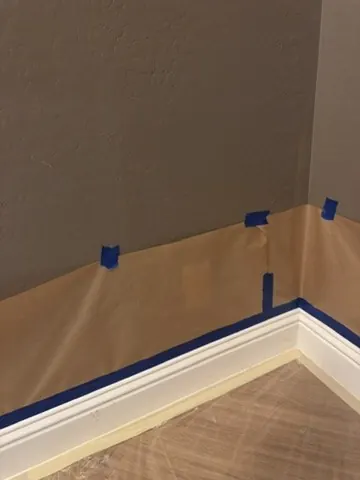
When trim goes first
Some painters reverse the order on new construction or in an empty house. Trim is sprayed first, then masked, and the walls are sprayed or rolled after. That makes sense when everything is being sprayed and the trim can be fully protected. In a furnished home with existing walls, the top-down order is usually faster and cleaner.
A trim-only repaint follows its own logic. The walls are staying, so tape goes on the wall side, not the trim, and the cut line is done by hand against the existing wall color. Any wall touch-ups happen first so the trim line is the last thing painted.
Before you paint old trim: check what is on it
Many older Valley homes still have oil-based enamel on the trim and doors. Latex rolled straight over glossy oil can peel off in strips. A quick check: rub a hidden spot with a cotton ball and rubbing alcohol. If paint comes off on the cotton, it is latex. If nothing comes off, treat it as oil and plan on cleaning, scuff sanding and a bonding primer before the new finish.
Homes built before 1978 may also have lead in older trim layers, which changes how the sanding should be done.
Getting the floor line right
The bottom edge of the baseboard is where most trim work looks sloppy. On tile, mask the grout line so paint does not wick into it. On carpet, tuck a wide tape or a paint guard under the baseboard and pull the carpet down slightly so the bristles do not catch fibers. On wood or vinyl plank, a low-tack tape protects the finish.
Pull the tape while the paint is still slightly soft, at a low angle, so it does not lift a film of enamel off with it. Fresh trim enamel is slow to harden, so keep furniture and vacuums off the baseboards for the first week or so.
How we approach trim on a repaint
At the same-day estimate we look at the trim condition, check whether old oil enamel is on it and talk through sheen and color with you, including whether the trim should contrast with the walls or match them in a higher sheen. Our interior work uses Sherwin-Williams Emerald Interior and careful masking at the floor line, and touch-ups found at the final walkthrough are handled on the spot.
Frequently asked questions
- Should baseboards be the same sheen as the doors?
- Usually yes. Keeping baseboards, casings and doors in one sheen makes the trim read as a single, consistent element across the house.
- Do you paint baseboards before or after the walls?
- In a repaint, after. Walls are painted first and allowed to lap onto the trim slightly, then the trim enamel is cut in over that edge for a clean final line.
- Is satin trim paint durable enough for baseboards?
- Yes, in a good enamel. It is a little less scrubbable than semi-gloss but hides dents better and touches up more easily.
- Why is my new semi-gloss trim showing brush marks?
- Higher sheens show every stroke. Brushing too long after the paint starts to set, or using a cheap brush, leaves ridges. Lay the paint on, finish with long, light strokes and leave it alone.
- Should I caulk trim before or after priming?
- Prime bare wood first so the caulk bonds, then caulk the gaps, let it set and paint. On already-painted trim, caulk after cleaning and sanding, then paint.
- Can white trim be painted over dark stained wood?
- Yes. It needs cleaning, scuff sanding and a stain-blocking primer so tannins do not bleed yellow through the white. Expect two finish coats.