Paint color · Sherwin-Williams white
Alabaster (SW 7008): A Soft White for Arizona Light
Published
Alabaster (SW 7008) is a soft, slightly warm white that stops short of cream. It works on walls, trim, cabinets and stucco, and in strong Arizona sun it looks clean without the blue glare of a stark white.
Its hex value is #EDEAE0 and its light reflectance value works out to about 82 when calculated from the RGB numbers, so it sits near the top of the scale. Below we cover how its undertone shifts with light, where it works in a West Valley home, what to pair with it and how we suggest testing it.
Color swatch: Alabaster SW 7008, #EDEAE0
| Code | SW 7008 |
|---|---|
| Hex | #EDEAE0 |
| RGB | 237, 234, 224 |
| LRV | About 82 (calculated from the RGB values, not Sherwin-Williams' published figure) |
| Color family | Soft warm white with a faint creamy cast |
How warm is Alabaster?
Look at the RGB numbers: red 237, green 234, blue 224. The blue channel sits 13 points below red, and that gap is what gives Alabaster its gentle warmth. It is not enough to make the color read yellow on most walls, but it is enough that Alabaster never looks icy.
Some people see a faint gray-green whisper in it, mostly in dim rooms or next to green landscaping outside a window. That effect comes and goes with the light, so judge it on your own walls rather than on a screen.
Alabaster on stucco in full Arizona sun
At midday in Surprise or Peoria, direct sun bleaches nearly every light color, and Alabaster on a south or west elevation will look close to plain white. The warmth comes back in the morning and late afternoon, when the low sun turns it soft and slightly creamy.
Stucco texture adds tiny shadows across the wall, which knocks the brightness down a little compared with a smooth sample board. That is one reason Alabaster rarely feels harsh as a body color: the texture and the warm undertone both take the edge off.
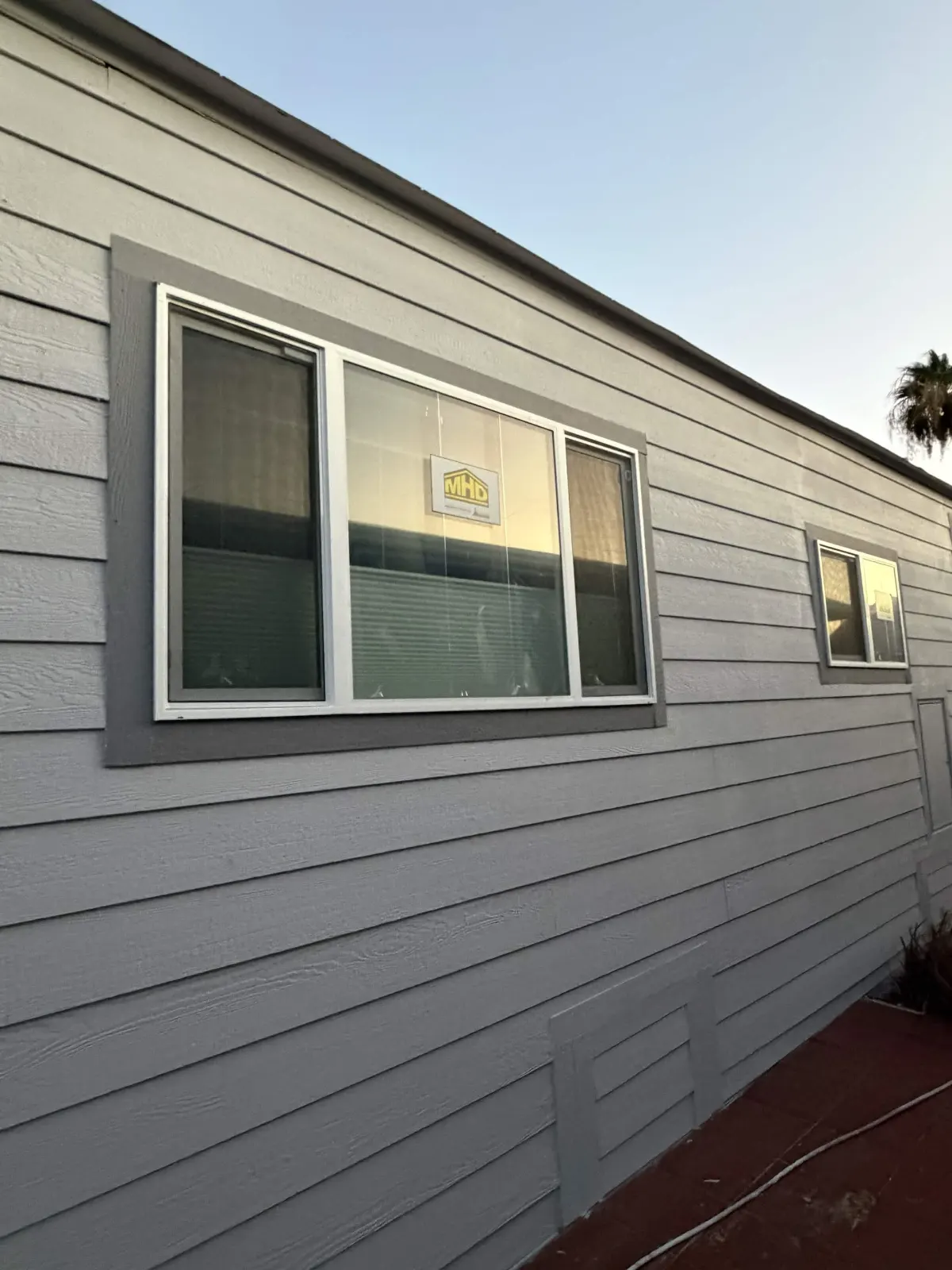
Alabaster indoors: north light versus west light
In a north-facing room, the cooler, indirect light pulls Alabaster toward a soft putty white. It still reads as white, but it can look a shade grayer and flatter than the chip, especially on a cloudy monsoon afternoon.
West-facing rooms do the opposite. Late sun pouring through the glass warms Alabaster up, and with warm-white bulbs it can drift toward ivory in the evening. If your main living space faces west, look at a sample after 4 p.m. before you decide.
Where Alabaster works best
- Walls and trim in one color: Alabaster in eggshell on walls and semi-gloss on trim gives a calm, low-contrast look in open floor plans.
- Kitchen cabinets: soft enough that it doesn't look clinical next to wood floors or warm granite.
- Stucco body color: a light, heat-reflective choice for ranch and Spanish-style homes with tile roofs.
- Trim and fascia: a gentle white against greige bodies such as Accessible Beige (SW 7036) or Agreeable Gray (SW 7029).
- Ceilings in rooms where a brighter white would look blue against warm walls.
Alabaster next to Pure White and Extra White
These three Sherwin-Williams whites get compared all the time. Pure White (SW 7005) has RGB 237, 236, 230, so its blue channel sits six points higher than Alabaster's; it reads cleaner and a touch less creamy. Extra White (SW 7006) is brighter again and leans slightly cool.
If your house has warm tile, wood or stone, Alabaster usually blends in best. If your flooring and counters are gray or black, Pure White or Extra White tends to look crisper beside them.
Colors that pair with Alabaster
- Sherwin-Williams lists SW 7690 and SW 9023 as coordinating colors; pull those chips at the store to see the intended palette.
- Body colors that make Alabaster trim look sharp: Accessible Beige (SW 7036), Agreeable Gray (SW 7029) or Worldly Gray (SW 7043).
- Front doors and shutters: Urbane Bronze (SW 7048) or Iron Ore (SW 7069) for strong contrast.
- Wrought iron and light fixtures: Tricorn Black (SW 6258) keeps the look simple.
What an LRV of about 82 means for heat and fading
LRV runs from 0 (black) to 100 (pure white) and describes how much visible light a color reflects. A figure around 82 means Alabaster bounces back most of the light that hits it, so a sunny stucco wall stays noticeably cooler than it would in a mid-tone or dark color.
Whites like this also carry very little tint, so there is little colorant for UV to break down. Over the years an Alabaster wall is more likely to pick up dust and chalk than to visibly change color. A rinse before repainting and a top-tier exterior paint keep that in check.
Sheen, product and how to test it
Outside, we put Alabaster in Sherwin-Williams Emerald Exterior, two coats sprayed and back-rolled, with Loxon masonry primer on bare or patched stucco. Inside, Emerald Interior in eggshell or satin suits busy walls, flat suits ceilings, and trim and cabinets look best in a harder, glossier finish.
- Ask for a large paint-out sample, at least 12 by 12 inches, on the actual wall.
- Check it at mid-morning, noon and late afternoon on the sunniest and shadiest sides of the house.
- Hold it next to your trim, tile, cabinets or roof so you judge it against fixed finishes.
- In an HOA community, confirm Alabaster is on your approved palette for the area you plan to paint before work is scheduled.
Frequently asked questions
- Is Alabaster too yellow for a modern kitchen?
- Usually not. Its warmth is mild, so it reads as a soft white rather than cream next to most counters. If your kitchen has cool gray quartz or stainless everywhere, compare it with Pure White before committing.
- Can I use Alabaster on both walls and trim?
- Yes, and many people do. Using the same color in two sheens, such as eggshell walls and semi-gloss trim, gives a quiet, continuous look. The sheen difference is enough to define the trim without a color change.
- Does Alabaster look white on an Arizona stucco house?
- In midday sun it looks close to pure white, and in morning or evening light it reads warmer. The stucco texture softens it further, so it rarely looks glaring the way a bright cool white can.
- What door color goes with an Alabaster exterior?
- Dark, earthy colors give the clearest contrast. Urbane Bronze (SW 7048) and Iron Ore (SW 7069) both work on doors and shutters, and Tricorn Black (SW 6258) suits iron and light fixtures.
- Will Alabaster look gray in my north-facing bedroom?
- It can look a little grayer and flatter there, because north light is cool and indirect. Brighter warm bulbs help, and a large sample on that exact wall will tell you whether you like the effect.
- Does Alabaster stay cooler than beige on a west wall?
- Yes. With an LRV calculated at about 82, it reflects more visible light than any beige or greige, so the wall absorbs less heat from the afternoon sun. That also means less thermal stress on the paint film over time.