Paint color · Light gray-green
Oyster Bay (SW 6206): Soft Gray-Green in Desert Light
Published
Oyster Bay (SW 6206) is a soft gray-green from Sherwin-Williams, light enough to use as a whole-house color and green enough to feel different from the beiges and greiges on most Arizona streets. Its LRV, calculated from the RGB values, is about 44, which keeps a stucco body reasonably cool while still giving the house some color.
It is the lightest of three related gray-greens, with Retreat (SW 6207) and Pewter Green (SW 6208) as its deeper companions.
Color swatch: Oyster Bay SW 6206, #AEB3A9
| Color | Oyster Bay |
|---|---|
| Code | SW 6206 |
| Hex | #AEB3A9 |
| RGB | 174, 179, 169 |
| LRV | About 44.1 (calculated from the RGB values) |
| Color family | Light-to-mid gray-green, soft sage |
The undertone in Oyster Bay
Oyster Bay's RGB values are 174, 179 and 169. Green leads by a few points, blue is lowest, so the color is a gray with a soft sage cast. It does not read minty or blue; on a wall it looks like a weathered gray-green, close to the color of dried sage leaves.
In some light it can look almost like a light gray, especially next to a cool white. Beside a warm cream or tan, the green steps forward. That makes it easy to steer: choose a warmer trim to bring out the green, a cooler one to keep it gray.
Oyster Bay on sunny stucco versus inside under north light
Arizona's high sun lightens Oyster Bay on south and west walls until it looks like a pale gray-green, almost silvery at noon. On the shaded side, the green deepens and the color looks closer to the chip. Stucco texture adds a bit of shadow that keeps the color from washing out entirely.
In a north-facing room, Oyster Bay cools down and can look more gray than green, which suits bedrooms and bathrooms. In a south-facing room with warm daylight, it reads as a fresh, light sage. It handles both without turning muddy, though very dim rooms can make it look drab.
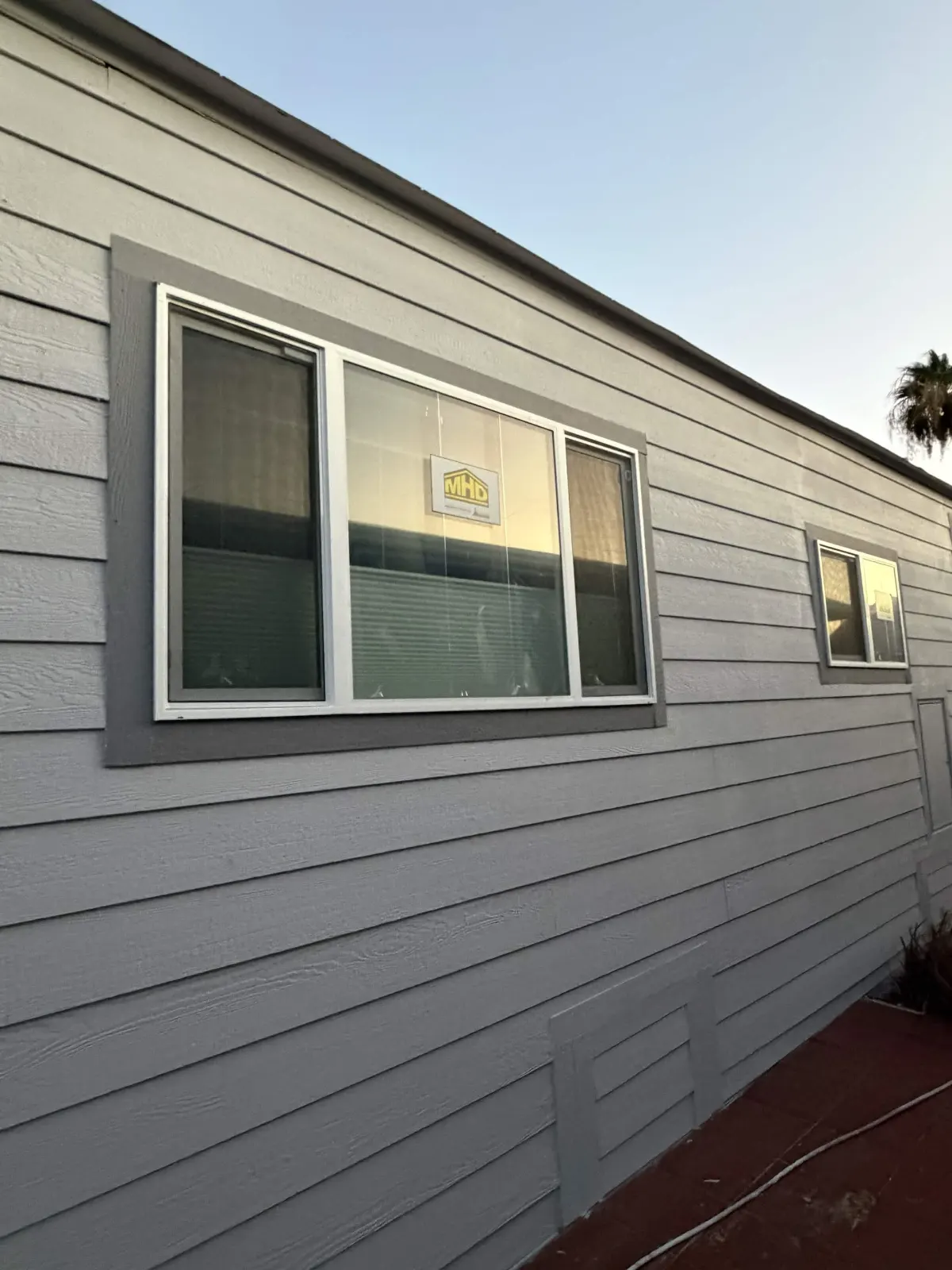
Where Oyster Bay fits
Oyster Bay is a less natural fit for a house with pink-beige pavers or a salmon-tinted stucco base that shows at the edges; the green can make those surfaces look pinker. It also loses its character in dark interior halls, where a lighter neutral is easier.
- Full exterior body on stucco, siding or block, with white or deeper green trim
- Upper body of a two-tone stucco scheme above a darker band
- Bedrooms, bathrooms and laundry rooms where you want a quiet color
- Kitchen cabinets, especially in a room with plenty of daylight
- Patio walls and ramada ceilings, where a soft green feels cooler than beige
What pairs with Oyster Bay
Sherwin-Williams' coordinating colors for Oyster Bay are SW 6203, SW 7546 and Greek Villa (SW 7551). Greek Villa is a warm white with an LRV of about 84 that keeps the green looking fresh rather than chalky.
- Trim, soffits and doors: Greek Villa (SW 7551)
- Deeper two-tone band or shutters: Retreat (SW 6207)
- Dark accent for front door or garage: Pewter Green (SW 6208)
- Lighter cool companion for interior ceilings: Nebulous White (SW 7063)
LRV, heat and fade at about 44
An LRV of about 44 means Oyster Bay reflects a little under half the visible light that reaches it. On a sunny stucco wall that keeps surface temperatures well below a charcoal or navy, and it is within the range many Arizona homeowners pick for a body color that still looks like a color.
Light, muted colors also hide gradual fading better than deep ones. The sunny elevations will still lighten slightly over the years, but a soft gray-green that fades a little tends to look like itself rather than like a different color.
Oyster Bay with roof tile and desert landscaping
A brown or terracotta concrete tile roof can make some greens look muddy. Oyster Bay usually holds up because it is light and gray enough to sit beside warm tile without fighting it, but test it against your actual roof. With a gray or charcoal roof tile, it looks especially clean.
It also flatters desert landscaping: gray-green agaves, olive trees and decomposed granite all echo it. If your yard is mostly turf and tropical plants, the color will look more like a soft gray.
Sheen and product for Oyster Bay
Exterior stucco gets Sherwin-Williams Emerald Exterior, sprayed and back-rolled in two coats, with Loxon masonry primer on bare or patched stucco. Flat or low-sheen on the body, satin on trim and doors.
Inside, eggshell works on walls in most rooms, satin in bathrooms, and a satin or semi-gloss on cabinets. Emerald Interior is low-VOC, so bedrooms can be used again soon after painting.
Testing Oyster Bay
- Roll two coats on a large sample board, so the color is fully opaque.
- Hold it against the sunny and shady sides of the house at different times of day.
- Compare it with your trim color, roof and any stone or block walls.
- If you live in an HOA, confirm Oyster Bay is on the approved palette or submit it for approval before work starts.
Frequently asked questions
- Is Oyster Bay green or gray?
- It is a gray-green: gray first, with a soft sage cast that shows more beside warm whites and in shade. In full noon sun it looks paler and grayer.
- Is Oyster Bay a good exterior color for Arizona?
- Yes, its calculated LRV of about 44 keeps walls cooler than mid-to-dark colors, and its muted tone hides gradual fading well. Test it beside your roof tile first.
- What white goes with Oyster Bay?
- Greek Villa (SW 7551), one of Sherwin-Williams' coordinating colors for it, is a soft warm white that suits trim and soffits. A cooler white makes Oyster Bay look grayer.
- Can Oyster Bay go in a bathroom?
- Yes, it is a calm bathroom color, particularly with white tile and brushed nickel or brass. Use a satin finish to handle humidity and cleaning.
- What is a darker color in the same family as Oyster Bay?
- Retreat (SW 6207) is the next step darker at an LRV of about 21, and Pewter Green (SW 6208) is darker still. Both work as trim or two-tone colors with an Oyster Bay body.
- Does Oyster Bay look blue?
- Rarely. Its blue channel is the lowest of the three, so it leans green-gray. In strong north light it can look cooler, but it does not usually read blue.