Paint color · Mid-tone gray-green
Retreat (SW 6207): A Mid-Tone Sage Gray for Arizona
Published
Retreat (SW 6207) is a muted, mid-tone gray-green from Sherwin-Williams that reads as a dusty sage on walls. Its LRV is about 20.9 when calculated from the RGB values, so it can serve as an exterior body color on a stucco house with some heat trade-off, and it makes a grounded, calm color for cabinets, studies and bedrooms inside.
Of the three gray-greens that sit next to each other by number, Retreat is the middle one: Oyster Bay (SW 6206) is lighter, Pewter Green (SW 6208) is darker.
Color swatch: Retreat SW 6207, #7A8076
| Color | Retreat |
|---|---|
| Code | SW 6207 |
| Hex | #7A8076 |
| RGB | 122, 128, 118 |
| LRV | About 20.9 (calculated from the RGB values) |
| Color family | Mid-tone gray-green, muted sage |
How green is Retreat?
Retreat's RGB values are 122, 128 and 118. Green leads by a small margin and blue trails, so the color is a gray with a soft, slightly warm green cast. It is not minty and not olive; on most walls it reads as sage that has been dulled with gray.
The green content becomes more obvious next to pure grays and whites. Next to wood, terracotta and leather, Retreat looks more like a warm, earthy gray. That flexibility is why it works in both modern and Southwestern settings.
Retreat in Arizona sun and in north-facing rooms
On a sunlit stucco wall at midday, Retreat lightens and the green becomes the first thing you notice, almost like the leaves of a desert shrub. In the shade of a porch or on the north side of the house, it settles into a deeper, grayer tone. The stucco's texture breaks up the surface so it never looks flat.
Indoors with north light, Retreat moves toward a cool gray-green and can feel restful in a bedroom or reading room. Under warm LED bulbs at night, it looks earthier and more olive. If the room faces west, expect a noticeably warmer green in the late afternoon.
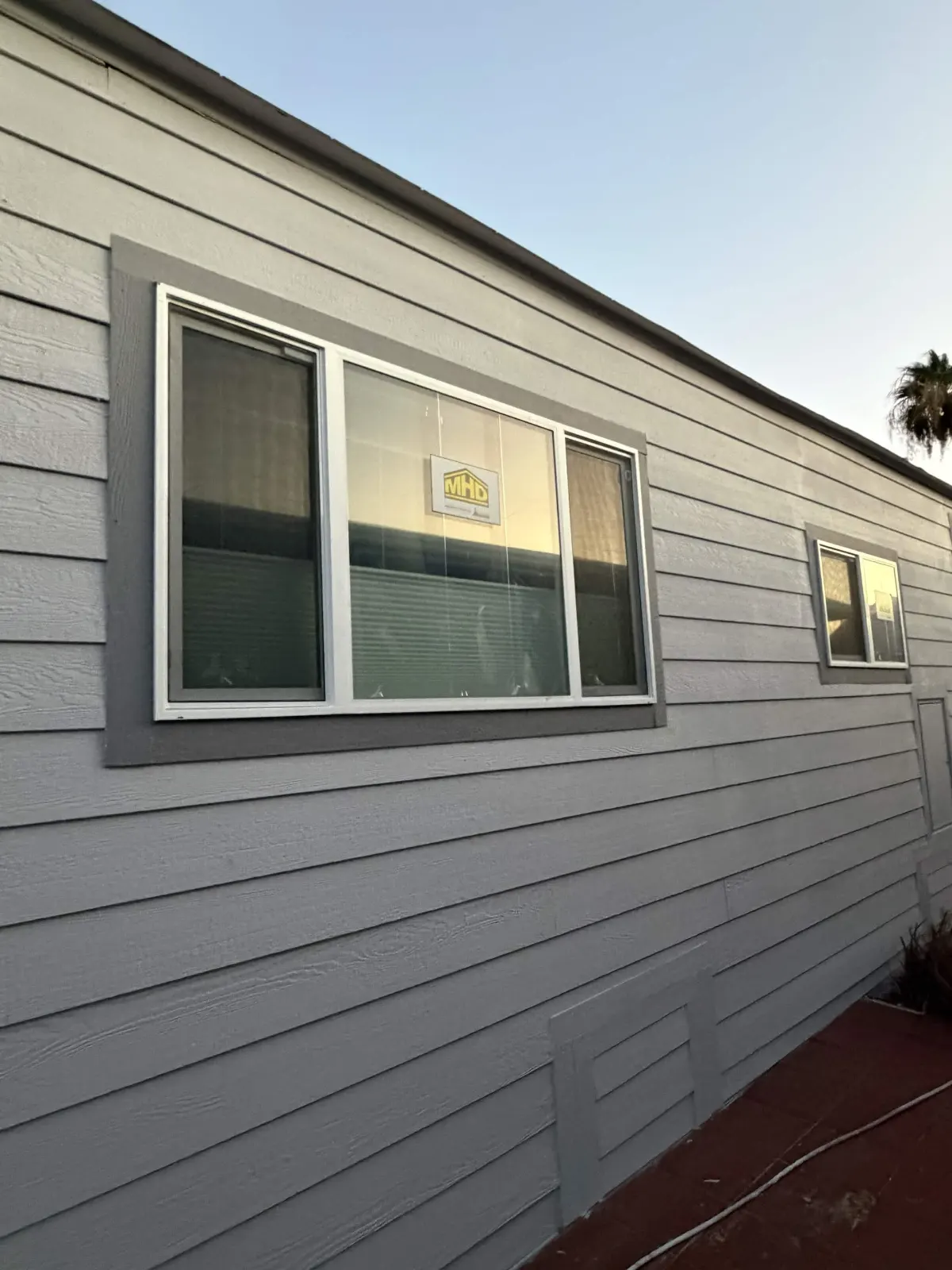
Where Retreat works
Retreat is less convincing on a house with a strongly pink or salmon-toned stucco base that will show through at corners and edges, or beside red brick, where the green and red can fight. In those cases a warmer neutral is usually the easier answer. It also needs some daylight indoors; in a windowless hall it can turn flat and gray-brown.
- Exterior body on a stucco or siding house with white or cream trim
- Lower band of a two-tone exterior, under a lighter green-gray or off-white
- Front doors on a light beige or white body
- Kitchen and bathroom cabinetry, especially with brass hardware
- Bedrooms, studies and dens where you want walls that feel calm and slightly enclosed
Colors that go with Retreat
Sherwin-Williams lists Origami White (SW 7636) as one of Retreat's coordinating colors, along with SW 6203 and SW 9042. Origami White is a soft, slightly warm white with an LRV near 76, a clean partner for trim and ceilings.
- Trim and ceilings: Origami White (SW 7636)
- Lighter body for a two-tone house: Oyster Bay (SW 6206)
- Darker accent for doors and shutters: Pewter Green (SW 6208)
- Warm neutral alternative for trim: Shoji White (SW 7042)
LRV around 21 on a desert exterior
Retreat absorbs roughly four-fifths of the visible light that strikes it. That makes a Retreat body color warmer to the touch than a beige or off-white in summer, though not nearly as hot as a charcoal or navy. On a house with decent overhangs, the difference is manageable.
As greens fade, they often drift grayer or a little yellow. Because Retreat is already muted, a gradual fade on the sunny elevations reads as softening rather than an obvious color change, which is one reason mid-tone sage colors hold up visually better than saturated greens in Arizona.
Retreat on cabinets and in kitchens
Gray-green cabinets have become a common alternative to white and navy, and Retreat sits in a comfortable middle. It hides fingerprints and light splatter better than white, while staying light enough that a kitchen does not feel dark. Brushed brass, black or aged bronze hardware all suit it.
For cabinets we recommend a satin or semi-gloss finish so they wipe clean. Pair Retreat lowers with white uppers or open shelving if the room has limited daylight.
Sheen and product for Retreat
Retreat on stucco goes on as Sherwin-Williams Emerald Exterior, sprayed and back-rolled in two coats, after Loxon masonry primer on any bare or patched areas. Body walls look best flat because it hides texture and patches, while doors and trim get satin.
Inside, Emerald Interior in eggshell suits Retreat on walls, and it is low-VOC, which matters in bedrooms you need to sleep in soon after painting.
Test Retreat before you buy gallons
- Brush or roll two full coats of Retreat onto a sample board about two feet square.
- Place it on the wall where it will go, next to your trim and floor.
- Look at it in morning, midday and evening light, and once under your own lamps.
- For exteriors, compare it against your roof tile and landscaping, and get HOA approval if your community requires it.
Frequently asked questions
- Is Retreat green or gray?
- Both, in a sense. It reads gray in shade and more clearly sage in direct sun, so most people end up calling it a muted sage.
- Is Retreat a good exterior body color in Arizona?
- It can be, at an LRV of about 21. Walls will run warmer than a light neutral, and a gentle fade on the sunny side is likely over time, but the muted green hides that better than brighter colors.
- What trim color goes with Retreat?
- Origami White (SW 7636), which Sherwin-Williams lists as a coordinating color, makes a soft trim. A warmer cream like Shoji White (SW 7042) gives a more traditional look.
- Does Retreat look good on kitchen cabinets?
- Yes, it is a balanced cabinet green that is darker than white but lighter than navy or charcoal. Use satin or semi-gloss and test it under your kitchen lighting.
- How does Retreat compare with Oyster Bay?
- Oyster Bay (SW 6206) is the lighter version with an LRV of about 44. Retreat is deeper and more noticeably green on a large wall.
- Does Retreat look blue in north light?
- It shifts cooler in north light but stays green-gray rather than blue, since its blue channel is the lowest of the three RGB values.